High voltage electrician near me
Search your postcode to find your local Checkatrade-approved tradespeople

Find a tradesperson near me
to view most relevant local trades, or search your postcode to browse more
Riverside Electric Ltd
10.00
(4 reviews)Services & skills
ElectricianElectric CookersElectrical Heater RepairFuseboard / Consumer Unit InstallationSmoke AlarmsThunder Electrical Services Ltd
10.00
(96 reviews)Services & skills
ElectricianElectric Gate WiringHouse RewiringElectrical Under Floor Heating InstallationElectrical ContractorsWhat Electrics! Ltd
10.00
(66 reviews)Services & skills
ElectricianElectrical ContractorsElectric StovesElectrical Under Floor Heating InstallationElectric RadiatorsBlue Lantern Electrical Services Ltd
10.00
(284 reviews)Services & skills
ElectricianElectric Boiler InstallationElectric CookersElectrical Installation Condition Report - Safety Checks - EICRElectric HeatingAC Electrical (Surrey) Ltd
10.00
(66 reviews)Services & skills
ElectricianElectrical ContractorsElectric HeatingElectric ShowersSmoke AlarmsMark Knowles Electrical
10.00
(47 reviews)Services & skills
ElectricianElectrical ContractorsElectric StovesFuseboard / Consumer Unit InstallationElectric Heating


Most electricians aren't qualified to work on systems that operate above 1,000 volts. So, if you need help with a piece of high voltage equipment, you'll need to find a specially qualified high voltage electrician near you.
Want to get started on finding a high voltage electrician near you? Get started with Checkatrade. Pop your postcode into the search tool, and in an instant we’ll show you the high voltage electricians that operate in your area.
Want to get started on finding a high voltage electrician near you?
It's quick and easy to find the high voltage electrical contractors near you on Checkatrade.
1. Search your postcode
Enter your postcode in our search tool to browse high voltage electricians who work in your area.
Find qualified electricians working in your area
2. Easily check and compare
View profiles, check experience, and read customer reviews. Then create a shortlist of electricians near you.
3. Get in touch
Use our request-a-quote feature to get a selection of quotes from high voltage electricians in your area, helping you compare options like-for-like.
4. Use the Checkatrade app
Keep all your messages and quotes in one place and track progress from first enquiry to finished install.

What is a high voltage electrician?
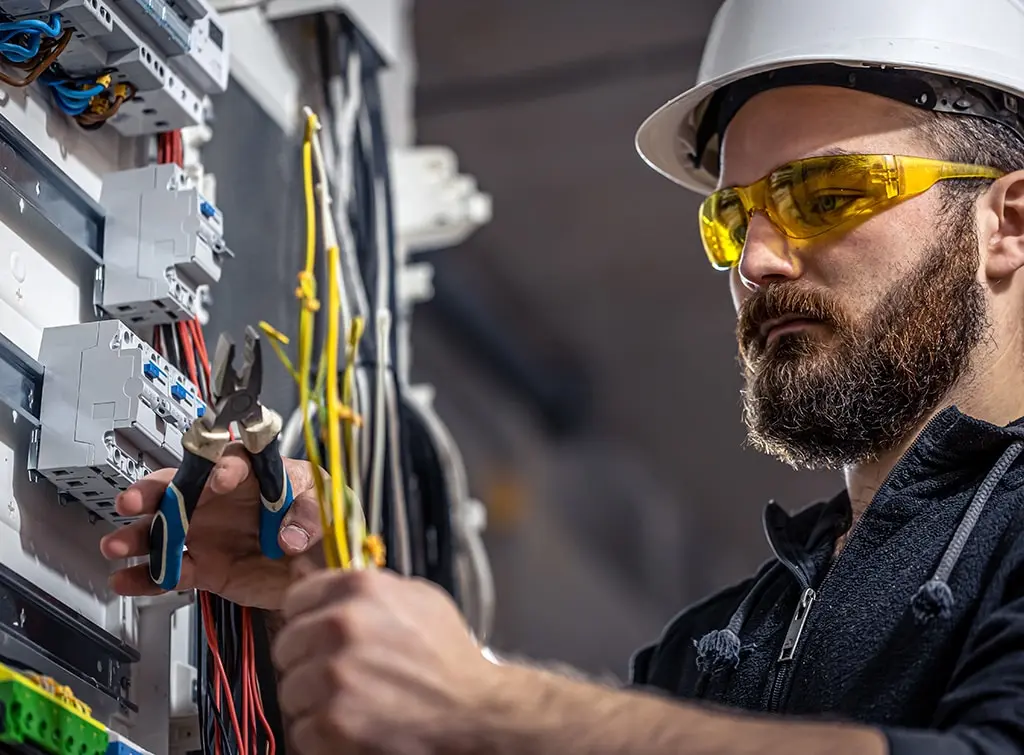
A high voltage electrician is someone who's qualified to work on systems that operate between 1,000 and 33,000 volts.
These systems aren't found in the home. Rather, they're typically found in heavy industrial settings, power generation plants, and high voltage distribution networks.
What qualifications do you need to work on high voltage?
A high voltage certificate is needed to work on systems that operate between 1,000 volts and 33,000 volts.
What's the difference between a high voltage, commercial and industrial electrician?
A high voltage electrician is defined by the certificate they hold, for systems between 1,000 and 33,000 volts.
Commercial and industrial electricians, meanwhile, are defined by the type of building they work in.
In practice, the same job might need both types of electrician (or someone who works with both): a commercial or industrial electrician for the general fit-out, and a high voltage electrician for anything connected to the site's power supply.
How much does a high voltage electrician cost near me?
High voltage work is specialist, so expect to pay more than a standard electrician's hourly rate. As a starting point, general electricians charge around £50 per hour on average.
If your fault is urgent, expect an emergency call-out rate closer to £90 per hour.
Get an exact price by comparing quotes from high voltage specialists near you, and see our electrician cost guide for a full rate breakdown.
Electrician hourly rates in the UK in 2026
From installing a light fixture to rewiring an entire house – the list of jobs a qualified electrician can help with are endless. Read the latest guidelines and advice in this comprehensive cost guide.
Find the electrician you need
Popular high voltage electrician locations
Find checked high voltage electrical contractors in these cities:
Why hire a high voltage electrician near me?
If you work in a setting with high voltage equipment, hiring a high voltage electrician is a must. Here's why.
Legal requirement
Individuals without a high voltage certificate aren't legally allowed to work on high voltage systems.
Doing so would be a breach of the Electricity at Work Regulations and could result in significant financial penalties for the business. In some cases, business owners and directors could even face prison time.
Training
High voltage certification demonstrates that an electrician has had the appropriate training to work with these systems.
In this way, you can be confident that your high voltage electrician has the skills, knowledge, and experience needed to do their job properly.
Safety implications
High voltage systems can be particularly dangerous if not handled correctly.
Working on these systems without the proper certification could lead to the risk of injury and even fatalities, which is why it's essential to hire a properly certified high voltage electrician.
How do I find a reputable HV electrician in my area?
Check reviews, compare quotes, and confirm their qualifications and insurance before hiring a high voltage electrician near you. Here are our top tips.
Read reviews
Always check to see what others have to say about any HV electricians in your area.
That way, you can make sure to choose someone that others rate highly.
Get multiple quotes
Compare a selection of quotes from high voltage electrical contractors working near you.
This will allow you to get a feel for a range of different tradespeople, and check that you're getting a fair price for the work.
Ask about insurance
Check that the companies you're considering have the right insurance in place. This will give you confidence that you have protection in case things go wrong.
You'll be pleased to hear that all our tradespeople must have up-to-date public liability insurance to be listed on the Checkatrade directory.
Ask when they take payment
Reputable high voltage electricians won't ask for full payment upfront.
Instead, you should be able to pay at least part of the fee after the work has finished.
Get recommendations
Ask anyone you know who's recently had work completed on a high voltage system whether they'd recommend the electrician they used.
Make sure to cross-reference any recommendations on Checkatrade, so you know they've also been checked by us.
High voltage electrician FAQs
A high voltage electrician is qualified to work on systems that operate between 1,000 and 33,000 volts, typically in industrial or power generation settings rather than homes. They hold a high voltage certificate that's separate from standard electrician qualifications.
High voltage work usually costs more than standard electrical work: expect at least the general electrician average of £50 an hour as a starting point. Get quotes from a few tradespeople near you for an exact price.
A high voltage certificate is legally required to work on systems between 1,000 and 33,000 volts. Working without one breaches the Electricity at Work Regulations and can lead to serious penalties.
High voltage refers to a particular type of certification, which allows an electrician to work with high voltage electricity.
Commercial and industrial refer to the type of site an electrician works on.
The same job can need more than one of these specialists. For example, a commercial fit-out might need an industrial electrician for the general wiring and a high voltage electrician for the site's power supply.
Check reviews, compare quotes from a few contractors, and confirm they carry public liability insurance. Use Checkatrade to see electricians who've already been checked, and always read the customer reviews to see who's highly rated.

If you're not confident tracing your own wiring, a qualified electrician can test the circuit and confirm what's safe to add before any work starts.