EXPERT ADVICE
Blocked outside drain – what to do and who to call
Updated 03/26
By: Content Team
Reviewed: Laura Macdonald
A blocked outside drain is hard to ignore. You might notice standing water, unpleasant smells, or gurgling sounds after rain. In more serious cases, wastewater can start backing up toward your home.
Some blockages are simple to clear; others point to deeper issues underground that aren’t always obvious right away.
Knowing the difference can save you time, money, and potentially a far messier problem later on.
What causes a blocked outside drain
When you can clear it safely yourself
When the blockage could indicate pipe damage
How urgent the problem is
What it typically costs to fix
How urgent is a blocked outside drain?
Whether a blocked drain is urgent depends on the symptoms. A blocked drain is usually urgent if:
Water is backing up toward your property
Wastewater is overflowing from the drain
There’s a strong sewage smell
Multiple drains or toilets inside are affected
If it’s slow-draining but contained, you’ve probably got a bit of time to assess it properly.
If water is rising quickly or sewage is visible, contact an emergency drain service immediately.
If you’re seeing brown water rising after flushing a toilet or running a tap, don’t wait — that’s a clear sign your system’s struggling.
Want someone to take a look now? Why wait.
Find drain clearance experts near you
What causes an outside drain to block?
Common causes of a blocked outside drain include:
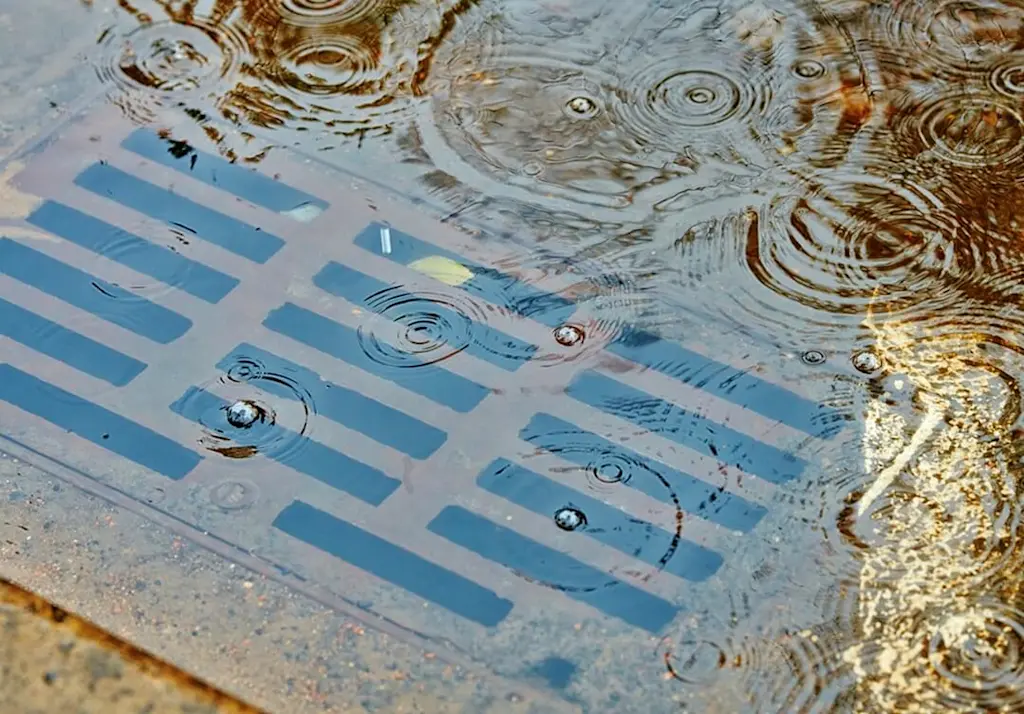
Leaves and debris covering the grid
Fat, oil or food waste washed from sinks
Wet wipes, sanitary products or excess toilet paper
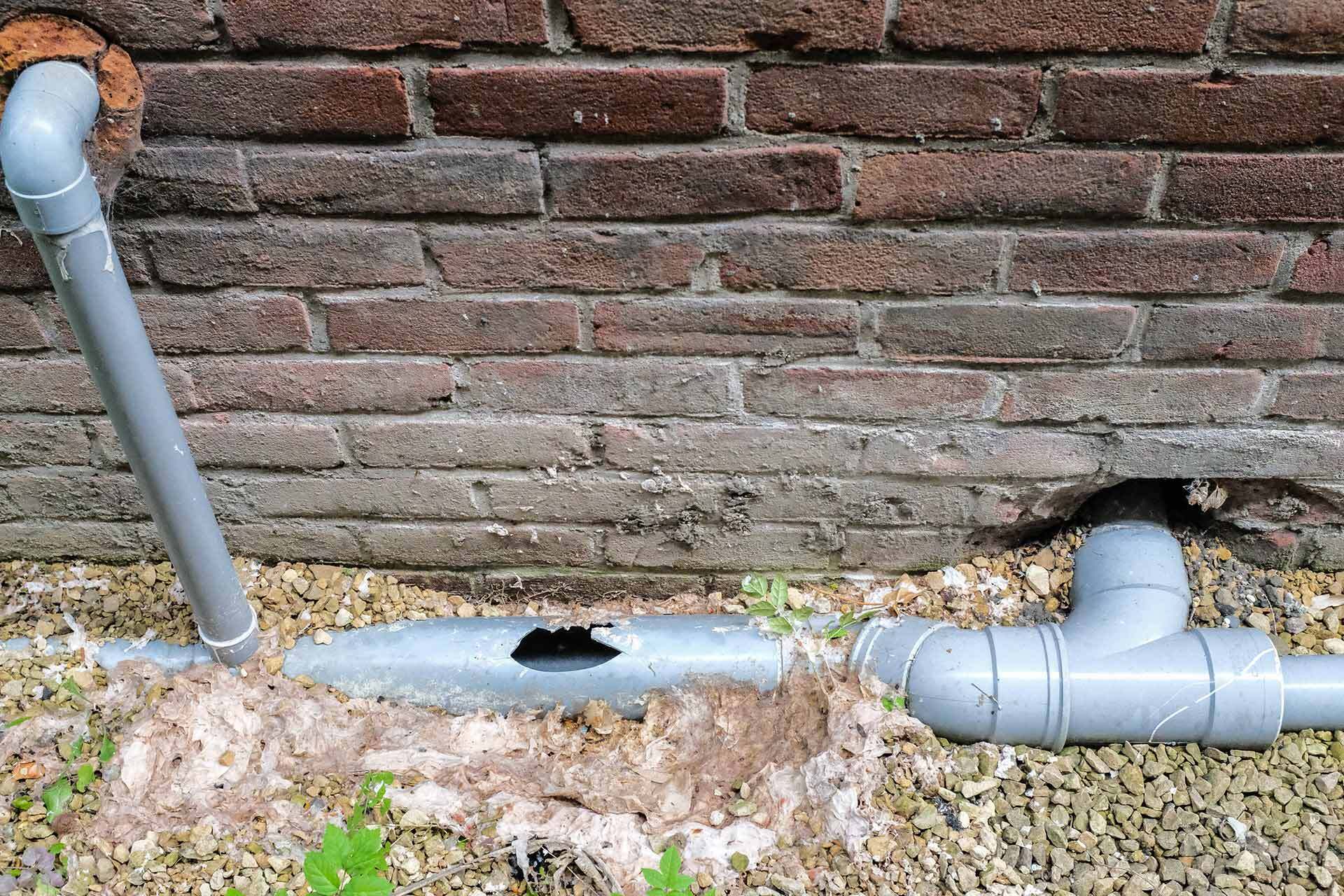
Mud, silt or collapsed pipework
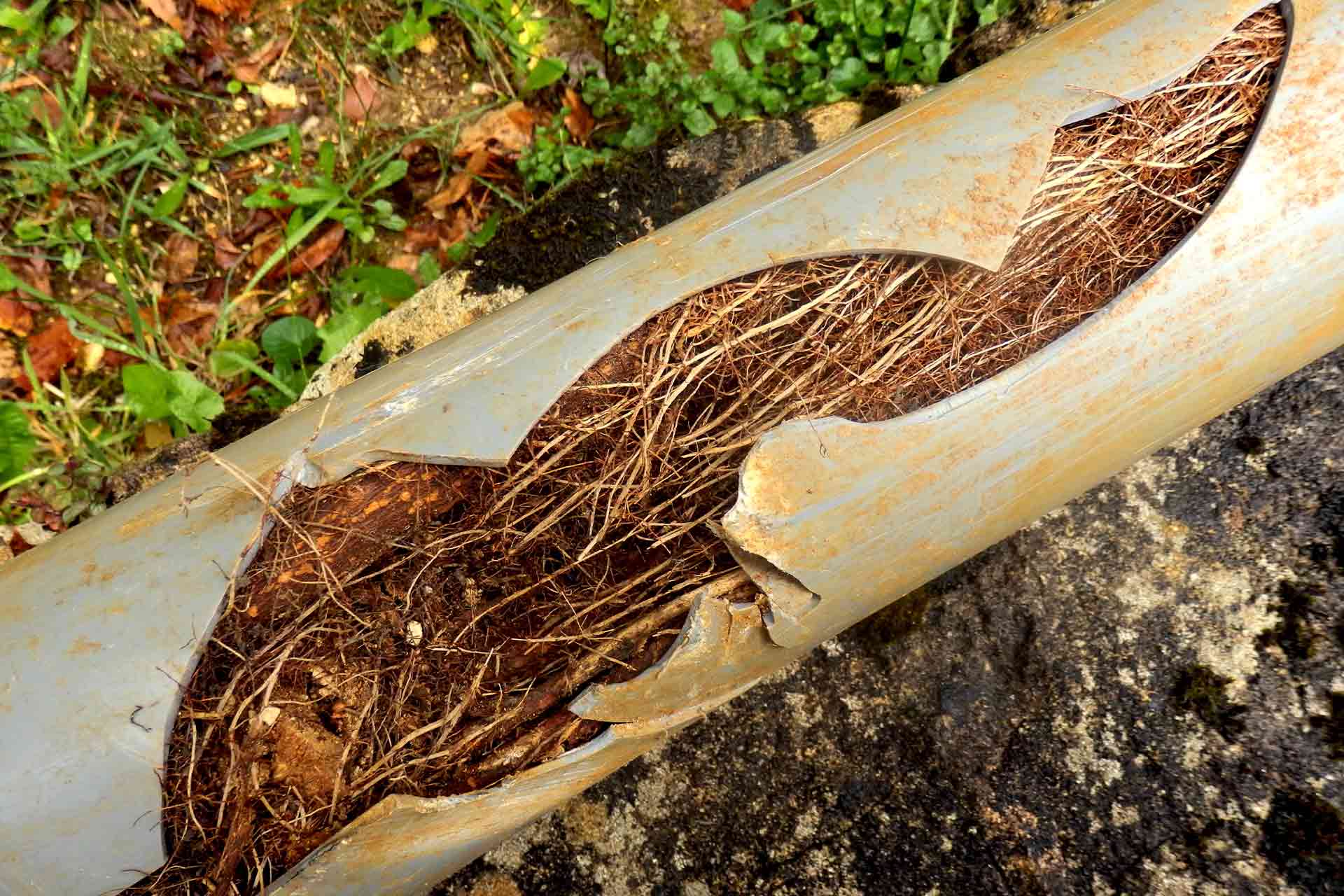
Tree root intrusion
Foreign objects lodged in the pipe
Sometimes the cause is obvious, like a handful of leaves sitting over the grate after a storm. Other times, it’s further down the line and not immediately visible.
In older properties, tree roots are a particularly common culprit. They can be surprisingly persistent once they find a water source.
Assessing the blockage safely
Before reaching for tools, take a careful look.
If the blockage is surface-level, for example, leaves sitting on the grid, you may simply need to clear the debris by hand (with gloves on, of course).
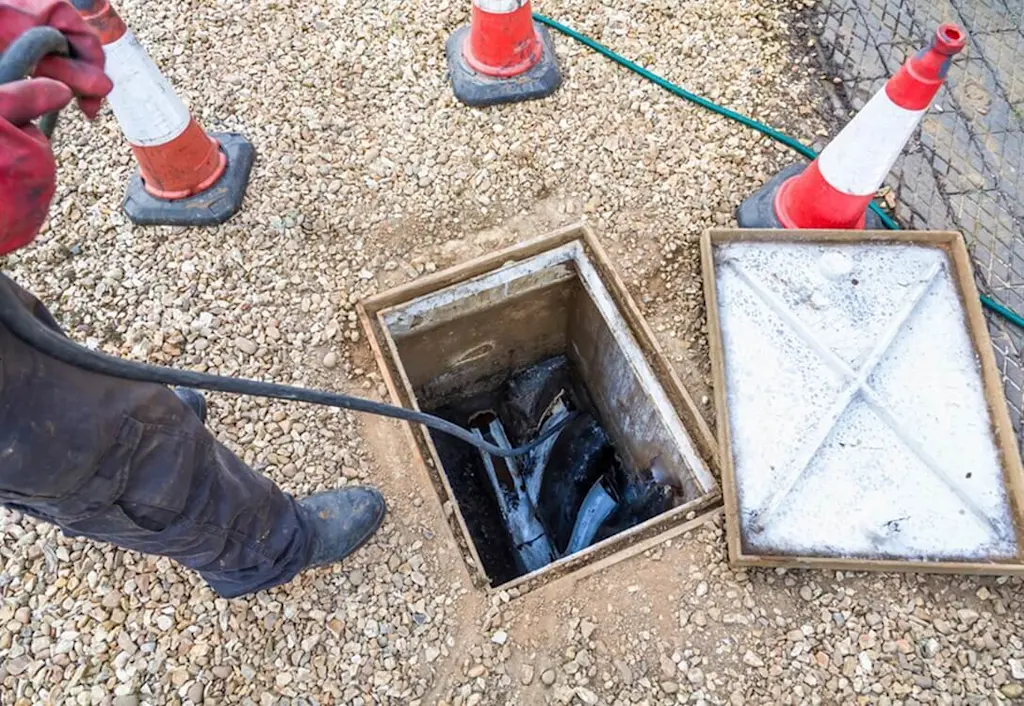
If water is pooling and not draining, you’ll likely need to lift the cover to see what’s happening below.
When lifting a drain cover:
Use appropriate tools
Wear gloves and eye protection
Avoid putting your hands into standing wastewater
If the obstruction is clearly visible and within reach, it may be manageable. If you can’t see the blockage, or it’s deep within the pipe, that’s usually when specialist equipment is needed.
It’s not a pleasant job — and if the water level is high, that often suggests the blockage sits further down the line.
Will a plunger help a blocked drain?
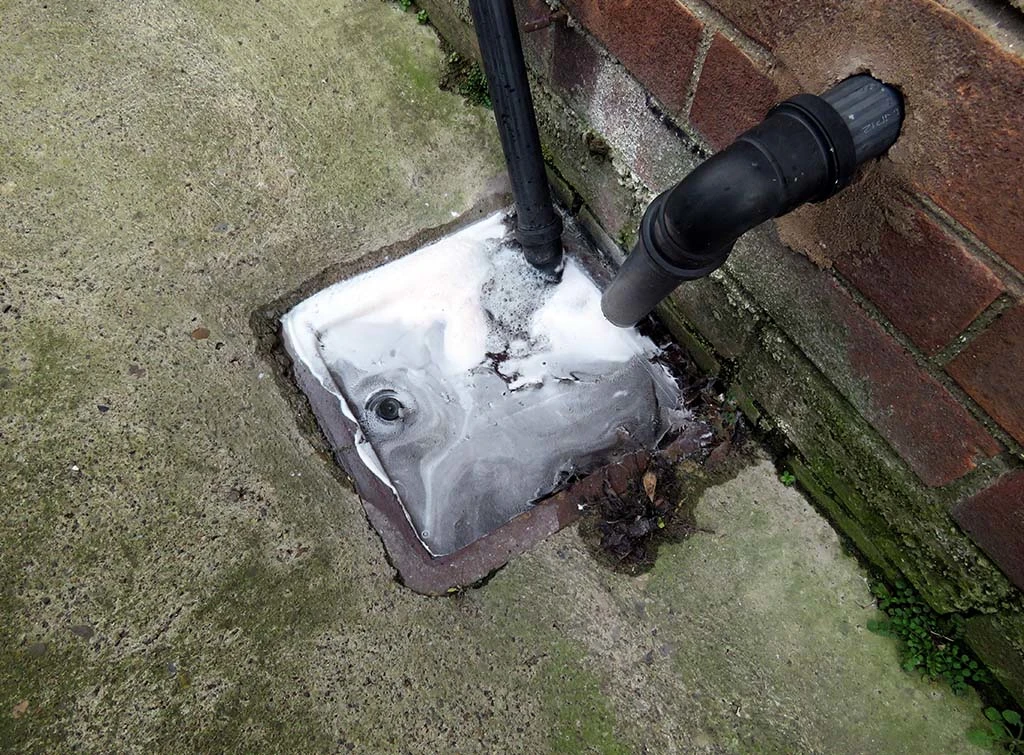
A plunger can help with shallow or minor blockages, especially where there is partial flow.
However, outdoor drains are often wider and deeper than indoor ones, so plungers usually have limited impact.
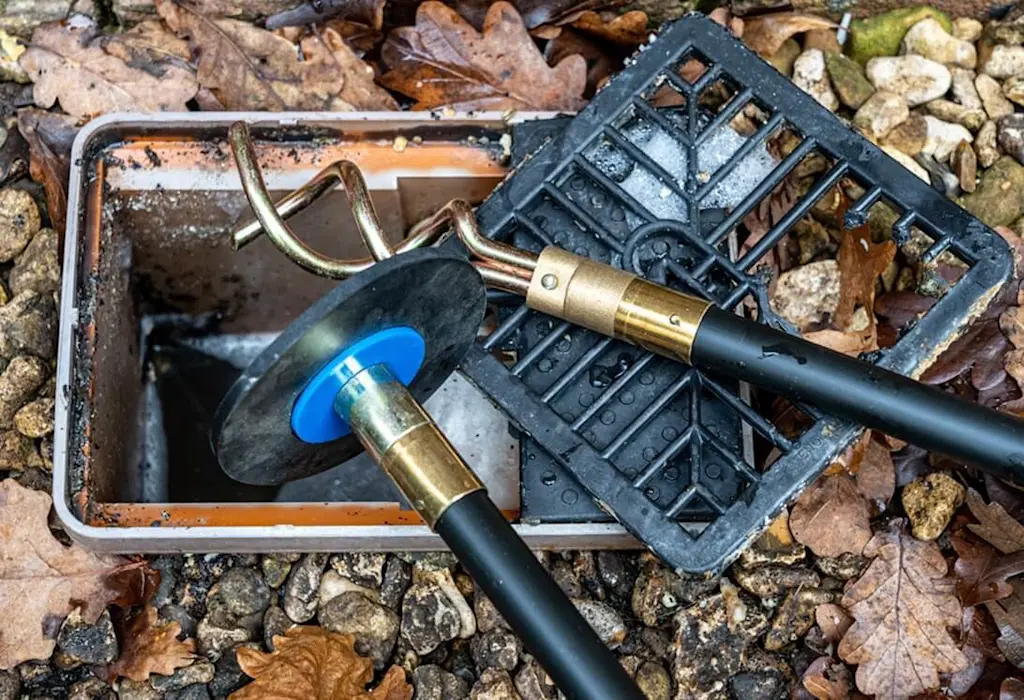
If you’ve tried plunging a few times with no movement at all, that usually means the blockage sits further down the line. At that stage, rodding or jetting is usually the next step.
Can you clear a blocked outside drain yourself?
You may be able to clear the blockage yourself if:
It's close to the surface
It appears to be leaves, grease or minor debris
Water isn’t backing up into your home
You’ll usually need:
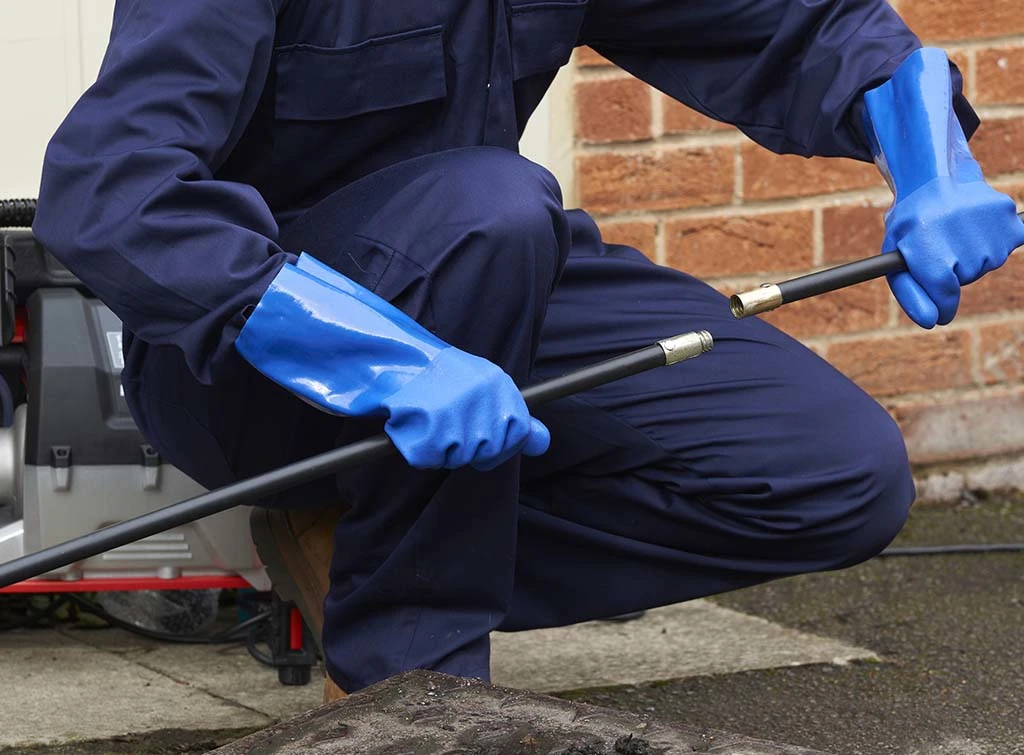
Heavy-duty rubber gloves
Eye protection
Drain rods
A bucket or bin bags
Access to a hose
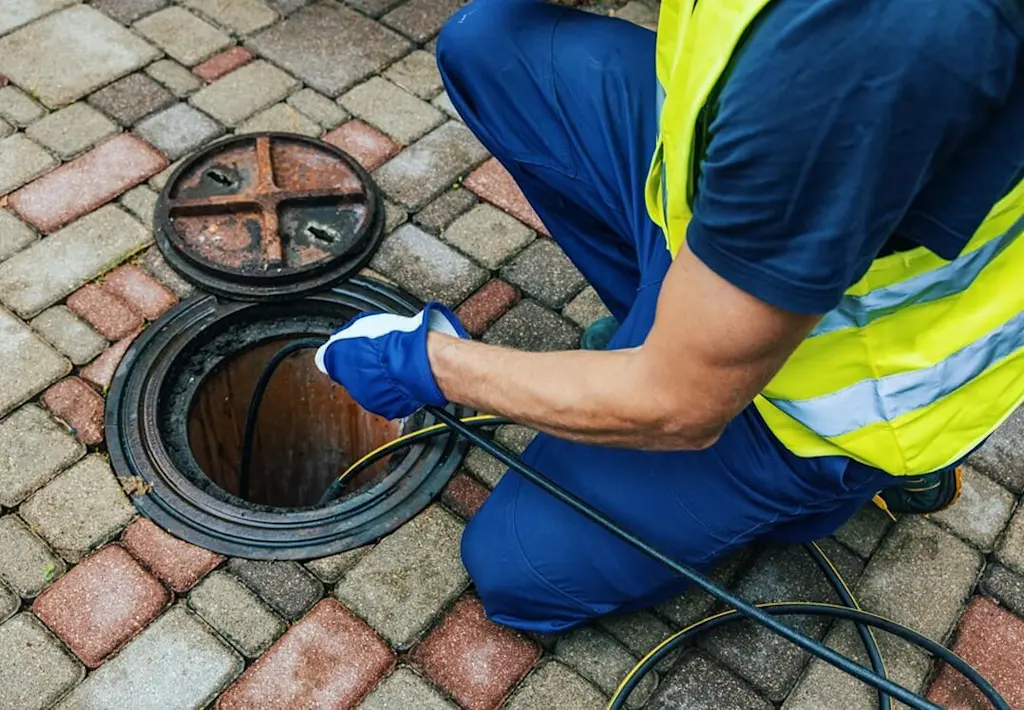
When you insert drain rods, twist clockwise — otherwise they can unscrew and vanish into the pipework. If you feel resistance, apply steady pressure rather than force.
And if the rods won’t pass through or you suspect collapsed pipes, walk away — you could risk turning a simple blockage into a repair job.
How do you unblock a badly blocked sewer pipe?
If wastewater is backing up from multiple drains, the blockage may be in the main sewer line.
This is not usually a DIY job.
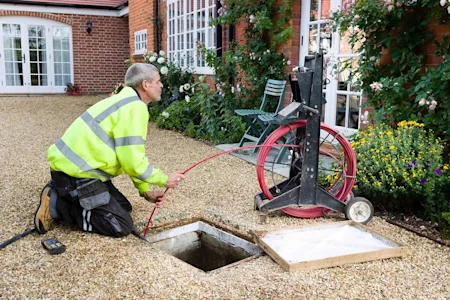
Drainage specialists typically use:
High-pressure water jetting
Mechanical cutting tools (for roots)
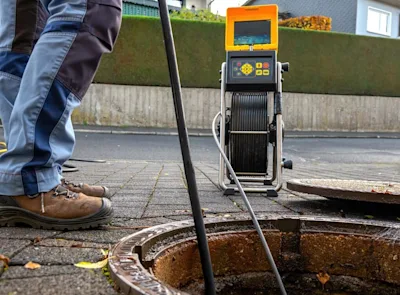
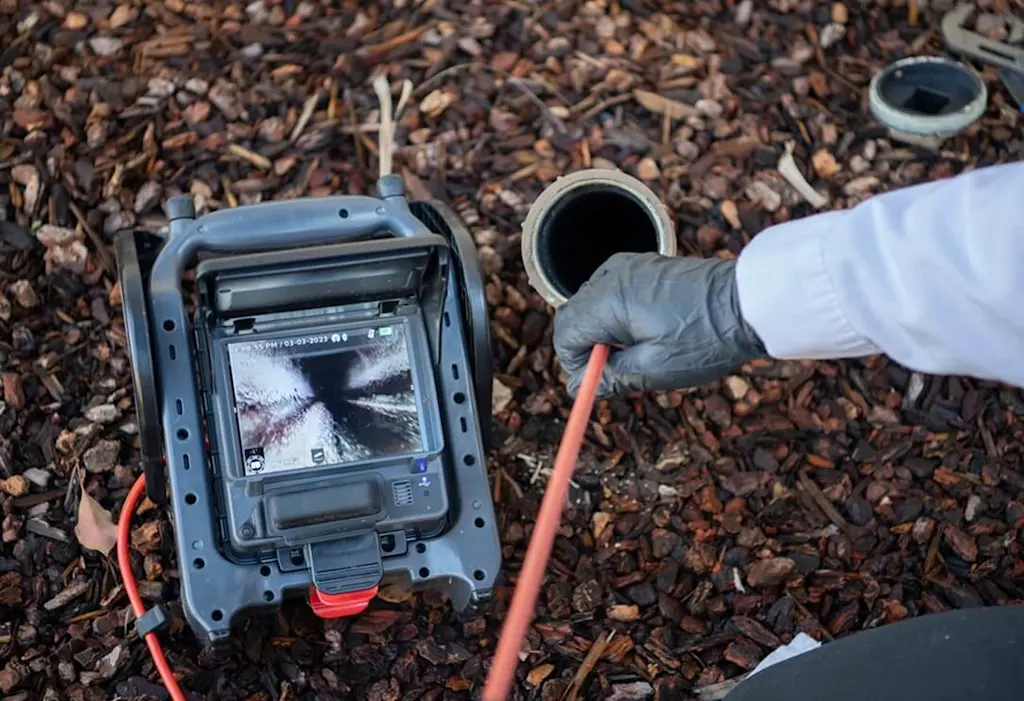
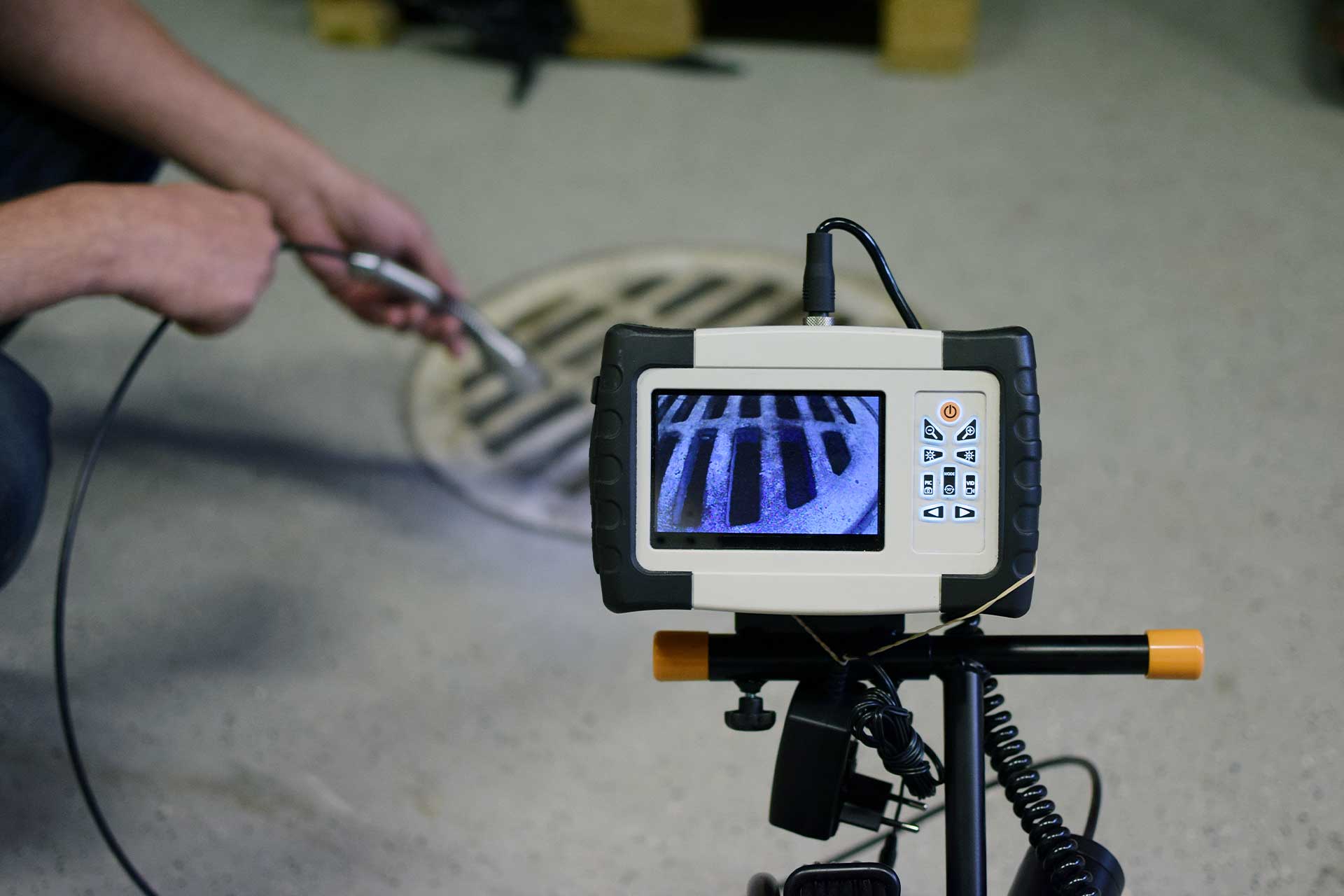
CCTV surveys to locate collapsed or damaged pipes
If sewage is visible or affecting neighbouring properties, treat it as urgent and contact a professional sewer clearance service immediately.
At this stage, the goal isn’t just to clear the blockage, it’s to find out why it happened in the first place.
Whose responsibility is a blocked drain?
Responsibility for a blocked drain depends on where the blockage is located.
If the blockage is within your property boundary and serves only your home, it’s usually your responsibility
If it’s in a shared drain or public sewer outside your boundary, it may be the water company’s responsibility
If you’re unsure where your boundary ends, your water provider can check using drainage maps. It’s often a quick phone call that can save a lot of back-and-forth later.
How much should it cost to clear a blocked drain?
Costs vary depending on how severe the blockage is and how easy it is to access the drain. Drains hidden under decking, patios or extensions can take longer to reach, which affects labour time.
As a rough guide:
Drain rodding: average cost £85
High-pressure jetting: around £185
CCTV drain survey: £200
Emergency call-out: typically £180
If pipe damage is discovered, repair costs will be higher. Our drain unblocking cost guide contains more detailed pricing information.
For simple blockages, professional help is often more affordable than people expect, especially compared to repairing accidental pipe damage.
Who do I ring for a blocked drain?
For private drains within your boundary, contact a:
If the blockage affects multiple properties or appears to be in a public sewer, contact your water company first.
If flooding is occurring, treat it as urgent.
When is it safer to call a professional?
It’s usually best to call a professional if:
Water is backing up toward your home
The blockage isn’t visible
Drain rods don’t clear it
You suspect collapsed pipework
The smell is persistent and strong
Drainage problems rarely fix themselves. Waiting often turns a small job into a much bigger (and messier) one, particularly if water starts finding its way back toward your home.
How to prevent outside drain blockages
Install a drain guard to stop leaves entering
Avoid pouring fats or oils down sinks
Dispose of wipes and sanitary products in the bin
Check drains regularly after heavy rainfall
Arrange inspections every year or two if you have mature trees nearby
Prevention is far cheaper than repair and far less disruptive in the long run.

Blocked outside drain checklist
If multiple drains are involved, sewage is present, or rods won’t clear the obstruction, it’s safer to bring in a professional before the situation escalates.
Find a drain clearance service near you
If your outside drain is more than a simple surface blockage — or you’d rather not risk damaging underground pipework — a local drain clearance service can assess and clear it safely.
Search your postcode to compare checked, reviewed drain clearance specialists near you and request quotes with confidence.
Find drain clearance experts near you
FAQs
How urgent is a blocked drain?
A blocked drain is urgent if water or sewage is backing up, multiple drains are affected, or there’s a strong smell. Minor slow drainage can usually be assessed first.
Will a plunger help a blocked drain?
A plunger may help with shallow blockages, but outdoor drains often require rodding or jetting to remedy the problem.
Whose responsibility is a blocked drain?
If a drain serves only your property and lies within your boundary, it’s usually your responsibility. Shared or public sewers are typically the water company’s.
Who do I ring for a blocked drain?
Contact a local plumber or drainage specialist in the event of a blocked drain. If it affects multiple homes, call your water provider first.
How much should it cost to clear a blocked drain?
Basic drain rodding typically starts from around £80–£100, with jetting and surveys costing more depending on the complexity of the job.
How do you unblock a badly blocked sewer pipe?
Severe sewer blockages usually require professional jetting, mechanical cutting tools, or CCTV inspection.
More Blocked Drains Articles
See the tradespeople we've checked for your job