HOW-TO GUIDES
How to adjust kitchen cabinet doors
Updated 04/26

By: Olivia Scammell
Reviewed: Laura Macdonald

Kitchen cabinet doors can go out of line gradually, so it’s often only when you stop and really look that you notice something’s off.
One door sits lower than the next
A gap suddenly looks uneven
One corner starts catching every time you close it
The good news is that wonky cabinet doors do not always mean worn-out hinges or the cost of replacing the fronts. In many cases, they just need a small adjustment. And once you know which screw does what, it’s usually a much simpler job than you might think.
This guide explains how to adjust kitchen cabinet doors properly, what to do if they won't close, how soft-close hinges differ, and when it might be easier to call in a handyperson.
What adjusting kitchen cabinet doors actually involves
Why cabinet doors go out of line
What each hinge screw does
How to adjust kitchen cabinet doors step by step
What to do if a door won't close properly
How to handle soft-close and tall cabinet doors
When it is worth getting help from a professional
What does adjusting kitchen cabinet doors involve?
Adjusting kitchen cabinet doors usually means making small changes to the position of the hinges so the door sits straighter, closes properly, and lines up neatly with the surrounding cabinets.
Most modern concealed hinges allow for three main adjustments:
Side to side
Up and down
In and out (sometimes called depth adjustment)
That means you can usually correct uneven gaps, sagging doors, rubbing, or doors that sit proud of the cabinet without replacing anything.
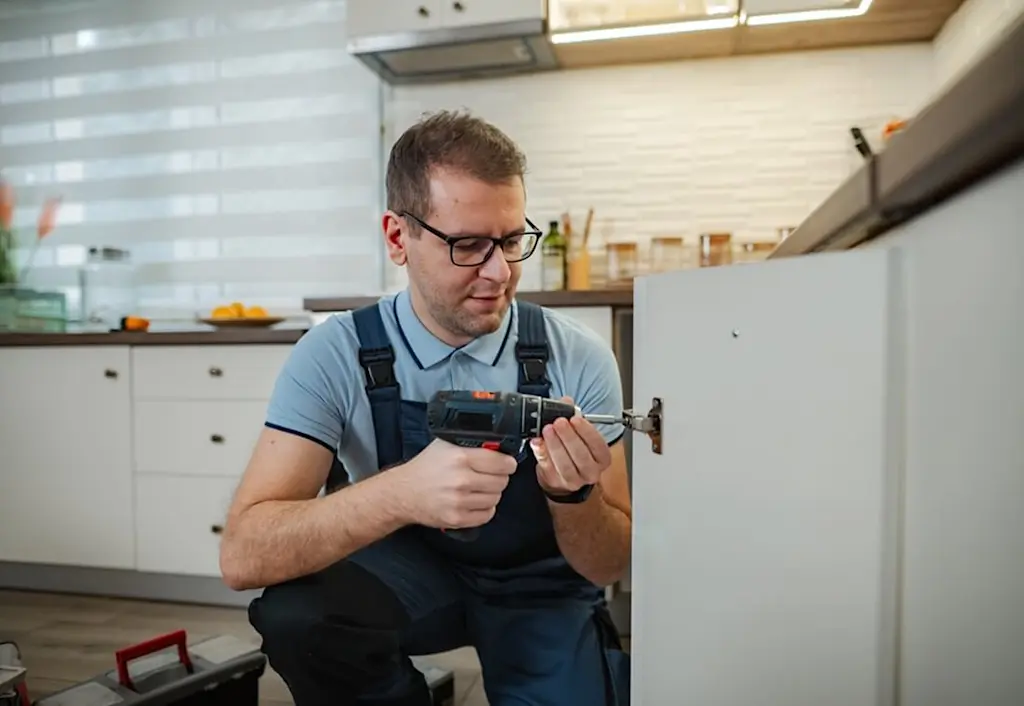
Why do kitchen cabinet doors go out of line?
Kitchen cabinet doors can fall out of line just through everyday use. Doors get opened and closed constantly, heavier cupboard doors can drop slightly over time, and hinges can shift a little if screws loosen.
You might find:
The hinges have worked slightly loose
A heavy door is pulling down at the top
Uneven gaps have appeared after installation
A soft-close hinge needs readjustment
The cabinet unit itself is slightly out of square or out of level
That last one is worth remembering, especially with tall cabinets. Sometimes the door is not really the problem at all — it’s the unit.
What do the hinge screws do?
This is usually the point where the whole job starts to make sense.
Most modern kitchen cabinet hinges have three adjustment screws, and each one moves the door in a slightly different direction. Once you know which screw controls which movement, the process becomes much less trial and error.
Side-to-side adjustment
This screw moves the door left or right, helping you even up the gaps between doors.
You’ll usually find it:
Near the centre of the hinge
Slightly larger than the others
Facing towards you when the cupboard door is open
Turning this screw moves the door sideways in very small increments, which is often enough to straighten a crooked-looking door or stop edges rubbing together.
Height adjustment
This adjustment moves the whole door up or down.
Instead of being on the hinge itself, these screws are usually:
On the hinge plate fixed to the inside wall of the cabinet
Positioned vertically (one above the other)
Loosening these screws allows the hinge — and the door — to slide slightly up or down. Once the door is level, you simply tighten them again to hold it in place.
Depth adjustment
This screw moves the door slightly closer to or further away from the cabinet.
You’ll normally find it:
At the back of the hinge, closest to the cabinet
Sitting deeper into the hinge mechanism than the side adjustment screw
This is often the adjustment that fixes doors that won’t close properly or sit flush with the cabinet.
Before turning any screw fully, try a small quarter-turn and watch what happens. It’s much easier to stay in control when you move gradually.
How to adjust kitchen cabinet doors
Once you know where each adjustment screw is located, the job becomes much more straightforward.
Most cabinet doors can be corrected with a Phillips screwdriver and a little patience.
Step 1: Start with the obvious
Open the cupboard and check that all the hinge screws are snug. A loose screw is one of the most common reasons a door has started to sag or drift out of line.
If one hinge is clearly loose, tighten that first before adjusting anything else.
Most kitchen cabinet hinges use a Phillips (cross-head) screwdriver, which fits into the screw with a cross-shaped slot.
Step 2: Adjust the door side to side
If the gap between your kitchen cabinet doors looks uneven, or one door is sitting too close to the next, use the side adjustment screw.
Which screw?
It's the large grub screw positioned near the centre of the hinge
The one facing you directly when the door is open
Turn it slowly in small increments, adjusting both the top and bottom hinge until the gaps look even. This is usually the quickest fix for crooked cabinet doors.
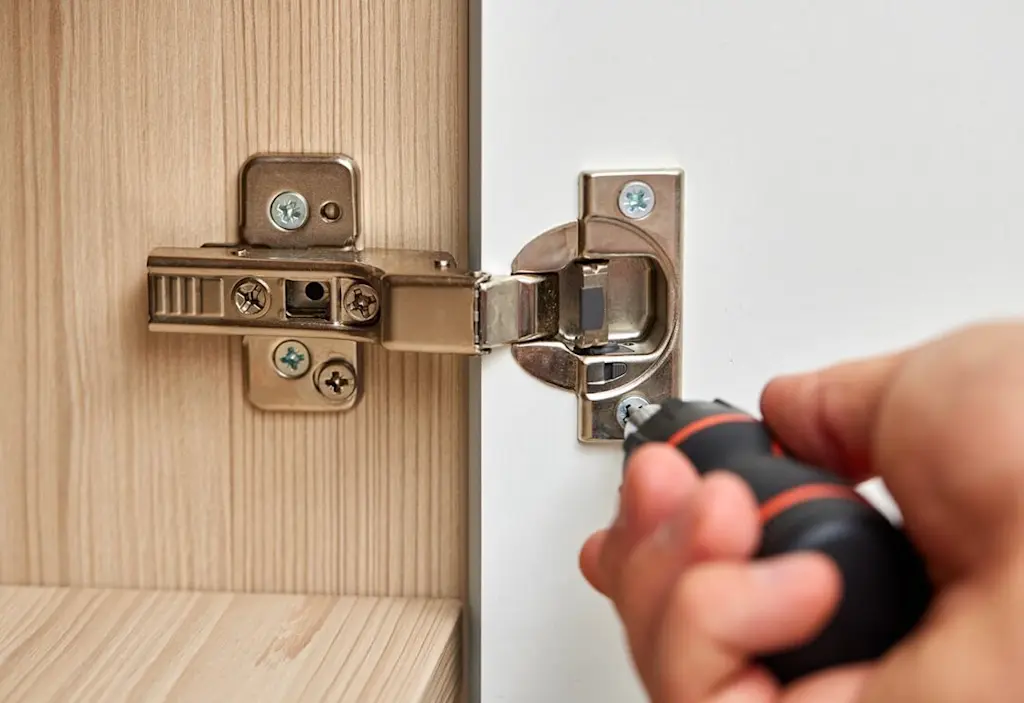
By adjusting both the top and bottom hinges, you'll be able to move the doors closer together or further apart. Turning the screw clockwise moves the door closer to the edge of the kitchen cabinet.
Step 3: Adjust the door up or down
If the door is sitting lower than the one beside it, you’ll need to adjust the height screws.
Look for:
The top and bottom screws that fix the backplate to the cabinet frame, not the door
The ones holding the hinge plate against the inside wall of the cabinet
Loosen these slightly, support the door with your hand, and gently move it up or down until it lines up with the neighbouring door. Then tighten the screws again.
When making 'up and down' adjustments and the backplate is a little stiff, try tapping the backplate very gently with a hammer to loosen it, allowing you to move the backplate up and down.
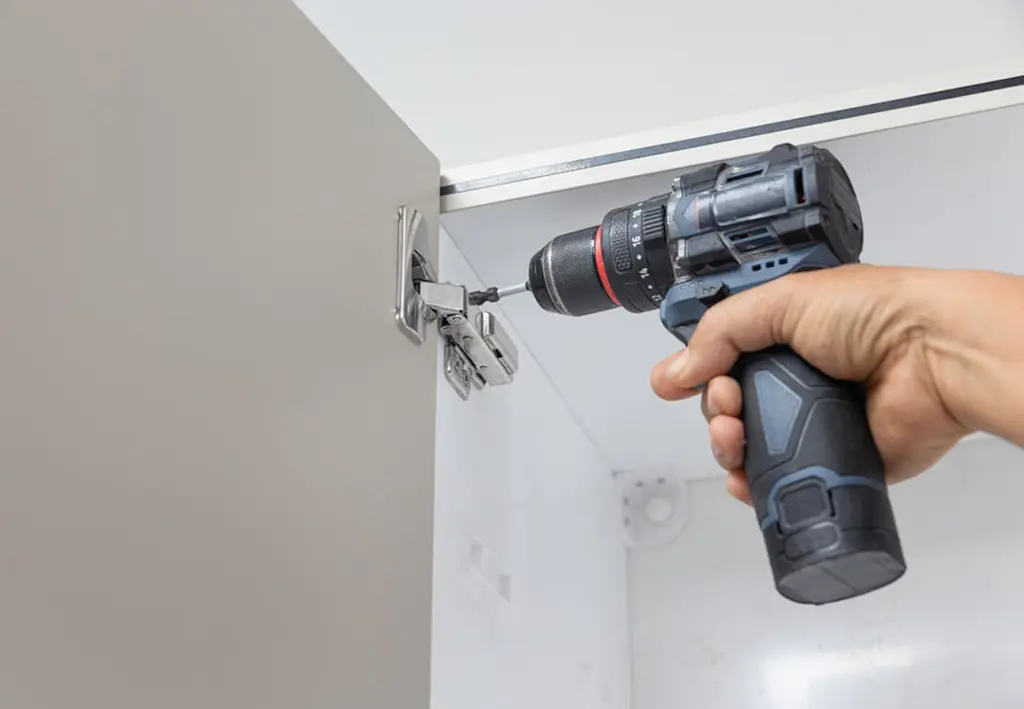
If the door is heavy, place a small box or stool underneath to help support the weight while you make the adjustments.
Step 4: Adjust the depth (in or out)
If your cabinet door is not sitting flush, or the back edge seems to catch when it closes, you’ll need to use the depth adjustment screw.
Locate the correct screw:
It's the screw positioned at the back of the hinge
The one closest to the cabinet interior
A screw that sits slightly deeper into the hinge mechanism
Turning this screw moves the door slightly in or out — bringing it closer to or further away from the cabinet.
This is often the adjustment that solves doors that look fine from the front but still do not close properly. You can also use this screw to even up double doors, so the middles are in line with one another.
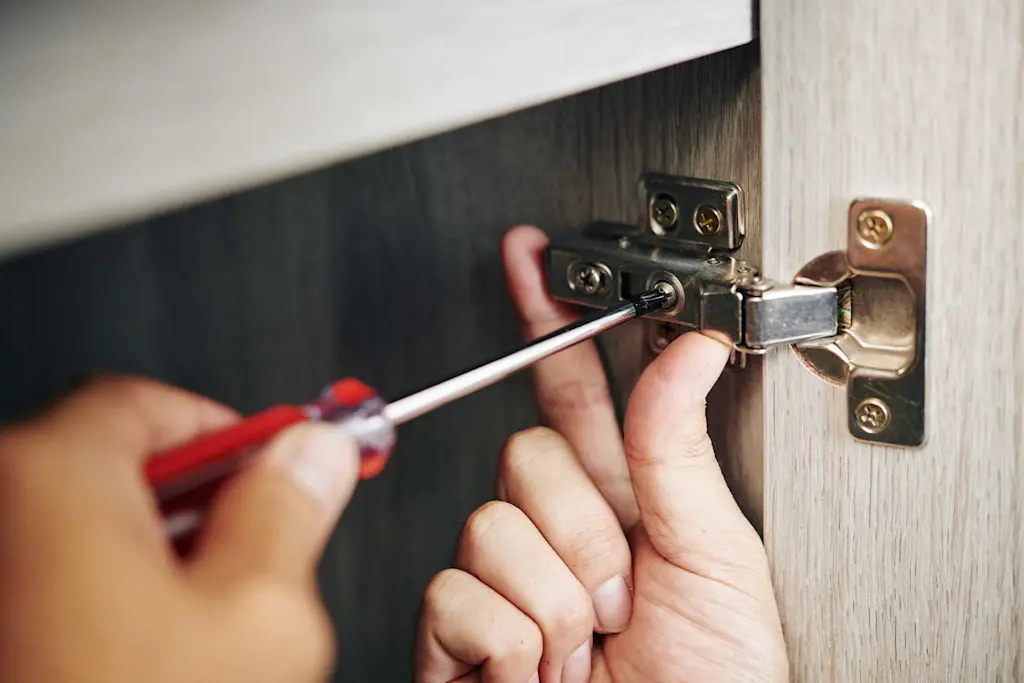
If your door isn't closing properly, it may be because this gap is too small and the back of the door is rubbing against the cabinet. By slightly widening this gap, you should stop the door from rubbing with the cabinet.
Step 5: Test the door after each change
After each small adjustment, close the cupboard gently and check:
Are the gaps even?
Is the door level?
Does it sit flush with the cabinet?
Is it catching anywhere?
A few small adjustments usually work better than one large correction.
How to adjust soft-close kitchen cabinet doors
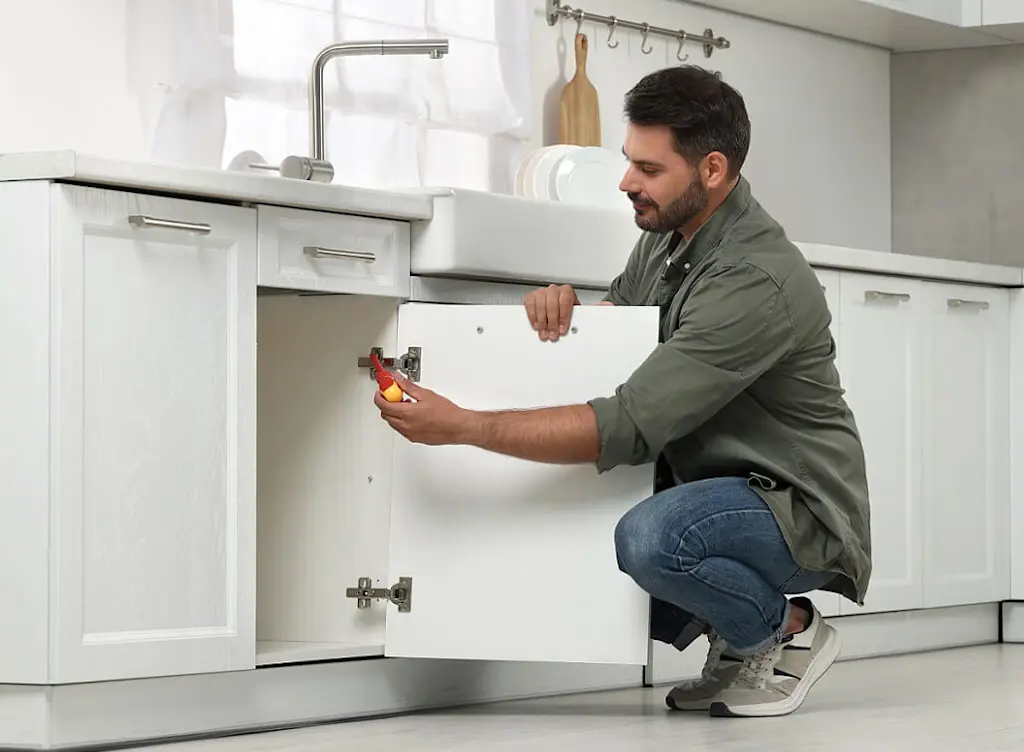
Soft-close doors can feel slightly more fiddly because you’re not just lining up the door, you’re also trying to get the closing action working properly. Start by focusing on the door alignment first. If the door is crooked, overlapping, or sitting too far out from the cabinet, the soft-close mechanism will not behave as it should. On some soft-close hinges, there’s a small plastic lever or slider built into the hinge. This is the activation switch, which turns the soft-close mechanism (called the damper) on or off. Not every hinge on a door needs the soft-close function activated, so it’s normal to see some switches turned off. Adjusting the door position should always come before making changes to the soft-close setting. If a door that used to close softly has started slamming, the cause is usually one of the following:
The door alignment has shifted
The hinge settings need adjusting
The soft-close damper has worn out or been switched off
If you can see a small lever or switch on the hinge, check the manufacturer’s guidance before moving it. A quick adjustment is often all that’s needed to restore the soft-close action.
The damper is the mechanism that slows the door down so it closes gently rather than slamming. A bit like having a brake inside the hinge. The activation switch is a small lever or slider that turns the soft-close feature on or off. Think of it as the on/off switch for the damper.
How to adjust kitchen cabinet doors that won’t close
If your kitchen cabinet door won't close, the problem is usually one of three things:
The door is rubbing against the cabinet
The gap is too tight
The door is sitting too far in or too far out
In many cases, a small depth adjustment is enough to solve it:
Adjust the hinge by turning one of the screws that sit on the horizontal axis of the hinge (the other screw in the centre adjusts the door side to side)
This moves the door forwards or backwards, enabling you to create an even gap down the whole length of the door
Move the door slightly away from the cabinet and test the closure again
If the issue is between two doors, use the side adjustment first to create a more even gap.

Find a kitchen fitter near me
Whether you're planning a complete kitchen renovation, replacing your worktops, or upgrading cabinets and drawers, the services of a local kitchen fitter are essential. Search for professional kitchen fitters near you with Checkatrade for a job done right.
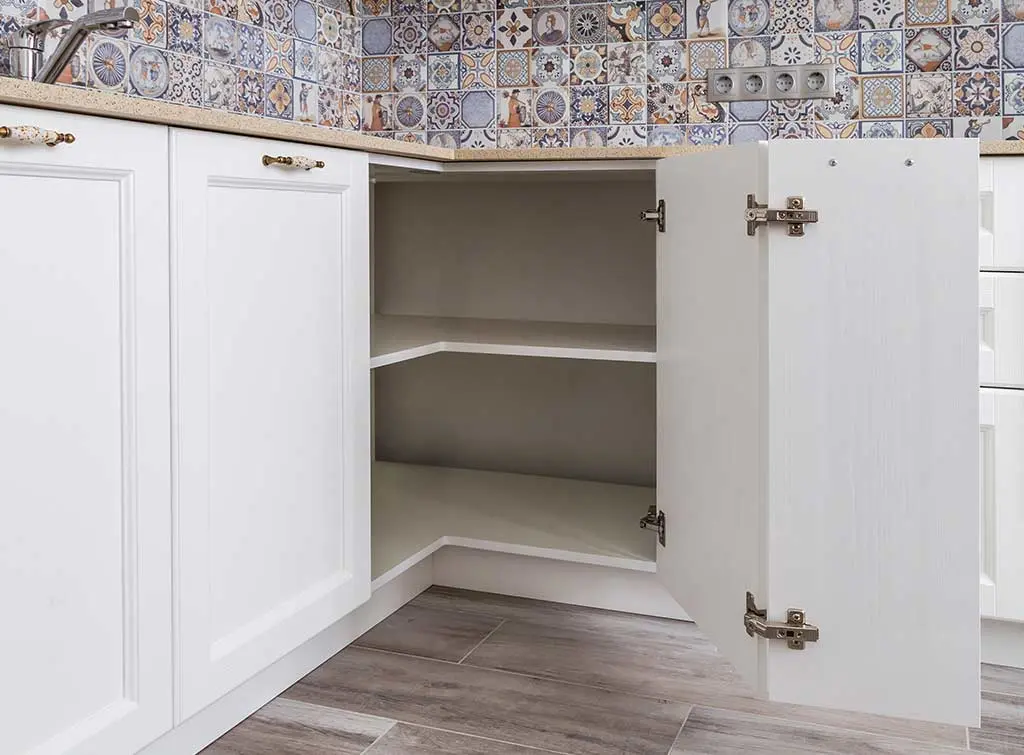
What if you have tall or 4-hinge cabinet doors?
This is where people often get stuck.
With tall doors or pantry-style doors, the hinges can start to feel like they’re working against each other. You tweak one, the top looks better, then the middle of the door starts bowing, and before long the whole thing feels slightly random.
The best way to tackle 4-hinge cabinet doors is to:
Check that the cabinet unit itself is square and stable (not twisted or out of plumb)
Get the top and bottom hinges roughly right first
Then bring the middle hinges in gently so they support the door without adding tension
If a tall door still will not sit flat after repeated hinge adjustments, stop blaming the door for a moment and check the cabinet. If the unit is slightly twisted, no amount of fine-tuning will make the hinges behave properly.
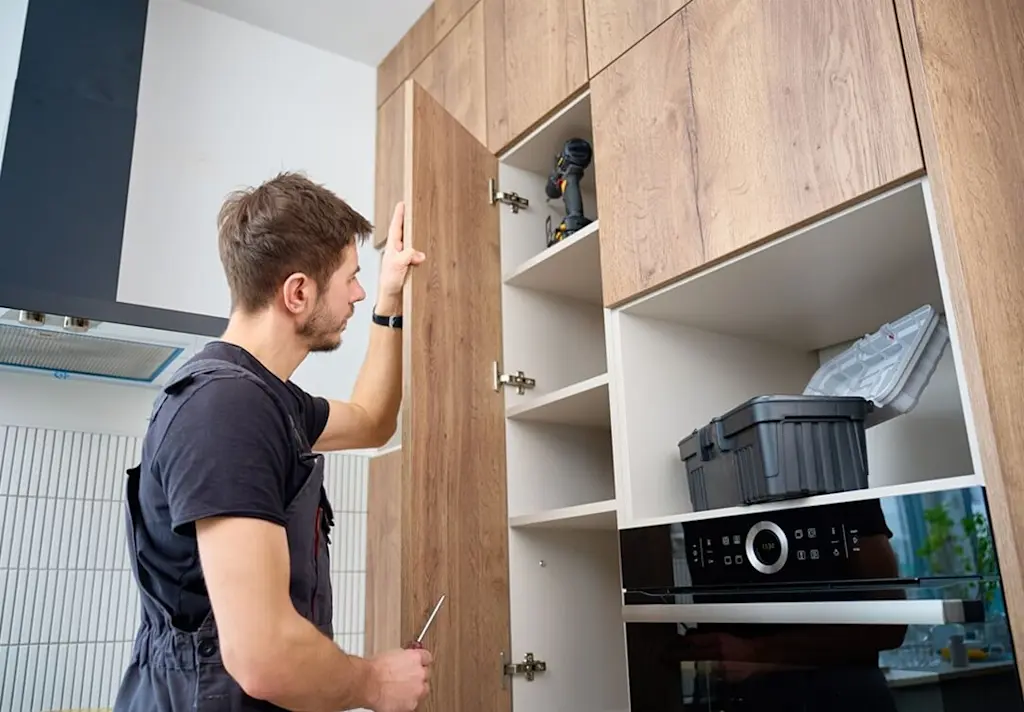
How much does it cost to adjust kitchen cabinet doors?
For a straightforward hinge adjustment job, many people would use a handyperson rather than a kitchen fitter.
The average hourly rate for a handyperson is around £30 per hour, with many handypeople charging a minimum call-out fee of £40–£50.
So if the issue is simply a few sagging or misaligned doors, it’s usually a relatively affordable fix compared with replacing the doors altogether.
Because of the minimum call-out fee, it's often beneficial to group several small jobs into one visit. So as well as getting your kitchen cabinet doors sorted, you could also get your shelves put up and the curtain rail installed at the same time!

Can you adjust kitchen cabinet doors yourself — and should you?
Adjusting kitchen cabinet doors is often a manageable DIY job.
A DIY approach is usually fine if:
The hinges are in good condition
The cabinet door just needs realigning
You’re happy working slowly and making small adjustments
You can clearly see what each hinge change is doing
It may be worth hiring a professional if:
The door is heavy or unusually tall
The hinges seem damaged
The cabinet unit itself may be out of square
You’ve adjusted it several times and it still is not right
That last one matters. There’s a point where this job stops being about turning screws and starts becoming more of a troubleshooting exercise.
If you’re at that stage, a handyperson or kitchen fitter will usually sort it quickly, and avoid a lot of unnecessary frustration.
Thinking about hiring a professional?
Here’s what recent Checkatrade customers said about hiring a handyperson:
“Gabriel was very reliable and very reasonable price too with good standard of work. Highly recommended. Will definitely be using the service again and recommend to friends and family.” Verified reviewer, Pick N Fix Property Maintenance Ltd, (Location SS15)
“I found Roland’s details online and gave him a call around 5pm. He was incredibly responsive, friendly, and professional both over the phone and in person. He managed to book me in for the very next afternoon, which I really appreciated. I had several kitchen jobs that needed fixing due to a previous poor service, and Roland truly went above and beyond to make sure everything was completed to a very high standard. I’ll definitely be using his services again and would happily recommend him to family and friends in the surrounding area.” Verified reviewer, Roland's Handyman Services, (Location RM18)
Find a handyperson near you
If you’d rather not spend your afternoon tweaking hinges and second-guessing which screw does what, a local handyperson can usually sort the problem quickly.
With Checkatrade, tradespeople are:
Checked - Every Checkatrade member must pass up to 12 checks and commit to upholding the Checkatrade Standard
Reviewed - Over 6.2 million reviews have been published on Checkatrade about real jobs, on everything from communication, tidiness, timekeeping, and quality of work
Guaranteed - Jobs booked through Checkatrade are covered up to £1,000 (T&Cs apply)
Enter your postcode to browse checked and reviewed handypeople working in your area.
Get help from a recommended handyperson
FAQs
What is the average cost of replacing kitchen cabinet doors?
Replacing kitchen cabinet doors typically costs between £131.10 and £258.90 per door, depending on the material, size and finish. A full kitchen door replacement project often totals £1,300–£2,250.
How can I update my kitchen cabinet doors without replacing them?
You can update kitchen cabinet doors without replacing them by adjusting the hinges, replacing handles, repainting suitable doors, or having them professionally resprayed. These changes can refresh the look of a kitchen at a much lower cost than full replacement.
What is the best quality for kitchen cabinet doors?
The best quality kitchen cabinet doors depend on durability, budget and style. Solid wood is often considered premium, while high-quality MDF, veneer and laminate doors are widely used because they are stable, practical and easier to maintain in everyday kitchens.
How much does it cost to respray kitchen cabinet doors?
Kitchen cabinet respraying usually starts from around £80+ per door, with a typical total cost of £800-£1,600 for a standard kitchen. Costs vary depending on the number of doors, preparation work and finish required.
What is the standard size of kitchen cabinet doors?
There is no single standard size for kitchen cabinet doors, but many full-height doors are around 715mm high. Many kitchen cabinets are built in common widths such as 300mm, 400mm, 500mm and 600mm, although other sizes are available.
The doors themselves are usually made slightly smaller than the cabinet to allow them to open smoothly, so measuring your existing doors is always the safest way to ensure a proper fit.
Can I replace my kitchen cabinet doors myself?
Yes, many homeowners can replace kitchen cabinet doors themselves if the cabinets are in good condition and measurements are accurate. However, installing new doors takes more time and precision than adjusting existing ones, so some people choose professional help for a smoother finish.
Why won’t my kitchen cabinet door close properly?
A kitchen cabinet door usually won’t close properly because the hinges are misaligned, the gap is too tight, or the door is sitting too far in or out. A small depth or side adjustment often fixes the issue without replacing the door.
How to fix crooked cabinet doors?
Cabinet doors usually become crooked when a screw or hinge comes loose. If the top hinge is loose, push the door up and back to straighten the door. Ask someone to hold the door in alignment with the cabinet while you tighten the screws of the hinge.
The bottom hinge rarely loosens as there’s less pressure on it, but if the screws are loose, tighten them too.
See the tradespeople we've checked for your job