EXPERT ADVICE
Why is your underfloor heating not working?
Updated 07/26
By: Sarah P
Reviewed: Content Team
Underfloor heating faults usually trace back to one of a handful of causes, and which one depends heavily on whether your system is electric, hydronic (wet), or infrared. The good news: many issues are fixable rather than needing a full replacement.
Common problems specific to each system type
Quick checks to run yourself
What's different when it won't turn off, rather than won't turn on
Actuator and pump-specific troubleshooting
Why only one room might be affected
When to call a professional
Ready to get help? Here's where to start.
Find a heating engineer near you
Common problems by system type
Electric underfloor heating
Leaks, valve, or expansion vessel issues causing low pressure
Cut or damaged heating cables preventing adequate heat
A faulty valve actuator, often from a sticky pin
Faulty wiring or a tripped circuit breaker
A faulty thermostat causing incorrect readings or constant heating
Trapped air reducing heat output and causing uneven heating
Cables crossing or touching, which can cause damage and overheating; always keep cables at least 50mm apart

Infrared underfloor heating
Circuit breaker issues cutting power
Inconsistent wire spacing or floor levelling causing uneven heat
Inadequate insulation wasting energy downwards instead of into the room
Furniture blocking infrared radiation, reducing effectiveness
Oddly shaped rooms sometimes needing the wattage split across two zones
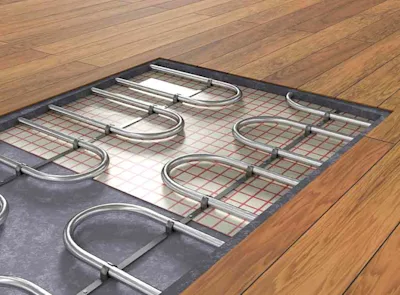
Hydronic (wet) underfloor heating
Trapped air blocking water flow, causing uneven or absent heating
Pump or motor failure preventing proper circulation
Debris or sediment blocking pipes, causing cold spots
Leaks reducing pressure and heat output; watch for damp patches or a pressure drop
Faulty pressure valves disrupting circulation
A boiler not heating water properly (low pressure, thermostat issues) can affect the whole system; listen for unusual noises or inconsistent water temperature

If your underfloor heating works but running costs feel high, our guide on underfloor heating running costs explains what's normal for electric vs wet systems.
Quick checks to run yourself
Is the thermostat working? Check batteries on wireless models
Is it set to the correct temperature?
Is the system getting power? Check for a tripped circuit breaker
Any visible damage: leaks, exposed wires, damaged cables?
Is the whole room cold, or just patches? This tells you if it's a zone-specific or system-wide issue
Is the pump (wet systems) making unusual noises?
For electric systems specifically, you can also use a multimeter to test cable resistance and check for faults in the temperature sensor.

On Checkatrade, you'll only find trades who meet our high standards and pass up to 12 checks.
Underfloor heating won't turn off
Usually a thermostat or control system issue:
Stuck relays in the control box
Wiring issues affecting the thermostat
Faults in actuators or zone valves
Incorrect thermostat settings; try resetting it, checking your manual for the exact steps
The first three point to electrical issues, so a heating engineer or electrician testing the circuits is the safest route.
Underfloor heating actuator problems
Actuators can fail in hydronic systems, causing inconsistent zone heating:
A stuck actuator pin
A failed actuator motor
Stuck or blocked valves
Wiring issues linked to the actuator
The actuator not fully opening or closing
If a pin's stuck, try dislodging it gently with silicone spray or long-nose pliers. Beyond that, get a certified electrician or heating engineer to check the wiring and thermostat.
Underfloor heating pump not working
The circulator pump keeps hot water moving around a wet system. Common issues:
Pump motor failure
Air trapped in the pipes
A clogged or blocked pump
Incorrect pump speed settings
Try turning the pump off and checking whether pressure changes, which can point to a leak or blockage. Flushing the pipes or bleeding the system is worth trying too, or bring in a heating engineer.
Underfloor heating not working in one room
Usually a zone-specific issue:
Trapped air in that zone's pipes
A faulty actuator in that zone
A blockage or leak specific to that area
A thermostat issue in that room
To troubleshoot: check your boiler for common faults, check for a stuck valve actuator pin, check the thermostat (faults, battery, settings), try bleeding the system to clear trapped air, check for pressure issues in the filling loop and pipework, check wiring and connections, and check for leaks by re-pressurising zones one at a time.

Circulating pump installation cost guide
Got a faulty circulating pump making your heat and water tepid, at best? Find out the average cost to install a new recirculating pump here.
Only attempt these checks if you feel genuinely comfortable doing so.

Before you call an engineer
FAQs
Start with a visual check for damage, broken pipes, or faulty wiring. Test the thermostat, check wiring with a multimeter, and look for leaks or trapped air in hydronic systems.
Turn the system off at the main power source, wait a few minutes, then turn it back on. Check your user manual for model-specific steps.
Minor thermostat issues are often DIY-friendly. Leaks, faulty wiring, or damaged cables are best left to a professional heating engineer or electrician.
More Underfloor Heating Repair Articles


See the tradespeople we've checked for your job