HOW-TO GUIDES
How to hang a chandelier
Updated 07/26

By: Content Team
Reviewed: Alex Peters
Find out how to safely hang a chandelier with our step-by-step guide, including hanging heavy chandeliers and hanging from concrete ceilings.
The step-by-step process for hanging a chandelier safely
How to size a chandelier for your room and table
What changes for heavy chandeliers or concrete ceilings
Fitting a chandelier on a sloped ceiling
How much professional installation typically costs
When it's worth hiring an electrician instead
A chandelier can turn a plain ceiling into a genuine focal point, but hanging one safely involves working at height, handling significant weight, and dealing with live electrics all at once.
Get any of those wrong and it's a lot more than a bruised ego.
This guide covers the full step-by-step process, sizing your chandelier correctly, and what changes for heavy fixtures, concrete ceilings and sloped ceilings.
Find an electrician near me

Before you start: sizing and prep
Before fitting anything, check your chandelier suits the room.
As a rough guide, add the room's length and width together in feet, then convert that figure to inches to get an appropriate chandelier diameter. Over a dining table, the fixture should sit roughly 12 inches narrower than the table itself.
Unpack the chandelier, check it for damage, and assemble as much of it as you safely can while it's still on the ground, since it's far easier to fit hanging crystals and other decorative parts before it's in the air.
If you're unsure how a fixture will look, cut a cardboard circle to the chandelier's diameter and hold it up where the light will hang. It's a quick way to catch a sizing mistake before you start drilling.
How to hang a chandelier: step-by-step
Prepare a sturdy ladder, a Phillips and flat-head screwdriver, and wire cutters.
Turn off the power. Switch off the room light at the wall and the relevant circuit at the fuse box. Double-check with a voltage tester before touching any wiring.
Remove the existing light fitting and access the wiring, confirming with a voltage meter that no power is running through it.
Fit a brace or hook to the ceiling joist where the chandelier will hang. This is what supports the fixture's full weight, so it needs to be anchored to solid timber, not just plasterboard or lath. If you can't locate a joist, a heavy-duty toggle fixing is the usual alternative, though this depends on the chandelier's weight and your ceiling type.
Attach the chain to the brace or hook, test-hang the chandelier with a second person's help, and cut the chain to the right length.
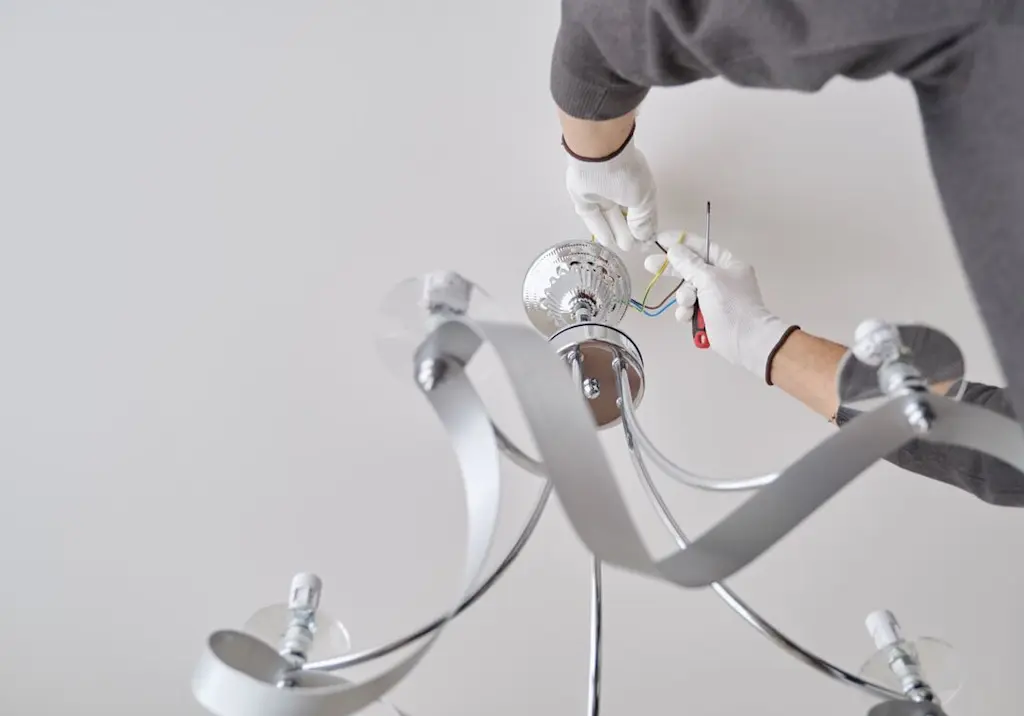
Connect the power wire to the ceiling's terminal box, threading it down through the chain, then connect it to the chandelier's terminal.
Secure all terminal covers, then turn the power back on at both the fuse box and the room switch.
This is a genuinely risky job. Working at height with a heavy fixture and live electrics is exactly the combination where things go wrong.
The best idea is to hire a qualified electrician for the best result and peace of mind.
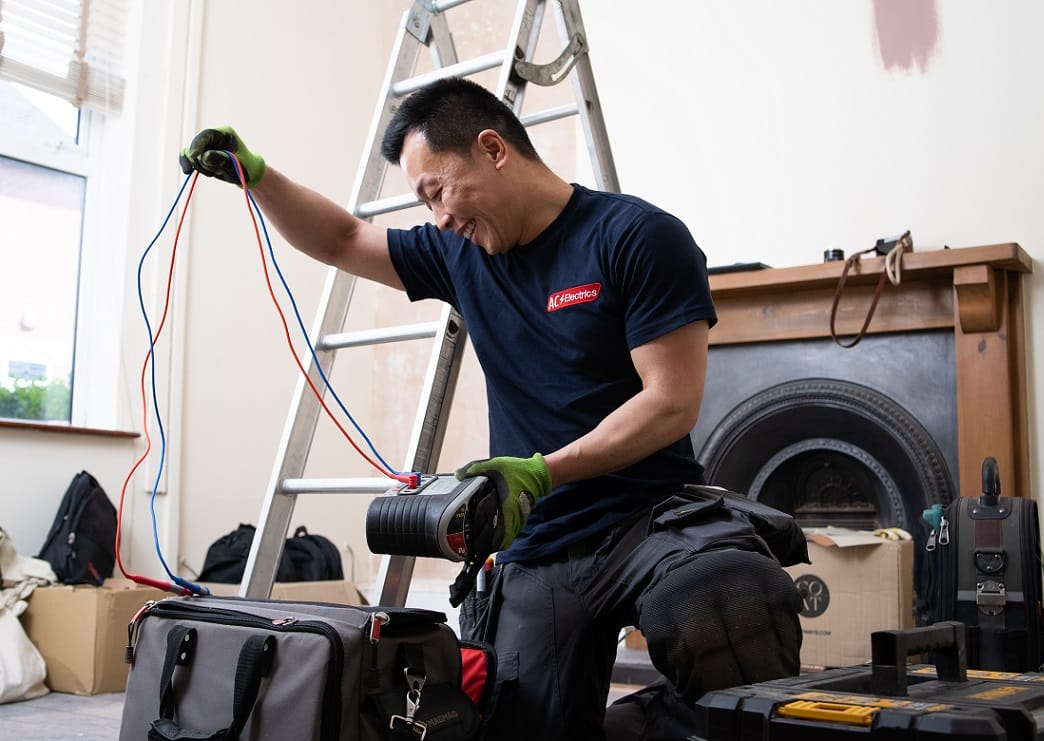
Find & hire local electricians near you
If you need electrical work done in your home, hiring a qualified electrician is essential for safety and peace of mind. Find local electricians near you with the help of Checkatrade.

How to hang a heavy chandelier
The process is the same, but the margin for error is smaller.
Confirm the ceiling box or joist is rated to support the fixture's full weight. Most standard ceiling boxes handle 50-75lb (roughly 23-34kg), so check your chandelier's weight against this before you start.
A second pair of hands is essential, and a raised platform can help support the fixture while you're connecting the wiring rather than relying on your arms alone.

How to hang a chandelier in a concrete ceiling
Concrete ceilings need a different fixing method, though the core process stays largely the same:
Turn off the power at the fuse box and the room switch.
Wearing safety goggles and a mask, drill pilot holes where the chandelier will hang.
Insert the wall anchors supplied with the fitting, tapping them flush with a rubber mallet.
Attach the mounting bracket to the anchors using retaining screws.
Test-hang the chandelier to the desired length and cut the chain accordingly.
Run and connect the power wires, then test.
An electrician is worth calling in for this type of installation.

How to hang a chandelier on a sloped ceiling
Sloped ceilings need a different anchor point since there's no flat surface to work from directly overhead.
If there's an existing beam: attach the chandelier directly to it, or suspend it from a chain or cable.
If there isn't: fit two perpendicular supports into the joists and attach a crossbar between them to create one.
Whichever method you use, make sure the fixture's weight is distributed evenly across the support.

Chandeliers are just one part of getting a room's lighting right. Our ceiling lighting and living room lighting buying guides cover the rest, or a lighting design specialist can plan the whole room.

Play it safe with chandeliers
Followed carefully, hanging a chandelier is a job that can be done safely at home. But between the electrics, the weight, and working at height, there's a lot that can go wrong.
It is therefore important to hire a professional for chandelier installation.

On Checkatrade, you'll only find trades who meet our high standards and pass up to 12 checks.
Keep this checklist handy so you don't miss a step:

Chandelier installation checklist
How much does it cost to hang a chandelier?
Costs vary depending on the chandelier's weight, your ceiling type, and whether new wiring is needed. For current UK prices, see our chandelier installation cost guide.

How much does it cost to hang a chandelier?
If you’re looking to add a wow factor to your ceiling lights, hanging a chandelier is one of the easiest ways to add that special touch. In this guide we look at the average cost to hang a chandelier in the UK.
FAQs
Hanging a heavy chandelier requires a strong anchor securely fastened to a wooden joist or a rated fixing in a concrete ceiling, along with a chain rated for the weight and an extra pair of hands to help lift and hold it in place. A raised platform can help support the fixture while you connect the wiring.
It's not a legal requirement for most homes, but given the combination of electrics, height and weight involved, hiring a qualified electrician is always recommended for the best and safest result.
You can, but not alone. A heavy chandelier can be dangerous if it isn't properly supported during and after installation, so following the steps above with a second person helping is essential.
Yes, rope, cord or cable can work as long as it's rated to support more than the fixture's weight. Always check the maximum weight capacity of whatever material you use before buying.
Aim for at least 7 feet from the floor in walkways so people don't bump their heads, or 30-36 inches above a dining table. The exact height also depends on your ceiling and what's underneath, so treat these as starting points rather than fixed rules.
Ceiling boxes are usually rated for lighter fittings than heavy chandeliers. If the box isn't rated to support your fixture's weight, you'll need to fit a separate brace or hook anchored directly to a joist rather than relying on the box alone.


See the tradespeople we've checked for your job