HOW-TO GUIDES
How to make your home more secure with outdoor security lights
Updated 08/26
By: Content Team
Reviewed: Kim Staples
Outdoor security lights act as a very simple and very effective deterrent to burglars. But only 1 in 4 homes in the UK have motion-triggered security lighting.
Which type of security light suits your home
Whether PIR, dusk-till-dawn, or smart lights are best
What IP rating and brightness actually mean
How much outdoor security light installation costs
When you legally need an electrician, and how to find one
How to stop lights annoying you or your neighbours
A well-placed light does two jobs at once: it makes intruders think twice, and it gives you the reassurance of seeing who's at your door after dark.
This guide walks through the different types of outdoor security light, what to look for before you buy, how much installation typically costs, and when the work needs to go to a qualified electrician rather than a DIY job.
How do outdoor security lights work?
Most outdoor security lights operate in one of three ways: manual switches, dusk-till-dawn photocell sensors, or PIR (Passive Infra-Red) motion sensors.
Manual switches are usually reserved for purely decorative lighting, such as LED downlights in soffits or lights that highlight trees and planting. They're not really "security" lighting in the traditional sense, since you have to remember to turn them on.
Dusk-till-dawn timers, which use a photocell to detect falling light levels, are a good option if you want a light that acts as a welcoming glow for visitors or a general deterrent all evening, such as on a porch or driveway.
PIR sensors, in contrast, only activate on movement, which makes them better suited to genuine security uses like side passages, gates and rear gardens.
Standard PIR security lights typically detect motion within a 120-degree range and up to 6-10 metres away. Premium versions can stretch to 180 degrees and 18-20 metres, while bollard-style lighting along paths can offer full 360-degree detection.
Most PIR lights also let you adjust sensitivity (so a cat or fox doesn't set it off every night) and how long the light stays on once triggered.
If your light keeps triggering on windy nights or when cars pass on the road, turn down the sensitivity dial slightly before assuming the unit is faulty. Most false triggers are a settings issue, not a hardware one.
Types of outdoor security lights
There are three broad styles of outdoor security light to choose between, and many homes end up using a mix.
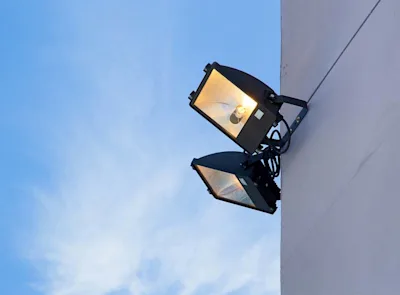
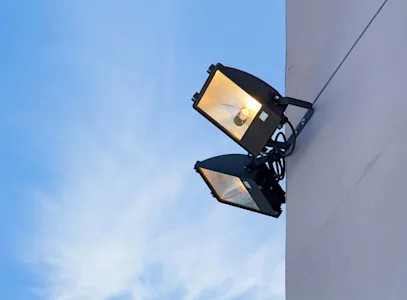
Floodlights: The flashlight-style fitting that most of us think of when we think about outdoor security lights, floodlights are renowned for being robust and emitting a glaring light once activated.
Bulkheads: These lights are quite industrial looking but very strong and resistant to both weather and vandalism. Emitting a more subtle light once triggered, they are often better used for general illumination rather than simply security.
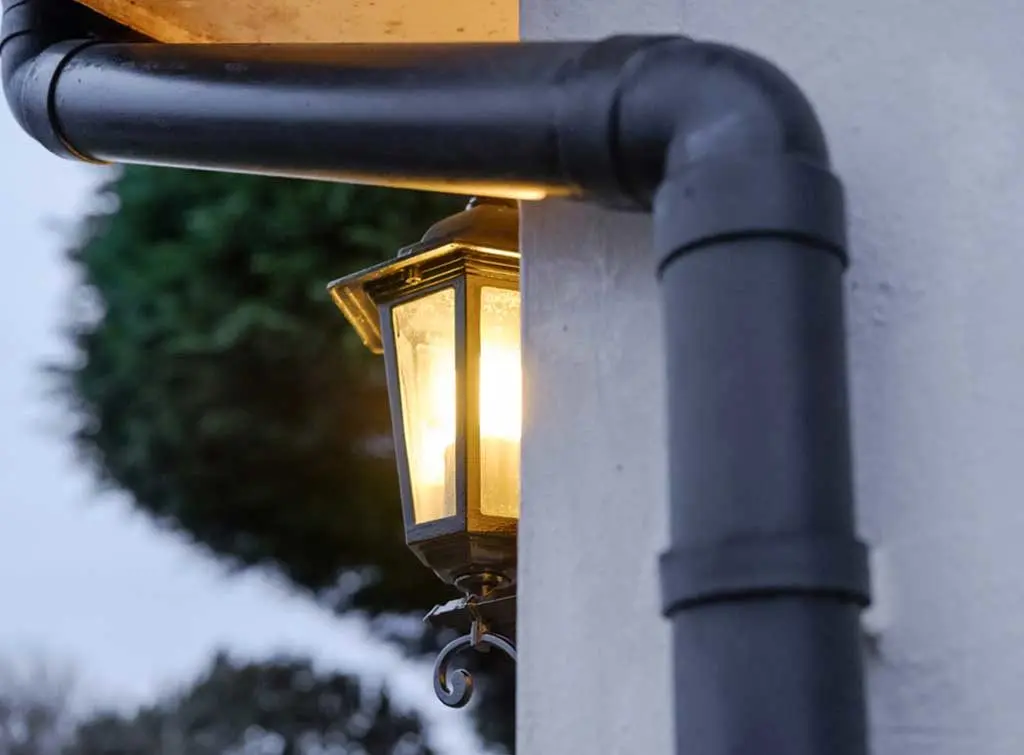
Sconce: Lights that have a lantern feel and are wall-mounted. They serve as the least alarming of the external security lights, but the most elegant and as such can combine decorative and security functions.
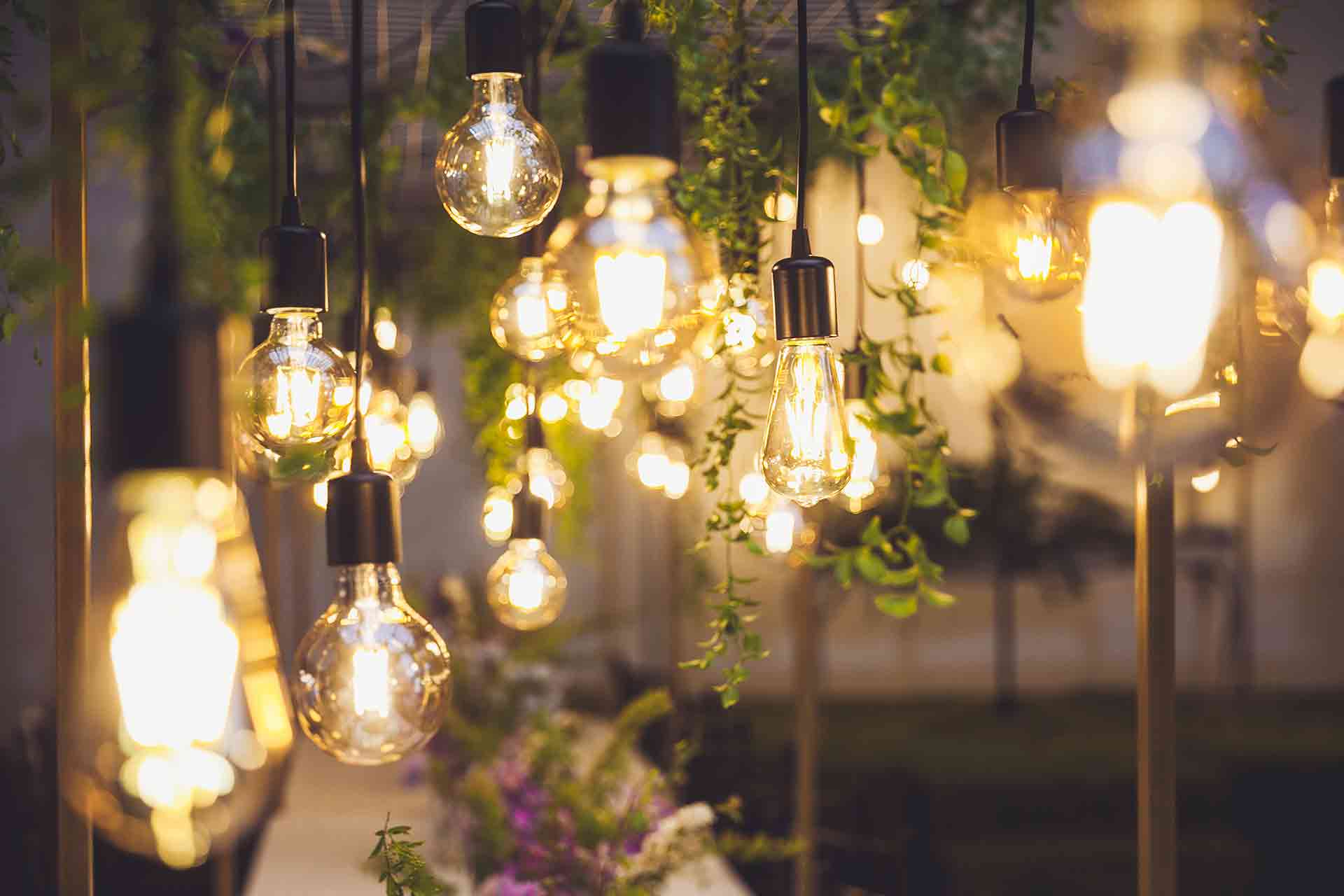
Outdoor lighting ideas to transform your garden
From festoon lights to motion-sensor security lights, discover 15 outdoor lighting ideas for ambience, style, and safety in your garden.
What to look for: IP rating and brightness
IP rating
A light’s IP rating shows how well the light is protected against water ingress (IP stands for Ingress Protection).
For outdoor lighting the higher, the better, with most experts agreeing that an IP rating of IP65 or more is the best way to ensure that your new wall light doesn’t get ruined by rain in a matter of months.
IP44 might be acceptable for a sheltered spot, but anywhere exposed to direct weather deserves the higher rating.
Bulb type
LED is the standard choice for outdoor bulbs these days, since they use far less energy than halogen bulbs and last considerably longer.
Brightness
For a typical outdoor security light, aim for somewhere around 700-1,300 lumens (roughly a 10-20W LED), which is bright enough to genuinely deter and illuminate without being an eyesore.
You'll want less than this for purely atmospheric or path lighting.
Find a local outdoor lighting installer
Where to install outdoor security lights
The most vulnerable elements of your property are the obvious places to install outdoor security lights.
So entrances to side gardens, above garages, next to darker alleys and, of course, to the rear of houses next to vulnerable patio doors are the best spots.
However, think too about where to install security lights with a dual purpose of either decoration or illumination.
A well-lit house generally looks less appealing to intruders, so consider attractive sconce outdoor lighting by front doors and driveways or on front elevation walls.
How much do outdoor security lights cost?
Installing a mains-powered outdoor security light connected to an existing circuit typically costs an average of £175. A simpler mains-powered wall light on an existing circuit averages around £125.
Where a job is small, such as adding one or two lights to a circuit that's already in place, many electricians will charge by the hour instead of a fixed project price. Typical electrician labour rates for this currently sit around £45–£60 per hour.
Costs rise if the job needs a brand new circuit, longer cable runs, difficult access, or an additional outdoor socket to power the light.
For the full breakdown, including garden lighting schemes and soffit lighting, see our exterior lights installation cost guide.
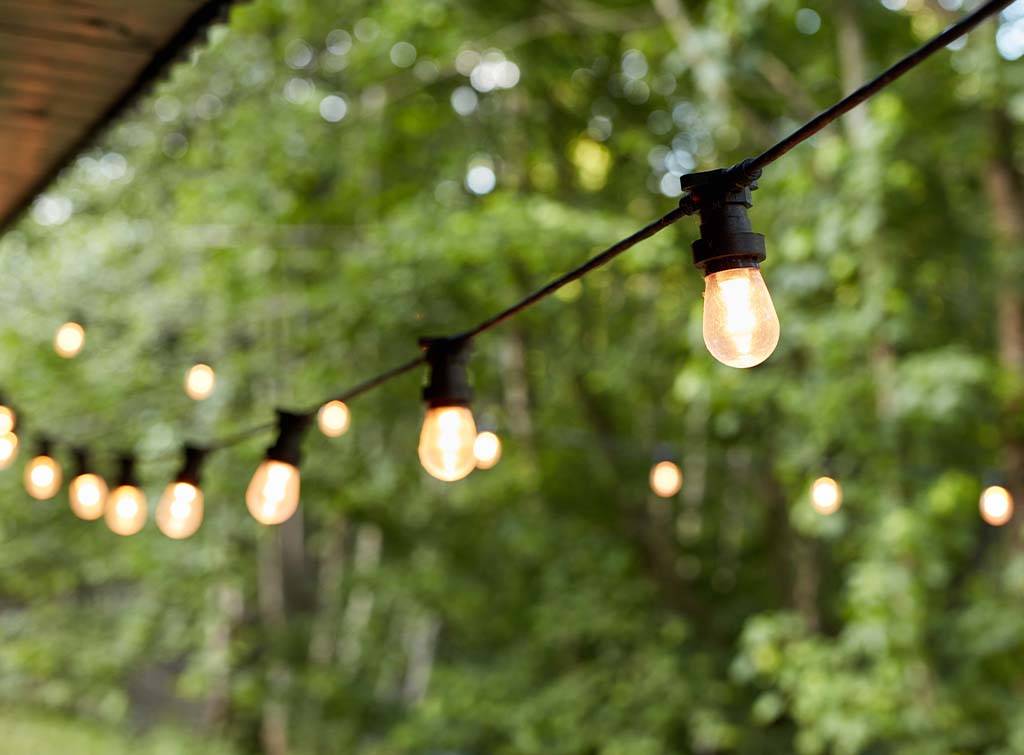
How much does it cost to install exterior lights? (2026 price guide)
Exterior lighting can improve how you enjoy your property, providing atmospheric light for enjoying evenings, or intense light that provides security and protection. The total cost to install lighting will depend on several factors, which we've covered in this cost guide.
Security light installation cost calculator
Every property is different, so the exact price you'll pay depends on the number of lights, cable run, and whether an existing circuit can be used.
Try Checkatrade's AI-assisted Job Estimate Calculator to get a tailored guide price for your specific outdoor security lighting project in a few quick steps.
Job Estimate Calculator

Do you need an electrician to install outdoor security lights?
Yes, you might do.
Almost all outdoor security lights that connect to your mains supply need proper wiring, and electrical work in and around the home falls under Part P of the Building Regulations. That requires sign-off from a qualified electrician.
That said, not every job is "notifiable." Swapping an existing outdoor light fitting for a new one, or adding a light to a circuit that's already there, usually doesn't need council sign-off.
Installing a brand new circuit, running new garden wiring, or wiring in a security floodlight from scratch generally does.
For a straightforward swap of a fitting on an existing circuit, some homeowners use a trusted handyperson for the non-electrical parts of the job, such as mounting brackets or making good the wall afterwards.
But any new wiring, circuit work or notifiable job should always go to a qualified electrician, who can test and certify the work properly.
Find a local outdoor lighting installer
Smart and connected security lighting
The world of outdoor security lighting has been transformed by the wireless revolution. Wireless, app-connected security lights have become increasingly popular alongside traditional wired options.
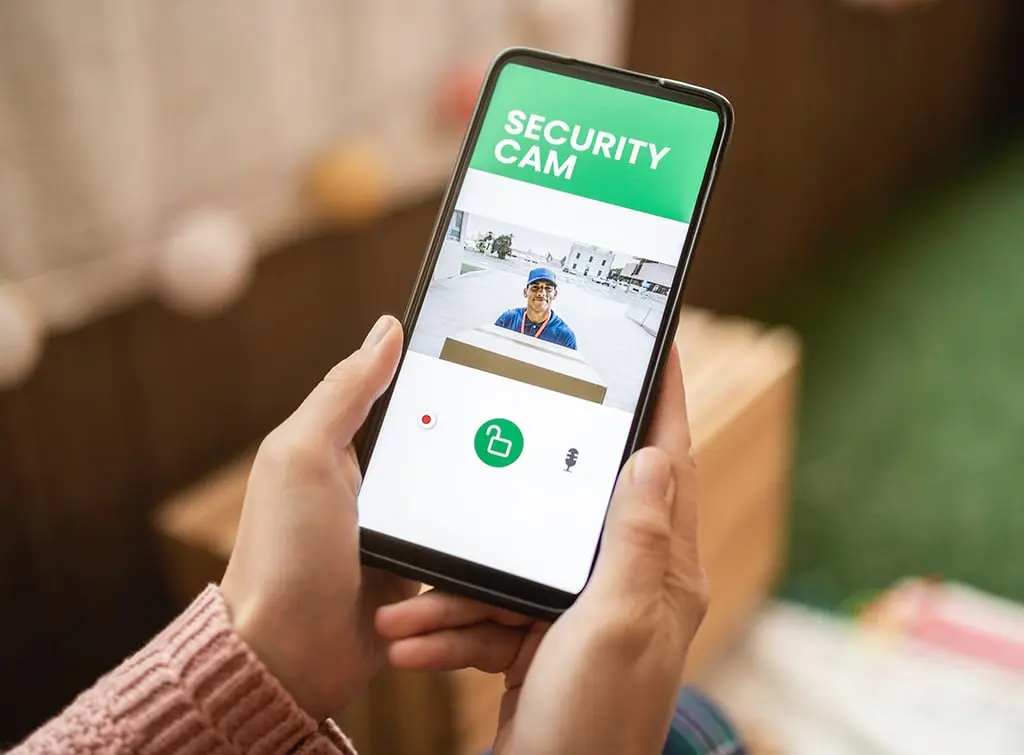
Many combine PIR motion detection with an integrated camera, two-way audio and an alarm. That means you get a light, a doorbell-style camera, and basic monitoring in one unit.
These smart units still usually need a mains or hardwired power source for full functionality, so the same wiring and Part P considerations apply as for a standard security light.
If you're building out a wider system rather than a single light, it's worth reading up on home security systems more broadly, including burglar alarms and CCTV installation, rather than treating lighting as a standalone fix.
Common problems with outdoor security lights
They keep triggering for no obvious reason. This is almost always a sensitivity or range setting rather than a fault. Wind-blown branches, passing cars, and even large insects near the sensor can set off a PIR light that's set too sensitive.
Neighbours complain about light spill. Light trespass onto a neighbour's property can cause a bit of friction. Angling the light downward, reducing the range, or fitting a shield or hood to direct the beam only where you need it usually resolves this without losing your security.
Running costs are a worry. LED security lights use very little electricity compared with older halogen floodlights, especially since they're only on when triggered or during darkness. Switching an old halogen floodlight for an LED equivalent is one of the cheapest security upgrades you can make.
The light doesn't reach far enough, or too far. This usually comes down to buying a standard-range PIR when a premium, longer-range unit was needed (or vice versa for a smaller garden). Check the stated detection range and angle before you buy.
Finding a tradesperson for your outdoor security lights
Once you know roughly what you want, the next step is getting quotes from a few different electricians so you can compare your options.
Get started by entering your postcode into our search tool. You'll see all the Checkatrade electricians who offer security light installation in your area.
Find a local outdoor lighting installer

When requesting quotes, it's worth including the type and number of lights you want, whether you're connecting to an existing circuit or need a new one, whether you'd like PIR sensors, timers or smart controls, and any access issues around your property.
The more detail you give upfront, the more accurate and comparable the quotes will be.

Preparing for your installation
Before your electrician arrives, it helps to have a few decisions already made.
Knowing roughly where you want lights, which trigger type you prefer, and whether you'd like extras like a new outdoor socket will make the visit quicker and the quote more accurate.
If you're planning a new outdoor socket alongside your lighting, our outdoor socket installation cost guide is a useful companion read.

Your outdoor lighting installation checklist
For anything connected to your mains supply, yes. A qualified electrician can wire the light safely, weatherproof the connections correctly, and confirm whether the job needs certifying under Part P of the Building Regulations.
Simple solar-powered lights that don't connect to the mains can usually be fitted yourself.
Probably, but it depends on the job. Replacing an existing light fitting or adding a light to a circuit that's already there is usually not notifiable.
Installing a brand new circuit or garden wiring generally is, and should be certified by a registered electrician or signed off by building control.
Aim for IP65 or higher for anywhere genuinely exposed to the weather. This is a good balance of protection and cost for most homes, and is the rating most installers recommend for outdoor security lighting specifically.
Not by much if they're LED. Because PIR lights only switch on when triggered, and dusk-till-dawn lights are only on during darkness, running costs are low compared with older halogen floodlights left on manually.
Yes, if the beam spills over into their garden or windows, which is sometimes called light trespass. Angling the light down, reducing the range, or adding a shield or hood usually solves this while keeping the security benefit for your own property.
A PIR (Passive Infra-Red) sensor reacts to movement and heat, so the light only comes on when something passes in front of it.
A dusk-till-dawn sensor uses a photocell to detect falling light levels and switches on at dusk, staying lit until morning regardless of movement.
No, most homeowners won't need planning permission for standard domestic security lighting. It's worth double-checking with your local authority if you live in a conservation area, have a listed building, or the light is particularly large or bright, since local rules can vary.
LED security lights generally last considerably longer than older halogen units, often several years of regular use, though the exact lifespan depends on the fitting quality and how often it's triggered. Keeping the sensor clean and checking seals annually helps them last.

Need more outdoor lighting advice? At Checkatrade, we're here to help. Whether it's garden lighting ideas or hiring specialist services like LED lighting installers, we’ve got you covered.
See the tradespeople we've checked for your job