HOW-TO GUIDES
How to remove limescale: a room-by-room guide
Updated 08/26
By: Laura Macdonald
Reviewed: Content Team
Limescale has a habit of creeping up on you. One minute your taps and shower screen look fine; the next, there's a chalky crust around the spout, cloudy marks on the glass and a kettle that sounds as though it's overdue a clean.
It's particularly common in hard water areas, and some surfaces seem to show every single water mark.
Thankfully, most everyday limescale can be tackled at home without too much trouble. The trick is choosing a cleaning method that won’t damage the surface underneath.
This guide explains how to remove limescale from taps, tiles, shower screens, showerheads, kettles and toilets, plus what to avoid and when a professional clean might be worthwhile.
What causes limescale
How to remove limescale around your home
Which household products can help
How to clean taps, tiles, showerheads, kettles and toilets
Which surfaces need gentler treatment
How to slow down limescale build-up
When professional cleaning might be worthwhile
Quick answer: What's the best way to remove limescale?
For many everyday surfaces, limescale can be softened and removed using a suitable descaling product or, where the surface allows it, a mild acidic cleaner such as diluted white vinegar.
As a general approach:
Check what the surface is made from
Choose a cleaner that's suitable for it
Give the product time to work
Gently loosen stubborn deposits
Rinse thoroughly with clean water
Dry the surface afterwards
Be particularly careful with natural stone and decorative or plated finishes. Vinegar might be handy to have in the cupboard, but that doesn't make it suitable for everything.
Before trying any homemade remedy, check the manufacturer's cleaning instructions. That quick check could save you permanently damaging an expensive tap, tile or worktop.
Find a recommended cleaner in your local area
What is limescale, and why do I have so much of it?
Limescale is the hard, chalky deposit you often find around taps, inside kettles, on shower screens and anywhere else hard water regularly sits or evaporates.
Hard water contains dissolved minerals, particularly calcium and magnesium. As the water evaporates or is heated, those minerals can be left behind as deposits.
That's why some households seem to be forever reaching for the descaler while others barely think about it. How quickly limescale appears depends largely on the hardness of your local water.
If you're constantly dealing with heavy limescale throughout your home, you could also speak to a plumber about whether a water softener would be suitable for your property.

How to remove limescale from bathroom tiles and grout
Tiles can quickly develop cloudy marks and deposits, particularly around showers and baths where they're repeatedly getting wet and drying again.
The right cleaning method depends on what your tiles are made from.
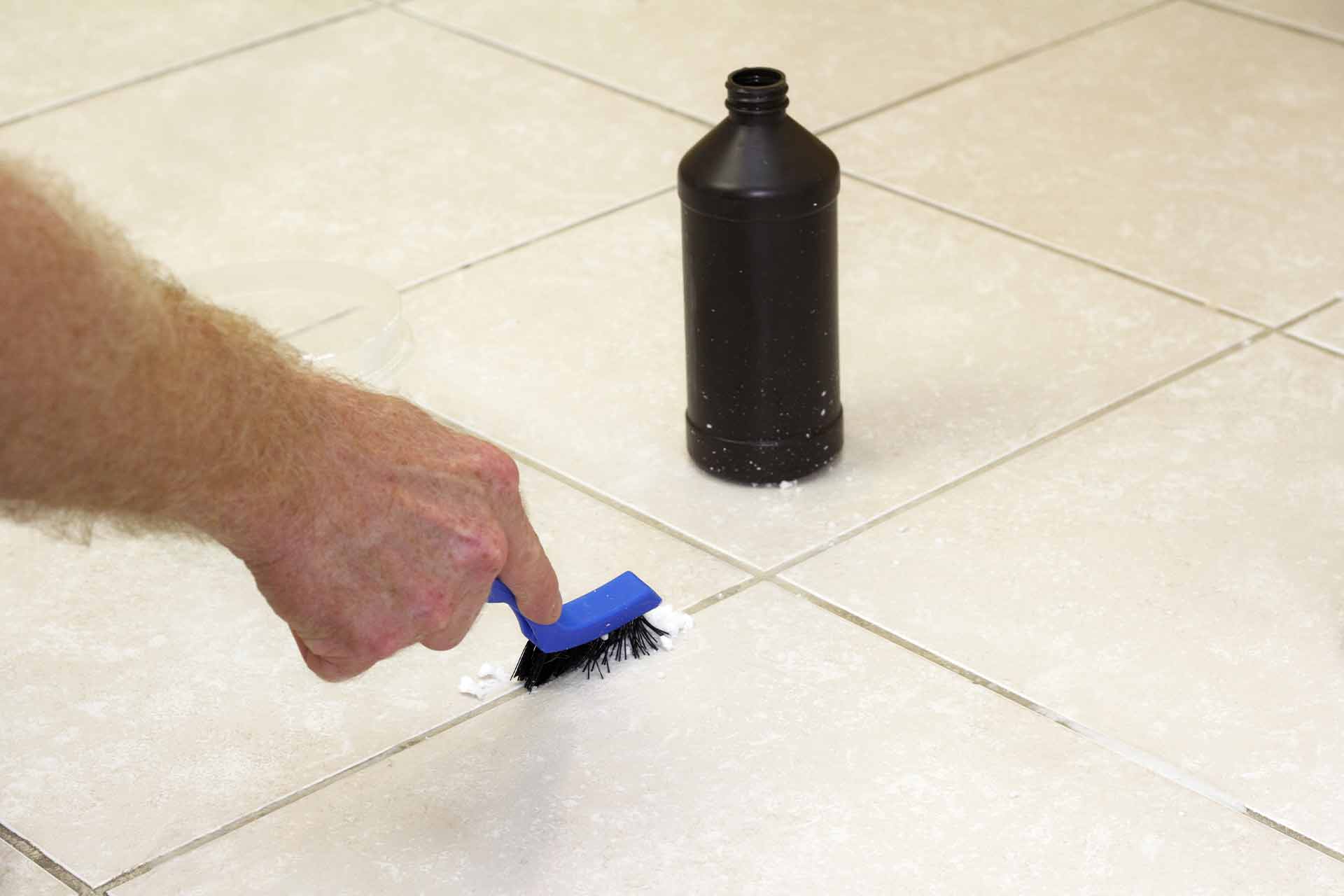
Cleaning grout
For everyday dirt and deposits, try a mild cleaner suitable for your grout and scrub gently with an old toothbrush or grout brush.
Rinse thoroughly afterwards and give the area time to dry.
If the grout remains stained or starts crumbling, cleaning may no longer be enough. Our guide to regrouting costs explains what you might pay to have it professionally renewed.

Cleaning ceramic tiles
For ceramic tiles, use a cleaner recommended for the surface.
Diluted white vinegar may be suitable for some ceramic tiles, but check the manufacturer's guidance first and keep acidic cleaners away from any sensitive grout or nearby surfaces.
Apply your chosen cleaner, give it time to soften the deposits, then wipe and rinse thoroughly.
Cleaning natural stone tiles
This is where you need to be much more careful.
Avoid vinegar, lemon juice and other acidic cleaners on acid-sensitive natural stone such as marble and limestone. They can etch the surface and leave dull patches that are usually much harder to deal with than the limescale you started with.
Instead, use a pH-neutral product specifically designed for your type of stone.
If you're not sure what your tiles are made from, don't experiment with the strongest cleaner you can find. Start gently or ask a professional cleaner for advice.
How to remove limescale from taps and fittings
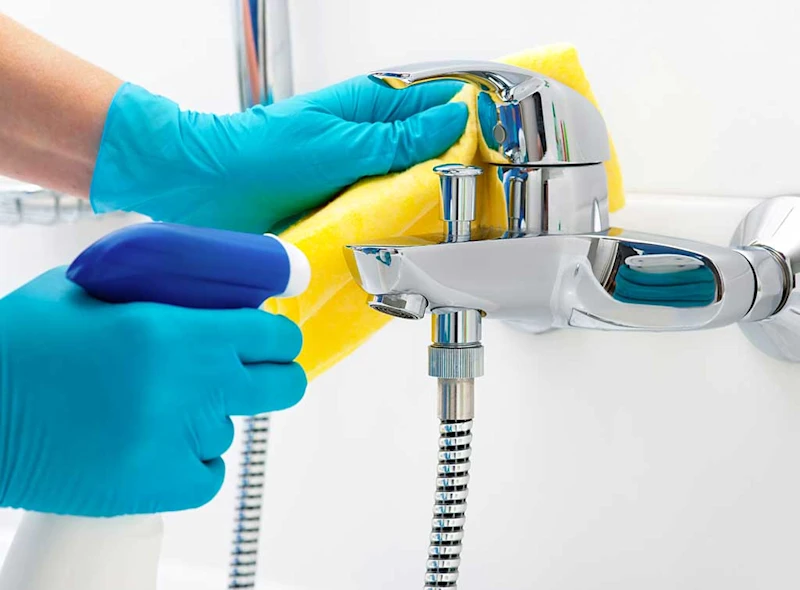
Taps are one of the first places you'll notice limescale, particularly around the spout and base where droplets are regularly left to dry.
For a standard finish that's suitable for mild acidic cleaning:
Soak a soft cloth in diluted white vinegar
Wrap it around the affected area
Leave it briefly to soften the deposits
Wipe gently rather than scraping
Rinse thoroughly with clean water
Buff dry with a soft cloth
For stubborn deposits, you may need to repeat the process rather than leaving an acidic cleaner sitting on the tap for hours.
Be much more cautious with brushed brass, gold, nickel, black and other decorative or plated finishes. Acidic cleaners can mark or damage some coatings, so follow the tap manufacturer's cleaning instructions rather than assuming vinegar is safe. And avoid abrasive scourers. Getting rid of the limescale isn't much of a win if you're left looking at scratched taps afterwards.

How to descale a kettle
If you live in a hard water area, you'll probably recognise the flaky white deposits that collect inside the kettle.
Before descaling, check the manufacturer's instructions for your particular appliance.
If vinegar is suitable:
Add a diluted white vinegar and water solution
Leave it to soak according to the manufacturer's guidance
Empty the kettle
Rinse it thoroughly several times
Refill with fresh water, boil and discard before using it again
Alternatively, use a purpose-made kettle descaler and follow the instructions on the packaging.
Don't automatically fill the kettle to its maximum line with descaling solution. You only need enough to cover the affected area, and your kettle manufacturer may specify its own method.
How to remove limescale from a showerhead
A showerhead covered in limescale doesn't just look grubby. Deposits around the nozzles can also affect the spray pattern and water flow.
If the showerhead is removable, check the manufacturer's instructions and soak it in a suitable descaling solution
For a fixed showerhead, you may be able to secure a bag containing the cleaning solution around the head so the affected area is submerged
Once the deposits have softened, gently work the flexible nozzles with your fingers or use a soft toothbrush where appropriate, then rinse thoroughly.
Avoid poking pins or needles into the jets. Apart from being fiddly, you could damage the nozzles or push deposits further inside.

How to clean a shower head and remove limescale
Is your shower head looking a bit worse for wear? It might not be time for a replacement just yet! Follow these steps to get your shower head looking sparkling and new.
How to remove limescale from shower glass
Shower screens have an annoying knack for looking spotless while they're wet and revealing every cloudy mark again once they've dried.
To tackle limescale:
Check the manufacturer's cleaning recommendations, particularly if the glass has a protective coating
Apply a suitable shower-glass or limescale cleaner
Allow it to work for the recommended time
Wipe gently with a soft, non-abrasive cloth
Rinse thoroughly
Dry the glass with a clean microfibre cloth or squeegee
You may need to repeat the treatment on older deposits rather than scrubbing harder.
Once you've got the glass clear again, a quick squeegee after showering makes a big difference. It only takes a few seconds and removes much of the water before those frustrating cloudy marks get a chance to form.

How to remove limescale from a toilet
Limescale below the waterline can be particularly stubborn because the deposits have often had plenty of time to build up.
Start with a toilet descaler that's suitable for the bowl and follow the manufacturer's instructions carefully.
For heavier deposits:
Lower the water level in the bowl if the product instructions recommend it
Apply the descaler directly to the affected area
Leave it for the recommended contact time
Scrub with a toilet brush
Repeat if necessary rather than reaching straight for an abrasive tool
Flush thoroughly afterwards
Be cautious with pumice stones and other abrasive methods. Although they're sometimes recommended for ceramic toilet bowls, they can scratch certain surfaces or finishes.
Never mix bleach with vinegar, toilet descaler or another acidic cleaning product. Mixing chlorine bleach with acids can release dangerous chlorine gas. Use one cleaning product at a time, follow its instructions and ventilate the room well.
How to stop limescale coming back
If you live in a hard water area, limescale will probably keep coming back. A few small habits can at least stop it becoming such a constant job. Try to:
Wipe taps and sinks dry after use
Squeegee shower glass after showering
Clean showerheads before deposits become heavily established
Descale your kettle as recommended by its manufacturer
Keep on top of light deposits rather than waiting for a thick crust to form
If heavy limescale affects appliances and plumbing throughout your home, you could also ask a plumber whether a water softener is appropriate.

Can you remove limescale yourself — and should you?
For everyday deposits on taps, tiles, shower screens and bathroom fittings, limescale removal is normally a perfectly manageable cleaning job.
DIY cleaning is usually suitable if:
The deposits are relatively light
You know what material you're cleaning
The surface is in good condition
You have an appropriate cleaning product
The area is easy to reach safely
Professional cleaning may be more appealing if:
Limescale has been building up for years
You have a large bathroom or several affected rooms
You're dealing with expensive natural stone
You aren't sure which products are safe for the surface
Previous cleaning attempts haven't shifted the deposits
You'd rather not lose half your weekend scrubbing taps and tiles
Sometimes limescale comes away surprisingly easily. Other times you clean one corner, look at the rest of the bathroom and realise you've barely made a dent.

Thinking about hiring a professional?
A domestic cleaner can take care of heavy limescale as part of a deeper bathroom or kitchen clean, using products and techniques suited to the different surfaces in your home.
That can be particularly reassuring if you have natural stone, decorative taps or older surfaces you're worried about damaging.
There's the convenience factor too. If you've inherited years of limescale build-up or simply have better things to do with your weekend, getting someone else to tackle the scrubbing can be money well spent.

Limescale removal checklist
Find checked and reviewed cleaners near you
If the limescale has gone beyond a quick wipe-down, or you'd simply rather have someone tackle the bathroom or kitchen for you, a local cleaner can help.
With Checkatrade, tradespeople are:
Checked - Every Checkatrade member must pass up to 12 checks and commit to upholding the Checkatrade Standard
Reviewed - Over 6.2 million reviews have been published on Checkatrade about real jobs, on everything from communication, tidiness, timekeeping, and quality of work
Guaranteed - Jobs booked through Checkatrade are covered up to £1,000 (T&Cs apply)
Whether you're dealing with stubborn limescale on shower glass, bathroom tiles that need some TLC or a kitchen that's ready for a deeper clean, search for checked and reviewed cleaners near you and get the job ticked off your list.
Start browsing to find domestic cleaners near you
Enter your postcode to find a top tradesperson near you
TOP SHINE LONDON CLEANING SERVICES LTD
10.00
(1 review)Services & skills
Cleaning ServicesDomestic CleaningHoliday Let Cleaning ServicesHard Floor CleaningEmergency Cleaning ServiceROC Services London
10.00
(2 reviews)Services & skills
Cleaning ServicesDomestic CleaningEnd of Tenancy / Move CleaningDeep Cleaning ServicesCleanerDeep Cleaning Services Ltd
10.00
(7 reviews)Suggested Services
Domestic CleaningPrice on requestServicetube Limited
10.00
(1 review)Services & skills
Cleaning ServicesDomestic CleaningSoft WashingAntiviral cleaning servicesDeep Cleaning ServicesServiceShift Ltd
10.00
(2 reviews)Suggested Services
Domestic CleaningPrice on request- R
Refresh Dynamic
10.00
(1 review)Services & skills
Cleaning ServicesDomestic CleaningCleanerCommercial CleaningEmergency Cleaning Service


FAQs
What dissolves limescale?
Acidic products can dissolve the calcium carbonate found in limescale. White vinegar may work on suitable surfaces, while purpose-made limescale removers are another option. Always check that your chosen product is safe for the material you're cleaning.
Does washing-up liquid remove limescale?
Washing-up liquid is useful for grease and everyday grime but won't usually remove established mineral deposits on its own. You'll normally need a suitable descaling product for stubborn limescale.
Can I use bleach to remove limescale?
Bleach isn't designed to dissolve limescale. More importantly, never mix bleach with vinegar or an acidic limescale remover, as this can release dangerous chlorine gas.
Can I use limescale remover on a boiler or radiator?
Don't add household vinegar or bathroom limescale remover to your central heating system. If you think scale or sludge is affecting your boiler or radiators, ask a heating engineer to diagnose the problem and recommend the appropriate treatment.
Is limescale harmful?
Limescale itself isn’t generally harmful, but heavy build-up can make surfaces harder to keep clean and may reduce the efficiency or lifespan of some appliances and fittings.
Why does my kettle get limescale so quickly?
If your kettle scales up quickly, you probably live in a hard water area. Heating hard water encourages mineral deposits to form inside the kettle, so regular descaling may be necessary.
Can you remove limescale from natural stone?
Yes, but you need to choose the cleaner carefully. Avoid vinegar, lemon juice and other acidic products on acid-sensitive stone such as marble and limestone. Use a cleaner specifically designed for the particular stone instead.
How can I prevent limescale on shower glass?
Use a squeegee after showering to remove water before it dries on the glass. Regular light cleaning is also much easier than waiting until cloudy mineral deposits have built up.

See the tradespeople we've checked for your job