EXPERT ADVICE
Everything you need to know about consumer units
Updated 07/26
By: Emma Potter
Reviewed: Content Team
Your consumer unit (fuse box) is arguably the most important piece of electrical equipment in your home. It distributes power to every circuit, and its job is to protect you from electric shock and fire, not just keep the lights on.
What's actually inside a consumer unit
The main types available and how they differ
What's changed recently in fire safety regulations
Warning signs something's wrong
Whether you can replace one yourself
How to find the right electrician for the job
Find an electrician near you
What is a consumer unit?
The consumer unit distributes power to every electrical circuit in your home and protects against electric shock. Knowing exactly where yours is could matter in an emergency.
What is inside a consumer unit?
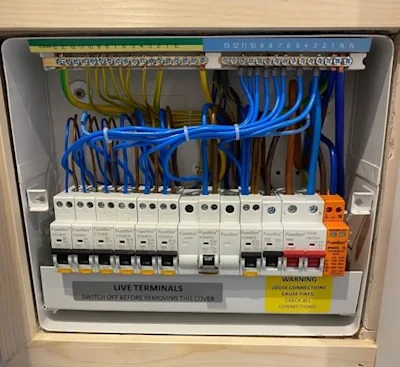
Enclosure: the housing for everything inside. Since the 18th Edition wiring regulations, new installations must use a non-combustible enclosure, typically steel.
Earth bar: the common connection point for all circuits' earth cables and bonding connections.
Neutral bars: the common connection point for neutral cables from earth leakage protection devices (RCBOs).
DIN rail: the metal bar circuit protection devices clip onto; it carries no current itself.
Busbar: a copper strip that locks circuit breakers and the main switch securely in place.
Main switch: controls the whole electrical supply, letting you isolate all circuits at once.
MCBs (Miniature Circuit Breakers): protect individual circuits from overload, in a range of ratings depending on the circuit.
RCD (Residual Current Device): protects against electric shock by detecting a mismatch between incoming and outgoing current ("earth leakage") and cutting power to the circuits it protects.
RCBO (Residual Current Breaker with Overload): combines RCD and MCB protection in one device, giving each circuit individual protection. RCBOs are now the more common choice, since a fault on one circuit doesn't affect the others.
Blanks: plastic filler pieces that keep space available for future circuits without reconfiguring the whole board.
SPD (Surge Protection Device): required under 18th Edition regulations, protecting against surges from lightning strikes or the wider electrical network.
AFDD (Arc Fault Detection Device): detects dangerous electrical arcing, a leading cause of UK house fires, often from damaged cables, rodent damage, or poor connections.

A recent update on AFDDs
Since September 2022, arc fault detection devices have been a mandatory requirement (not just a future possibility) for socket-outlet circuits in higher-risk residential buildings, houses in multiple occupation, purpose-built student accommodation, and care homes. For standard domestic homes, AFDDs are currently recommended rather than mandatory, though many electricians now fit them as standard practice given the fire-safety benefit.

Consumer unit fires are one of the most common electrical faults UK homes face. Our guide to common electrical faults in UK homes covers the wider picture, including the fire-safety upgrade many older homes still need.
What type of consumer unit do I need?
Main switch consumer unit
The most common type installed today, and generally recommended for full 18th Edition compliance. Populated with RCBOs, giving individual protection to each circuit.
Dual RCD consumer unit
Comes with a main switch and two RCDs. Careful circuit design matters here: avoid putting all lighting circuits on one RCD, since a single fault would plunge the whole bank into darkness.
RCD incomer consumer unit
Common in garages and sheds, without a main switch; isolated instead via a single RCD.
High integrity consumer unit
Built with three neutral bars, giving more flexibility: two banks of MCBs plus a full bank of RCBOs for mission-critical circuits like a fridge, freezer, or fish tank, where you don't want nuisance tripping to cut power unexpectedly.

On Checkatrade, you'll only find trades who meet our high standards and pass up to 12 checks.
How consumer unit styles vary
Standard metal consumer unit: the most common type today, with a hinged front lid, sized by the number of circuits (ways) needed.
Duplex consumer unit: two boards stacked together, increasingly common as circuit separation via RCBOs has become standard practice.
Flush consumer unit: a slimmer, seamless design that sits neatly into modern homes, functionally identical to a standard unit.
Garage consumer unit: typically under four ways, for outbuildings, sheds, and garages needing just a couple of circuits.
EV consumer unit: a standalone board for electric vehicle charging, commonly supplied with a 100A main switch, Type 2 surge protection, and RCBOs throughout.
Warning signs to watch for
A plastic consumer unit with cracks, or a burning smell or crackling sound (a possible sign of arcing): call a qualified electrician immediately.
Continuous tripping: points to a fault on one or more circuits, and needs prompt investigation.
Ten years since your last periodic inspection: an Electrical Installation Condition Report (EICR) is recommended at this interval for homeowners.
Exposed cables inside the unit: worth an occasional visual check when you open the lid, without touching anything.
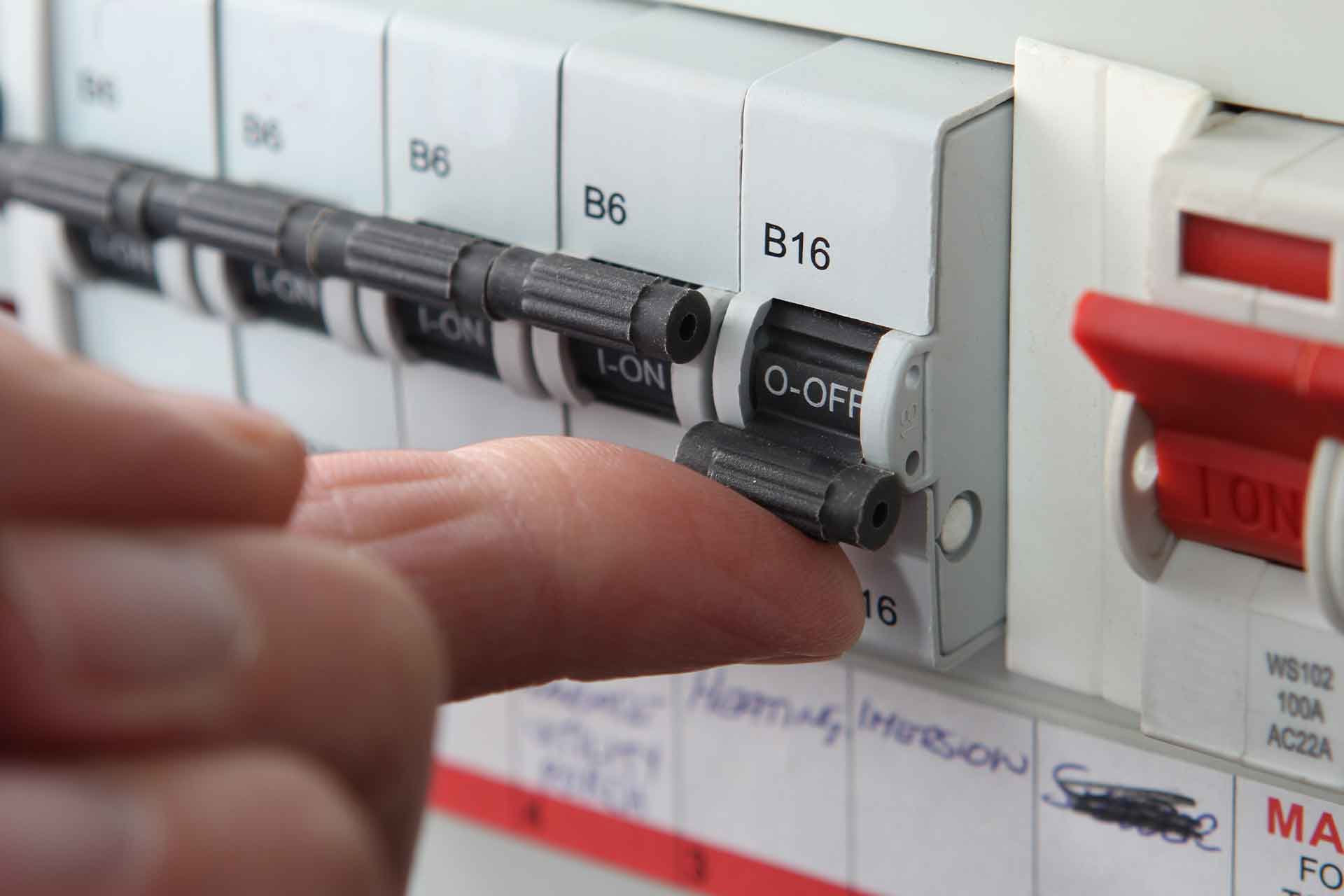
How much does consumer unit replacement cost in 2026?
Consumer units are the modern and safer version of fuse boxes. Here’s how much consumer unit replacement costs in the UK.
Can I replace my consumer unit myself?
No, unless you're a fully qualified electrician. This is a legal requirement under Part P of the Building Regulations, and beyond the legality, getting it wrong risks injury to you and genuine danger to your home and family.

Before you book an electrician
Find an electrician in your area
Find an electrician near you
FAQs
An RCD protects a group of circuits against earth leakage (electric shock risk) but not overload. An RCBO combines this with overload protection for a single circuit, so a fault on one circuit doesn't affect others on the board.
New and replacement consumer units in UK homes must be made from non-combustible material (typically metal) under current wiring regulations. Existing plastic units aren't automatically illegal, but it's worth asking an electrician for their view, especially if yours is old or in a high-risk location like under a staircase.
Only mandatory in higher-risk residential buildings, HMOs, student accommodation, and care homes. They're recommended, not required, for standard domestic homes, though increasingly fitted as good practice.
Every 10 years for homeowners is the general recommendation, or every 5 years (or at a change of tenancy) for landlords, via an EICR.
No. Any work involving the consumer unit or fixed wiring should be carried out by a qualified, registered electrician, in compliance with Part P.
Related guides
Find an electrician near you
See the tradespeople we've checked for your job