EXPERT ADVICE
Buying an oven and hob: Everything you need to know
Updated 07/26
By: Laura Macdonald
Reviewed: Content Team
Buying an oven and hob involves more than picking whatever looks good in the showroom. Fuel type, size, and what's already available at the installation point all narrow your options before style even comes into it.
The oven types available and how they differ
The connection requirements each type needs
The features actually worth paying for
How gas, ceramic, and induction hobs compare
Roughly what to budget for buying and installing
Who's qualified to install each type
Find an oven installer near you
Types of oven
Beyond gas or electric, ovens also come in built-in, built-under, single, and double varieties.
Gas ovens
Popular with keen bakers for their moist cooking environment and precise temperature control.
Drawbacks: heat can be less even than electric, meaning food sometimes needs rotating, and they're trickier to clean.
Need to know:
Need a live gas supply within 1.5m of the appliance location
Models with ignition systems and timers need a 13 amp electrical supply
By law, only a registered Gas Safe engineer can install a gas oven
Electric ovens
One of the most popular types, especially with landlords, offering consistent, even heat that suits larger meals. Pyrolytic or steam-cleaning models are notably easy to keep clean.
Drawbacks: can take longer to preheat and typically use more energy, so may cost more to run than gas.
Need to know:
Need a suitable electrical connection within 1.5m of the appliance location
Models over 3kW need a 32amp outlet
Models under 2.99kW are fine on a 13amp outlet
Always use a qualified electrician for installation

Built-in single ovens
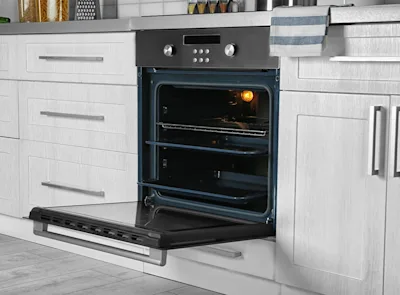
Ideal for compact kitchens or lighter cooking needs. One cavity serves as both oven and grill, fitted beneath a hob or at eye level. Typical dimensions: 60cm (W) x 60cm (H).
Built-in double ovens
Suited to keen cooks and larger households, with two separate cavities positioned at eye level for cooking multiple dishes at different temperatures. Typical dimensions: 60cm (W) x 90cm (H).
Built-under double ovens
Offers the same multi-dish flexibility with a main oven and grill fitted underneath a hob or worktop, though the cavity is slightly smaller than a built-in equivalent. Typical dimensions: 60cm (W) x 60cm (H).

If this purchase is part of a bigger project rather than a straight swap, our kitchen renovation planning guide covers sequencing appliances alongside the rest of the work.
Features to consider when buying an oven
Energy efficiency: rated A-G, with A the most efficient.
Self-cleaning options: steam cleaning softens dirt for wiping away; pyrolytic cleaning burns residue off at high temperatures.
Convection cooking: distributes heat evenly, ideal for roasting and baking.
Steam cooking: keeps food moist inside and crisp outside, particularly good for bread and pastries.
Size: built-in double ovens typically have more capacity than built-under models, so measure up against your actual needs.
Space: check height, width, and depth of the available space. A gas hob needs 75cm of clearance above it; an electric hob needs 65cm.
Slide-away doors: useful if kitchen space is tight.
Food sensors: measure the core temperature of your dish during cooking for more consistent results.
Smart controls: remote pre-heating, recipe suggestions, and temperature monitoring for busier households.
What to look for in a hob
The main hob types are gas, ceramic, and induction.
Gas hobs
Instant heat with a visible flame gives immediate, precise control, useful for delicate techniques like simmering or searing. Durable, with generally affordable repairs, and compatible with almost any cookware.
Drawbacks: harder to clean and less energy-efficient than induction. Choose a model with a flame failure safety device, which cuts the gas supply if the flame goes out.
Ceramic and induction hobs
The main difference is price. Induction hobs cost more and need induction-compatible cookware, but heat pots and pans directly, making them the most energy-efficient option, and they're safe to touch since the surface itself doesn't heat up. Ceramic hobs are more affordable, work with any cookware, and share a similarly sleek look, but take longer to heat and cool, and the surface stays hot after use, posing a burn risk if touched too soon.
If speed, energy efficiency, precision, and safety matter most, induction is the strongest choice.

Need reassurance? All tradespeople pass up to 12 checks before joining, and we keep checking after.
What are the best oven brands?
Popular brands include Bosch, Neff, Hotpoint, AEG, Smeg, Indesit, Beko, Candy, and Cookology, spanning a range of price points and feature sets. Compare specific models against the features above rather than brand name alone, since ranges within the same brand vary considerably.
How much does it cost to buy and install an oven?
Cost varies by brand and specification. Our oven installation cost guide covers current pricing for both the appliance and installation, including the difference between a like-for-like swap and replacing a built-in unit, plus additional costs like cooker hood installation, old appliance disposal, and any cable or switch upgrade your new oven's power demands might need.
Find an electric cooker installer near me
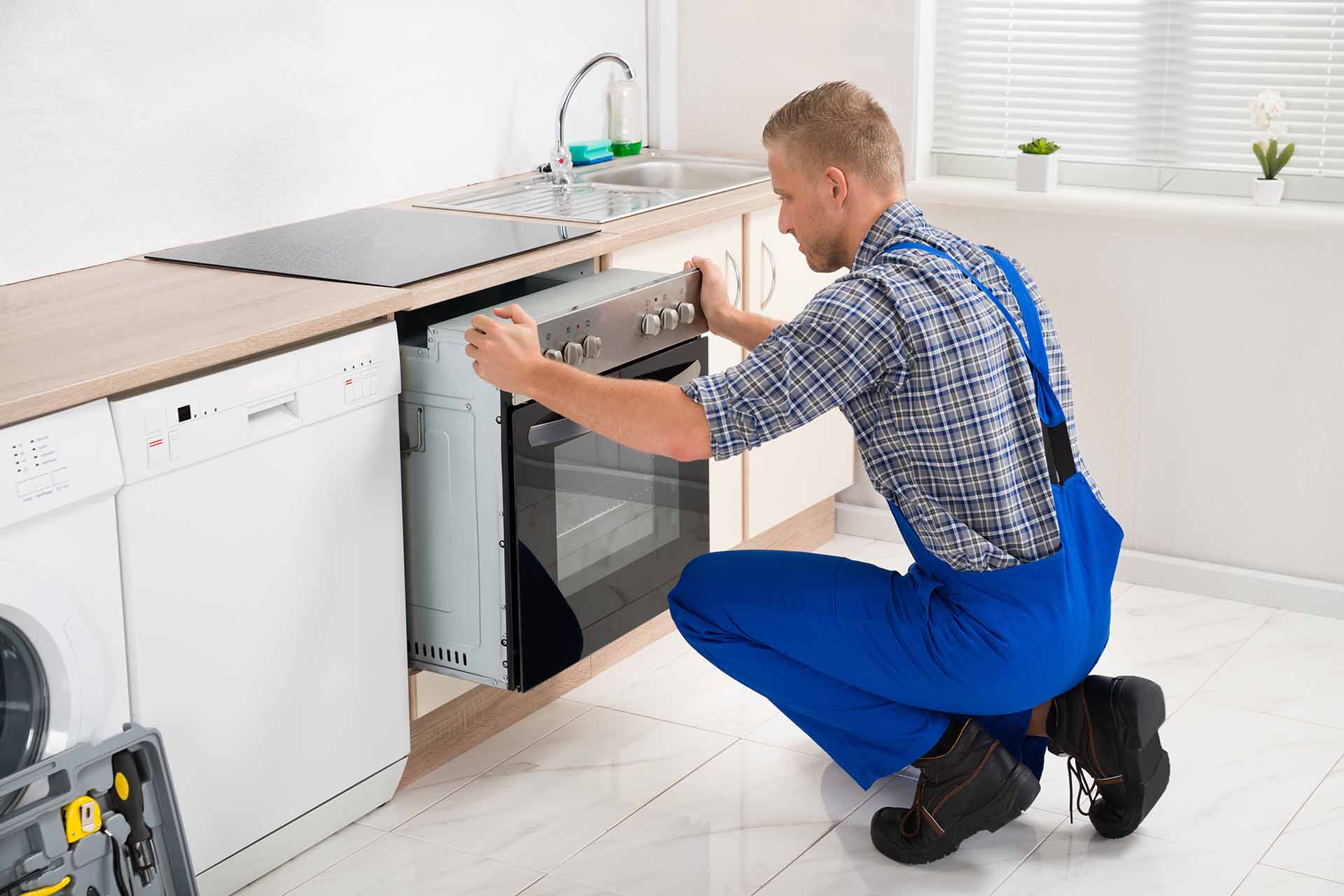
Renovating your kitchen or ready to upgrade your cooker? For everyone's safety and your oven's efficiency, look for a qualified electric cooker installer near you.

Before you buy
Key takeaways
Compare cost, energy efficiency, and capacity alongside features like self-cleaning, slide-away doors, and smart controls
Installation cost depends on whether it's a like-for-like swap or a built-in unit replacement
A gas oven must be fitted by a registered Gas Safe engineer; an electric oven by a qualified electrician
FAQs
This depends on your cooking habits, kitchen space and layout, and which features matter to you. Think about size (capacity), self-cleaning or smart controls, and whether a single or double oven suits your household.
Fuel type (gas or electric), size, capacity, energy rating, and additional features. Build a shortlist against your budget, and factor in installation costs from the start.
Start with your home's fuel supply. If you cook for larger households or often have multiple dishes on the go, a double oven is worth the extra space. Then weigh up which extra features genuinely suit how you cook.
Gas gives immediate, precise flame control. Induction is the most energy-efficient and quickest to heat and cool, but needs compatible cookware. Ceramic sits in between on price and performance.
Induction hobs, since they heat cookware directly rather than heating the hob surface first.
Related guides
Find an oven installer near you
See the tradespeople we've checked for your job