Blog>Expert Advice>Buying guide: Helping you to choose your uPVC doors
Last updated: 23 September 2024

Buying guide: Helping you to choose your uPVC doors
A new front door is a great way to instantly upgrade your home's exterior - and you won't go far wrong choosing to buy a uPVC door. Here, we cover everything you need to know about uPVC doors including the pros and cons, costs and benefits.
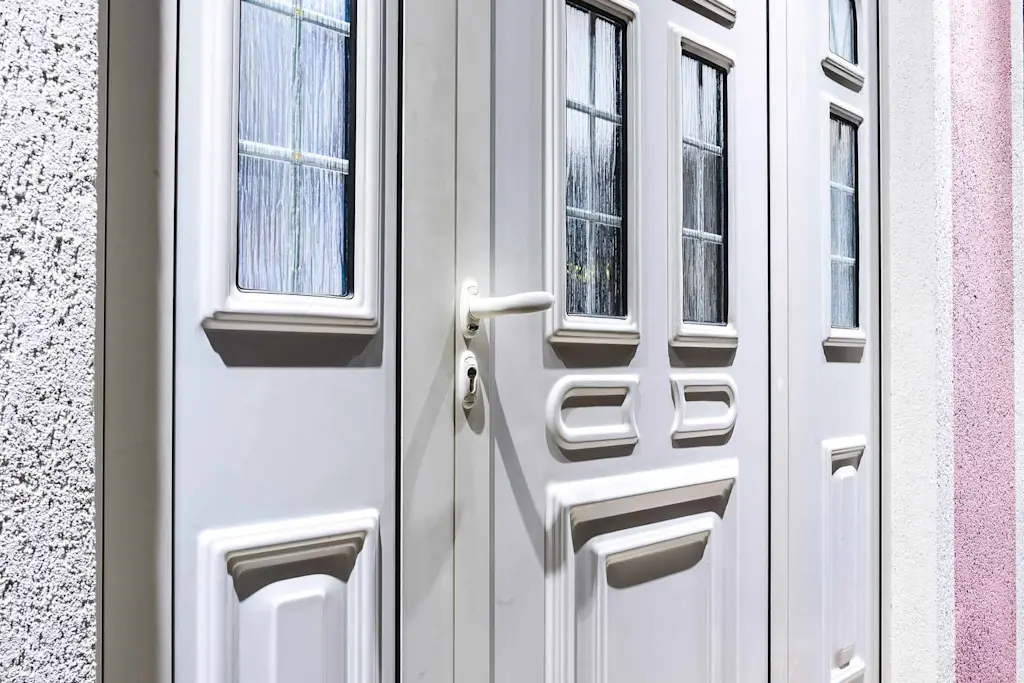
Buying a new front door is a big decision. What should you look for and what type of door is best? If you're considering uPVC, we're here to help you weigh up all the key considerations before you buy a uPVC door for your home.
We've gathered all the info you need, including uPVC door brands, features, costs, and comparisons, so you can confidently make the right choice for your property.
What are uPVC doors?
UPVC (Unplasticised Polyvinyl Chloride) is a strong, lightweight, low-maintenance plastic building material often used for windows and doors.
UPVC doors are made by encasing an insulated steel frame in uPVC to create a durable, thermally efficient sealed unit that's resistant to UV rays.
Why buy a uPVC door?
UPVC doors have stayed a popular choice with UK homeowners since their introduction in the 1980s, being affordable, durable, and easy to take care of.
However, with so many types of doors available it can be hard to decide on the best option for your home.
Some of the top reasons for choosing a uPVC front door include:
Price: uPVC doors are generally more affordable than composite or wooden doors, making them a great option for smaller budgets
Low-maintenance: Compared with wooden doors, which need to be repainted or restained, uPVC doors are very low maintenance - although they can discolour over time
Durable: uPVC doors are moisture-resistant - they won't warp, crack or swell
Energy efficient: Modern uPVC doors have an insulating, multi-chamber interior, which helps to keep your home warm, and provides energy savings too
Secure: uPVC doors are sturdy and many come with multi-point locking systems, for a high level of security
Aesthetics: uPVC front doors are available in a range of colours, styles, and designs, including woodgrain effect
Customisation: It's even possible to customise a uPVC door with your choice of door furniture and decorative glass to match your home's style
Lifespan: A good quality uPVC door that's professionally installed and well-maintained can last up to 35 years
How to choose a uPVC door
Buying a front door is an investment - not just financially. A well-installed, quality product can last for decades - it could be part of your home's exterior for many years to come.
With this in mind, making the right choice of uPVC door is crucial. Here's what to look for when buying uPVC doors...
Quality and security
When buying a front door, security should be a top priority.
Modern uPVC doors are made with reinforced steel frames and panels. The hinges and locks are welded to the steel reinforcement, offering improved security.
Look for a solid uPVC door between 2.3 to 3 mm wide. A sturdy, solid door will be more resistant to chipping and splitting and will help to reduce outside noise.
Many uPVC doors have multi-point locking systems to keep your home extra secure.
Energy efficiency
One of the key things to check before buying a new front door is its U value. This measures its thermal efficiency.
The lower the U value, the better the door will insulate your home, i.e. keep it warm by reducing heat loss.
All replacement doors in the UK must have a U value of 1.4W/m²K or less. However, you can opt for even better insulation if energy efficiency is your top priority.
Style and design
When it comes to the style and design of the uPVC door you choose, there are several options.
Flush doors, glazed doors, stable doors, and panel doors are all popular choices with UK homeowners.
Flush or panel doors offer the most privacy, but glazed doors have the benefit of letting in more natural light - brightening your home's entryway.
Many homeowners add decorative glass panels to their uPVC door design. In this way, they can emulate the traditional doors on a Victorian or Edwardian property.
Meanwhile, the stable door design works well on more rural properties and cottages.
Then there's the colour and finish to consider. UPVC doors come in classic white or woodgrain effect. You can even opt for two colour doors with white on the inside to suit your home's interior decor and timber effect from the outside.
Threshold options
If you're upgrading your front door for accessibility reasons - for example, mobility issues - a low threshold uPVC door is a good option.
Low threshold uPVC doors make for easier access for the disabled or elderly with a smoother transition between indoors and outdoors, reducing the risk of trips and falls.
Cost and installation
As a general rule, uPVC doors are one of the most cost-effective options compared with composite, wood, or aluminium doors. Prices typically range from £825 - £1,200 per door (for basic spec, no glazing).
However, this can vary depending on the quality of the product, its design, security features, and energy efficiency.
Don't forget to budget for the cost of door installationtoo. This normally sits between £400–£1,000 (including glazing and architraves).
Find a local tradesperson
What to look for when buying uPVC doors
Some of the key things to look for when buying uPVC doors include:
Whether the company is a member of the Windows, Doors & Conservatories Group – for assurance they adhere to high standards
FENSA registration – to ensure the glazing in your door is energy-efficient and meets building regulations. This applies to all external doors installed after April 2002 that have a glazed area greater than 50%
It's always best to get a selection of quotes from uPVC door suppliers (and installers, if this is separate) to ensure you receive a fair and competitive price. Compare quotes side-by-side to ensure any extra features you've requested are included.
Always check out customer reviews, and ask to see previous examples of an installer's work.
Using a professional directory, such as Checkatrade, you can easily compare several uPVC door specialists that we've checked and approved in one handy place.

On Checkatrade, you'll only find trades who meet our high standards and pass up to 12 checks.
Which brand is best for uPVC doors?
Many homeowners choose to buy their uPVC doors from local companies, but there are several national brands too, including:
Each brand has its strengths, so it's worth comparing their products against your specific needs.
Design and style, budget, and security are some of the key comparisons homeowners make when buying uPVC doors.
Do your research to narrow down your selection based on your needs and contact a local uPVC door installer for expert advice.

How much are uPVC doors?
UPVC doors range in price from around £825 - £1,200 per door (for basic spec, no glazing). The price you are quoted will depend on the quality of the door you choose, the design choices you make, e.g. whether you opt for decorative glass; the security features, and energy efficiency of the door.
If you're looking at how much a uPVC door costs in the UK, you'll also need to budget for the cost of installing your new front door. This typically sits around £400–£1,000 (including glazing and architraves).
Contact an approved uPVC door installer for an accurate quote for your front door upgrade.
How much does a uPVC back door cost (UK)?
The cost of a new uPVC back door depends on the style you're after. As a guide, here are some average costs for a selection of popular options:
£1,000for a uPVC French patio door
£2,400 for a uPVC bifolding door
£1,875 for a uPVC sliding patio door
Find a local tradesperson
Key takeaways
UPVC doors are cost-effective, durable, low maintenance, secure, and energy-efficient
They come in a variety of styles and designs and can be further customised with door furniture and decorative glass to suit your needs and property style
UPVC doors range in price from around £825 - £1,200 per door (for basic spec, no glazing)
The cost of installing a new front door is normally around £400–£1,000 (including glazing and architraves)
Find a uPVC doors specialist in your area
For more expert advice on uPVC doors and to help choose the best option for your home, contact a local specialist today.
Search your postcode now to see who comes highly rated in your area.
Find a local tradesperson
FAQs
Are wooden doors cheaper than uPVC?
If cost is a key driver, uPVC is the more affordable option than high-quality wooden doors, with solid wood being more expensive than an engineered wood door.
Are composite doors better than uPVC?
If you're comparing composite doors with uPVC, you'll notice a few key differences. The first is the price, but why are composite doors more expensive than uPVC?
A composite door is made from layers of materials fused together in a high-pressure machine to make a door that's more durable, solid, and robust than other types of doors.
This makes them more secure and creates a much more energy-efficient door than uPVC, with most composite doors having an A or A+ energy rating, so it could save you more money on your heating bill.
Composite doors also have a more authentic 'wood-like' appearance, while uPVC can have a slightly plasticky finish.
But while composite doors have a long lifespan (35+ years) and can be styled in a variety of colours and designs, some homeowners report hearing creaking and cracking noises during periods of direct sun. This is due to the layers of different materials expanding in the heat.
Both uPVC and composite make great choices for a new front door, but - if your budget allows and it meets your needs - composite could be considered the better option based on the reasons we've outlined above.
What type of front door is best in the UK?
This depends on your needs. On a more modest budget, uPVC makes a great choice of front door. Composite is more expensive, but is generally more solid, durable, and energy efficient. Aluminium is a stylish option that is well-suited to a contemporary property, while wooden doors support the characterful nature of traditional homes.
See the tradespeople we've checked for your job