Blog>Trade>Starting a Business>How to take card payments for small business
Last updated: 6 February 2025
How to take card payments for small business
A small business card reader can transform your trade business. This article looks at how to take card payments and how using a card reader can help boost profits and save on hassle.

We’re a nation that loves plastic for paying bills. Over the past few years, the availability of contactless card payments has continued to grow. It's transforming how people pay for goods and services.
The numbers are impressive
2023 was a record year for contactless payments with 93.4% of all in-store card transactions up to £100 made this way. In November 2023, there were 2.12 billion debit and credit card transactions in the UK.
This article includes how to use a card reader and how to take card payments. But let's start with why they are so useful for tradespeople.
Why use a small business card reader?
As a tradesperson, cash and cheques are probably becoming the old way of transacting business. Using a small business card reader is a clear benefit.
Card reader payments are usually for smaller amounts. They're quick and easy - both for you and your customers.
Let’s not forget that paying tradesmen by direct bank transfer (also called BACS) is also popular among tradespeople.
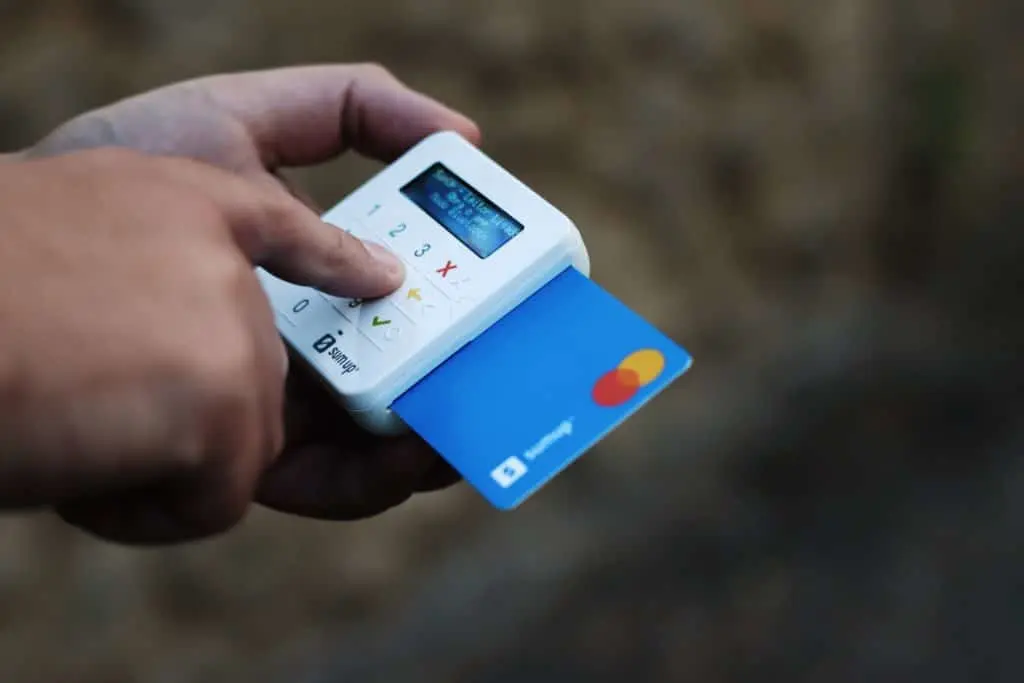
There’s no shortage of benefits in taking card payments small business. So let's have a look at a few below:
Improve your cash flow
Getting paid quickly helps you manage your cash flow more effectively.
Payments are usually immediate or within one working day into your bank account
Using a small business card reader is just one way to keep a tight grip on your cash flow. There are plenty of other ways to improve cash flow.

How to improve cash flow for trade businesses
What keeps tradespeople awake at night? Worrying about getting paid on time and settling your bills is probably a contender. Often, it all comes down to cash flow. Poor cash flow can quickly bring down even a successful business. Keep in control It doesn't matter whether you're a small or large
Win more business
Customers are likely to spend more on a card than paying by cash. You can get paid face-to-face on jobs with a mobile card reader. So you know payment is made.
Use a card reader remotely linked to your computer so customers can pay you without you needing to be standing in front of them.
Cut the hassle
Business life is easier with a card payment reader, especially if you do lots of one-off jobs.
Taking card payments small business often involves lots of single transactions. You’ll find it a lot less hassle to take payments from multiple one-off customers using a card reader.
Bring in more business with Checkatrade
Want to win more work in your local area?
Keep better financial records
Get on top of your accounts with accurate details of card payment transactions. Everything will be documented in more than one place, so you can keep a track of all money going into your business.
You can use a small business card reader to get the details you need for more efficient bookkeeping.
Offer customers better service
Most people are comfortable paying by card. It’s almost expected nowadays.
Putting in a PIN or tapping are easier than setting up a new payment through a banking app. As a result, you’ll have happy and satisfied customers using a card reader.
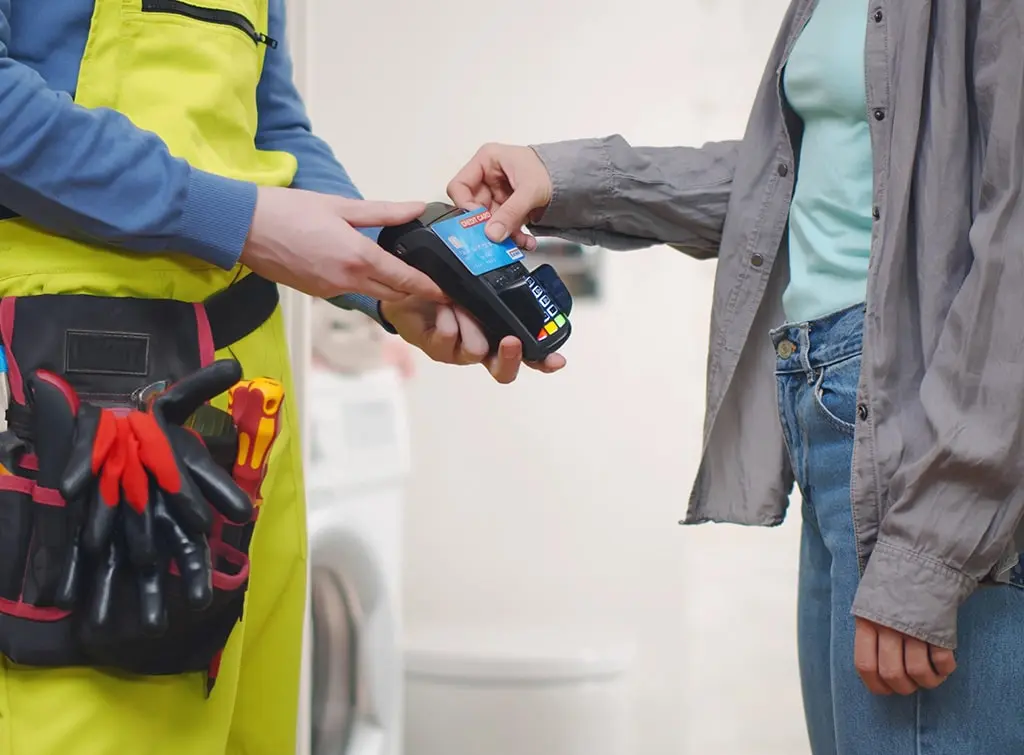
How to use a card reader
Card readers use technology to scan a card and process the transaction. They link to your bank account and that of your customer.
First, decide if you want a contactless card reader. Remember the following:
It is a mobile device so you can take it with you to jobs
Card readers from reputable providers should be highly secure
The risk of fraud is relatively low
Data being taken from the card and sent to banks is encrypted for protection
Some card readers allow you to print or email receipts to the customer
To start accepting card payments you will need to decide on what software and card reader provider to use for your business.
There are lots of different card readers available on the market. Do your research to decide which best suits you.
Talking to your business bank is a good starting point. While using a card reader supplied by your bank might be more straightforward, most card readers should be suitable for your trade business.
Bring in more business with Checkatrade
Want to win more work in your local area?
How much does a card reader cost?
All card payments incur costs. These can be hard to predict with different charges that apply for debit and credit cards.
Different banks will have different rates, and there will be others for Amex, foreign cards and corporate cards. It can be a challenge.
The cost of taking card payments for a small business is therefore a bit of a minefield. But there is a large choice of providers, so pricing is competitive.
Some card readers charge a monthly fee
Others offer a 'pay as you go' service
Card reader vendors will usually charge you a percentage of any transaction. This is usually a small figure, so could only be around 1-2%. Make sure to check with the supplier before applying.
Paying tradespeople by bank transfer
Of course, a small business card reader is just one way of getting paid. An alternative is paying trades by bank transfer. You’ll probably want to offer your customers this service alongside other electronic business payment methods.
Paying tradespeople by bank transfer includes:
Bank transfer
Direct debit or standing order
These methods are probably more likely for larger jobs. Paying by direct debit or standing order can be practical for part payments on jobs that take a long time to complete.
Bring in more business with Checkatrade
Want to win more work in your local area?
The benefits of setting up trade accounts
Banking isn’t just about how customers pay you. Think about how you want to pay your suppliers.
Open a trade account with trade suppliers and you'll receive certain benefits. These can include discounts and better payment terms.
As a Checkatrade member, you'll get access to trade accounts with Selco, Tradepoint and other suppliers.
There are lots of other reasons to consider membership too. They include:
Access to our membership advice team
Work guarantee up to £1,000 (T&Cs apply)
Offers and discounts on business essentials
Reduced cost of workwear and branding
Savings on things such as vans and materials
Is Checkatrade worth it?
Find out whether Checkatrade membership is worth it for your business. Learn about lead generation, membership costs, ROI, reviews, and how to win more high-quality leads.
FAQs
How do you use a card reader?
Choose a small business card reader provider that will send you the card payment device. Download their software and get going. Taking card payments small business links your business account to that of your customer to transfer payments securely.
How do you take card payments?
You enter the amount due, and ask the customer to check it is correct. They then enter their personal identification number and confirm payment. The payment should then go through. If your card reader issues receipts you can print one off for the customers.
How much does a card reader cost?
Small business card reader costs vary depending on the provider. Paying by card is hugely popular with people so there are lots of card readers on the market. With so much competition, card reader costs are competitive.
What are the advantages of paying tradesmen by bank transfer?
A small business card reader helps you to improve cash flow, win more business and reduce your admin workload. You also keep accurate accounting records and offer your customers better service.
Is there an alternative to taking card payments small business?
Yes. Some people prefer paying tradesmen by bank transfer. You can offer electronic payment by direct debit, standing order and BACS payments. These methods might be more practical on high-value jobs or where you want part payment.
Ready to grow your trade business this year?
Enjoy more jobs leads as a Checkatrade member
Content disclaimer: This content has been created for general information purposes and should not be taken as formal advice. Read our full disclaimer here.