EXPERT ADVICE
Radiator buying guide: Helping you to choose the right radiator for your home
Updated 07/26
By: Laura Macdonald
Reviewed: Content Team
Radiators can be single or double panel, cast iron or aluminium, horizontal, vertical, or even mirrored. But before style enters the picture, getting the heat output right, and understanding how manufacturers actually measure it, matters more than any of that.
The main radiator types and where each suits best
The three fuel source options
Why comparing BTU ratings between brands can be misleading
What material actually affects performance
Valve options and what they control
Roughly what to budget for
Find a plumber near me
Radiator types
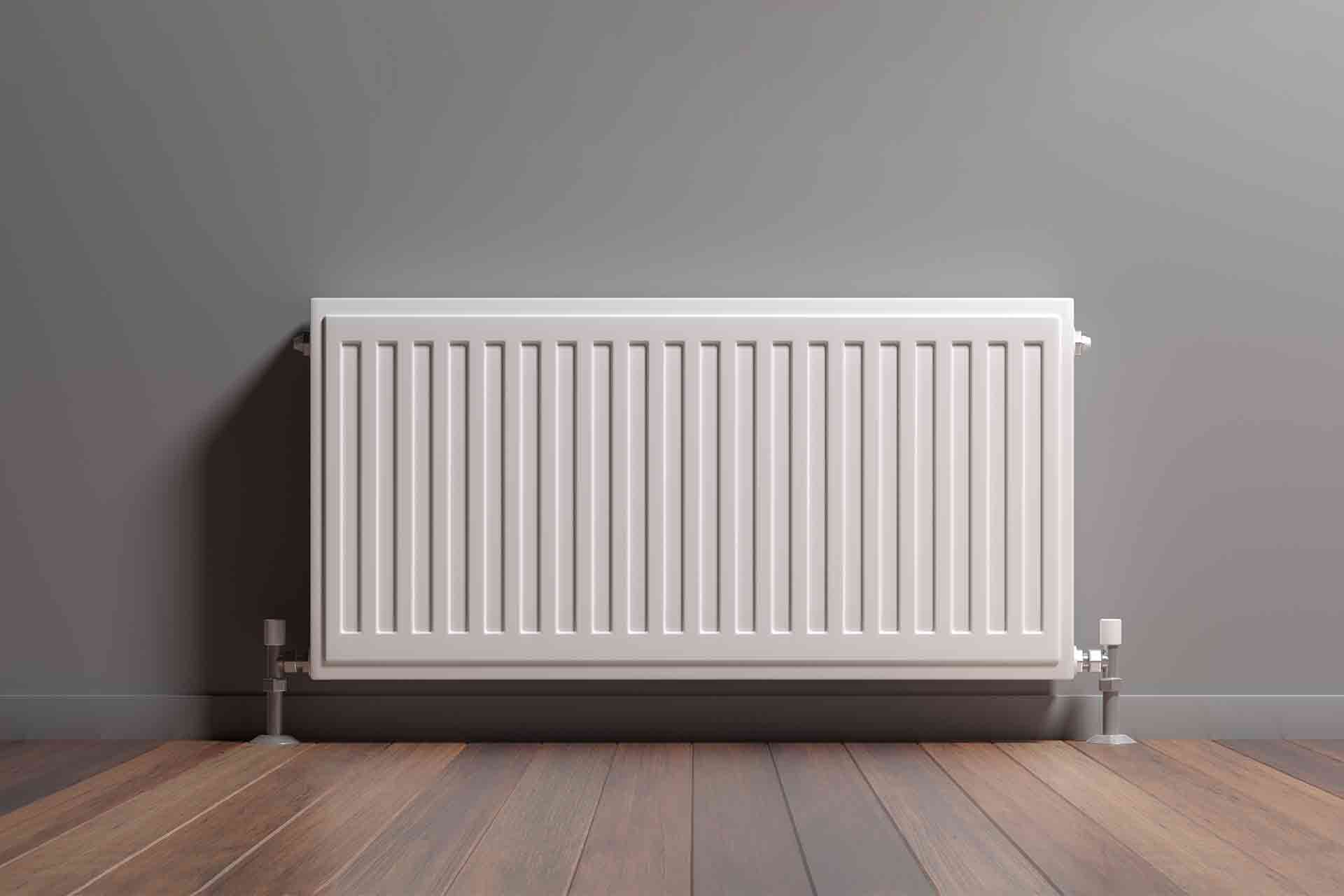
Panel radiators
The most common type in UK homes, in three main varieties:
Single Panel (Type 11): one metal panel with a single layer of convection fins, suited to narrow hallways or small rooms.
Double Panel (Type 21): front and back panels with one layer of convection fins between them.
Double Panel (Type 22): front and back panels with two layers of convection fins, delivering greater heat output than Type 21, better suited to medium or large rooms.
Vertical radiators
A modern alternative to horizontal designs, useful where wall space is limited.
Column radiators
Inspired by vintage cast iron designs, available in a range of colours, shapes, and finishes. Can be floor-standing or wall-mounted, though they tend to be bulkier and less suited to narrow spaces.
Towel radiators
A popular bathroom choice, providing heat and somewhere to hang and dry towels. Towel radiators typically resemble column radiators with a rail attached.
Designer radiators
Prioritise style and often multi-purpose features, like mirrored fronts that reflect light in smaller rooms, alongside high heat output.

Fuel sources
Plumbed-in (central heating) radiators
The most common option, relying on your boiler to heat and circulate water. Efficient, but take longer to heat up and are less flexible than electric, since they need the whole central heating system running.
Get your boiler serviced regularly to keep your whole radiator system performing at its best.
Electric radiators
A good fit for rooms without existing pipework, such as a loft conversion. Built-in thermostats give precise, energy-efficient control. Some plug straight into a wall socket; others need a qualified electrician to install.
Dual fuel radiators
Combine both, adding an electric element to a central heating radiator so you can heat it independently of the whole system, particularly useful for bathroom towel rails in summer, when you want warmth or drying without running the full heating.

Already have radiators but they're not performing well? See our guide on how to make radiators hotter before assuming you need new ones altogether.
Calculating radiator heat output (and why BTU comparisons can mislead)
Getting the heat output right matters more than how a radiator looks. Too low, and the room never quite warms up; too high, and you're overheating the room and wasting money running it.
Heat output is measured in British Thermal Units (BTU), or increasingly in watts. But there's a catch that catches a lot of buyers out: the same radiator can be listed with very different BTU figures depending on the "Delta T" rating used to test it. Delta T is the difference between the average radiator temperature and the room temperature; a higher Delta T value inflates the BTU figure without the radiator actually performing any better in your home.
Delta T50 is the current UK and EU standard, and what most retailers use.
Delta T60 was the previous UK standard until 2013, and some radiators (or older listings) still use it, showing roughly 25% higher BTU figures for the same physical radiator.
Delta T70 is used by a handful of manufacturers and inflates figures further still.
If you're comparing radiators across brands, check they're quoted at the same Delta T rating, ideally T50, before comparing BTU numbers directly. A radiator that looks more powerful on paper may simply be measured differently, not genuinely more powerful.
If your home has a heat pump or runs a lower flow temperature system, radiators sized for a standard Delta T50 gas boiler system are likely to be undersized. You'll typically need significantly larger radiators (or check for a Delta T30 rating) to get the same comfort level.
What size radiator, and how many?
Required heat output depends on room dimensions, number of external walls, window type, and insulation level. An online BTU calculator is a helpful starting point, and if you're between sizes, it's generally better to round up slightly.
For larger rooms, you may want to distribute heat across more than one radiator; divide the room's total BTU requirement by the number of radiators to get the output needed from each.
A qualified heating engineer can calculate the correct BTU for each room and recommend radiators to match, at the correct Delta T rating for your system.

On Checkatrade, you'll only find trades who meet our high standards and pass up to 12 checks.
Key considerations when choosing a radiator
1. Room size and placement
Larger rooms may need multiple radiators or a higher-output model. Radiators are traditionally placed under windows to counter heat loss, though modern designs offer more layout flexibility.
2. Positioning
Wall type: solid brick supports most radiator sizes and weights; plasterboard walls may need studs for secure mounting.
Existing pipework: replacing a radiator where pipework is already in place is quicker and cheaper than moving a radiator to a new spot.
Furniture placement: avoid positioning radiators behind large furniture, which blocks the heat from circulating properly.
3. Material
Cast iron: slow to warm up, but holds heat far longer than steel or aluminium.
Mild steel: low-cost, durable, and easily shaped for different spaces.
Stainless steel: doesn't rust and stays warm after switching off, useful for hanging damp towels.
Aluminium: a strong all-rounder; heats a space quickly and efficiently, and is lightweight and easy to install.
4. Valves and control
Manual valves: the traditional option, turned on and off by hand like a tap.
Thermostatic radiator valves (TRVs): automatically adjust flow based on the room's temperature, letting you control each radiator individually.
Smart valves: WiFi-connected and app-controlled, for scheduling and remote control even when you're out.
5. Style and covers
Radiators now come in a wide range of colours, finishes, and designs, from a bold coloured column radiator as a kitchen focal point to a streamlined vertical model that blends into minimalist decor. Radiator covers and cabinets can disguise more basic models and add a layer of protection for young children.
Cost to move a radiator: 2026 UK price guide
Moving a radiator is a great way to complete decorating jobs, improve efficiency and refresh the design of your room. Get our top tips on ways to reduce the costs.
How much do radiators cost?
Cost depends on type, size, and material, and prices vary considerably across brands and retailers, so use current retailer and installer pricing rather than a fixed figure when budgeting. Standard panel radiators tend to sit at the lower end, with column, vertical, and designer models costing more. Electric radiators are typically priced higher for the unit alone (supply only), before factoring in installation.

Before you buy
Find a qualified professional to fit your radiator
Work involving the boiler needs a Gas Safe registered engineer
Moving or installing pipework needs a qualified plumber
Any mains electrical work needs a qualified electrician
Get several quotes, compare them like-for-like, check qualifications and experience, and read genuine reviews from previous customers. Checkatrade can help connect you with vetted tradespeople in your area.
In summary
Choosing the right radiator means balancing style, heat output, and how it fits your specific heating system, not just picking on looks. Get the BTU comparison right (checking the Delta T rating), and the rest comes down to budget and design preference.
FAQs
They're different testing standards for the same physical radiator. Delta T50 is the current UK/EU standard; Delta T60 (the old UK standard) shows roughly 25% higher BTU figures for an identical radiator, which can mislead you into thinking one radiator outperforms another when the numbers just aren't directly comparable.
Generally yes. Heat pumps and other lower flow temperature systems need radiators sized for a lower Delta T (often Delta T30), which typically means larger radiators than an equivalent gas boiler system would need.
It depends on your priorities. Aluminium heats quickly and efficiently; cast iron holds heat longest after switching off; stainless steel resists rust and suits bathrooms.
Manual valves are simplest and cheapest. TRVs let you control each room's temperature automatically. Smart valves add app-based scheduling and remote control, at extra cost.
A qualified plumber for the pipework, a Gas Safe engineer for anything involving the boiler, and a qualified electrician for any electric or dual-fuel wiring.
Find a plumber near me
See the tradespeople we've checked for your job