QUESTIONS
Can you get a hot and cold garden tap?
Updated 07/26
By: Adam Harris
Reviewed: Content Team
Yes, purpose-built exterior mixer taps exist for exactly this. But before you get one fitted, there are a couple of things worth knowing: hot water outside needs safe temperature control just as much as it does indoors, and any outside tap has to meet UK water regulations around backflow prevention, not just freeze protection.
What makes an exterior mixer tap different from a standard tap
The legal backflow prevention requirement most people miss
Why hot water outside needs a safe temperature limit
How to protect the tap and pipework over winter
Whether this is a DIY job or one for a plumber
Roughly what it costs
Find a plumber near you
Is it possible to have a hot and cold garden tap?
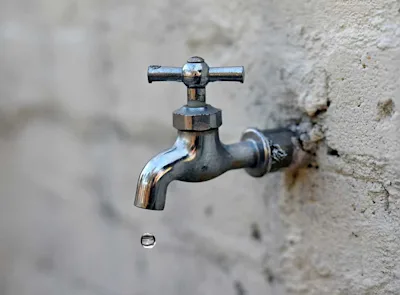
Yes. Specially designed exterior mixer taps are available, built specifically to handle outdoor conditions. Unlike an indoor tap, these are designed to:
Self-drain once the hose is disconnected, so no standing water is left inside to freeze
Include a threaded outlet for a standard hose connector
Resist freezing in cold weather
Contain siphon-proof valves to allow full drainage
These are readily available from plumbers' merchants, who can advise on the right model for your setup, or a local plumber can supply and fit one for you.
Whichever tap you choose, check it carries WRAS approval (or is on the WRAS-approved product list). This confirms it meets UK water supply regulations, which matters more for outdoor taps than most people realise.

The legal requirement most people miss: backflow prevention
Under the Water Supply (Water Fittings) Regulations 1999, any outside tap needs proper backflow protection, typically a double check valve assembly (DCVA), to stop contaminated water being siphoned back into the mains supply. This applies whether you're fitting a simple cold outside tap or a full hot and cold mixer.
This gets skipped surprisingly often on DIY and older installations, and it's not just a technicality: your water supplier can take enforcement action if a contamination event is ever traced back to an unprotected connection. If you're getting a tap fitted, ask directly whether backflow protection is included, since it should be as standard on a compliant installation.

Anything involving new hot water pipework outside is also worth planning alongside general freeze protection for your home. Our guide to preventing pipes from freezing covers the wider picture beyond just the tap itself.
Other ways to get hot water outside
If a dedicated exterior mixer tap isn't practical for your property's layout, a thermostatic mixing valve (TMV) fitted indoors can blend hot and cold water to a fixed, preset temperature before it reaches the outside tap. The temperature is set during installation and can't be adjusted afterwards, so the outside tap then always delivers water at that same fixed temperature.
This isn't just a convenience feature, it's a genuine safety measure. Hot water cylinders are often kept at around 60°C to control the risk of Legionella, and water at that temperature can cause serious burns in seconds. A TMV brings that down to a safe temperature (commonly around 46-48°C) before it ever reaches the tap, which matters just as much outdoors as it does for an indoor shower or bath.
Leaving hot water pipes running outside uninsulated isn't just a freezing risk, it also wastes energy and can fall foul of Building Regulations Part L efficiency requirements. Make sure any external hot water pipework is properly insulated, not just the tap itself.
Protecting the tap and pipework over winter
Hot water pipes are, if anything, more exposed to freeze damage outdoors than cold ones, since the exposed pipe run and any heat loss can create its own risks if it's not well insulated. To protect the system over winter:
Locate the internal isolation valve for the outside supply, usually under a sink or in a nearby cupboard.
Turn it off to isolate the outdoor circuit independently from the rest of the house.
Open the outside tap and let any residual water drain out fully.
Leave the tap in the open position for the rest of the winter. If the valve weeps slightly or any residual water does freeze, an open tap lets the ice expand outward through the spout rather than splitting the pipework.
Never leave a hose connected to an outside tap over winter. A water-filled hose freezes first, and the ice can travel back up into the tap and split the pipework behind the wall.

Need reassurance? All tradespeople pass up to 12 checks before joining, and we keep checking after.
Can I install an outside mixer tap myself?
It's possible as a DIY job if you have solid plumbing experience, but between backflow compliance, safe hot water temperature limits, and correct winterproofing, there's more to get right here than a standard indoor tap swap. If you're at all unsure, it's worth hiring a professional.
Plumber costs in the UK: 2026 price guide
Whether you are planning an exciting renovation or have a troublesome issue, our plumber cost guide contains daily, hourly and emergency rates.

Before you book
Frequently asked questions
Yes. Under the Water Supply (Water Fittings) Regulations 1999, outside taps need suitable backflow protection, typically a double check valve, to prevent contamination of the mains water supply.
It needs a temperature limit. Hot water cylinders are often stored at around 60°C to control Legionella risk, which is hot enough to cause serious burns. A thermostatic mixing valve brings this down to a safe temperature before it reaches the tap.
Not necessarily more easily, but the pipework needs proper insulation regardless, and uninsulated hot pipe runs outside also waste energy, so it's worth getting this done properly rather than as an afterthought.
Isolate the supply using the internal valve, drain any residual water by opening the tap, and leave the tap open for the rest of winter. Always disconnect hoses, since a water-filled hose is a common cause of freeze damage.
It's possible with solid plumbing experience, but getting backflow protection, safe water temperature, and winterproofing right all add complexity beyond a standard tap swap, so many people choose to hire a plumber for this specific job.
Related guides
Find a plumber near you
See the tradespeople we've checked for your job