QUESTIONS
How deep should wires be chased into walls?
Updated 07/26
By: Laura Macdonald
Reviewed: Content Team
There are actually two separate rules at play here, not one: how deep you can safely cut into the wall structurally, and where and how the cable itself needs to be protected once it's buried. Getting the first rule right keeps the wall sound. Getting the second wrong is a genuine safety and Part P compliance issue, so it's worth understanding both.
The structural depth limits for chasing into a wall
The separate electrical safety rules (BS 7671) that also apply
Why plastic capping alone often isn't enough
The best tool and technique for the job
The general chasing process
When to bring in a registered electrician
Find an approved electrician near you
Structural depth limits for chasing
When cutting a channel into masonry to hide cables, the golden rules for wall integrity are:
Vertical chases: don't cut deeper than one-third of the total wall thickness.
Horizontal chases: don't cut deeper than one-sixth of the total wall thickness, since horizontal cuts weaken a wall's structural strength more than vertical ones.
And regardless of direction:
Never cut two chases back-to-back on opposite sides of the same wall.
Make sure the depth accounts for the cable's thickness plus enough filler to make the surface good afterwards, rather than cutting to the bare minimum
These depth ratios protect the wall's structural integrity. They're not the same as the electrical safety rules below, which is where a lot of confusion (and non-compliant work) comes from.

The electrical safety rules that also apply (BS 7671)
This is the part that's often missed, and it matters more than the structural depth ratios for keeping the finished job safe. Under the UK Wiring Regulations (BS 7671), cables buried less than 50mm from the wall's surface must either:
Be routed within specific "safe zones" (horizontal and vertical bands running from socket outlets, switches, and wall corners) and be protected by a 30mA RCD, or
Have genuine mechanical protection sufficient to stop a nail or screw penetrating the cable, such as earthed steel conduit, earthed trunking, or armoured cable.
Cables can't simply be routed anywhere in the wall at a shallow depth just because they're capped. Plastic cable capping alone is widely considered insufficient mechanical protection under BS 7671, since it won't reliably stop a nail or screw reaching the cable behind it. If you're relying on capping rather than RCD protection or genuine earthed mechanical protection, that's a compliance gap worth raising with whoever's doing the work.
Any work involving concealed cabling is also likely to count as notifiable electrical work under Part P. Our guide to getting a Part P certificate explains what that means in practice.

Chasing a wall also raises the question of which trade should actually do it. Our guide on which trade wall chasing falls under covers who's best placed for cable versus pipe chasing specifically
What's the best way to chase wires into a wall?
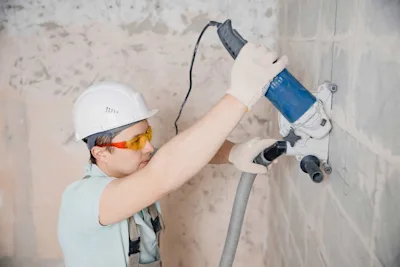
A wall chaser is the standard tool for this, cutting a narrow, uniform channel at a depth you set in advance on the tool itself. It's possible to hire one if you're confident tackling this as a DIY job, but take proper safety precautions, including dust extraction and eye protection, since cutting into masonry generates a significant amount of fine dust.
Bear in mind the wall chaser only handles the structural cutting. It doesn't address the electrical safety requirements above, so knowing your cable routing and protection method before you start cutting will save reworking the job afterwards.

On Checkatrade, you'll only find trades who meet our high standards and pass up to 12 checks.
Call in the experts to do the job
Because this work involves both structural cutting and compliance with BS 7671 and Part P, it's worth having a registered electrician plan the cable routes and protection method before any chasing starts, even if a different trade ends up doing the physical cutting.

How to hide TV wires
Are your TV wires driving you to distraction? Well, with this handy 'How To' guide on how to disguise annoying cables, you'll have a smart, seamless and calming space in no time.

Before you start chasing
Frequently asked questions
Generally no. BS 7671 requires either genuine mechanical protection capable of stopping a nail or screw penetrating the cable, or RCD protection combined with routing the cable within a recognised safe zone. Plastic capping alone typically doesn't meet the mechanical protection standard.
They're the horizontal and vertical bands (typically running from sockets, switches, and wall corners) where cables less than 50mm deep are permitted to run, provided they're also RCD protected.
Structurally, no deeper than one-third of the wall's thickness for a vertical chase, or one-sixth for a horizontal chase. Separately, if the cable ends up less than 50mm from the surface, the electrical safety rules above also apply.
The structural cutting itself can be done by a competent DIYer or another trade, but planning the cable routing, protection method, and any notifiable work should involve a registered electrician to stay compliant.
Often, yes, particularly if it involves new circuits or significant alteration. Check our Part P certificate guide for when this applies.
Related guides
Find an approved electrician near you
See the tradespeople we've checked for your job