QUESTIONS
What's causing damp in my bedroom?
Updated 07/26
By: Laura Macdonald
Reviewed: Content Team
Damp in a bedroom comes from one of three sources: condensation, penetrating damp, or rising damp, and by far the most common of the three is condensation, particularly in corners, around windows, and behind furniture pushed against external walls. Where and how the damp appears is usually enough to narrow it down before you call anyone out.
The three types of damp and how to tell them apart
Why bedroom corners are especially prone to condensation
What a ceiling patch specifically usually means
How to fix condensation without professional help
When penetrating or rising damp needs a specialist
How to treat and redecorate once the cause is fixed
Find a damp proofing specialist
The three types of damp, and how to tell them apart
Condensation: by far the most common cause of bedroom damp. Appears as damp patches, black mould, or water droplets, typically in corners, around window frames, and on cold external walls, especially behind wardrobes, curtains, or furniture that blocks airflow. Wipes away fairly easily and tends to dry out within hours to a day; it comes back because the underlying moisture and cold surface are still there, not because the surface itself is failing.
Penetrating damp: water getting in from outside through a fault in the building's fabric; a cracked wall, damaged render, a faulty gutter, or a roof issue. Shows up as isolated patches that often get worse after heavy rain, and doesn't wipe away or dry out the way condensation does.
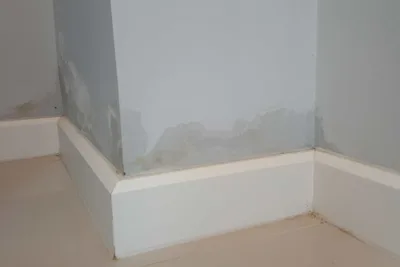
Rising damp: moisture drawn up from the ground through the walls, usually due to a failed or missing damp-proof course. Shows as a tide mark, typically up to around a metre high, sometimes with crumbling plaster or white, powdery salt deposits. This is the least common of the three, despite often being the first thing people suspect.
A quick way to narrow it down: if the patch is on the ceiling rather than a wall, it's very unlikely to be condensation or rising damp. That points to a leak from above instead, covered separately below.

Why bedroom corners and windows are especially prone to condensation
Corners are the coldest parts of a room, since two walls (and sometimes a ceiling) meet at that point, dragging the surface temperature down further than elsewhere. Warm, moist air from breathing, sweating, and everyday living condenses on that colder surface first. This effect, called cold bridging, is made worse by gaps or weak spots in insulation at wall and ceiling junctions, which is common in older properties built before modern insulation standards.
It's also frequently worse in bedrooms specifically, since they're often kept cooler than the rest of the house, and furniture or curtains pushed against an external wall restrict the airflow that would otherwise help that surface stay warmer and drier.

If cold bridging at a specific spot (like under a bay window) is the underlying issue, our guide to insulating a solid brick wall under a bay window covers that scenario directly.
How to deal with condensation
Since condensation is about moisture and cold surfaces rather than a building fault, the fix is usually about ventilation and heating rather than repair work:
Ventilate regularly, even in winter, by opening windows briefly each day
Use extractor fans in the kitchen and bathroom, and keep bedroom doors closed while cooking or showering to stop that moisture spreading
Keep a consistent, moderate temperature in the room rather than letting it get cold, since a warmer surface condenses less
Pull furniture slightly away from external walls to let air circulate behind it
Consider adding insulation to a persistently cold wall or corner if the condensation keeps returning despite good ventilation
If you're already seeing mould as well as damp, our guide on getting rid of black mould, condensation and damp covers treating it safely, not just preventing it.

On Checkatrade, you'll only find trades who meet our high standards and pass up to 12 checks.
What if it's a patch on the ceiling specifically?
A damp patch on a bedroom ceiling almost always means water penetrating from above, either a leaking pipe in the loft or a fault in the roof, rather than condensation or rising damp.
A leaking pipe
If you can access the loft, inspect the area directly above the patch for wetness around any pipework, or a watermark on the surface below it. If you spot this, contact a qualified plumber promptly.
A leak in the roof
If there's no visible pipe leak, the roof itself is the likely source. A professional roofer can inspect the roof and surrounding structure safely. Common culprits include:
A problem with the guttering
Loose or damaged roof tiles
A fault with the lead flashing
These elements exist specifically to keep rainwater out, so a fault in any of them can let water track through and cause a ceiling patch below. It's worth acting quickly, since water penetration left unresolved can cause increasingly costly structural damage.

Leaking roof - What to do and who to call
Think you may have a leaking roof? We explain how to handle a roof leak safely, how to tell if it’s an emergency, what usually causes leaks, and how to find the right tradesperson to put things right without delay.
When do I need a rising or penetrating damp specialist?
If the damp shows a clear tide mark, crumbling plaster, or salt deposits, or it's an isolated wall patch that worsens after rain and doesn't respond to ventilation, this points to rising or penetrating damp rather than condensation. These need a proper diagnosis (and often a damp-proofing specialist) rather than a ventilation fix, since the underlying cause is structural. Our guide on what causes rising damp goes into this in more depth.

Before you call anyone out
Redecorating once the cause is fixed
Once the underlying cause has been resolved, whether that's better ventilation, a repaired pipe, a fixed roof, or damp-proofing work, make sure the area is fully clean and dry before redecorating. Apply a stain block spray or paint to the affected area, using a second coat if needed, then repaint once fully dry.

Damp proofing costs in the UK (2026 prices)
Discover the typical damp proofing costs in the UK, common treatment options, and the practical things to budget for so you can plan with confidence.
Frequently asked questions
Condensation is by far the most common cause, especially in corners, on windows, and on cold external walls. Rising and penetrating damp are less common but need a different kind of fix, since they point to a fault in the building itself rather than moisture and cold surfaces.
Condensation wipes away and dries out within hours to a day, and tends to reappear in the same cold spots. Rising damp shows a tide mark and sometimes white salts. Penetrating damp appears as isolated patches that often worsen after heavy rain and don't dry out the same way.
That corner is likely colder than the rest of the room due to cold bridging, where warm, moist air condenses on the coldest available surface. Improving ventilation and heating helps, but persistent corner damp may need extra insulation at that specific spot.
It's possible but far less likely than on a wall. A ceiling patch usually points to a leaking pipe in the loft or a fault in the roof, so check those first.
Condensation can usually be managed yourself through ventilation, heating, and airflow changes. Rising and penetrating damp are more likely to need a professional diagnosis and repair.
Only once the underlying cause is fixed. Repainting over active damp without addressing the source will simply see the problem return through the new paint.
Find a damp proofing specialist
See the tradespeople we've checked for your job