EXPERT ADVICE
The guide to UK automatic water shut off valves
Updated 07/26
By: Content Team
Reviewed: Olivia Scammell
A manual stopcock only stops a leak if someone's home to notice it. An automatic water shut off valve detects a leak itself and cuts your water supply before it causes serious damage, whether you're in the house or not.
What an automatic shut off valve actually does
The two main detection methods and how they differ
What to look for when choosing one
What to do in an emergency if you don't have one yet
Roughly what installation costs
Who to hire for the job
Ready to get started? Here's how to find a checked plumber near you.
Find a plumber near you
What is an automatic water shut off valve?
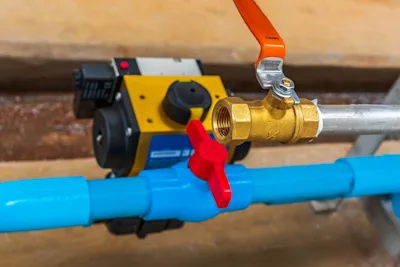
An automatic water shut off valve detects a leak and cuts off incoming water to your home automatically, stopping the leak in its tracks before it can cause further damage.
A manual valve, by contrast, only works if you notice the leak yourself and get to it in time. That's a real gap if you're out of the house or the leak is somewhere hidden, like inside a wall or under a floor.

How does an automatic shut off device work?
Broadly, these valves detect either unusual moisture or an unusual increase in flow, then shut off your water supply automatically.
Flow-based leak detection systems
Monitor water flow throughout your home. If water runs continuously for longer than expected, the system shuts off the supply, catching a leak that might otherwise run unnoticed for hours.
Moisture sensor systems
Use sensor "pucks" placed near appliances or in vulnerable spots to detect moisture where it shouldn't be. Once triggered, the water supply cuts off automatically.

Not sure where your stopcock even is yet? Our guide on finding your stopcock covers where to look and how to use it in an emergency.
What should I look for in a shut off valve?
Response speed: some valves shut off within seconds of detecting a leak, worth checking if speed matters most to you.
Detection method: flow-based systems suit whole-home protection well; moisture sensors are useful for targeting specific appliances or known risk spots, like under a washing machine or dishwasher.
Usage pattern learning: some systems learn your household's typical water use and flag genuinely unusual activity. This reduces false alarms.
Product ranges and availability change, so compare current specifications from a few manufacturers and ask a plumber which type genuinely suits your home's layout and plumbing, rather than picking based on marketing alone.

On Checkatrade, you'll only find trades who meet our high standards and pass up to 12 checks.
How can I find my stopcock in an emergency?
If you haven't yet installed an automatic valve, knowing where your manual stopcock is matters. It's commonly found under the kitchen sink, but can also be near the boiler, in an airing cupboard, a bathroom cupboard, or near the front door. Our guide to locating and using your stopcock covers this in more detail.

Stopcock replacement cost UK: 2026 prices
Learn the average stopcock replacement cost and how prices for main water valves and automatic shut-off installations differ in this handy guide.
How much does it cost to install an automatic water shut off valve?
Cost depends on the valve type and installation complexity. Our water shut off valve installation cost guide and plumber cost guide give current pricing for supply, fit, and labour.

Before you choose a valve
Considering switching to an automatic water shut off valve?
It's a smart, largely one-off investment against a much more expensive, disruptive leak later. A qualified plumber can advise on and fit the right system for your home.
Find a plumber near you
FAQs
A manual valve only stops water when someone notices a leak and closes it. An automatic valve detects the leak itself (via flow or moisture sensing) and shuts off supply without anyone needing to be present.
Most can be fitted to standard UK plumbing setups, but a plumber should confirm compatibility with your specific system before you buy one.
For most homeowners, yes, particularly if you're often away from home or have previously had a leak cause significant damage. The cost is generally modest compared to the damage a major undetected leak can cause.
It's generally a job for a qualified plumber, since correct installation and calibration matter for the system to work reliably when it counts.
See the tradespeople we've checked for your job