EXPERT ADVICE
Why is my electric shower not working?
Updated 03/26
By: Laura Macdonald
An electric shower that suddenly stops working can be more than just inconvenient. One minute you’re expecting a warm shower before work, the next you’re standing in cold water (or none at all) wondering what’s gone wrong.
Maybe there’s no hot water. Maybe it’s running lukewarm. Or perhaps it won’t turn on at all.
Some electric shower faults are minor. Others involve high-voltage components and that’s not something you want to touch unless you’re appropriately qualified.
The key is knowing which issues are minor and which ones aren’t worth taking risks with.
The most common faults in electric showers
When the issue becomes an electrical safety risk
When you legally need an electrician
What repair or replacement typically costs
What is a common fault in an electric shower?
The most common fault in an electric shower is a failed heating element.
Electric showers heat water instantly as it passes through the unit. If the element burns out or overheats, you’ll either get cold water, or no water at all.
Other frequent faults include:
A triggered thermal safety cut-out
A faulty microswitch
A failed solenoid valve
Limescale restricting water flow
In hard water areas especially, scale build-up can shorten the life of internal components.
Beyond checking the shower head for blockages and confirming the power supply, most internal faults aren’t safe DIY fixes.
No hot water from your electric shower
If your shower runs but produces only cold water, it’s usually caused by:
A failed heating element
The thermal safety cut-out activating
An internal electrical fault
Many Mira electric shower models, for example, will shut down heating if they detect overheating, often caused by restricted water flow.
If the water pressure feels weaker than usual, check the shower head for limescale. A blocked head can reduce flow and cause the safety cut-out to trigger.
If cleaning the shower head doesn’t restore heat, you’ll need a qualified electrician to test and replace the heating element.
Water not heating properly (tepid or going hot and cold)
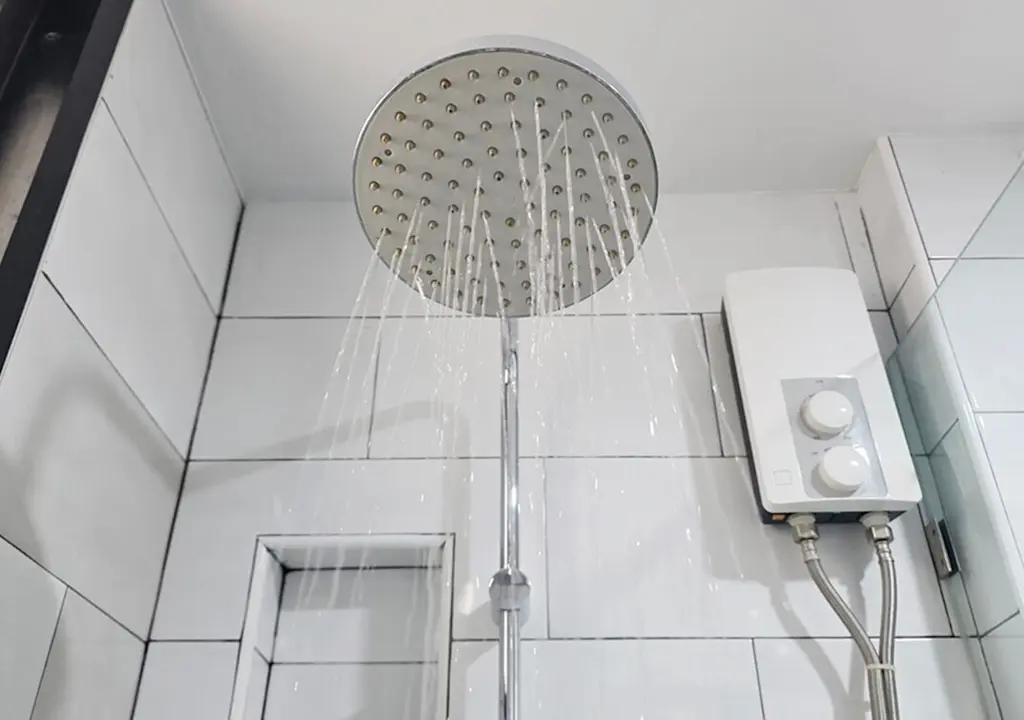
If the water is warm but not as hot as it should be — or it fluctuates between hot and cold — this suggests:
A partially failing heating element
A faulty microswitch
Inconsistent water flow
Internal scale build-up
This isn’t the same as ‘no heat at all’. It often indicates the element is weakening rather than completely failed.
Repairs usually involve internal component replacement, which should be carried out by an electrician.
Electric shower won’t turn on
If your electric shower won’t turn on at all, check:
The pull cord isolator
The consumer unit
The RCD hasn’t tripped
If power is reaching the unit but nothing happens when you turn it on, the solenoid valve or microswitch may have failed.
A shower that suddenly stops mid-use can indicate overheating protection has kicked in, especially if water pressure has dropped.
If your electric shower repeatedly trips the breaker, stop using it immediately and contact an electrician.
Electric shower won’t turn off
If water continues flowing after switching the unit off, the most likely cause is a faulty solenoid valve that isn’t closing properly.
Turn off the power at the isolator immediately.
While this repair is usually straightforward for a professional, it involves accessing live electrical components, so it’s not one to tackle casually.
Water leaking from the electric shower unit
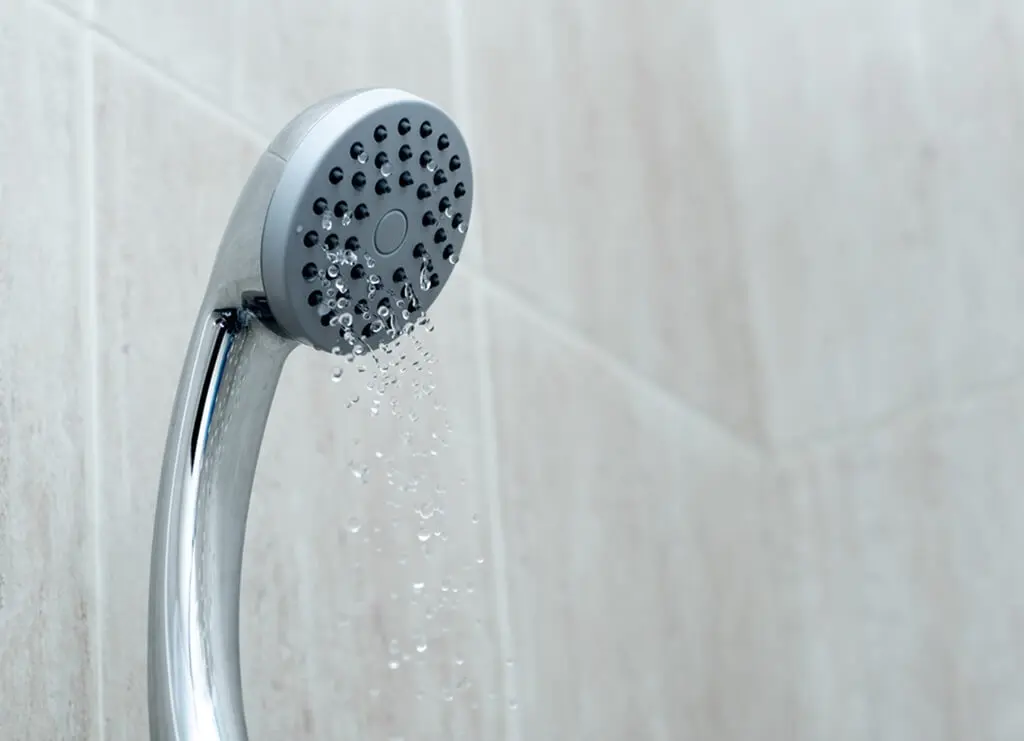
Water leaking from the bottom of the shower unit is often caused by:
Pressure build-up
A blocked shower head
A failed pressure relief valve
If the pressure relief device activates, it usually means something has caused overheating or restricted flow.
Once a pressure relief valve has operated, it often needs replacing. Simply fixing the blockage may not stop future leaks.
Electric shower keeps tripping the fuse
If your electric shower repeatedly trips the breaker or RCD, this can indicate:
Water ingress into electrical components
Internal wiring faults
Heating element failure
This is a serious safety issue.
Switch off the shower at the isolator and contact a qualified electrician. Mixing electricity and water is never something to experiment with.
Burning smell from the electric shower
A burning smell usually indicates overheating wiring or a failing component.
Stop using the shower immediately and isolate the power supply.
Even if it seems to settle down, don’t switch it back on until it’s been checked by a qualified electrician.
Electric shower unit coming loose from the wall
If the unit is coming away from the wall, it’s more than a cosmetic issue.
Electric showers carry a high electrical load. A loose casing can expose wiring or create strain on connections.
Stop using the shower and have it secured or replaced professionally.
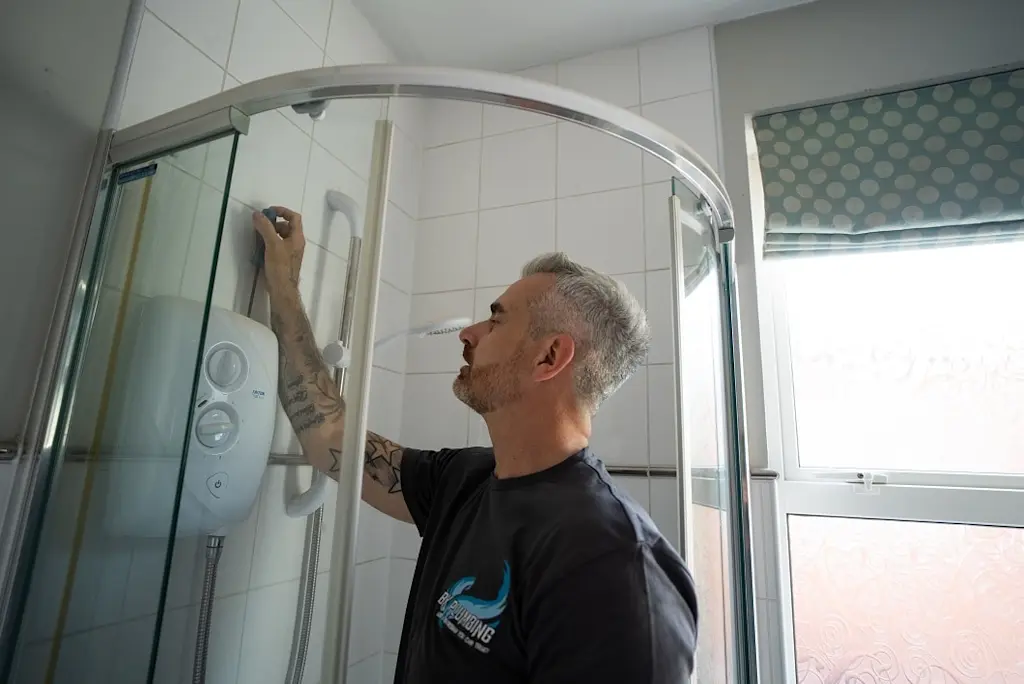
Do you legally need an electrician to replace an electric shower?
In most cases, you’ll need a qualified electrician, especially if the shower unit is being replaced or electrical connections are being altered.
Electric showers are usually wired into a dedicated high-current circuit. Replacement may therefore involve:
Isolating and reconnecting wiring
Checking cable capacity
Ensuring correct circuit protection
While minor plumbing adjustments (such as pipe alignment) can be handled by a plumber, electrical work must comply with Part P of the Building Regulations in England. If in doubt, hire a qualified local electrician.
How much does it cost to fix or replace an electric shower?
The cost of fixing or replacing an electric shower depends on the fault.
As a rough guide:
Heating element replacement: varies by model
Full electric shower replacement (supply & install): around £400
Electrician rate: typically £45–£60 per hour
Most electric showers last around 7–10 years, although in hard water areas, this can be shorter.
If your shower is more than 7 years old and experiencing repeated faults, replacement is often more economical.
For a detailed breakdown, see our shower installation cost guide.
When is it safer to call a professional?
Don't hesitate to call a qualified local electrician if:
The shower won’t turn on
It keeps tripping the breaker
There’s a burning smell
The unit is loose on the wall
Water is leaking from inside the casing
If you ever smell burning or see signs of overheating, stop using the shower immediately. It’s not worth the risk.
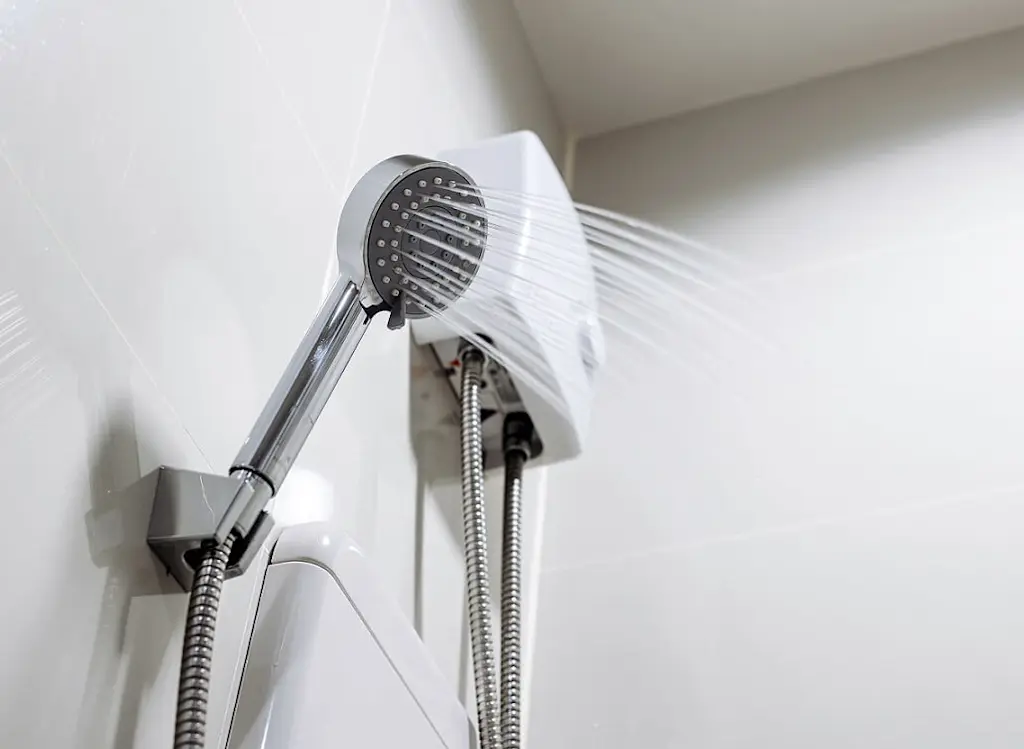

Electric shower fault checklist
Find an electrician near you
If your electric shower fault goes beyond a blocked shower head, a qualified local electrician can diagnose and fix it safely.
Search your postcode to compare checked, reviewed electricians near you and request quotes with confidence.
Find checked and reviewed tradespeople in your area
FAQs
What's a common fault in an electric shower?
A failed heating element or thermal safety cut-out is one of the most common faults in an electric shower.
What's the average lifespan of an electric shower?
Electric showers typically last between 7–10 years, depending on usage and water quality.
Do you legally need an electrician to replace an electric shower?
Yes, in most cases you’ll need a qualified electrician to replace an electric shower as it involves high-current electrical wiring and must comply with regulations.
Does an electric shower use a lot of electricity?
Electric showers are among the highest-wattage appliances in most homes. Typical units range from 8.5–10.5kW.
However, they only draw power while in use. A short daily shower is unlikely to have a dramatic impact on your bill, but longer showers will increase consumption.
Why is my Mira electric shower not getting hot?
If your Mira electric shower isn’t getting hot, it may be a failed heating element or a safety cut-out triggered by restricted water flow.
Can you put any shower head on an electric shower?
No, not all shower heads are suitable. Electric showers are designed to work with specific flow rates.
Fitting a large rainfall-style head can restrict flow, cause overheating, and trigger the safety cut-out. Always use a compatible low-flow shower head recommended for electric shower systems.
Why would my electric shower suddenly stop working?
Common reasons why your electric shower has suddenly stopped working include tripped breakers, overheating protection, or failed internal components.
How do you fix an electric shower that won't heat up?
Cleaning a blocked shower head may help fix an electric shower that won’t heat up, but heating element or electrical faults require professional repair.
Can you get an electric shower with a built-in pump?
Yes, some electric showers are available with integrated pumps. These are designed for homes with low water pressure.
What's better, a thermostatic shower or electric shower?
Whether you choose a thermostatic or electric shower depends on your home’s hot water setup and pressure system.
Electric showers heat water on demand, don’t rely on a boiler and work well where hot water storage is limited. Thermostatic showers use pre-heated water from a boiler or cylinder, maintain a stable temperature more precisely and often provide a stronger flow.
If you already have a reliable boiler system, a thermostatic shower may offer better performance. If you don’t, an electric shower can be a practical standalone option.
More Shower Installation Articles

See the tradespeople we've checked for your job