EXPERT ADVICE
Buying guide: Helping you to choose your hallway lighting
Updated 07/26
By: Laura Macdonald
Reviewed: Content Team
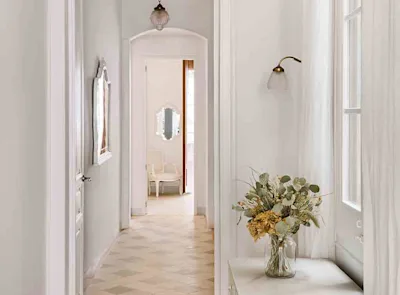
Your hallway is the first thing guests see, and one of the first spaces you pass through every day, so it's worth getting the lighting right. Here's how to layer it properly and choose fixtures that suit the space.
Why hallway lighting matters beyond first impressions
The main fixture types and where each works best
How hallway size and shape should guide your choice
Colour temperature, brightness, and the measurements that matter
Roughly what installation costs
Who to hire for the job
Find an electrician near you
The importance of hallway lighting
As a transitional, often limited space, a hallway benefits hugely from good lighting choices, making it feel larger, brighter, and more welcoming. Beyond first impressions, hallway lighting also has real functional value: helping prevent trips and falls after dark, supporting home security, and covering everyday tasks like a quick mirror check on your way out.
Types of hallway lighting and their uses
A good scheme blends three roles: general lighting (overall illumination), task lighting (for specific tasks, like a mirror check), and accent lighting (mood and highlights).
1. Recessed ceiling downlights
Best for: narrow or dimly lit hallways, low ceilings, or a sleek modern look.
Subtle and unobtrusive, giving good overall lighting without competing with your decor.

2. Directional spotlights
Best for: highlighting specific features like wall panelling or artwork.
Tiltable heads let you direct light exactly where you want it, adding depth to the space.
3. Flush ceiling lights
Best for: small hallways or low ceilings.
A wide range of styles, from simple to ornate, with a low profile that suits limited headroom.
4. Pendant lights
Best for: larger hallways or higher ceilings.
Can act as a dramatic focal point, especially with a statement chandelier.
5. Step lights
Best for: staircase lighting in contemporary homes, or anywhere extra safety helps.
Run along stair treads or skirting for a stylish, safety-boosting glow.
6. Wall lights
Best for: narrow hallways where floor space is limited.
Add warmth and character, particularly in traditional or period properties.
7. Table lamps
Best for: larger entrance hallways with room for furniture.
A decorative, ambient touch on a console table.

For visual inspiration once you've picked a layout, see our hallway ideas guide.
How to choose the best hallway lighting for your home
Style and design
Traditional homes: brass, copper, or glass fixtures
Contemporary properties: bold colours and striking shapes
Modern homes: metallic finishes or matt black for an industrial edge
Cottage or rustic settings: wooden or bamboo fixtures
Since hallway lighting isn't something you change often, lean towards a timeless design you're genuinely drawn to, rather than chasing a passing trend.
Hallway size and ceiling height
Low ceilings: flush mount lights or recessed downlights
High ceilings: pendant lights for a real statement
Long hallways: wall sconces for gentle, decorative illumination along the length
Narrow hallways: an oversized ceiling pendant paired with slim-profile wall sconces for warmth without crowding the space
In a narrow hallway, a horizontal wall mirror bounces light around and creates the illusion of more space.
Handy hallway lighting measurements
Space a light roughly every 8-10ft along the hallway's length
Keep the bottom of any fixture at least 7ft from the floor
Allow at least 4ft between a fixture and side walls, end walls, or obstacles like doorways
Keep fixture width to no more than half the hallway's width

On Checkatrade, you'll only find trades who meet our high standards and pass up to 12 checks.
Colour temperature and lumens
Warm white (2,700-3,000K) suits most hallways, giving a welcoming feel. Aim for around 100-150 lumens per m², adjusted for the hallway's size and available natural light. A dimmer switch adds flexibility for different times of day. A lighting designer can calculate exact lumens for your specific space.
Safety and IP ratings
IP20 is usually sufficient for hallway lights, since they don't typically face much dust or moisture. If using recessed downlights, check they're fire-rated, so they help restore the ceiling's fire integrity around the installation hole.
Energy efficiency and smart technology
LED bulbs remain the standard efficient choice. Smart lighting lets you schedule and remotely control lights, useful for the impression of an occupied home while you're away. Motion sensor lights are particularly handy for nighttime trips down the hallway.
How much does hallway lighting installation cost?
Cost depends on the scope of work, fixture type, and any new wiring needed. Our downlight installation cost guide has current supply-and-fit pricing. For an accurate quote, contact a qualified local electrician.
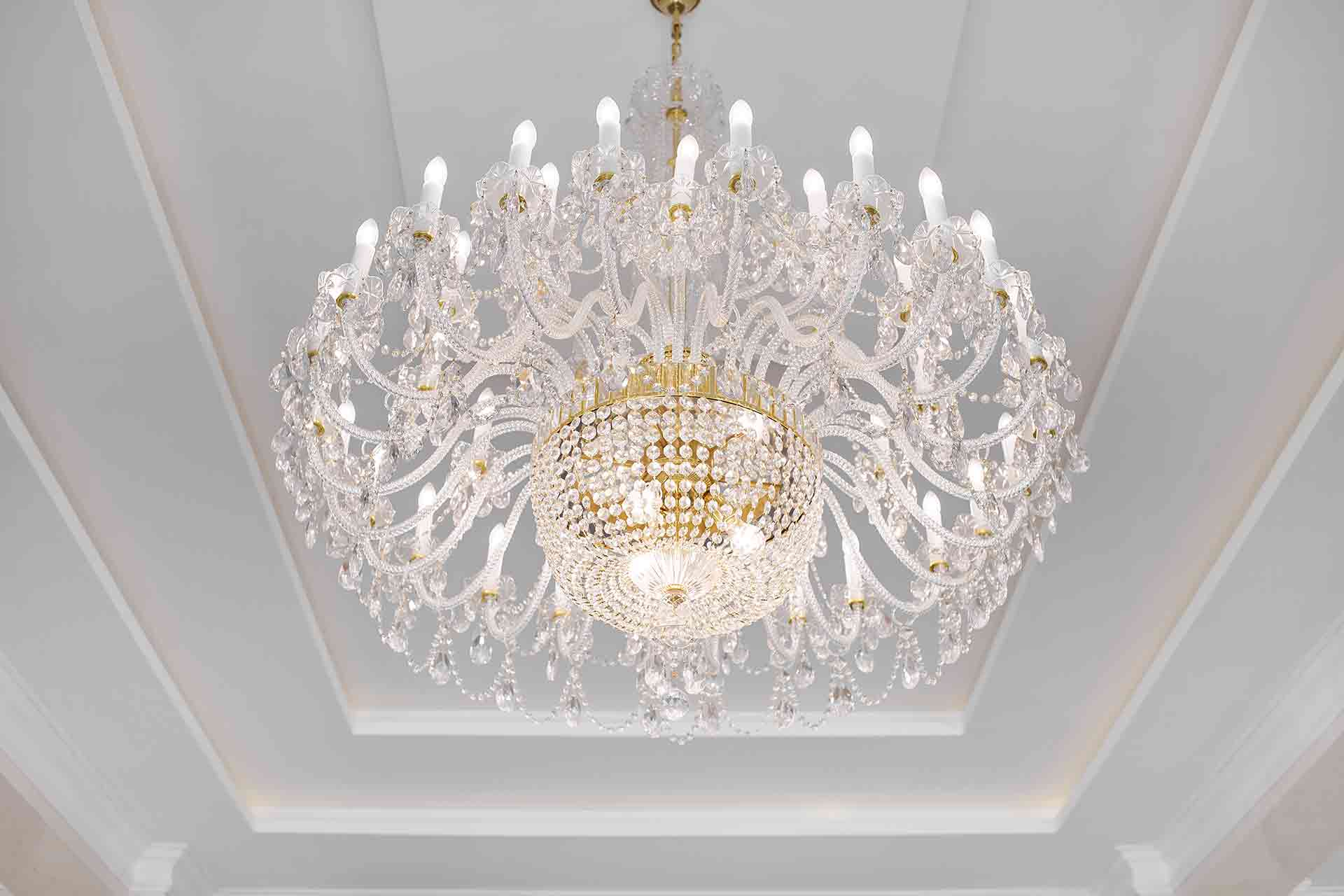
How much does it cost to hang a chandelier?
If you’re looking to add a wow factor to your ceiling lights, hanging a chandelier is one of the easiest ways to add that special touch. In this guide we look at the average cost to hang a chandelier in the UK.
Do you need help from any other trades?
If lighting is part of a wider hallway refresh, Checkatrade can also connect you with carpenters for panelling, painters and decorators, or flooring fitters.

Before you buy
Find an electrician in your area
Find an electrician near you
FAQs
A mix of general, task, and accent lighting, for example ceiling downlights, wall sconces, and a table lamp, works well. Motion sensors or smart technology add convenience too.
Consider hallway size, ceiling height, and the atmosphere you want. Flush or recessed lighting suits low ceilings; a chandelier suits higher ones; slim wall sconces suit narrow hallways.
Yes, energy-efficient, long-lasting, safe, and quick to light up.
As a general rule, one downlight per square metre, with around 1m spacing between fixtures and 0.5m from the walls.
No wider than half the hallway's width, as a guide.
Around 100-150 lumens per m², adjusted for size and available natural light.
Related guides
Find an electrician near you
See the tradespeople we've checked for your job