EXPERT ADVICE
What temperature should your hot water tank be set at?
Updated 07/26
By: Content Team
Reviewed: Kim Staples
Getting your hot water tank temperature right is a genuine safety issue, not just a comfort one. Too low, and you risk legionella bacteria growing in stagnant water. Too high, and you risk scalding, especially for children and elderly household members.
The correct hot water tank temperature to prevent legionella
Why tap temperature needs to be lower than tank temperature
How thermostatic mixing valves keep you safe from scalding
How water temperature affects your energy bill
What to do if your water isn't reaching the right temperature
When to call a plumber for your hot water tank
Keep reading if you’d like to learn about the best temperature for a hot water tank. This guide explains the correct settings for UK homes and how to balance safety with your energy bill.
What temperature should a hot water tank be set at?
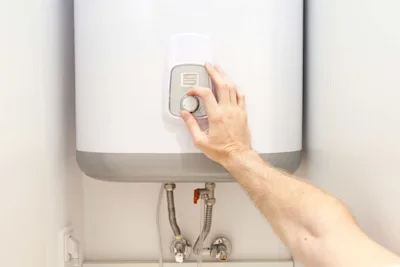
Your hot water tank (cylinder) should be kept at 60°C, and can safely run up to 65°C.
This is the best range because of legionella bacteria, which causes Legionnaires' disease.
Legionella thrives between 20°C and 45°C, and stagnant water sitting in a tank gives it exactly the conditions it needs to multiply. At 60°C, 90% of legionella bacteria die within around two minutes. At 70°C, it dies instantly.
Keeping your tank at 60°C or above kills the bacteria before it can build up, without pushing the water so hot that it becomes wasteful or unsafe to store.
The Health and Safety Executive (HSE) sets this 60°C minimum for hot water storage in its official Legionella guidance (HSG274). This is what both landlords and domestic installers use as the benchmark.
Is there a legal requirement for domestic homes?
Landlords and commercial properties are legally required to follow HSE Legionella guidance, including regular temperature checks.
Owner-occupied domestic homes aren't subject to the same legal duty, but the same 60°C guidance is still the recommended safe setting. Most modern cylinder thermostats are pre-set close to this range for exactly that reason.
What temperature should hot water be at the tap?
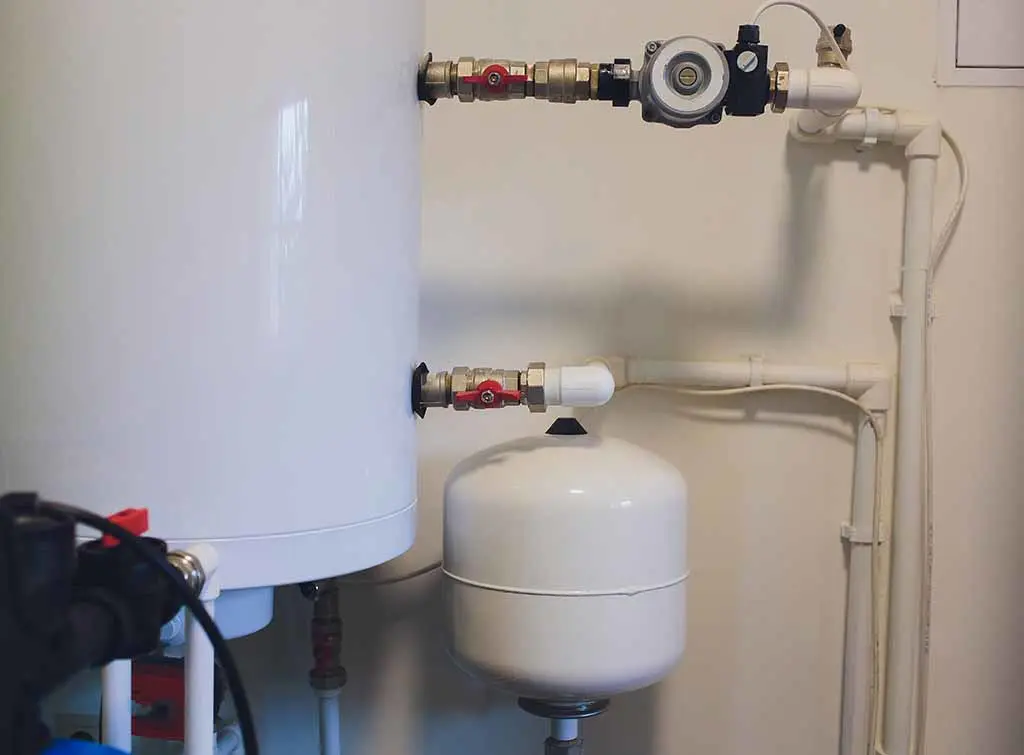
While 60 degrees Celsius is the perfect temperature for your water tank, water at this heat could cause scalding in only a single second! This means it’s vital to check that your tap water is at a lower heat.
In the UK, hot water at the tap should be at a maximum temperature of 50°C. This will prevent accidents while still allowing you to have toasty warm baths.
It may be even lower, around 44°C, in bathrooms with a thermostatic mixing valve fitted.
The two temperatures are kept separate on purpose. The tank stays hot enough to control bacteria, while the water that actually comes out of the tap or shower is safe to touch.
If your household includes young children, elderly relatives, or anyone with reduced sensation in their skin, ask a plumber about fitting thermostatic mixing valves at the taps and shower for safety.
Does turning down the tank temperature save money?
It can, but it's not worth it.
Water heating typically accounts for a meaningful share of a household's energy use, so lowering your cylinder's temperature would reduce energy bills - but it puts you at risk of Legionnaire's.
It's safe to drop it to 60°C at the lowest, as this can reduce running costs slightly without compromising on legionella control, since 60°C is still within the safe range.
Never drop below 60°C to save money. Below this point, you lose the bacterial protection the temperature is there to provide. The saving isn't worth the health risk.
My hot water isn't reaching the right temperature - what's wrong?
A few common causes are worth checking before calling out a plumber:
Thermostat fault - An ageing or faulty cylinder thermostat may no longer hold an accurate setting
Immersion heater or boiler issue - If your cylinder is heated by an immersion element or via your boiler, a fault there will affect your water temperature
Sediment build-up - Limescale and sediment can insulate the heating element from the water, reducing its efficiency
Insufficient insulation - An uninsulated or poorly jacketed cylinder loses heat faster, especially in an unheated airing cupboard or loft
A cylinder jacket is a cheap, easy upgrade that reduces heat loss between heating cycles, which can help maintain a consistent temperature without the heater running as often.
If DIY fixes don't resolve it, this is a job for a qualified plumber or heating engineer - particularly since it can involve working on the immersion heater's electrics or the boiler's controls.
Find a plumber near me

How to turn off the hot water supply
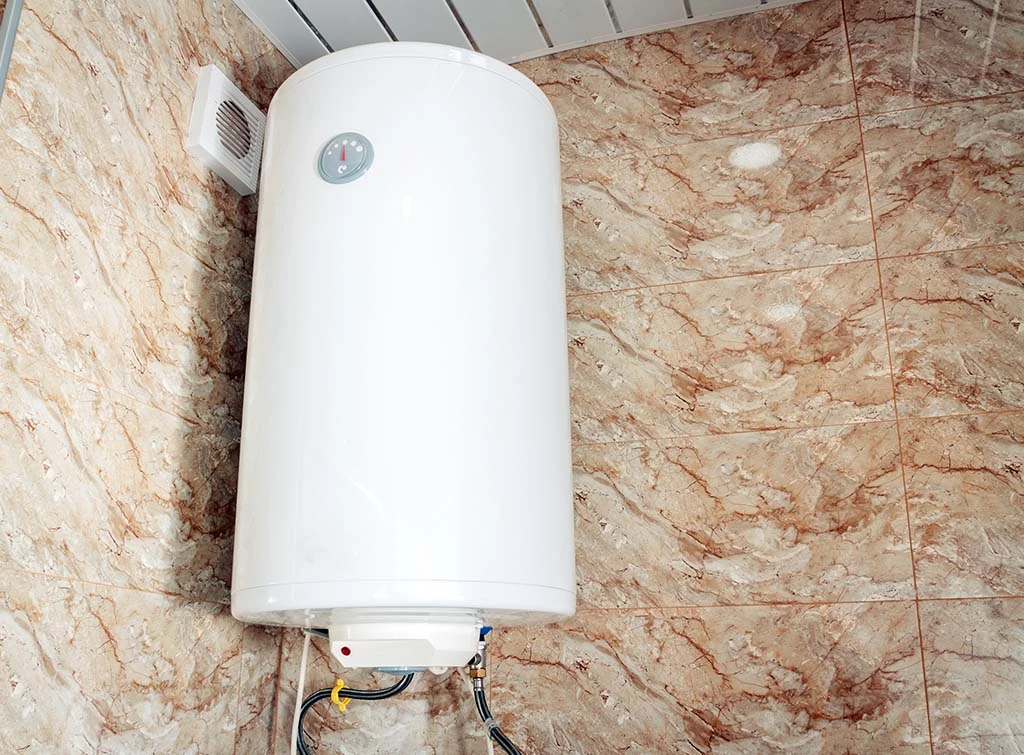
If you need to replace a broken tap or simply want to update your old taps, it’s important to completely switch off the hot water in your home first.
Do this by either:
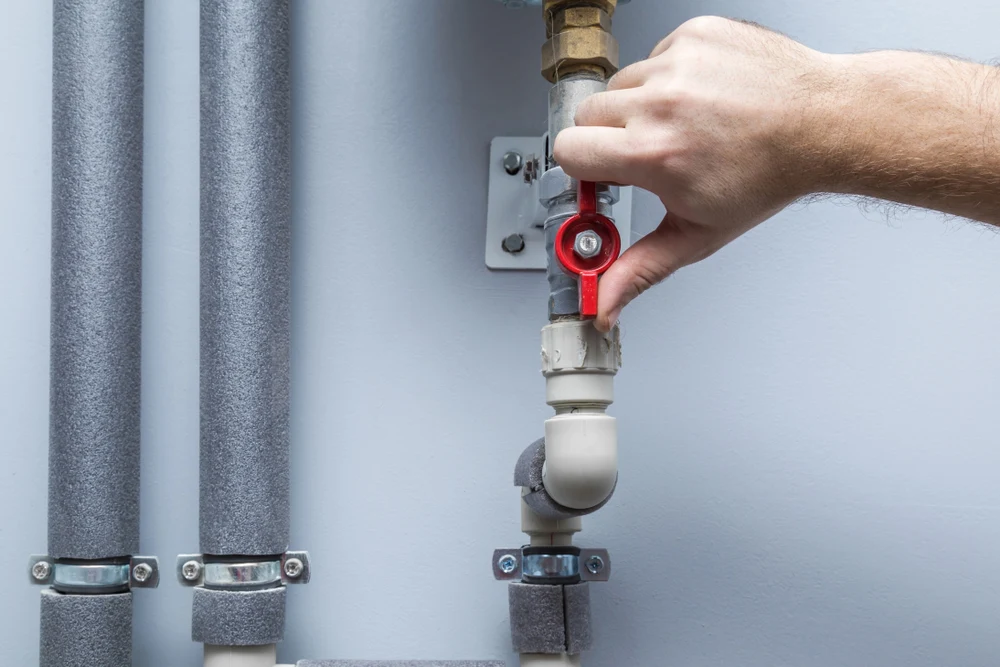
Shutting off the mains water supply to your home at the main stop valve or stop cock. This can often be found under your kitchen sink.
Shutting off the isolation valve to whatever appliance you wish to turn off. Some homes will have isolation valves in place for some or all appliances that can switch off your water supply. These will be turned off by a lever or screw head.
Shutting off the supply from a water cylinder. If your home has a water cylinder that’s used to store water, you’ll need to switch this off in addition to your mains supply. This can be done using a valve attached to the cylinder.
These instructions can also be followed if you need to turn off the hot water to change a tap washer.
Find a plumber near me
When to call a plumber
If your hot water temperature is inconsistent, your thermostat won't hold a setting, or you're not confident adjusting it yourself, it's worth calling in help rather than guessing.
A plumber or heating engineer can test the system properly, identify the cause, and make sure your setup is both safe and efficient.
Get started by entering your postcode into our search tool. We'll show you the Checkatrade plumbers who operate in your area.
Find a plumber near me

Checklist: Keeping your hot water tank safe and efficient
For the safest water at the most optimum temperature, follow everything on our handy checklist.

Your hot water tank temperature checklist
FAQs
60°C, and safely up to 65°C. This range kills legionella bacteria while avoiding the risks of storing water at an unnecessarily high temperature.
No more than 50°C, and often closer to 44°C where a thermostatic mixing valve is fitted. Water at tank temperature (60°C) can cause serious scalding in under a second.
You can reduce it slightly, for example from 65°C to 60°C, but you should never go below 60°C.
Doing so removes the protection against legionella bacteria, which is a health risk that outweighs any saving on your energy bill.
Legally, this requirement applies to landlords and commercial properties - though not to owner-occupied homes. However, following the same 60°C guidance is still the safest approach for any household with a hot water cylinder.
Common causes include a faulty thermostat, an issue with the immersion heater or boiler supplying the cylinder, limescale build-up on the heating element, or poor insulation. A plumber or heating engineer can diagnose which applies to your system.
A thermostatic mixing valve blends hot water from your cylinder with cold water right at the point of use. It means the water reaching the tap or shower is a safe temperature, even though the water in the tank itself is stored much hotter.
They're widely recommended in homes with children, elderly residents, or anyone at higher risk of scalding.
There's no strict rule for domestic homes, but checking annually, or whenever you notice inconsistent water temperature, is a sensible habit.
Landlords managing rented properties should check more frequently as part of routine legionella control.
No, the same 60-65°C guidance applies whether you have a vented or unvented cylinder. The difference between the two is mainly about pressure and installation requirements, not the safe storage temperature.

Need any help planning your central heating? From costs and maintenance tips to user guides and tips for being economical, we know you want a job done right.
See the tradespeople we've checked for your job