EXPERT ADVICE
How to rip out a kitchen: A step-by-step guide to kitchen removal
Updated 10/26

By: Laura Macdonald
Reviewed: Kim Staples
Planning a kitchen refit? Taking out the old kitchen is one of the easiest places to save money. Done carefully, you can remove your units in good condition, which means you can reuse, sell or donate them rather than paying to dump them.
What to do before you start stripping things out
How to remove worktops, drawers, and cabinets
Which jobs need a qualified tradesperson
Ways to reuse, recycle, or dispose of units
How long removal and refitting can take
This guide walks you through how to rip out a kitchen step by step, from switching off services to taking out the worktop, drawers, and cabinets.
We'll also cover what to leave to a professional, how to get rid of the old kitchen, and what affects the cost of kitchen removal.
Find checked and reviewed tradespeople
Before you start ripping out your kitchen
A little preparation makes the whole job safer and quicker. Tick off these steps first.
Check for asbestos first
If your home was built or refurbished before 2000, some materials in the kitchen could contain asbestos.
Common culprits include textured coatings (such as Artex) on ceilings and walls, vinyl floor tiles and their backing, and insulating boards.
Health and Safety Executive (HSE) guidance is to assume a material may contain asbestos if you're not sure, and not to drill, sand, scrape, or break it up until it's been tested. If you spot anything suspicious, stop and get it checked before carrying on.
Shut off and disconnect services
Before you touch a single unit, make sure the gas, water, and electricity supplies to the kitchen are safely isolated, and mark clearly what you've switched off.
Gas: Disconnecting a gas cooker or hob is regulated gas work, so it must be done by a Gas Safe registered engineer. Don't attempt this yourself.
Water: Turn off the supply to the sink, dishwasher, and washing machine, then open the taps to drain the pipes.
Electricity: Switch off at the consumer unit. If a cooker, hob, or oven is wired in on its own circuit, or you're not sure what's connected to what, ask a qualified electrician to disconnect it.
Take photos of how the pipes, wiring, and units are laid out before you start. This will be a big help for your new kitchen fitter, and for you if something needs to go back in the same place.
Clear the kitchen and remove appliances
With services safely isolated, empty the cupboards and drawers, then remove appliances such as the fridge-freezer, washing machine, dishwasher, and oven.
Once the major fixtures are out, you can then start taking out the units themselves.

Step-by-step: How to rip out a kitchen
The best order is usually from the top down: wall units first (if you have them), then the worktops, then the base units. That way, you always have clear access and nothing heavy is left hanging over your head.
Taps and sink
If your worktop includes a sink, disconnect it before you lift the worktop.
Turn off the isolation valves under the sink, disconnect the taps' flexible hoses and the waste pipe (have a bowl and towels ready for the water left in the trap), then release the sink clips or brackets underneath.
If the old pipework is stiff, corroded, or capped, you may need a plumber to disconnect it safely.
How to remove a kitchen worktop
Remove any drawers or items from the cabinets so you can see underneath.
Locate the fixings along the underside of the worktop and unscrew them.
Carefully cut through the sealant between the worktop and the wall or tiles with a utility knife.
Lift the worktop away. Depending on size and material (stone and solid surfaces are especially heavy), you may need a second pair of hands.
A kitchen worktop is normally held to the top of the base units with screws, brackets, or fixings, and sealed at the wall with sealant. Check how yours is fixed before you start.
If you have tiles above the worktop, you may need to remove the bottom row of tiles before the worktop will come away.
Use a hammer and bolster, and wear eye protection and thick gloves. And if the tiles or adhesive are in an older property, remember to check for asbestos first.
If the worktop has been glued to the cabinets, gently cut through the adhesive with a chisel or utility knife and use a small pry bar to ease it away.
If you want to reuse the worktop, work slowly and support it as you go. Stone worktops should usually be removed by a professional, as they crack easily and are very heavy.
How to remove kitchen drawers
With the worktop out of the way (or even before, if you need access), you can take out the drawers. The exact mechanism varies by manufacturer, but on most modern kitchens it works like this:
Empty the drawer.
Open it fully so it is extended on its runners.
Feel for the release levers or clips. These are usually on either side of the drawer, under a small cover, or underneath the drawer on the outer edge.
Lift or push the levers, then pull the drawer out and off its runners.
If you can't find the release mechanism, check the manufacturer's instructions or look up the make of your kitchen online.
How to remove kitchen cabinets
Once drawers and doors are out, you can start on the cabinets themselves. Remember, start at the top and work your way down.
Cabinet doors
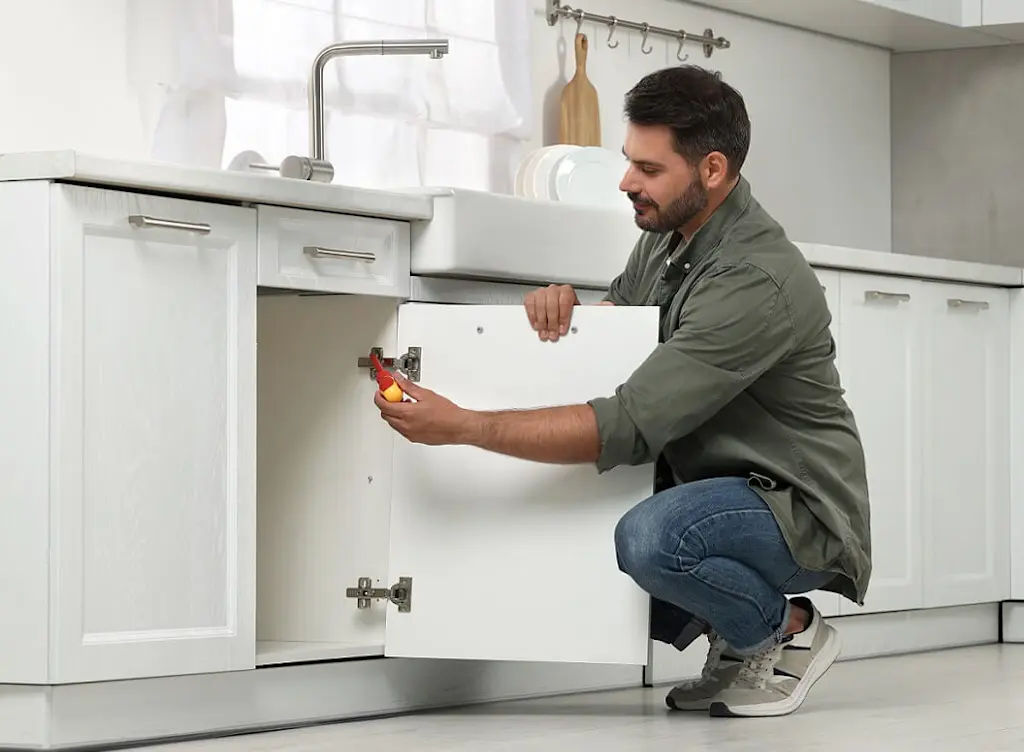
Take the doors off first, as it makes the cabinets lighter and easier to handle.
Look for a release clip on the back of the hinge. On many hinges you press the tab and the door lifts away.
If there is no clip, unscrew the hinge from the cabinet.
Support the weight of the door as it comes away.
Kickboards, plinths, and cornice
Before you take out the base units, remove the kickboards (the plinth along the bottom). They're usually clipped on or held with small screws or brackets, so ease them off carefully.
At the top, wall units may have a cornice or pelmet fixed on, which also needs to come off before the cabinets can be released.
Wall units
Empty the cabinet and take out any internal shelves. Then:
Unscrew the cabinets from each other.
Find the wall fixings, usually at the top and bottom, either inside or outside the cabinet.
Have someone support the weight of the cabinet as you undo the last fixings, then lift it away.
Base units
Base units are normally screwed to the wall and to each other.
Unscrew them from their neighbours first, then from the wall, and lift each one out.
Watch out for pipes and cables running behind or beneath the units, and do not pull on them.
If you want to sell or reuse your old kitchen, consider getting a professional to remove it. Careful removal gives you a much better chance of reselling it in good condition.
Can I rip out a kitchen myself, or should I hire a professional?
If your kitchen is a simple run of units, you're comfortable with basic tools, and you have an extra pair of hands, removing a kitchen is a realistic DIY job. Most of the work is unscrewing fixings and lifting units out.
However, it makes sense to bring in a bit of help when:
Gas appliances need disconnecting (this is always a Gas Safe engineer's job)
Wiring or pipework needs altering, capping or moving
You suspect asbestos
You have heavy stone worktops or fitted appliances you want to reuse
You want the best chance of reselling the units in good condition
How long does it take to rip out a kitchen?
Removing a typical kitchen is often a one to two day job for a competent DIYer, but older kitchens, awkward fixings, or extra work like removing tiles can all make it take longer.
Your new kitchen fitter will be able to give you a more accurate idea for your own home.

How much does kitchen removal cost?
Kitchen removal will generally cost a few hundred pounds, but it depends on the job in front of you. The main factors affecting the cost are:
The size of the kitchen and how many units and appliances there are
How the units are fixed, and whether they need to be removed carefully for reuse
Whether gas, plumbing or electrical disconnections are needed
Whether you need tiles, flooring, or plaster removed as well
How the waste is disposed of, for example a skip, a waste collection, or taking it to the tip yourself
Where you live, as labour rates vary around the UK
Some kitchen fitters include removal of the old kitchen in their quote for the new one, while others price it separately, so always check what's covered.
For a realistic guide to what the whole job might cost, see our kitchen fitting cost guide and our guide to how much a new kitchen costs.
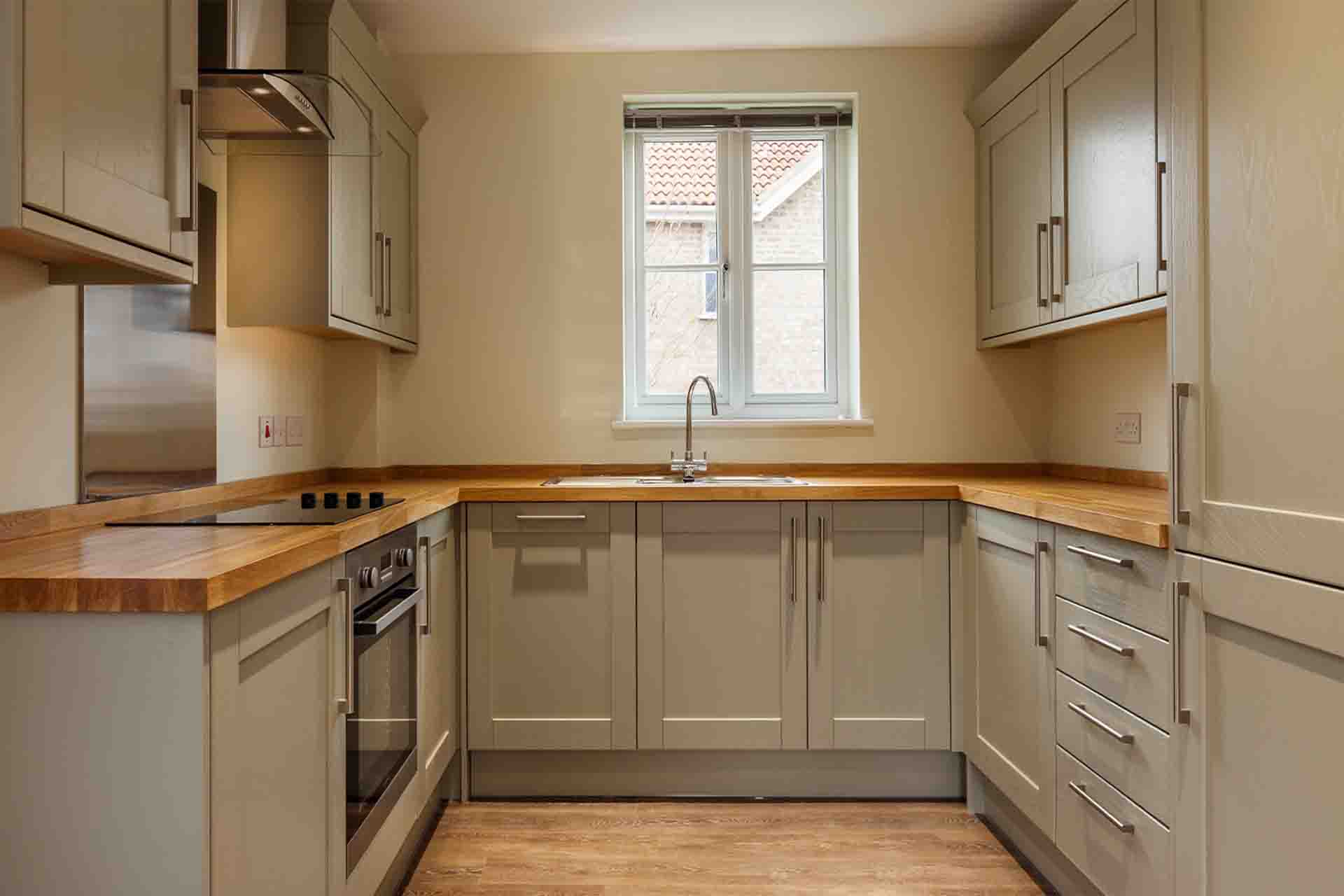
How much does kitchen fitting cost in 2026?
In this kitchen fitting cost guide, we look at the average cost of fitting a kitchen and the cost of a kitchen fitter per day, as well as detailing what is and isn’t included in a kitchen fitting quote.
What to do with your old kitchen
What you do with the old units and appliances can save you money and keep waste out of landfill. Here are your main options.
Reuse
Existing appliances such as your fridge, oven, and washing machine could be given a new lease of life with a clean or service, which is often cheaper than buying new.
Find an appliance repair specialist or an oven cleaner to bring your oven back up to scratch. Our appliance repair cost guide can help you decide whether a repair is worth it.
Sell, donate, or recycle
If you've removed your kitchen carefully, the units, worktops and the sink can often be resold or given away.
List them on a site such as Freecycle, eBay, or Facebook Marketplace, and you may be surprised what someone else will take.
Some charities and reuse organisations also collect good-quality used kitchens, so it is worth asking locally.
When you buy new appliances, you can also check what the retailer offers. Shops that sell electrical items must provide a way for you to dispose of your old one, usually free take-back in store or through an alternative scheme, and some will also collect it when they deliver the new one (collection may be chargeable).
Otherwise, your local household recycling centre will usually accept old electricals. Check your council's website for what they take.
Hire a skip
If the kitchen is beyond saving, you may need a skip. If it will go on a public road, a permit from your council is usually needed.
In most areas the skip hire company arranges this, but check when you book. Check our guide to skip hire prices to see what to expect, and read how skip hire works for the practicalities.
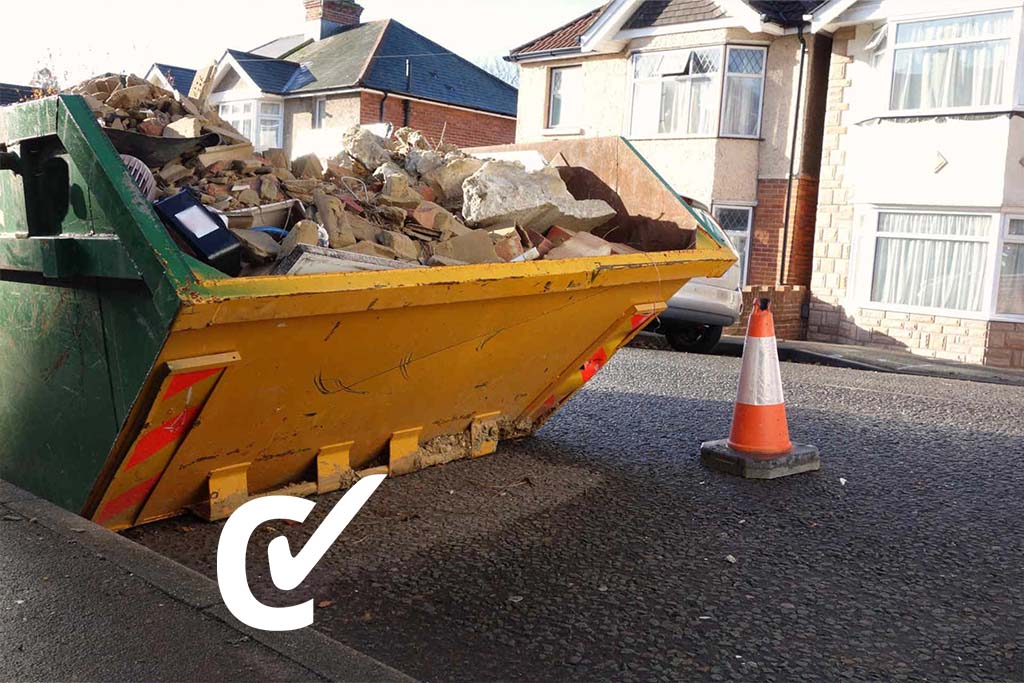
Skip hire costs in the UK: Pricing breakdown 2026
If you're looking for skip hire prices we've done the research for you! Here's the average cost you can expect to pay for skips.
What happens after the old kitchen is out?
Once the old kitchen is gone, the walls and floors will usually need attention before new units go in. That might include:
Making good and plastering
Repairing or replacing tiles or flooring
Moving services and utilities, if you're changing the layout
Fitting the new kitchen itself often takes around one to two weeks depending on size and what else is involved. Our guide to how long a kitchen renovation takes goes into more detail.
Ready for the next stage? See how to fit kitchen units or get ideas from our kitchen ideas guide.
Finding a tradesperson to remove and refit your kitchen
If you'd rather leave the strip-out to someone else, a kitchen fitter can remove the old kitchen and fit the new one as a single job, which keeps the project simple and means fewer people to coordinate.

Need reassurance? All tradespeople pass up to 12 checks before joining, and we keep checking after.
When comparing quotes, ask whether removal and disposal are included, whether gas, plumbing, and electrical disconnections are covered or need separate trades, and how long they expect the job to take.
Read recent customer reviews and check the work they've done on similar homes.
Ready to get started? Enter your postcode into our search to start finding tradespeople near you.
Find checked and reviewed tradespeople
Kitchen removal checklist
Tick things off on this list to keep your kitchen removal project on track.

Kitchen removal checklist
FAQs
For a straightforward kitchen, it is a manageable DIY job if you're confident with the tools and have someone else to help you.
The tricky parts are disconnecting gas, water, and electrics safely, so these are best left to qualified tradespeople.
Try listing units, worktops, and appliances on a site like Freecycle or Facebook Marketplace, or ask local charities and reuse organisations whether they collect used kitchens.
Retailers may also take away old appliances when you buy new ones, and if all else fails, your local recycling centre will usually take electricals and some other materials.
Yes, if you work in the right order (doors and drawers first, then wall units, worktops, and base units), and support the weight of each unit as you release the last fixings.
If you want to resell them, take your time, keep the fixings together, and consider hiring a professional instead.
Most worktops are fixed to the base units from underneath with screws or brackets, and sealed to the wall with sealant. Some are also glued. Check underneath and along the wall edge before you try to lift one.
If it runs on gas, yes. Disconnecting a gas appliance must be done by a Gas Safe registered engineer.
Electric cookers or hobs wired in on their own circuit, on the other hand, are best disconnected by a qualified electrician if you aren't sure how to do it safely.
Doing it yourself saves the labour cost of removal, but you'll still need to handle the disposal - and any gas, plumbing, or electrical disconnections still require qualified tradespeople.

More Kitchen Fitters - Installation Articles


See the tradespeople we've checked for your job