HOW-TO GUIDES
How to clean decking: wood, composite and plastic
Updated 12/21
By: Content Team
Decking earns its keep as an outdoor entertaining space, but only if you keep on top of cleaning it. Left alone, algae and grime don't just look bad, they make boards slippery and can shorten the life of the timber underneath.
Here's how to clean decking properly, whichever material you've got.
Whether a pressure washer is safe for your type of decking
How to shift algae without damaging boards or fixings
Different methods for wood, composite and plastic decking
Why slippery decking happens and how to stop it
How to clean decking properly before staining
How much professional decking cleaning typically costs
Should you use a pressure washer?
A pressure washer gets impressive results fast, but the wrong pressure or technique can strip stain, splinter softwood, or damage composite boards outright.
Important: many composite decking manufacturers advise against pressure washing altogether, since the high-pressure water can force its way under the surface layer and cause lasting damage. Always check your manufacturer's guidance before reaching for a pressure washer on composite decking.

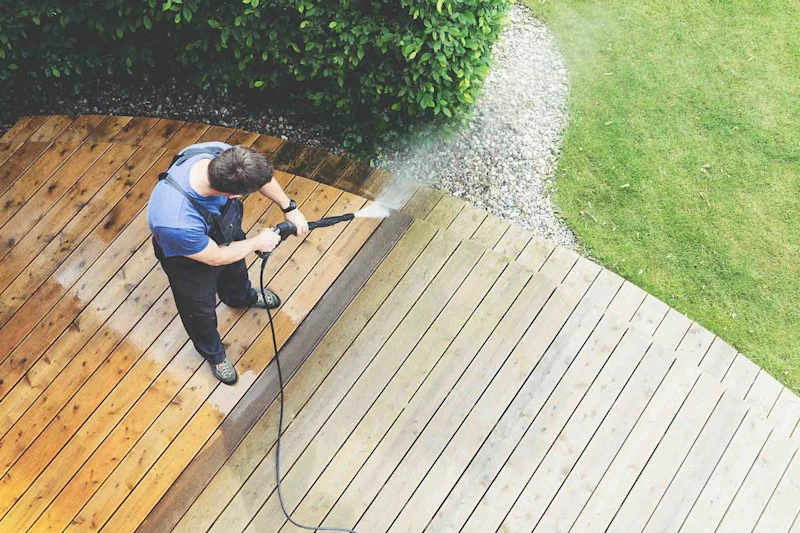
How to clean decking with a pressure washer (wood only)
Check the manufacturer's guidance and test on a hidden area first.
Sweep the decking to clear leaves and debris.
Use a fanning nozzle rather than a narrow, concentrated jet.
Keep the tip around two feet from the surface, moving in a steady sweeping motion.
Work away from your home, overlapping each pass so you don't miss patches.
Follow up with a cleaner or brightener if the finish needs it.
As a general guide, a pressure of around 500 PSI suits a softwood deck, but always defer to your specific decking's guidance since boards vary.
How to clean decking without a pressure washer
This takes longer but is gentler, and works well on decks with mildew staining or composite boards that shouldn't be pressure washed:
Sweep to remove dirt and leaves.
Mix a mild bleach and dish soap solution with warm water. (Skip the bleach step for composite or plastic decking; see below.)
Apply the mixture and leave it to work for up to 15 minutes.
Scrub with a stiff-bristled broom.
Rinse thoroughly to remove all traces of the cleaning solution.
Find decking cleaners in your area

How to clean decking naturally
If you'd rather avoid bleach, particularly with kids or pets around:
Mix one cup of white vinegar with a gallon of water.
Sprinkle baking soda over the decking.
Work the vinegar solution into the boards with a stiff brush.
Rinse thoroughly afterwards.
Vinegar is also the safer choice for algae on wood decking generally.
Chlorine bleach can alter the wood's colour and corrode metal fixings over time, so many professionals now recommend oxygen bleach or a vinegar-based approach instead of standard bleach.

How to clean composite decking
Composite decking is lower maintenance than wood but not maintenance-free:
Leaves and soil: sweep off, then scrub with dish soap and warm water.
Mould: scrub with a soft-bristled brush and a warm water and dish soap mix.
Stubborn algae: spray undiluted white vinegar on the area, leave for an hour, then wipe with a clean rag.
Ice: use a plastic shovel, never a metal one, and rock salt to melt ice safely.
If you're still weighing up materials, our composite decking vs wood cost guide breaks down the price difference.
Never use a pressure washer on composite decking unless your manufacturer explicitly confirms it's safe. It's one of the most common ways composite boards get damaged.
How to clean wooden decking
Move furniture and plants off the decking, then sweep to remove loose debris.
Rinse with a garden hose to shift excess dirt.
Mix white vinegar with water in a bucket.
Dip a brush or broom into the mixture and sweep along the grain of the wood.
Scrub the full surface, dipping the brush as needed.
Rinse thoroughly with the hose.
Always scrub in the direction of the wood grain. Cross-grain scrubbing can force dirt further into the fibres rather than lifting it out.
How to clean plastic decking
Sweep the decking before applying anything wet.
Avoid bleach, which can damage plastic decking over time. Use white vinegar, dish soap, or ammonia instead.
Scrub with a natural-bristle brush.
Rinse thoroughly with water.

Need reassurance? All tradespeople pass up to 12 checks before joining, and we keep checking after.

How to clean decking algae and prevent slippery decking
Algae is the main cause of slippery decking, and it thrives wherever moisture, shade and trapped debris combine.
Effective options for algae removal:
White vinegar, left to sit before scrubbing
Hydrogen peroxide (oxygen bleach), a gentler alternative to chlorine bleach
A dedicated algae removal product designed for your decking material
To prevent it returning:
Sweep regularly, especially when trees are shedding leaves
Improve airflow and sunlight to shaded areas where possible
Rinse dirt off boards routinely rather than waiting for a big clean
Consider an anti-slip treatment for persistently shaded, damp areas

How to clean decking before staining
A patchy stain job almost always comes down to one thing: dirt left on the boards before you started.
Any debris trapped under the stain leads to an uneven, messy finish, so sweep, rinse and let the deck dry completely before staining. Our how to stain decking guide covers the process once your deck is ready.

Hiring a professional decking cleaner
For decks that haven't been cleaned in a while, or composite decking you're wary of damaging yourself, a professional decking cleaner has the right equipment and product knowledge to get consistent results without the guesswork.
Checkatrade tradespeople have passed up to 12 checks, so you can book with confidence.
Find local tradespeople right for the job
Enter your postcode to find a top tradesperson near you
MSCS CLEANING LTD
10.00
(14 reviews)Services & skills
Cleaning ServicesDecking CleaningUPVC CleaningHard Floor CleaningDriveway Cleaning / Patio CleaningTailored Cleaning Solutions Ltd
10.00
(44 reviews)Services & skills
Cleaning ServicesDecking CleaningGutter Cleaning & ClearanceRug CleaningCommercial CleaningAstral Bright Cleaning Sevices
10.00
(58 reviews)Services & skills
Cleaning ServicesDecking CleaningRug CleaningOffice CleaningDeep Cleaning ServicesCL Cleaning Services
10.00
(290 reviews)Services & skills
Cleaning ServicesDecking CleaningGutter Cleaning & ClearanceStone Floor CleaningJet / Pressure Washing


Take a look at our patio cleaning cost guide for an idea of typical pricing before you book.

Decking cleaning checklist
FAQs
Combine two gallons of water with half a cup of dish soap and, for wood decking only, two cups of powdered bleach or an oxygen bleach alternative. For composite or plastic decking, skip the bleach and use dish soap and vinegar instead.
A dedicated wood deck cleaner and reviver gives the best results for heavily neglected softwood, while vinegar and dish soap handle routine maintenance well.
Vinegar, baking soda, dish soap, and hydrogen peroxide all work well, depending on your decking material and the type of staining you're dealing with.
Only if your manufacturer explicitly says it's safe. Many composite boards can be damaged by high-pressure water forcing its way under the surface layer, so check your warranty terms first.
Chlorine bleach can change the colour of the wood and corrode metal fixings over time. Oxygen bleach or a vinegar-based solution are generally considered gentler, safer alternatives.
Most decks benefit from a full clean twice a year, typically after winter and again mid-season, with more frequent sweeping in shaded or leaf-heavy areas.
Slippery decking is almost always caused by algae building up in damp, shaded spots. Regular sweeping and rinsing, plus improving airflow where you can, are the most effective long-term fixes.
Yes. Any dirt or debris left on the boards gets sealed in under the stain, leading to an uneven, patchy finish.

More Decking Cleaning Articles


See the tradespeople we've checked for your job