HOW-TO GUIDES
Why does my RCD keep tripping?
Updated 06/26
By: Tom Blake
Reviewed: Alex Peters
If your RCD keeps tripping, it can feel like a mystery - especially when it happens at random, or with nothing obvious plugged in.
The good news is that there are common, identifiable causes, and in many cases you can narrow down the problem yourself before calling in a professional.
RCDs protect against electric shock and fire
Faulty appliances are the most common cause
Moisture in sockets and wiring can also trigger trips
Boilers and heating systems are a common culprit
Step-by-step troubleshooting can help pinpoint the fault
Persistent tripping always needs a qualified electrician
This guide covers everything you need to know: what an RCD is, why it trips, how to troubleshoot the fault, and when to stop trying to fix it yourself and call a vetted electrician instead.
Find qualified electricians working in your area
What is an RCD?
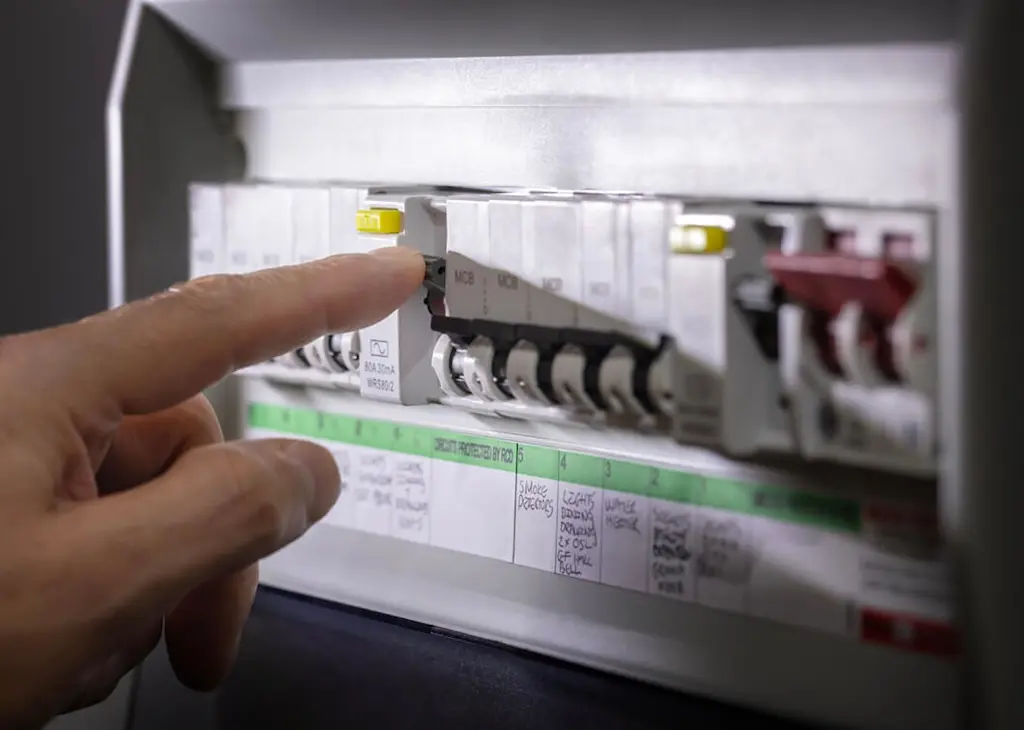
An RCD - short for Residual Current Device - is a safety switch in your consumer unit (fuse box) that monitors the flow of electricity through your circuits.
If it detects current leaking to earth, it cuts the power almost instantly. That split-second reaction is what protects you from electric shock, and your home from electrical fire.
Most modern homes have RCD protection built into their consumer unit. Some older properties may have a separate RCD device fitted between the fuse box and the sockets it protects. You can find out more about how your consumer unit works in our guide to consumer units.
RCDs are tested to trip within 30 milliseconds of detecting a fault - fast enough to prevent a fatal electric shock. Never ignore repeated tripping. It means something is wrong.
RCD vs MCB - what's the difference?
These two devices often cause confusion, but they do very different jobs.
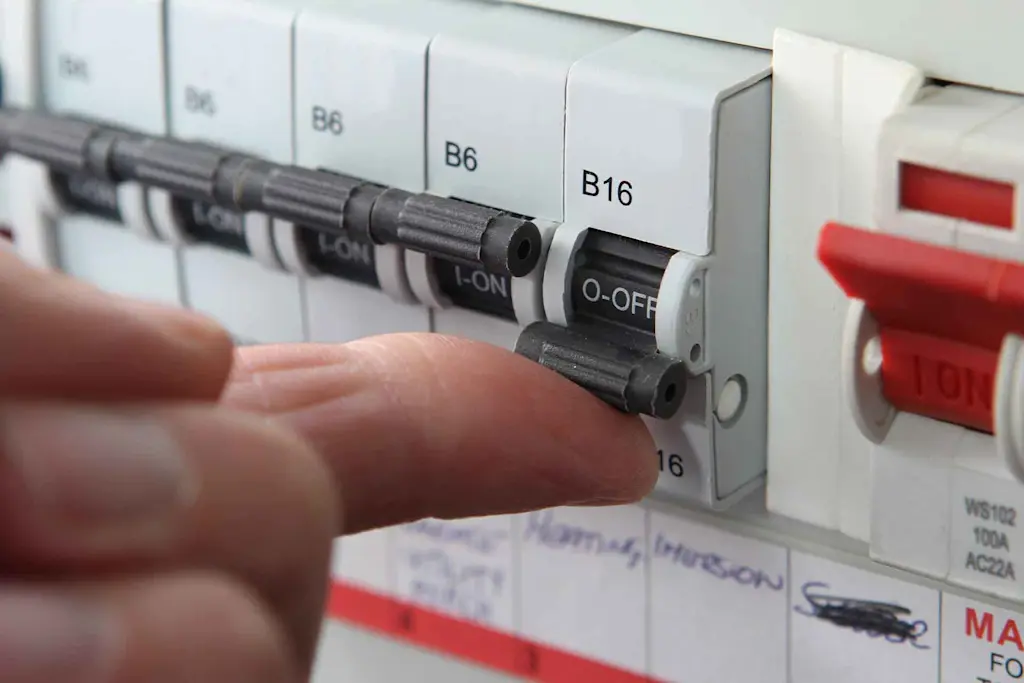
An MCB (Miniature Circuit Breaker) protects against overloads and short circuits - it trips when too much current flows through a circuit
An RCD protects against earth leakage - it trips when current is going somewhere it shouldn't, such as through a person or a faulty appliance
This is why you can have an RCD trip without the MCB tripping. The fault is not about load - it's about leakage.
An RCBO (Residual Current Breaker with Overcurrent) combines both functions in a single device. If your RCBO keeps tripping with nothing plugged in, it could be a short circuit, an earth fault, overcurrent, or even a faulty RCBO itself.

Why does my RCD keep tripping? The most common causes
1. A faulty appliance
This is the single most common cause. Appliances with heating elements or motors - washing machines, ovens, kettles, tumble dryers, dishwashers - can develop faults that cause current to leak to earth.
Even a small amount of leakage from multiple devices on the same circuit can add up and push the RCD over its trip threshold.
Try the one-by-one method. Unplug everything on the affected circuit, reset the RCD, then plug appliances back in one at a time. The one that causes it to trip again is likely the culprit.
2. Washing machine faults
Washing machines deserve their own mention because they come up so often. Common faults that cause RCD tripping include:
A leaking or failing heating element
A worn or damaged motor
A faulty drain pump
Damaged internal wiring
A defective door safety lock or start/stop switch
If your washing machine is causing intermittent trips - particularly during the wash or spin cycle - this points to a fault that's only present under load or heat. Get a tradesperson to service it.
3. Oven and cooker faults
Similar issues apply to ovens and electric hobs. Things to look out for include:
Loose or damaged terminal block connections
Faulty heating elements
A failed convection or cooling fan
Damaged wiring inside the unit
The oven light housing short-circuiting
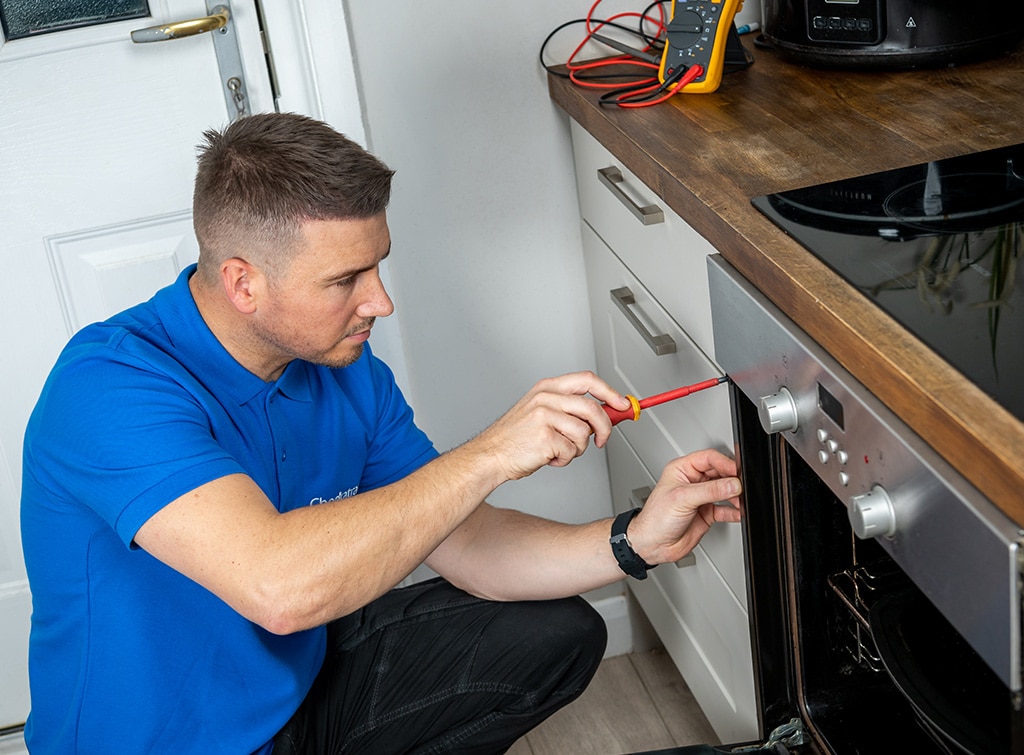
If your RCD trips when you turn the oven on, that's a strong indicator the oven is the cause. Disconnect it and call an electrician before using it again.
Find oven repair near me
When your oven stops working, mealtimes can quickly turn stressful. Here, you'll discover how to find checked oven repair technicians near you, what the work involves, and how much you might expect to pay.
4. Boiler tripping the RCD
A boiler tripping your RCD is more common than people realise, and it's one of the more serious causes. It typically points to:
A fault with the boiler's internal wiring or pump
A failing component that's causing earth leakage
Moisture getting into the boiler's electrics
Don't reset the RCD repeatedly and carry on. A boiler fault needs to be assessed by a qualified electrician and, in some cases, a Gas Safe registered engineer too.
5. Moisture and water ingress
Water and electricity are a dangerous combination. Moisture getting into sockets, light fittings, or wiring can trigger RCD trips - particularly in:
Bathrooms and kitchens where steam is common
Outdoor sockets and garden lighting after rain
Garages and outbuildings that aren't weathertight
After heavy rain, it's not unusual to find that an outdoor socket or garden light has caused the RCD to trip. Check weatherproof seals on outdoor fittings and replace any that have deteriorated. If moisture has got into internal wiring, you'll need an electrician.
If your RCD trips overnight with nothing obviously on, think about what runs automatically - fridge/freezer motors cycling, heating systems on timers, and garden lighting can all cause trips at unusual times.
6. Cumulative earth leakage from multiple appliances
Modern appliances all have a small amount of natural earth leakage. On its own, each one is below the trip threshold. But when you have several devices connected to the same circuit - particularly in a kitchen or home office - that leakage adds up.
Eventually, the combined total exceeds what the RCD is rated to tolerate, and it trips.
This is sometimes called "nuisance tripping" because there's no single faulty device - it's the accumulation that's the problem. An electrician can test the earth leakage across your circuits and advise on the best solution.
7. Damaged or ageing wiring
Frayed cables, DIY wiring jobs, gnawed wires from rodents, or simply old wiring that has degraded over time can all cause earth faults.
If your home was built before the 1970s and hasn't been rewired, ageing wiring could be contributing to the problem. Look at our guide to common electrical faults in UK homes for more on what to watch out for.
8. A faulty or over-sensitive RCD
RCDs don't last forever. Over time, they can become over-sensitive or simply wear out - causing them to trip even when there's no genuine fault. If you've ruled out appliances and wiring, the RCD unit itself may be the issue.
Signs include the RCD feeling warm to the touch, visible discolouration, or it refusing to stay reset. This needs professional replacement.
9. Power surges and surge protection interference
External power surges - from lightning, grid fluctuations, or nearby equipment - can trigger an RCD trip. Certain surge protectors and electronics can also produce short current spikes that cause sensitive RCDs to trip unexpectedly.
If your RCD trips briefly and then resets itself without any obvious fault, a power surge could be the explanation.
Find qualified electricians working in your area
How to troubleshoot a tripping RCD - step by step
Before calling an electrician, it's worth running through this process. It takes a few minutes and can quickly narrow down the cause.
Step 1
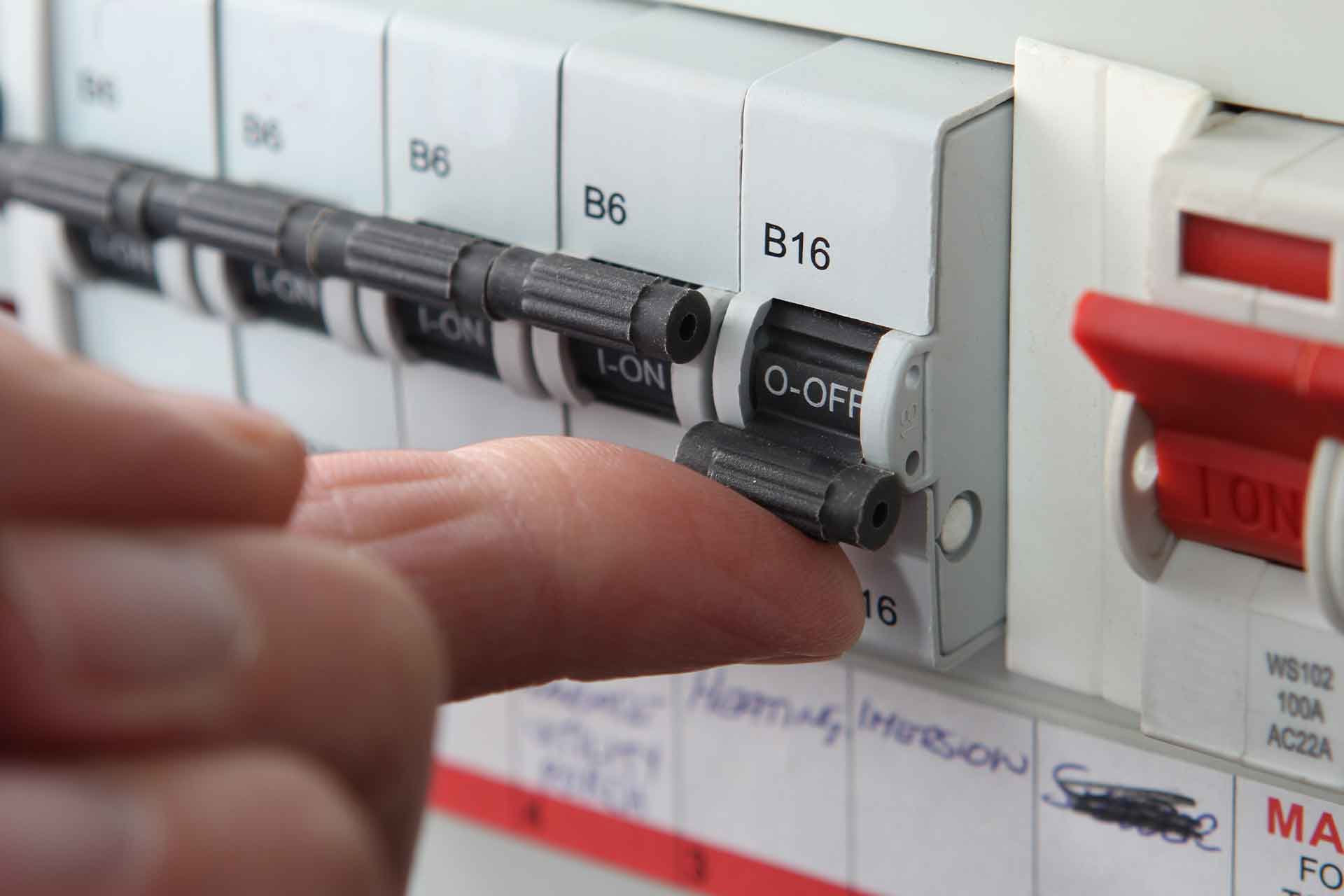
Reset and observe - Press the RCD switch back to the on position. If it trips immediately and won't stay on, the fault is constant and likely serious. Call an electrician.
Step 2
Unplug everything on the affected circuit - Switch off or unplug every appliance on the circuit that's tripping. Turn the MCB switches for that circuit to off.
Step 3
Reset the RCD again - If it holds with everything unplugged, the problem is almost certainly an appliance. Move to Step 4.
n.b. If it still trips with everything unplugged, the problem is likely in the wiring, a fixed appliance (like a boiler or cooker), or the RCD itself. Call a vetted electrician.
Step 4
Plug appliances back in one at a time - Turn the MCB back on, then plug each appliance in individually and wait a moment. The one that causes the RCD to trip is your culprit. Disconnect it and don't use it until it has been inspected or replaced.
Test your RCD every three months using the test button on the front of the unit. Press it, confirm the power cuts, then reset it. If it doesn't respond to the test button, it needs replacing.

When should I call an electrician?
Some RCD problems are straightforward to identify yourself - but there are situations where you should stop troubleshooting and call a professional:
The RCD won't stay reset, even with everything unplugged
You notice a burning smell, scorch marks, or sparks at the consumer unit
The RCD trips repeatedly even after you've identified and removed the faulty appliance
You suspect moisture has got into your wiring
Your boiler or a fixed appliance is involved
Your consumer unit or wiring is over 25 years old
You have no RCD protection on circuits in your bathroom or kitchen
All electricians found through Checkatrade are vetted to our standards - including up to 12 background checks - and are covered by the Checkatrade guarantee.
You can find an emergency electrician near you if the situation is urgent, or search for a local electrician for non-urgent work.
Find qualified electricians working in your area
Can I add RCD protection to an older fuse box?
If your home has an older fuse box without RCD protection, it is possible to add it - either by fitting a separate RCD device or by upgrading the consumer unit entirely. Read our guide on whether an RCD can be fitted to an old fuse box to understand your options.
For homes with a particularly outdated setup, a full consumer unit replacement may be the safer long-term choice. See our consumer unit replacement cost guide for an idea of what's involved.
You might also want to consider a high integrity consumer unit if you want individual RCD protection on every circuit.

What is a high integrity consumer unit and when should it be used?
Often hidden away from view, the consumer unit is the central hub of the home’s electrical network from where all circuits are connected to the main supply and isolated when required. Protecting circuits, appliances and crucially the occupants, it is in many ways, the single most important
How to prevent your RCD from tripping
A few simple habits can reduce the likelihood of nuisance trips and help you catch problems early:
Test your RCD every three months using the test button
Don't overload circuits - especially in kitchens, home offices, and extension leads
Keep outdoor and bathroom electrical fittings dry and properly sealed
Have appliances serviced regularly, particularly washing machines and boilers
Book an electrical safety check every five to ten years (or every five years for rental properties)
Avoid cheap electrical devices that don't meet UK safety standards

Electrical problems at home? We've got you covered. Whether you need to understand your fuse box, find out what electrical faults to watch for, or budget for an upgrade, our guides have the answers.
RCD tripping checklist
Use this before calling an electrician:

RCD tripping - checklist to try
Find a vetted electrician near you
If you've worked through the checklist and still can't resolve the issue - or if the fault involves fixed wiring, your boiler, or any sign of scorching or burning - it's time to bring in a professional.
Every electrician on Checkatrade has been through up to 12 checks before they can list with us. Search for a local electrician or, if you need someone quickly, find an emergency electrician near you.
Find a local electrician
Enter your postcode to find a top tradesperson near you
Eastway Electrical Contractors Ltd
10.00
(167 reviews)Services & skills
ElectricianElectrical ContractorsSmoke AlarmsElectric Gate WiringFuseboard / Consumer Unit RepairLondon Live Electrical
10.00
(18 reviews)Services & skills
ElectricianElectrical ContractorsGarden LightingEmergency Electrician ServiceElectric SocketsMark Knowles Electrical
10.00
(47 reviews)Services & skills
ElectricianElectrical ContractorsElectrical Installation Condition Report - Safety Checks - EICRElectric RadiatorsElectrical Heater RepairWhat Electrics! Ltd
10.00
(66 reviews)Services & skills
ElectricianElectrical ContractorsElectric StovesElectrical Under Floor Heating InstallationEmergency Electrician ServiceJRG Electrical
10.00
(146 reviews)Services & skills
ElectricianElectrical ContractorsEmergency LightingElectric SocketsFuseboard / Consumer Unit RepairThunder Electrical Services Ltd
10.00
(96 reviews)Services & skills
ElectricianElectric Gate WiringElectric ShowersHot Tub WiringLED Lighting


FAQs about RCD tripping
Why does my RCD keep tripping with nothing plugged in?
If the RCD trips even when all appliances are unplugged and circuit breakers are off, the fault is likely in the fixed wiring, a permanently connected appliance (such as a boiler, cooker, or immersion heater), or the RCD unit itself.
This isn't something to troubleshoot yourself - call a qualified electrician.
Why does my RCD trip at night?
Night-time tripping usually points to appliances that run automatically. Fridge and freezer motors cycle on and off regularly and can cause brief current spikes. Boilers and heating systems on timers, outdoor lighting triggered by sensors, and even washing machines mid-cycle can all cause trips when you're not paying attention.
Work through the one-by-one method during the day to identify the cause.
Why does my fridge freezer keep tripping the RCD?
Fridge freezers cause small electrical spikes each time the compressor motor starts up to begin a cooling cycle. These spikes can be enough to trip a sensitive RCD. It could also be a sign of a faulty motor or wiring issue inside the appliance.
Because diagnosing fridge freezer faults requires specialist equipment, it's best left to a professional.
Why is my RCD tripping intermittently?
Intermittent tripping is one of the trickiest problems to diagnose because the fault isn't always present. It's often caused by an appliance that only leaks current under certain conditions - such as during a heat cycle or spin. Cumulative earth leakage from several appliances can also cause intermittent trips.
An electrician can use specialist testing equipment to measure leakage across your circuits and find the source.
Can a boiler trip an RCD?
Yes. A boiler with a wiring fault, a failing pump, or moisture in its electrical components can cause the RCD to trip. If your RCD trips when the boiler fires up or during a heating cycle, treat this as a priority.
Don't keep resetting it and hoping for the best - get a qualified electrician to investigate.
Why is the RCD tripping but not the MCB?
Because they protect against different things. The MCB responds to overloads and short circuits - too much current on a circuit. The RCD responds to earth leakage - current going where it shouldn't.
A small leakage fault won't trigger the MCB because the overall load is still within limits, but it's enough to cause the RCD to trip.
How do I stop nuisance RCD tripping?
First, identify whether there's a genuine fault or true nuisance tripping (where the RCD trips without any real danger). Work through the appliance isolation method to rule out faulty devices. If no single appliance is causing it, cumulative leakage from multiple devices may be the issue.
An electrician can test individual circuit leakage levels and may recommend splitting circuits or upgrading the consumer unit.
Is it dangerous if my RCD keeps tripping?
The tripping itself isn't dangerous - it's the RCD doing its job. What's potentially dangerous is the fault causing it. Repeated tripping means something on your circuit is leaking current to earth. Left unfixed, that fault could cause electric shock or fire. Don't just keep resetting the RCD and ignoring the underlying problem.
Should I reset the RCD myself?
You can safely reset the RCD once to see if it holds. If it trips again immediately, or trips every time you use a particular appliance, stop resetting it and investigate the cause.
Repeatedly resetting an RCD without fixing the fault is not safe.
How often should I test my RCD?
Test your RCD every three months by pressing the test button on the unit. The power should cut immediately. If it doesn't, or if the button feels stiff or unresponsive, the RCD may be faulty and needs replacing by a qualified electrician.


See the tradespeople we've checked for your job