HOW-TO GUIDES
How to fix a toilet flush button
Updated 07/26
By: Imogen Beech
Reviewed: Kim Staples

If your toilet won’t flush properly, the issue could be to do with the flushing mechanism. Don’t panic! Here’s how to fix a toilet flush button.
How to fix a stuck or sticking push button
What to check before replacing any parts
How to replace a faulty flush valve or button
How to fix a lever-style flush instead
Why your toilet keeps running after flushing
When to call a plumber, and what to expect
A flush button that sticks, won't return, or doesn't flush properly is usually down to a handful of common faults - many of them fixable without calling a plumber.
Here's how to work through the problem step by step, whether you've got a push-button cistern or a traditional handle - and when you need to call in help.
If you're not confident with DIY, or want to ensure professional results, your best bet is to hire a plumber. Enter your postcode below to find a plumber near you.
Find toilet repair services near you
Tools you’ll need to fix a push button toilet
Screwdriver (flathead, and possibly a small one for prising)
Replacement toilet flush button
Replacement flush valve or rubber seal
Replacement lift chain or rod, and flapper (for lever toilets)
Step 1 - Turn off the water
Before you do anything else, make sure to turn off the water supply.
Twist the isolation valve on the pipe feeding the toilet, or turn off at the mains stopcock if there isn't one.
Then, flush the toilet to drain as much water from the cistern as possible before you start.
Check whether your toilet has its own isolation valve near the pipework. If it does, you can shut off the water to just the toilet rather than the whole house while you work.
Step 2 - Remove the cistern lid
Next, carefully remove the cistern lid. Depending on your toilet, you may be able to lift it up or you may need to unscrew it.
Take care here - the lid is usually still connected to the fill valve or refill tube, so don't pull it away sharply.
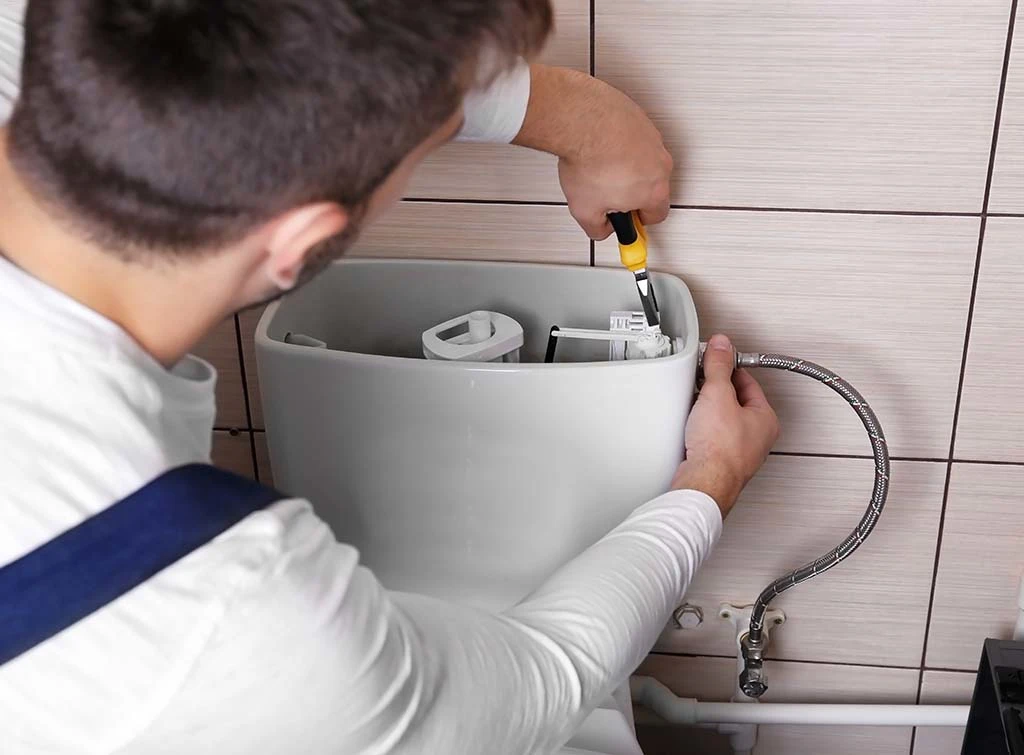
Step 3 - Disconnect and drain the cistern
The fill valve or tube should have a small release button on the side. Press this to separate it from the flush button.
Then use your screwdriver to press the fill valve lever and flush out the remaining water. Twist off the valve to drain what's left in the cistern.
Step 4 - Diagnose the fault
Take a look at what's actually gone wrong. You might see:
Bottom suction section not resealing - the flush valve lifts when you press the button but doesn't drop back down, so water keeps running
Limescale or debris around the flush valve seat
A worn or damaged rubber seal on the valve
A sticking or misaligned button that doesn't return to its resting position, keeping the valve open
It can be hard to tell for certain whether the seal alone is the problem, so if in doubt, it's usually more reliable to replace the whole flush valve rather than just the seal.
Step 5 - Replace the toilet flush valve
Remove the flush valve, and make sure that all parts have been removed - including the separate lower section.
Then, place the new toilet flush valve in the correct position and twist it until you hear a click.
You can adjust the levels on the flush valve to match those on your old flush valve if you want to, but it often isn’t necessary.
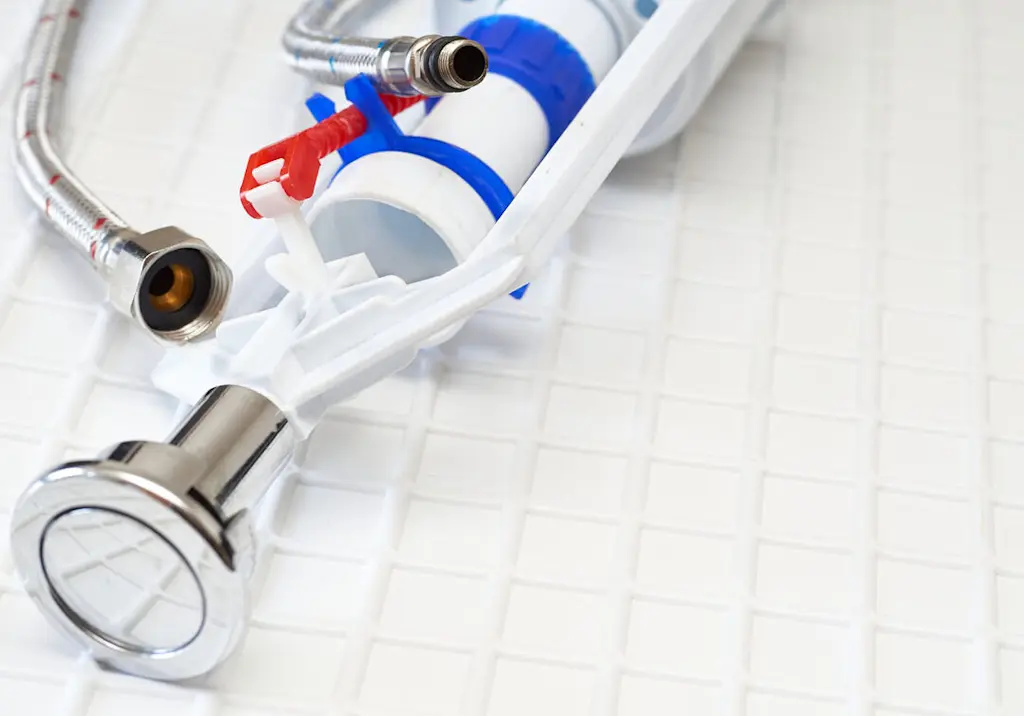
Step 6 - Replace the toilet flush button
Next, remove your old toilet flush button from the cistern lid.
Replace it with your new one, making sure to tighten the last plastic bit on the bottom of your cistern lid.
Reconnect it to the fill valve or tube by pressing the side release button, the same way you disconnected it.
Step 7 - Check it works
Now, you need to test your toilet to make sure it works.
Place the cistern lid back into position and turn the water supply back on. Then, flush your toilet a few times to make sure there are no issues, such as leaks or continuous running.
Still experiencing problems?
Hopefully, everything is sorted now the button and flush valve have been replaced.
But if you’re still experiencing problems, it’s time to call in a plumber to take a closer look. Enter your postcode to get started.
Find toilet repair services near you
H2: My push button is stuck or won't return
A button that sticks down - rather than one that's simply broken - usually just needs to be cleaned and lubricated rather than replaced.
Mineral buildup and grime around the button housing is a common cause, especially on toilets a couple of years old.
Here's how to fix it:
Disconnect the button unit and clean the buttons and shafts in warm soapy water
Let everything dry fully before reassembling
Apply a small amount of silicone lubricant (not WD-40) to the moving parts
Check any air tubes on pneumatic systems aren't kinked or twisted, as this stops the flush valve resetting properly
How to adjust a push button toilet flush
If your push button works but your toilet doesn’t flush all of the waste away as it should, you may be able to adjust the button on your push button toilet flush valve instead of replacing it altogether.
Here’s how:
Remove the cistern lid and place it upside down on the toilet seat
Locate the white push rod - this operates the larger flush valve; the blue rod opens the small flush valve and won't normally need adjusting
Turn the lock nut anticlockwise to loosen it
Turn the white push rod anticlockwise once, then retighten the lock nut
Put the cistern lid back on the toilet lid and test the flush button
If it still isn't flushing completely, repeat these steps to adjust it further.
How to fix a toilet flush lever
Not all toilets have a push button. Instead, many will have a lever or toilet handle. Here’s how to fix the flushing mechanism on your toilet if it has a lever.
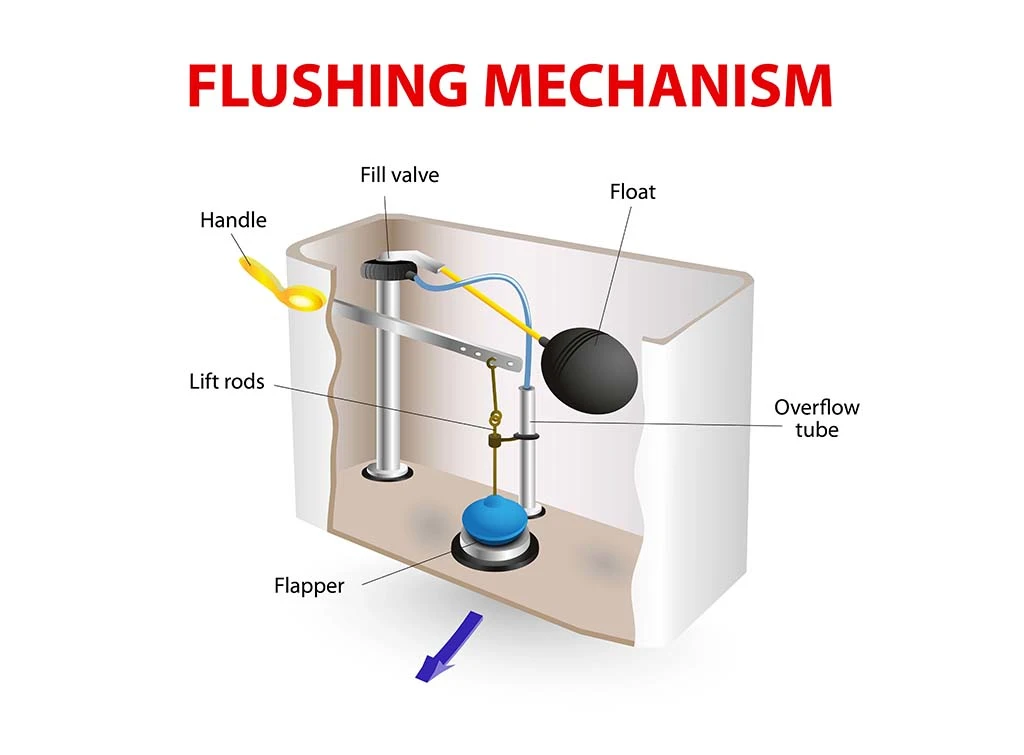
Turn off the water supply
Remove the cistern lid and place it upside down on the toilet
Empty the tank: pull up the rubber flapper that sits at the bottom of the flush mechanism, and let the water drain
Check the chain or rod connecting the flush lever to the flapper. If it's loose, remove the chain and reattach it to a hole closer to the flush lever. If it's disconnected, reconnect it to the flapper. If it's broken, you'll need to replace it
Check the flapper is sealed and positioned properly. Again, if it's damaged or worn, you'll need to replace it
Replace the lid, turn on the water supply, and flush the toilet to check it works properly
If it still doesn't work, you may need to call a plumber.
Find toilet repair services near you
How much does it cost to fix a toilet?
Costs vary depending on what's actually wrong. As a guide, plumbers typically charge around £50 per hour, and fixing a toilet flush is a quick job that shouldn't take more than an hour or so.
You'll also need to pay for any replacement parts on top of that.
Plumber costs in the UK: 2026 price guide
Whether you are planning an exciting renovation or have a troublesome issue, our plumber cost guide contains daily, hourly and emergency rates.
Find a plumber to fix a toilet flush
A toilet flush button or lever that isn’t working properly can be a real issue, especially if you have only one toilet in the home!
Hopefully, these steps will help you to get to the root of the problem. But if not, it’s time to call in a plumber.
Remember, it’s best not to take any chances when it comes to running water in the home. Plus, a plumber will be able to get the job done quickly and effectively – making sure they get to the root of the problem to provide you with a long-term fix.
Luckily, it’s easy to find a trusted plumber on Checkatrade. Enter your postcode into the search box below to get started - or download the Checkatrade app.
Need a trade? Search now

Only tradespeople who pass our checks are on Checkatrade. In fact, we’re so confident in the tradespeople on Checkatrade that if you book through us, we guarantee their work up to £1,000. (T&Cs apply.)

FAQs
This may be due to a broken flush button, faulty flush valve, low water level, or blocked pipe. See our guide on what to do if your toilet isn't flushing properly for more troubleshooting.
A plumber can fix this quickly, though it's often a manageable DIY job for most people comfortable with basic tools.
Plumbers typically charge around £50 per hour, with the total cost depending on what needs replacing.
This is usually due to a flush valve that isn't resealing properly, often due to limescale, a worn seal, or a button or rod that isn't returning to its resting position.
Often, yes. Disconnect the button, clean it and the shafts in warm soapy water, dry thoroughly, and apply a little silicone lubricant before reassembling. If that doesn't work, it may need replacing.
It can be hard to tell without dismantling the valve, so if you're not certain, replacing the whole valve is the more reliable fix.
Yes, vinegar is a safe way to dissolve limescale on flappers, valves, and rim holes without damaging rubber or plastic components. Avoid bleach inside the tank, however, as it can degrade the rubber parts over time.
Mechanical systems use a rod or cable connected directly to the flush valve. Pneumatic systems use a small air pump that sends a puff of air through a tube to trigger the flush. It's common on buttons mounted on the wall rather than the cistern lid.

Browse our toilet hub for more guides on toilet repairs, replacements, and costs.

See the tradespeople we've checked for your job