HOW-TO GUIDES
How to get rid of flies in the house fast (and stop them coming back)
Updated 08/26
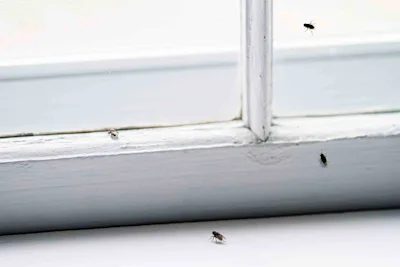
A handful of flies buzzing around the kitchen is annoying. A window full of them is something else entirely.
Flies aren't just irritating - house flies and bluebottles carry bacteria like Salmonella and E.coli on their feet and in their saliva, picked up from bins, drains and worse.
This guide walks you through the fast fixes and gives advice on when it's worth calling in a professional.
Why flies have suddenly appeared in your home
How to tell house flies, fruit flies and drain flies apart
The fastest DIY ways to clear an infestation
How to get rid of flies for good, not just today
What professional fly control typically costs
When it's time to call in a pest control specialist
Why do you suddenly have flies in the house?
Flies don't appear from nowhere. If you've gone from seeing the odd fly to counting dozens, there's almost always a breeding site or a food source somewhere close by.
A single house fly can lay several hundred eggs in her lifetime, and in warm weather the whole lifecycle from egg to adult can take under two weeks. That means a small problem can turn into a big one within days if the source isn't dealt with.
The usual culprits are:
Bins that aren't emptied often enough, especially food waste
Pet food left out, particularly wet food
Overripe fruit or veg left on the side
A build-up of grime inside drains
A dead rodent or bird in a loft, chimney or wall cavity
Doors and windows left open in warm weather with no screens
Before you reach for a spray, spend five minutes checking bins, pet bowls and the fruit bowl. Killing the adult flies you can see won't help much if eggs are still hatching somewhere out of sight.
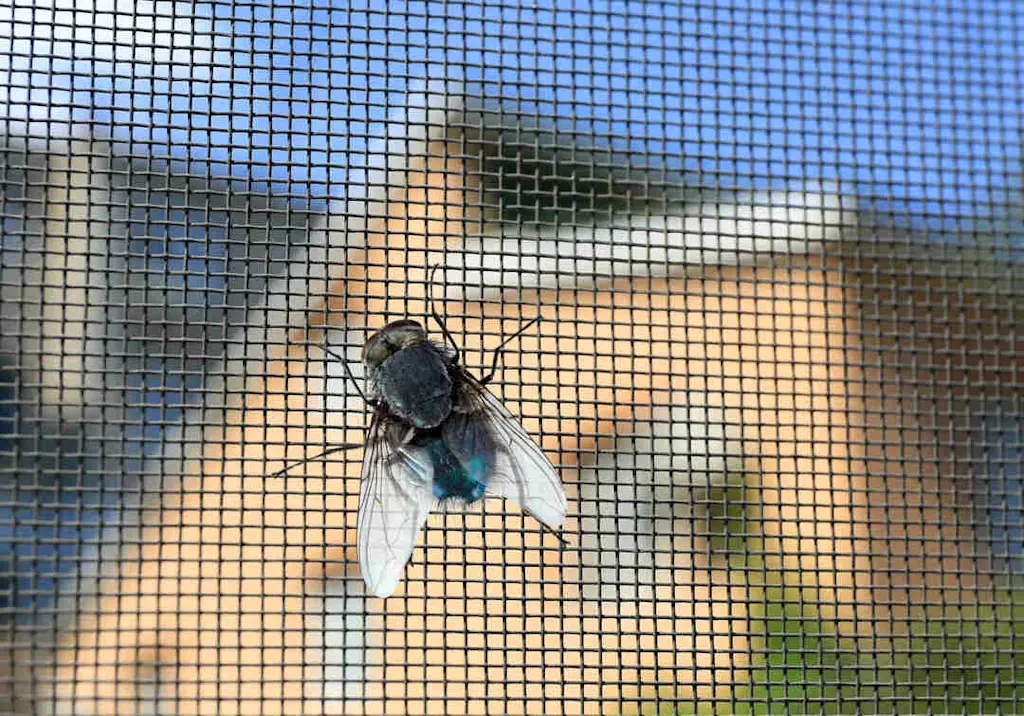
Types of house flies and how to identify them
Not all flies are the same, and knowing which one you've got makes it much easier to pick the right fix. Here's how to tell them apart:
Common house flies
Grey-bodied with four dark stripes and around 6-8mm long, house flies are drawn to decaying food, bins and pet waste. They're the most likely culprit if you're seeing flies mostly in the kitchen or near bins.
Fruit flies
Tiny (around 3mm) and tan or brown in colour, fruit flies cluster around ripe or rotting fruit, spilled juice and empty drinks bottles or wine glasses.
Bluebottles (blow flies)
Larger, with a distinctive metallic blue-green sheen, bluebottles are attracted to meat, fish and anything decaying - including, sometimes, a dead rodent or bird you haven't found yet.
Cluster flies
Similar in size to house flies but slightly larger and duller, with fine golden hairs. Cluster flies don't breed indoors - they're hunting for somewhere warm to hibernate over winter, usually arriving in lofts and roof spaces from late August onwards.
Drain flies (sewer flies)
Small, fuzzy-winged and moth-like, drain flies breed in the slimy biofilm inside drains, sinks and waste pipes rather than in food waste.
Thunder flies (thrips)
Tiny, fast-moving and usually black, white or green, thunder flies mainly target garden plants but can get inside in large numbers during warm, thundery weather, where they'll go for houseplants too.
Not sure if it's flies or something else moving in? Our expert advice guide about signs of pests tells you what to look out for.

Are noises in your attic a sign of pests?
Noises in the attic should never be ignored. It could mean mice, rats, or other vermin are living in your roof space. In this guide, we share the telltale signs of mice and other pests and how you can get rid of them with professional help.
How to get rid of flies fast
If you just need flies gone today, these are the quickest options:
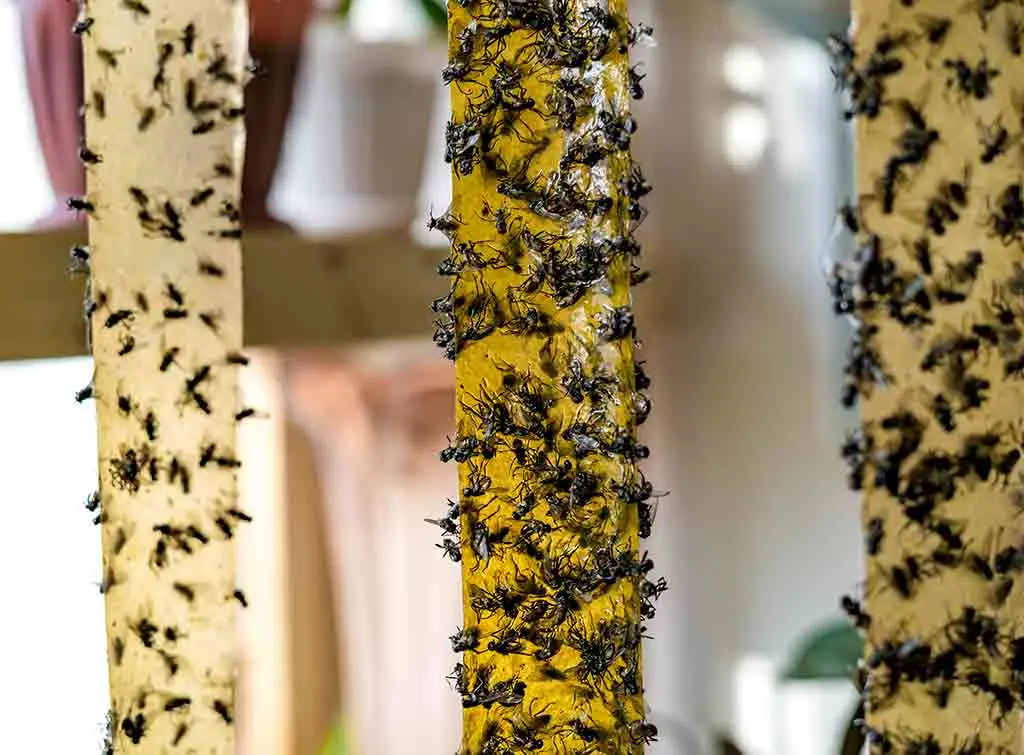
Sticky fly paper - Not glamorous, but cheap and effective for passive control
An electric UV bug zapper - Attracts flies with light and kills them on contact
A knockdown insecticide spray - Works fast, but only use it in a well-ventilated room and keep it away from food, pets and anyone with breathing difficulties
A fly swat - Flies take off forwards and slightly upwards, so approach from behind and above for the best chance of a hit
Mesh screens or beaded curtains - A good option if you'd rather deter flies than kill them
A vacuum cleaner - Genuinely one of the fastest ways to clear flies from a window or loft space; empty the bag outside straight afterwards
How to get rid of fruit flies
Fruit flies are more of a nuisance than a hygiene risk, but they multiply fast around ripe fruit. Keeping fruit in the fridge during summer helps prevent them in the first place.
You'll need:
The rotten or overripe fruit attracting them
A disposable container or jam jar
Cling film
Steps:
Place the fruit (or a splash of vinegar and a drop of washing-up liquid) in the container
Cover with cling film and secure it
Pierce a few small holes in the film and leave the trap where the flies are gathering
Once flies are trapped inside, dispose of the container. Repeat until they're gone
How to get rid of drain flies (sewer flies)
Drain flies breed inside the pipe itself, so surface sprays won't touch the problem - you need to tackle the drain.
You'll need:
A stiff, long-handled brush
An enzyme-based drain cleaner (more effective on biofilm than bleach)
An anti-bacterial spray and cleaning cloths
Steps:
Scrub inside the drain with the brush to physically remove the biofilm flies are breeding in
Pour an enzyme-based cleaner down the drain and leave it to work overnight
Repeat daily for around a week, and clear any standing water or damp patches nearby
If flies keep coming back after a week of this, the breeding site may be further down the pipe than you can reach, which is when it's worth calling in a drainage or a pest control specialist.
Find a trusted tradesperson in your area

On Checkatrade, you'll only find trades who meet our high standards and pass up to 12 checks.
How to get rid of cluster flies
Cluster flies aren't a hygiene risk, but a loft full of them is unpleasant, and they tend to return to the same property year after year once they've found it.
Vacuuming is the quickest way to clear an active cluster in a loft or window space. For a longer-term fix, sealing gaps around eaves, soffits and roof vents makes it harder for them to get in the following autumn.
The best time to treat cluster flies is late October to November, after they've moved in for winter but before they've properly settled. Treating too early or too late is much less effective.
How to get rid of bluebottles in the house
If bluebottles have appeared out of nowhere, it's worth taking it seriously - they're often a sign that something has died nearby, such as a rodent in the loft or wall cavity, or a bird in a chimney.
Start by vacuuming visible flies and washing down surfaces with disinfectant to remove any eggs. But if the flies keep returning, finding and removing the source is the only real fix.
Depending on what's behind the problem, you might need more than one type of tradesperson:
A pest control specialist can locate and remove a dead animal
Persistent drain-related fly problems may need a drainage engineer
A loft or roof void issue might call for both a pest controller and a builder to seal up entry points afterwards

If you're not sure who to call, our pest control near me directory can help, alongside specialists for fumigation services and general extermination if the infestation has spread further than flies alone.
How much does professional fly pest control cost?
Most people try DIY methods first, and for a small fly problem that's usually enough.
But if flies keep coming back despite your best efforts, professional treatment might be the quicker, cheaper option in the long run.
Fly infestations aren't always priced as a standalone job, since treatment often depends on the underlying cause (a dead animal, a drain issue, or a wider pest problem).
As a general guide, a pest control specialist typically costs around £230 per day, while individual treatments start from around £75 depending on the pest and severity.
Fly pest control cost calculator
Want a rough idea of what your job might cost before you get quotes?
Checkatrade's AI-assisted pricing tool uses real job data to give you a guide price in a couple of minutes.
Job Estimate Calculator

Or for an accurate quote, speak to a local pest controller. Just search your postcode below:
Find a trusted tradesperson in your area
How to stop flies coming back
Getting rid of the flies you can see is only half the job. Stopping them coming back means removing what attracted them in the first place.
Here's what to do:
Keep bins tightly closed and empty food waste regularly, especially in warm weather
Store bins in shade where possible, since heat speeds up decomposition
Wrap meat, fish and dairy waste before binning it
Fit mesh screens on windows and doors you keep open in summer
Seal gaps around pipes, vents, soffits and loft eaves
Wipe up spills and keep fruit in the fridge rather than on the side
Run hot water through drains regularly and clean them monthly with a brush
If you've sprayed the same insecticide repeatedly with less and less effect, it's not necessarily you doing something wrong. Many house fly populations have built up resistance to common pyrethroid sprays, so switching product type (or calling a professional who can rotate treatments) often works better than reaching for more of the same spray.

Pest prevention methods: How to pest-proof your home
Keep mice, rats and other vermin at bay with this expert guide to pest prevention methods in the home.
When to call a pest control professional
DIY methods deal with most everyday fly problems, but it's worth calling in a professional if:
Flies keep returning despite cleaning, trapping and sealing entry points
You suspect a dead animal but can't locate it
You're dealing with a large cluster fly infestation in a loft space
Drain flies persist after a week or more of cleaning
You've got young children, pets, or anyone in the household with breathing difficulties, making DIY sprays less suitable
A professional can identify the exact species, find breeding sites you might miss, and use treatments that aren't available over the counter. It's usually a faster route to a proper fix than repeated rounds of DIY spray.
Browse local pest control services
Enter your postcode to find a top tradesperson near you
Pablos Pest Management
10.00
(8 reviews)Services & skills
Pest / Vermin ControlEmergency Pest / Vermin Control ServiceFumigationM R Pest Control Environmental Services
10.00
(45 reviews)Services & skills
Pest / Vermin ControlBird Restriction MeasuresWildlife managementFumigationSOLUTIONS TAD LIMITED
10.00
(159 reviews)Services & skills
Pest / Vermin ControlBird Restriction MeasuresFumigationWasp Nest RemovalEmergency Pest / Vermin Control ServiceDirect Solutions Pest Control Ltd
10.00
(12 reviews)Services & skills
Pest / Vermin ControlBird Restriction MeasuresWildlife managementFumigationWasp Nest Removal- C
Cimex Pest Control (Greater London)
10.00
(42 reviews)Services & skills
Pest / Vermin ControlBird Restriction MeasuresWildlife managementWasp Nest RemovalFumigation Killaverm Pest Control
10.00
(94 reviews)Services & skills
Pest / Vermin ControlFumigationEmergency Pest / Vermin Control ServiceWasp Nest Removal


Why use Checkatrade to find pest control services near you?
Checked - Every Checkatrade member must pass up to 12 checks and commit to upholding the Checkatrade Standard
Reviewed - Over 6.2 million reviews have been published on Checkatrade on everything from communication, tidiness, timekeeping, and quality of work
Guaranteed - Jobs booked through Checkatrade are covered up to £1,000 (T&Cs apply)
Request a quote, search in the Checkatrade app, or enter your postcode below to find local pest controllers near you.

Fly control checklist
FAQs about fly control
A sudden spike usually means a breeding site nearby, such as an overfilled bin, food waste, a dirty drain, or in some cases a dead rodent or bird. Cluster flies are the exception, arriving each autumn to hibernate rather than breeding indoors.
Flies are said to dislike strong scents like lavender, eucalyptus, mint, basil and cloves. These can help as a mild deterrent, but the effect is temporary, and they won't stop an active breeding site producing new flies.
There's no single permanent fix for getting rid of flies, but removing the breeding source, sealing entry points, and keeping bins and drains clean will keep numbers down long-term. Persistent infestations usually need professional treatment to fully resolve.
Many common house fly populations have developed resistance to pyrethroid-based sprays after decades of use, so the same product can become far less effective over time. Switching to a different active ingredient, or getting a professional to treat the problem, often works better than repeat spraying.
House flies and bluebottles can carry bacteria, including Salmonella, E. coli, and Campylobacter, on their bodies and pass them on to surfaces and food they land on. They're a genuine hygiene risk, not just a nuisance, particularly around food preparation areas.
Cluster flies typically start moving into lofts and roof spaces from late August, with numbers peaking around October and November as they look for somewhere warm to spend winter.
A handful of flies can usually be dealt with using traps, sprays or a fly swat. It's worth calling a professional when numbers keep growing, keep returning, or you suspect a hidden breeding site you can't reach.
Some councils offer pest control services, but coverage and cost vary a lot by area, and many don't treat flies specifically. It's worth checking with your local authority directly, but a private specialist is usually the quicker option.
More Pest / Vermin Control Articles

See the tradespeople we've checked for your job