PLANNING GUIDES
Soundproofing a room: Planning for peace and quiet
Updated 07/26
By: Laura Macdonald
Reviewed: Kim Staples
Soundproofing a room has many benefits. Whether it's to help block out external noise or make the internal environment more amicable, there are many compelling reasons for soundproofing rooms.
How to tell whether your noise problem is airborne or impact noise
Which soundproofing method suits walls, floors, and windows
What acoustic panels, rockwool, and party wall soundproofing involve
Whether you need planning permission for soundproofing
Cheap ways to reduce noise without major building work
How much soundproofing a room typically costs
Sound travels, so without proper soundproofing, those private conversations you have within your own home could be overheard by your neighbours. Likewise, what's going on in their property - be it a loud stereo, the sound of slamming doors, or a barking dog - can be heard within yours.
This guide explains how to diagnose your noise problem, the most effective soundproofing methods for walls, floors, and windows, and what it typically costs.
Find soundproofing installers near you
Finding what to soundproof in your room
Before you can 'diagnose' the correct method of soundproofing, you need to determine whether the noise pollution you want to iradicate is airborne noise pollution or impact noise.
Airborne: Typically, noise from conversations, music, and TV are classed as airborne (noise travelling through the air)
Impact noise: Disturbances caused by footsteps, slamming doors, or moving furniture tend to be impact vibrations (noise travelling through other objects)
Common ways for how to make a room soundproof
Once you've figured out what's causing the noise, you can select the most suitable soundproofing method. Three of the most common options include:
Blocking the noise by adding a mass to a wall or floor
Dampening the sound vibrations
Absorbing the sound using soft furnishings
With your detective work complete, you can move forward with your soundproofing project.
Find a tradesperson to help with your soundproofing needs
Just add your postcode to our search box below to find a soundproofer in your local area.
Find soundproofing installers near you

Soundproofing for walls
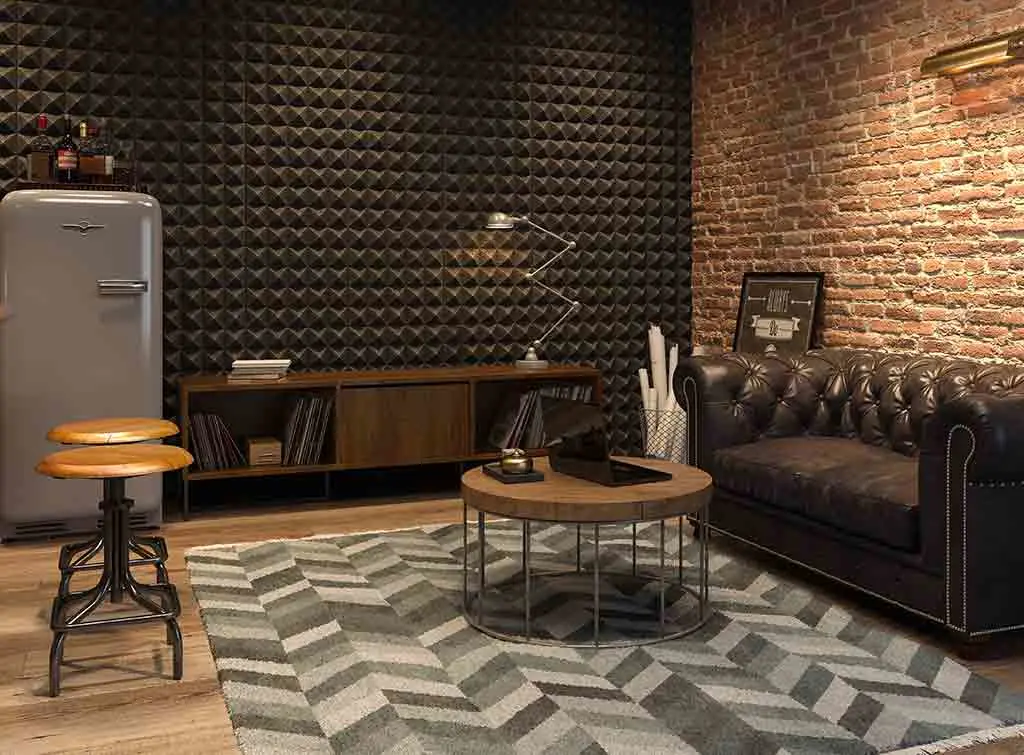
Walls are usually the first place homeowners look to soundproof, especially party walls shared with a neighbouring property.
Acoustic insulation slabs, acoustic roll, and acoustic plasterboard are all popular choices for tackling airborne noise.
Rockwool (mineral wool) is a common material used inside acoustic insulation slabs, prized for both its soundproofing and fire-resistance properties.
A damping compound fitted between wall layers, or acoustic wall panels, can help dampen vibration-based noise.
If noise from an adjoining wall is the real problem, cavity wall insulation can also help reduce sound transfer between properties, alongside its usual job of retaining heat.
If you're tackling a shared party wall, check whether the noise is genuinely coming through the wall itself or "flanking" around it via the floor or ceiling junction. A specialist can identify which before you spend money on the wrong fix.
Soundproofing for floors

Anyone who's lived in a flat or apartment will understand the need for quality soundproofing in the ceiling and floor.
Speak with a soundproofer to discuss the possibility of installing soundproof insulation in the space between the floor and the ceiling. It's often possible to install a suspended floor, filled with insulation.
Similarly, acoustic panel boards can be attached to the ceiling, or a dropped ceiling can be created, filling the cavity with insulation.
Soundproofing windows

If you live near a busy road, traffic noise can be a real problem.
Soundproofing your windows can help to reduce this considerably. Some methods of doing so include:
Noise-reducing glazing - specialist glass that disrupts soundwaves
Secondary glazing - although not all windows are suitable
Window inserts - similar to secondary glazing, typically of a lesser quality
Window film - a cost-effective solution, but you may lose the clarity of the glass
Shutters and window dressings - sound-dampening curtains and blinds can help to reduce traffic noise
Find out more about the different types of noise pollution and how to soundproof the various parts of a room - ceiling, door, and floor - in our soundproofing guide.
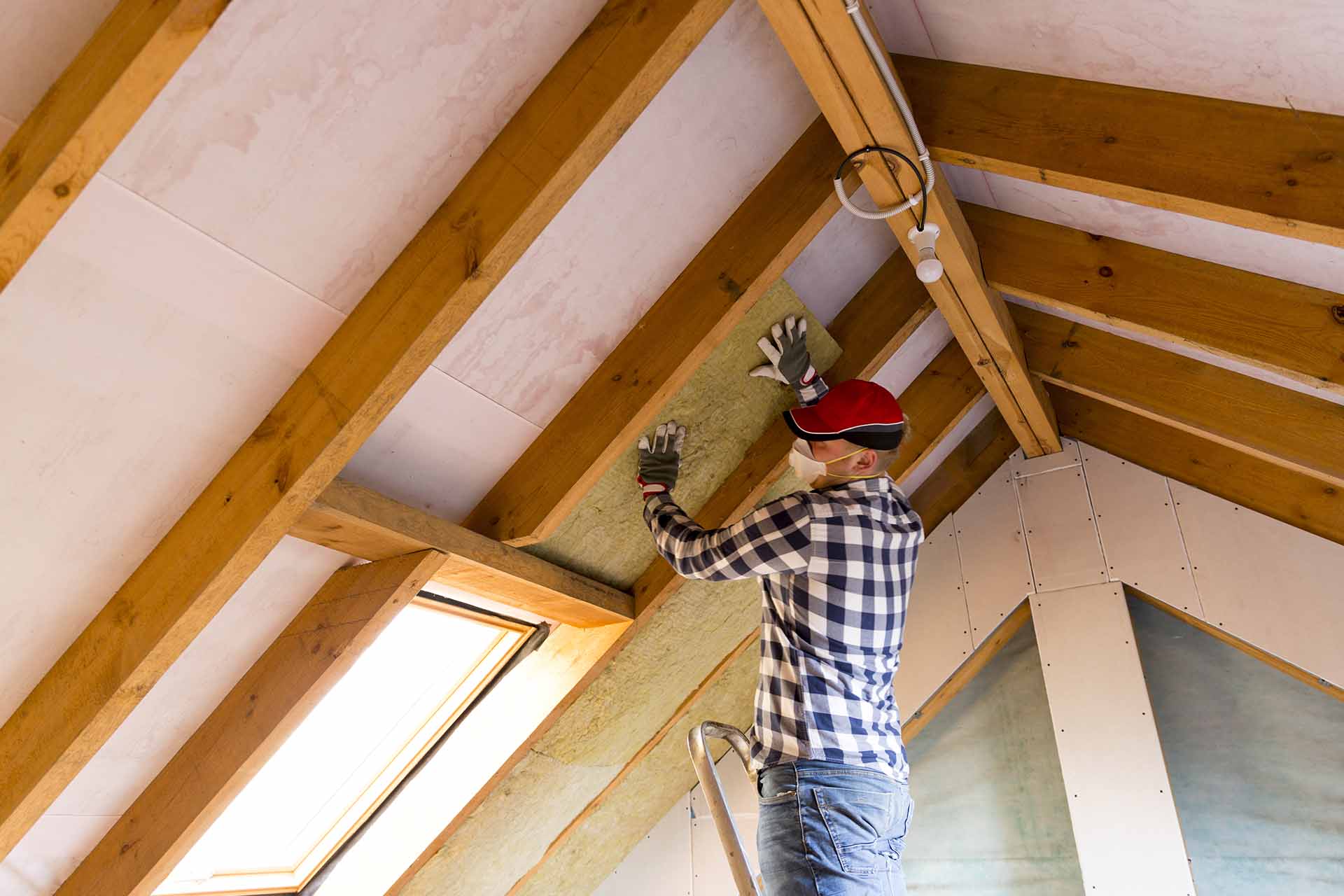
How to Soundproof Your Home: Walls, Floors, Ceilings and Doors
Learn how to soundproof walls, floors, ceilings and doors, from quick budget-friendly fixes to when it's worth hiring a soundproofing professional.
How to soundproof a room cheaply
If you have existing walls to soundproof and want cheaper, non-invasive solutions, we have a number of suggestions.
Seal gaps and cracks. Plug any gaps around windows, doors, and vents with caulk or an acoustic sealant
Strategic furniture placement. Position large, heavy furniture such as the sofa, wardrobe, or bookshelves full of books against the wall that needs soundproofing
Change your window dressings. Invest in affordable sound-dampening curtains or have window shutters installed
Add soft furnishings. Invest in rugs, cushions, throws, and wall hangings to help absorb the sound
Do you need planning permission for wall soundproofing?
When it comes to soundproofing your property, the UK requires no legal approval or permission prior to installation.
However, as part of the current Building Regulations (Part E), all new buildings and refurbishments in England must meet a rough guide target of 45 decibels for airborne noise resistance.
The regulations look at two aspects:
E1 - soundproofing from noise from adjoining buildings
E2 - soundproofing within the home itself
All new dwellings will now need to pass pre-completion sound testing (PCT) to determine whether the soundproofing is adequate. The results of this testing are then communicated to Building Control.
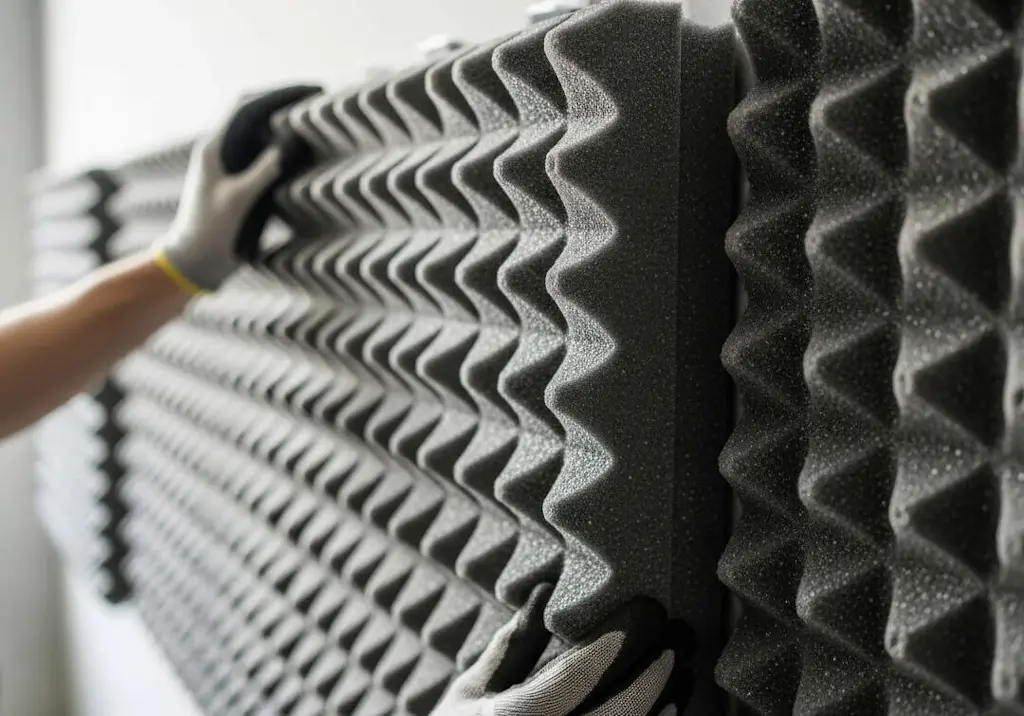
How much does it cost to soundproof a room?
The hourly rates for soundproofing a room will vary, but as a guide, you can expect to pay around £35 to £40 per hour, or about £300 per day – based on a two-person team with local tradespeople.
Read our in-depth guide for further information on the various methods of soundproofing a room and the costs involved.

Soundproofing a room cost: 2026 UK prices
Wondering how much soundproofing a room costs to cut out neighbour noise or build a home cinema? You're in the right place. Get [year] prices, what affects cost, and how to find a checked soundproofing specialist for a job done right.
Find a tradesperson to soundproof your rooms
The best and most effective way to soundproof a room is to call in a tradesperson. You can be sure of a job well done, alleviating your noise pollution issues once and for all.
To find a trusted local tradesperson, simply enter your postcode below to see who covers your area.
Find soundproofing installers near you
You can also post your job to hear back from local soundproofers, or download the Checkatrade app to your smartphone!

Your soundproofing planning checklist
Keep this checklist handy and get everything ticked off for your best chance at a calm, soundproofed room.

Your soundproofing planning checklist
FAQs
Soundproofing blocks noise from entering or leaving a room, using mass, dampening, or sealing. Acoustic treatment (like foam panels) improves the sound quality within a room by reducing echo, but doesn't stop noise from neighbours.
Yes, it can help with soundproofing. Rockwool (mineral wool) is a common material inside acoustic insulation slabs and stud wall cavities.
It absorbs sound energy well and adds fire resistance, but for a party wall it works best combined with mass (like acoustic plasterboard) and, ideally, decoupling from the structure.
Yes, to an extent. Sealing gaps around doors and windows, adding heavy furniture against noisy walls, hanging thick curtains, and adding soft furnishings can noticeably reduce noise for a fraction of the cost of structural soundproofing.
It won't match a full acoustic wall build-up, but it's a good starting point.
No, you don't need planning permission to soundproof your side of a party wall.
However, if the work involves cutting into or altering the structure of a shared wall, you may need to notify your neighbour under the Party Wall etc. Act 1996.
This depends heavily on the method. Sealing gaps and adding soft furnishings can be done in a day. Fitting acoustic plasterboard or a dropped ceiling with insulation is a bigger job, typically taking a few days depending on room size.
Home cinemas and studios usually need a combination approach: mass (acoustic plasterboard), decoupling (isolation clips or a separate stud frame), and absorption (acoustic panels) to control both noise leakage and internal echo.
See our recording studio cost guide for more detail.
Yes, it can, depending on the method used. Internal wall or ceiling soundproofing (like acoustic plasterboard or a stud frame) will reduce room dimensions slightly, similar to internal wall insulation. External or window-based soundproofing methods don't affect internal room size.

Our soundproofing hub has all the information you need in one place to help with your project, including soundproofing windows and fences.



See the tradespeople we've checked for your job