Underpinning near me
Search your postcode to find your local Checkatrade-approved tradespeople

Find a tradesperson near me
to view most relevant local trades, or search your postcode to browse more
Dulwich Diggers
10.00
(7 reviews)Services & skills
GroundworksUnder PinningEmergency Groundwork ServiceBVMH Groundworks Ltd
10.00
(153 reviews)Services & skills
GroundworksUnder PinningEmergency Groundwork ServicePilingBevan Groundwork
9.92
(30 reviews)Services & skills
GroundworksUnder PinningEmergency Groundwork ServicePilingAndi Contractor Ltd
9.93
(49 reviews)Services & skills
GroundworksUnder PinningEmergency Groundwork ServiceBLACK EAGLE CONSTRUCTION LTD
(14 reviews)Services & skills
GroundworksUnder PinningEmergency Groundwork ServiceRocks Plant And Construction Srvices Ltd
(2 reviews)Services & skills
GroundworksUnder Pinning


Being told your home needs underpinning to prevent further subsidence is news no one wants to hear.
The first thing you'll want to do is connect with experienced underpinning contractors near you. That's where Checkatrade can help.
Here's all you need to know about how to find underpinning contractors near you – from what the process involves to how much it costs.
Find underpinning contractors near me
Follow these three quick and easy steps to connect with underpinning specialists covering your local area.
1. Search your postcode
Enter your postcode in our search tool to browse underpinning contractors we've checked and reviewed in your area.
2. Easily check and compare
View profiles, check experience, and read customer reviews. Then create a shortlist of house underpinning services covering your local area.
3. Get in touch
Contact your chosen underpinning contractors (we always recommend contacting at least three tradespeople) to discuss the job, request quotes, and arrange a site visit.
Find a local tradesperson
Why use Checkatrade to find contractors for underpinning near me?
Underpinning is a big job, so you'll want complete faith in your tradesperson to carry out the job safely and effectively. That's where Checkatrade comes in.
Only tradespeople who pass our checks and commit to upholding the Checkatrade Standard appear in our listings. So you know it will be a job done right, whichever underpinning contractor you choose.
To find checked and reviewed tradespeople for house underpinning in your area, simply search your postcode – it's that easy.
Find underpinning services in your area
Find other structural repair services you might need
Why not download the Checkatrade app, for all the tradespeople you need at your fingertips?

When does a house need underpinning?
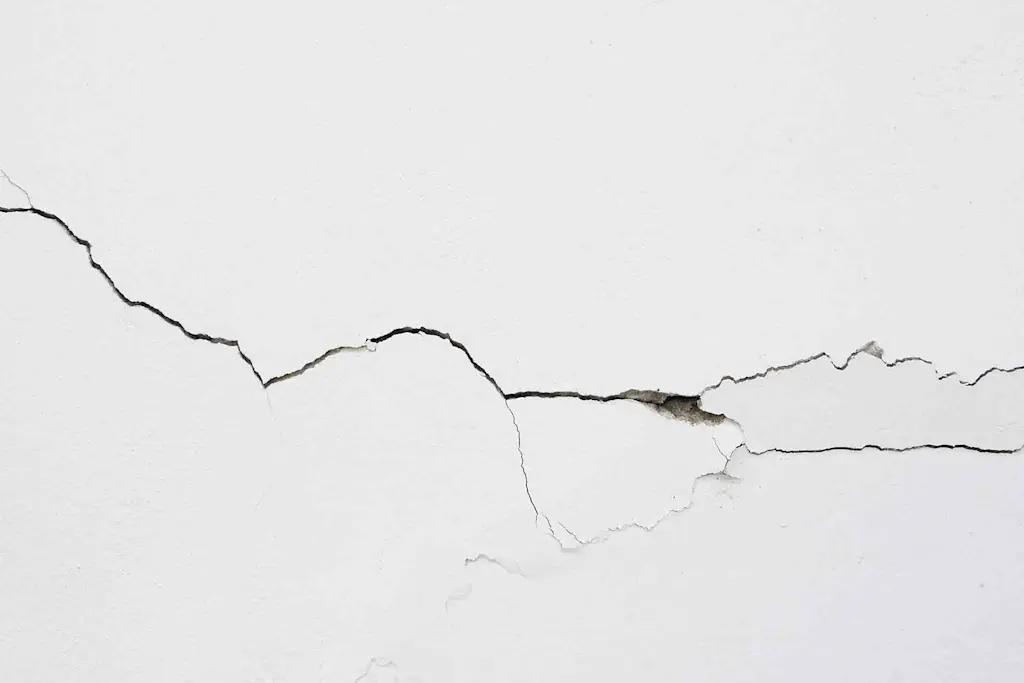
Some early signs you need underpinning for your home include:
Large or widening cracks in walls
Doors and windows sticking, jamming or becoming misaligned
Sloping or uneven floors that feel like they’re dipping or sinking
Gaps appearing between skirting boards, walls, ceilings or floors
Movement around extensions, especially where old and new foundations meet
Cracked or sinking external brickwork, patios, or pathways close to the house
Bulging walls or sagging roofs, signalling structural movement
Tree roots near the property (particularly on clay soil), which could be causing ground movement
If you notice any of these tell-tale signs, your first step is to get a structural engineer to assess it. They can then tell you whether underpinning is needed and recommend the right method.

Check out our building hub for expert advice on everything from understanding building foundations to how to find a good builder. We've got you covered for every stage of the job.
What does underpinning a house involve?
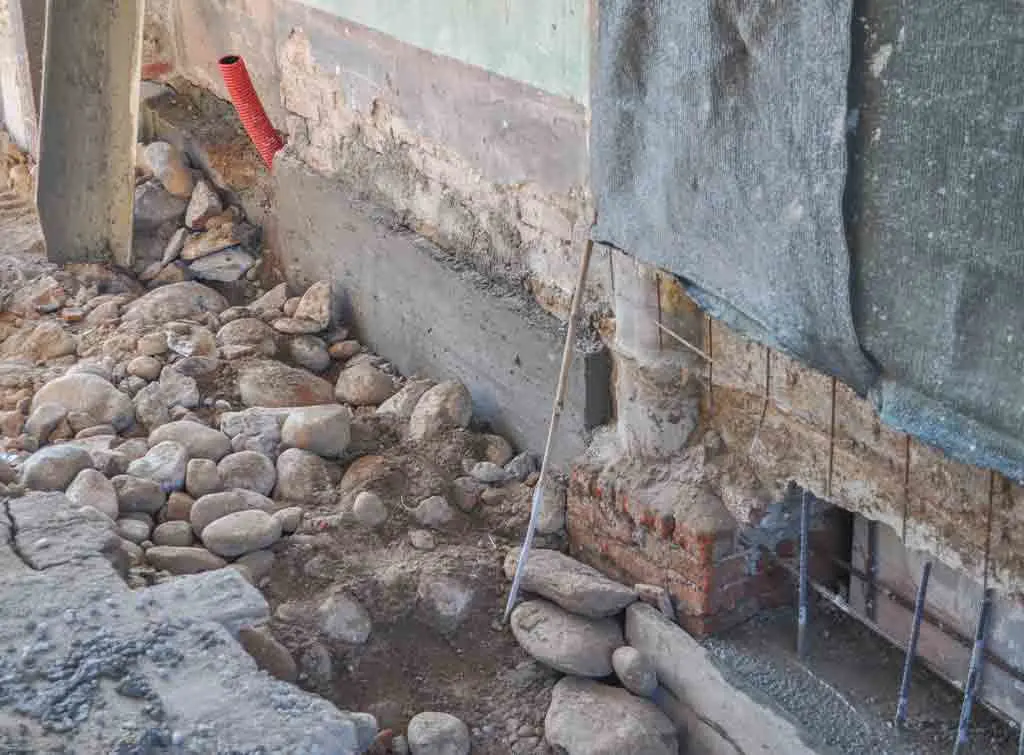
The first thing to know about underpinning is that it is a substantial job. It can also be noisy and messy, and you may wish (or must) move out of your home temporarily.
The steps for underpinning a house will vary depending on the method a structural engineer has advised. The main methods are:
Mass concrete (traditional):
Small sections under the foundation are hand-dug and filled with concrete
Low noise and disruption, but slower as it’s done in stages
Beam and base:
Concrete bases are installed beneath the wall, topped with a reinforced beam
Spreads the load more evenly than traditional mass concrete
Resin injection:
Expanding resin is injected into the ground to fill voids and compact the soil
Fast, clean and minimally disruptive
Piling (or mini-piling):
Steel or concrete piles are driven deep into stable ground
Best for deep or weak foundations, though typically the most expensive
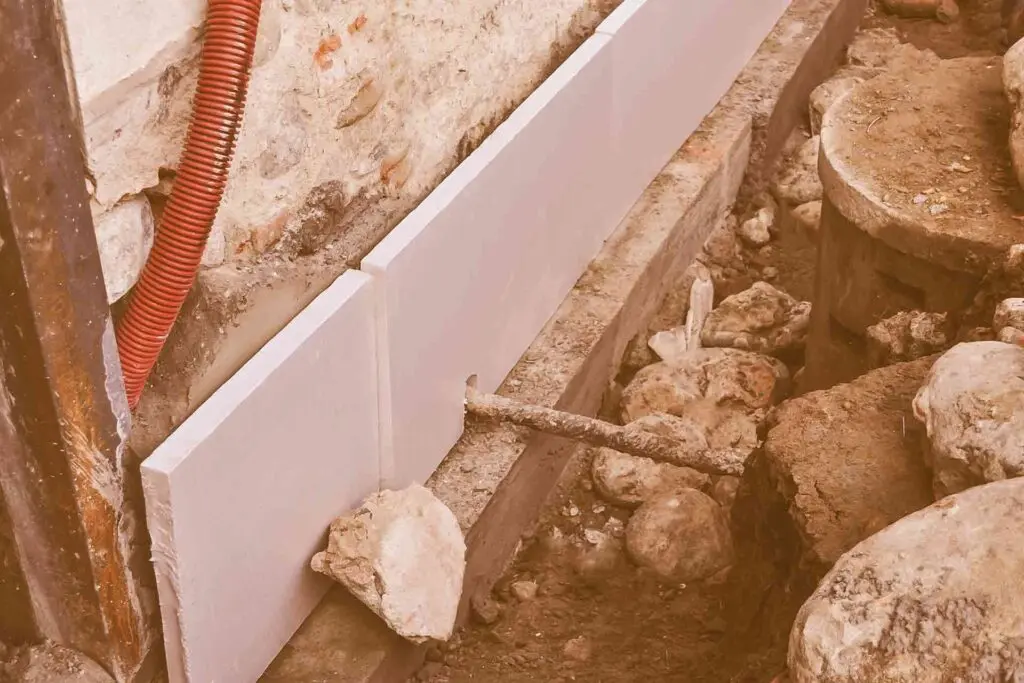
What is the average cost of underpinning?
| Underpinning method | Unit | Average cost |
|---|---|---|
| Mass concrete | Per m2 | £1,500 |
| Beam and base | Per m2 | £2,000 |
| Piling | Per m2 | £2,600 |
| Last updated: May 2024 Our costs are ballpark averages - get a local tradesperson to quote now | ||
The table above shows you the average cost per m2 for underpinning.
After an overall cost for the job? The average cost of underpinning a wall using the mass concrete method is £13,500.
You can learn more about the costs involved in our underpinning cost guide.
If you live in a semi-detached or terraced house, remember to have your party wall agreements in place before you commence work. You'll need to give your neighbours two months' written notice.
Is underpinning worth it?
Underpinning is a significant investment, but for many homeowners it's a necessity rather than a choice.
Underpinning can:
Prevent further structural damage by stabilising foundations and stopping ongoing movement
Support future building work, such as extensions or additional floors that add weight to your property
Increase confidence for buyers, lenders and insurers once the work is certified
Protect property value by fixing the root cause of subsidence
Who can carry out underpinning?
Underpinning must always be carried out by qualified professionals. These include:
A qualified structural engineer to assess the need for underpinning and recommend the most effective method
An underpinning contractor to carry out the work. You'll want someone who specialises in underpinning rather than a general contractor
A building regulations inspector to issue you a completion certificate
Why use Checkatrade to find underpinning contractors near you?
Checked - Every Checkatrade tradesperson must pass up to 12 checks and commit to upholding the Checkatrade Standard
Reviewed - Over 6.2 million reviews have been published on Checkatrade
Guaranteed - We guarantee Checkatrade tradespeople's work, claim up to £1,000 - T&Cs apply
Request a quote, search in the Checkatrade app, or enter your postcode to find checked and reviewed contractors for foundation underpinning near you.
Find a local tradesperson
FAQS about house underpinning
What is underpinning?
Underpinning means strengthening or replacing your home’s existing foundations – usually because of subsidence, cracking walls, or when you’re building an extension.
How long does underpinning usually take?
Most underpinning jobs take around three to five weeks, depending on the property, method and access.
What types of underpinning methods are common in the UK?
Common underpinning methods include:
Mass concrete (traditional) underpinning
Beam and base
Piling/mini-piling
The method most appropriate for your property will depend on ground conditions, property type, and the extent of foundation work needed.
Can you live in a house while it is being underpinned?
In many cases, you can stay in your home while underpinning work is carried out, particularly if work is done from outside. However, if works are extensive, such as deep piling, a underpinning contractor may recommend temporary accommodation.
Has your home been deemed uninhabitable while the works are being carried out? A good home insurance policy should hopefully cover you for alternative temporary accommodation.
How many years does underpinning last?
When completed to a high professional standard, a house's underpinning should last at least several lifetimes.
Does underpinning devalue a property?
Selling an underpinned home can certainly be more challenging, as potential buyers may worry that subsidence has happened in the past.
That's why it's important to make sure any underpinning work is approved and certified once completed. That way, you can prove to potential buyers that the work has been completed professionally.
Is there an alternative to underpinning?
Sometimes a property’s subsidence issues can be fixed without full underpinning. Common alternatives include:
Resin injection – Filling voids and firming up the ground with minimal disruption
Monitoring and crack repairs – Suitable when movement is small and stable
Improving drainage – Redirecting surface water away from foundations
Tree or root management – Reducing or removing problem trees on clay soil
That said, a structural engineer and underpinning contractor will confirm whether one of these simpler solutions will work – and when underpinning is the safest option.