Blog>Expert Advice>Combi vs condensing boilers – what’s the difference?
Last updated: 5 December 2024

Combi vs condensing boilers – what’s the difference?
Has the time come for a boiler replacement? Then you might be wondering what’s best: combi vs condensing boilers? Find out what's best for you.
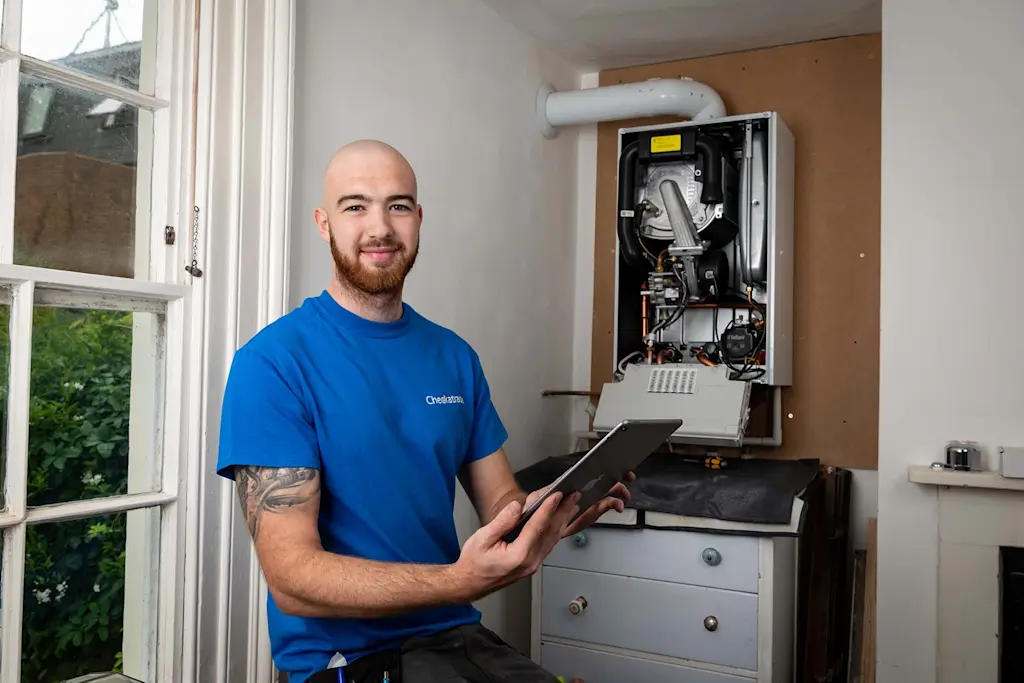
A boiler that doesn’t function properly could leave you without heating and hot water. So, if the time’s come for a boiler replacement, it’s important to get it right!
However, understanding the difference between various boiler types isn’t always straightforward.
If you’re struggling to understand the difference between combi vs condensing boilers, you’re not alone. However, it’s helpful to know that a combi boiler is actually a type of condensing boiler!
Here, we’ll answer all your questions.
Combi vs condensing boilers – are they the same thing?
The terms combi boiler and condensing boiler are often used interchangeably, which can get confusing.
However, they’re not the same thing.
A combi boiler is a type of condensing boiler.
All domestic boilers installed after 2005 are condensing boilers.
What is a condensing boiler?
A condensing boiler uses condensing technology to work more efficiently.
It captures heat from waste gases and uses this to warm up the water returning to your boiler.
In this way, less energy is needed to reheat the water that travels through your central heating system – reducing your running costs and your carbon footprint at the same time!
How does a condensing boiler work?
Your boiler burns fuel, such as gas or oil, to create heat. When it does so, gases are released via a flue.
In a boiler that doesn’t use condensing technology, these gases would be released into the atmosphere, losing valuable heat.
But in a condensing boiler, the hot gases are fed back into the system through a heat exchanger.
This heat is then used to warm the cool water that re-enters your boiler after flowing through your central heating system.
Benefits of condensing boilers
Condensing boilers come with lots of different benefits:
Higher energy efficiency
Lower running costs
More eco-friendly
Small in size
Types of condensing boilers
Any domestic boiler installed after 2005 will be a condensing boiler.
However, you will need to choose what type of condensing boiler you want.
You’ll have a choice of three different condensing boiler types:
Combi boilers
System boilers
Conventional boilers
While they each use condensing technology to recycle heat, they each have their pros and cons.
What is a combi boiler?
Combi boilers are the most popular type of boiler in the UK.
They’re a type of condensing boiler that provides both heating and hot water on demand and only needs a single unit.
In this way, they’re a great space-saving option, especially for smaller homes, as they don’t require a separate hot water cylinder.
How does a combi boiler work?
Combi boilers may be compact, but they’re very complex!
In short, when you need heating or hot water, your boiler will burn fuel to create a flame.
The heat from this flame is absorbed by a primary heat exchanger, which heats up the water that cycles through your central heating system.
However, this water isn’t generally clean enough to be sent straight to your taps and showers.
So, your combi boiler will also have a secondary plate heat exchanger.
When you turn on a tap, your system will open a diverter valve and send recycled water here, where it can heat clean water in pipes before the water travels to its destination.
Benefits of combi boilers
Combi boilers can be a fantastic option for the right household:
Space-saving (no tank required)
Instant hot water on demand
Energy efficient
Cost-effective
Types of combi boilers
Most UK homeowners opt for a gas combi boiler if they’re connected to the gas network.
However, you can also get oil, LPG and electric combi boilers.
Electric combi boilers function slightly differently as they heat water by passing it over a hot element instead of burning fuel.
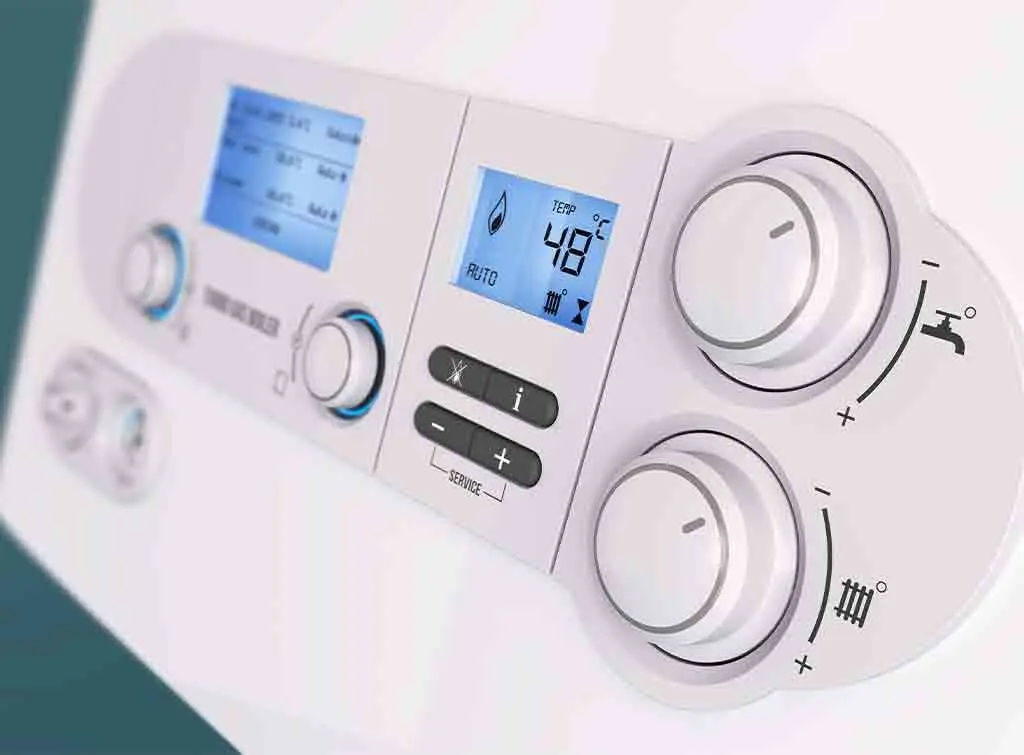
Combi vs other condensing boilers: key differences
Wondering how a combi boiler compares to other condensing boilers?
While each of them can provide both heating and hot water (assuming you don’t select certain ‘heat only’ conventional boilers), they can be very different.
Here, we’ll look at the key differences between combi, system and conventional boilers.
How they work
Combi boiler: Provides heating and hot water on demand
System boiler: Relies on a hot water cylinder
Conventional boiler: Needs both a hot water cylinder and cold water tank
Size and space
Combi boiler: The most compact option
System boiler: Takes up more space thanks to a separate hot water cylinder
Conventional boiler: Takes up the most space with both hot and cold feed tanks
Speed of hot water delivery
Combi boiler: Provides hot water on demand
System boiler: Hot water is heated up before use, so you will need to think in advance about when you will need it
Conventional boiler: Hot water is similarly heated up before use
Heating and hot water demand
Combi boiler: Not suitable for large homes with high demands
System boiler: Can supply warm water to multiple taps at the same time – but you will have a limited amount of hot water depending on the size of your tank
Conventional boiler: A great way of providing warm water to multiple showers or taps – but there is the potential to run out in periods of high demand
Efficiency
Combi boiler: Highly efficient
System boiler: Less efficient as heating loss can occur if water is stored for long periods
Conventional boiler: Similarly less efficient if water is stored for long periods
Water pressure
Combi boiler: Not good for homes with low water pressure
System boiler: Good mains water pressure
Conventional boiler: Won’t always supply the best pressure for showers – but can still provide hot water if mains pressure falls
New boiler costs
Combi boiler:The average combi boiler costs£1,500 (not including installation)
System boiler:The average system boiler costs £1,500 (not including installation)
Conventional boiler:The average system boiler costs £1,500 (not including installation)
Just remember that if you’re switching to a system or conventional boiler from another type, you may face additional costs for new water tanks or cylinders.
Head over to our new boiler cost guide to learn more.
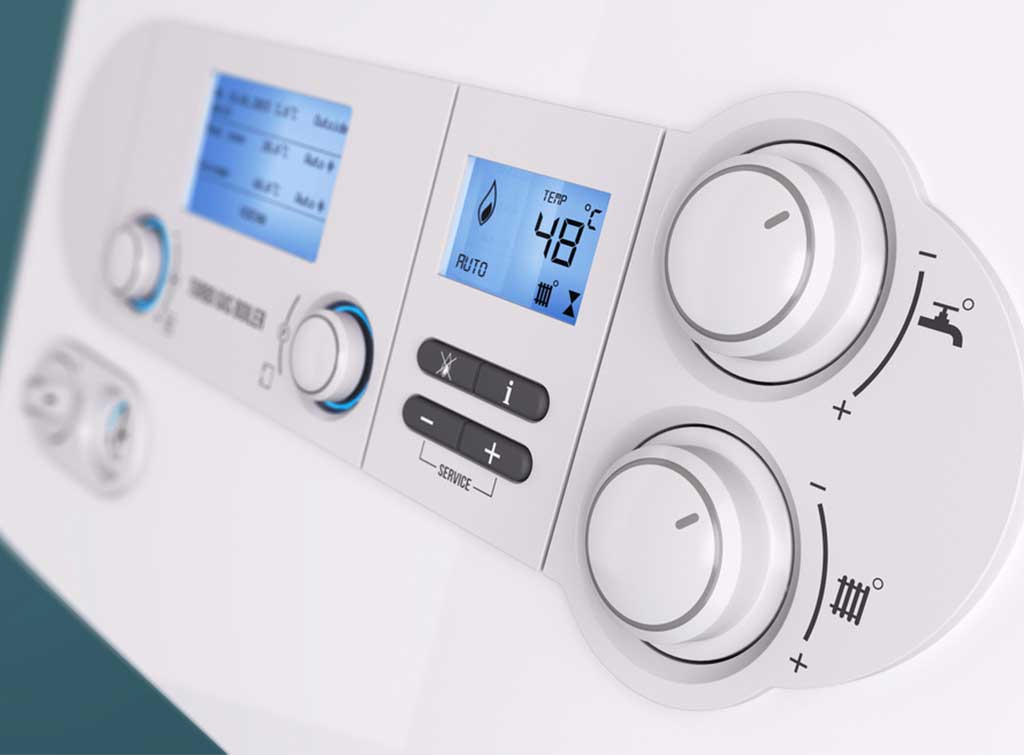
How much does a new boiler cost in the UK in 2026?
Our comprehensive guide outlines the average cost of a new boiler, running costs, and potential additional expenses to budget for.
Which boiler is right for your home?
While every home will need a condensing boiler, there’s no one best type.
The best type for you will depend on the size of your home, your hot water needs, and your willingness to plan ahead.
As a general guide, smaller homes could greatly benefit from switching to a combi boiler. This is because they’ll save a lot of space in the home.
They can also be handy as they generate hot water on demand, increasing energy efficiency and ensuring you only pay for the hot water you actually use.
On the other hand, larger homes may benefit more from a system or conventional boiler, as they’ll allow you to send hot water to several taps or showers at once. They’re also more suitable for homes with low water pressure.
Still not sure which is right for your home?
Our guide to combi vs system boilers goes into more detail. Or, why not reach out to a boiler installer near you for their advice.
Find a local tradesperson
Find a reputable heating engineer for your boiler replacement
Ready to reap the benefits of a warm home?
All that remains is to pick a trusted heating engineer for boiler installation in the UK.
Choosing a boiler fitter with the right qualifications and experience is key. A gas boiler must be installed by a gas safe registered engineer, while an oil boiler will need to be installed by someone who’s OFTEC registered.
Luckily, you’re in the right place!
At Checkatrade, all our tradespeople have to pass up to 12 checks, and they’re regularly reviewed by homeowners on everything from punctuality to professionalism.
We even check all reviews to make sure they’re submitted by real people.
In fact, we’re so confident in the quality of the trades on Checkatrade that if you book through us, we guarantee their work up to £1,000 (guaranteed for 12 months – eligibility and T&Cs apply).
Just enter your postcode into the search box below to get started.
Find a local tradesperson

FAQs
How long does a boiler replacement take?
A boiler replacement can take anywhere between four hours and six days, depending on whether you’re replacing your boiler like-for-like or switching it to a new type or location.
How much does it cost to replace a boiler?
New boiler costs generally sit between£1,200 - £10,000 for supply only. If you add labour and typical expenses, you’ll typically be looking at between £3,000 - £15,000 in total.
Is it worth upgrading to a condensing boiler?
Yes, it’s worth upgrading to a condensing boiler as they’re more efficient and environmentally-friendly. All new domestic boilers installed should be condensing boilers.
Can a combi boiler be installed in a large house?
That depends on your hot water usage. However, generally, a combi boiler won’t be suitable for houses with multiple bathrooms and a high demand for hot water.
Find a local tradesperson
More Gas Boiler Installation Articles

See the tradespeople we've checked for your job