EXPERT ADVICE
Choose your kitchen lighting: Buying guide help
Updated 07/26
By: Laura Macdonald
Reviewed: Alex Peters
Kitchen lighting is one of those things that's easy to overlook until you're actually living with it.
Perhaps the worktops always seem a bit gloomy when you're preparing dinner
Maybe your beautiful pendant lights look fantastic but don't give you enough light to cook by
Or perhaps the room feels bright during the day but cold and uninviting in the evening
Getting the lighting right in a kitchen right isn't about buying the most expensive fittings. It's about combining the right types of light in the right places so your kitchen works just as well for cooking, entertaining and day-to-day living.
Whether you're planning a brand-new kitchen or just updating a few light fittings, this guide will help you choose lighting that looks good and works well for the way you use your kitchen.
How to plan lighting in a kitchen
The three types of kitchen lighting every room needs
Popular kitchen lighting fixtures and where they work best
The best lighting for under kitchen cabinets
How to choose kitchen lighting for different layouts
Kitchen lighting costs
When it's worth hiring a professional
Planning your kitchen lighting project
Before you start choosing kitchen lighting fixtures, it's worth thinking about how you actually use your kitchen.
For some people it's purely somewhere to cook. For others it's the busiest room in the house, where homework gets done, friends gather around the island and family meals happen every day.
Thinking about how the space needs to work will make choosing your lighting much easier.
Renovating your entire kitchen?
If you're installing a new kitchen, plan your lighting from the very beginning.
That allows the electrical work to be completed before cabinets, worktops and appliances are fitted, giving you much more flexibility over where lights are positioned.
A kitchen designer can also help you combine practical task lighting with decorative features that bring the whole room together.
Making a few updates?
Replacing existing light fittings is usually much simpler.
If you're swapping one pendant for another, or updating ceiling lights, check the dimensions and fitting type before buying.
Although changing some fittings yourself may be possible, it's safest to use a qualified electrician for electrical work.
Find a local tradesperson
The three main roles of kitchen lighting
One of the biggest mistakes people make is relying on a single ceiling light to do everything.
The best kitchen lighting combines three types of lighting, each with its own purpose.
1. General lighting
General (or ambient) lighting provides overall illumination so your whole kitchen feels bright and welcoming.
Best for
Everyday lighting across the whole room
Open-plan kitchens
Larger family kitchens
Popular options
Pendant lights
Recessed spotlights
Downlights
2. Task lighting
Task lighting gives you brighter, more focused light exactly where you need it.
This makes everyday jobs like chopping vegetables, reading recipes and washing up much easier.
Best for
Worktops
Sinks
Hobs
Food preparation areas
Popular options
Under cabinet kitchen lighting
Cupboard lighting
Drawer lighting
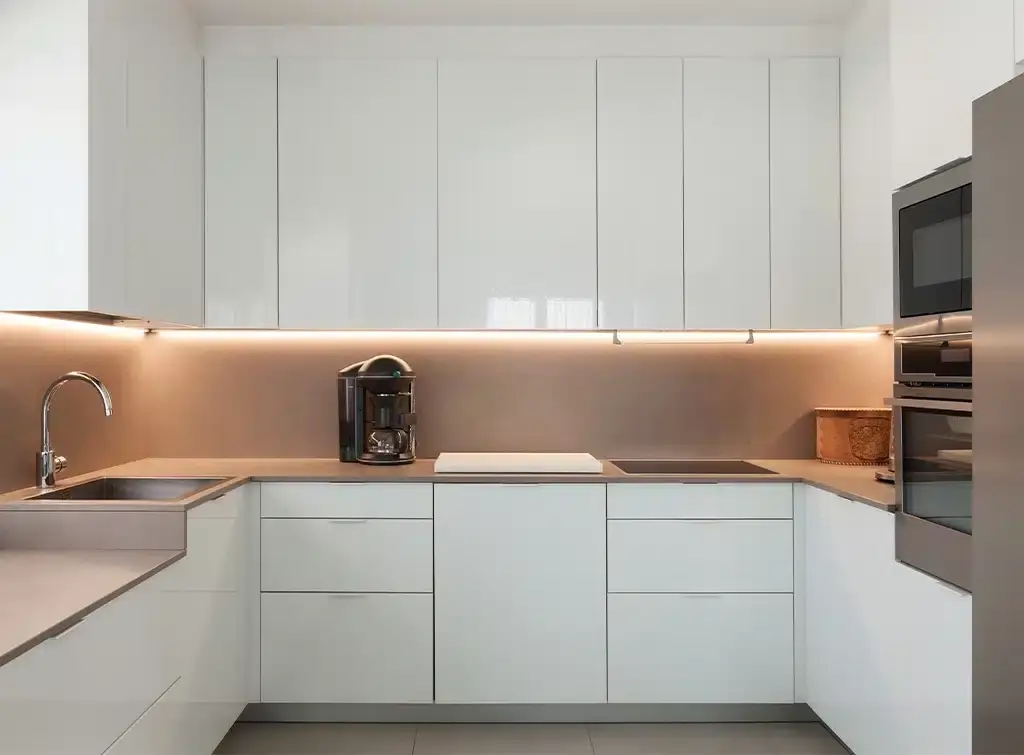
3. Accent lighting
Accent lighting is there to create atmosphere.
It highlights features you love while making the room feel warmer and more inviting once the cooking is finished.
Best for
Open shelving
Glazed cabinets
Feature walls
Popular options
LED strip lights
Wall lights
Plinth lighting
Decorative cabinet lighting
Kitchen lighting rule of thumb: Don't rely on one fitting to do everything. The most successful kitchens combine ambient lighting for the whole room, task lighting where you prepare food, and accent lighting to create warmth and highlight features.
Kitchen lighting ideas: choosing the right lighting for your kitchen
Once you know the job each type of lighting performs, choosing fittings becomes much easier.
Rather than picking lights because they look good in a showroom, think about what they'll actually be doing once they're installed in your kitchen.
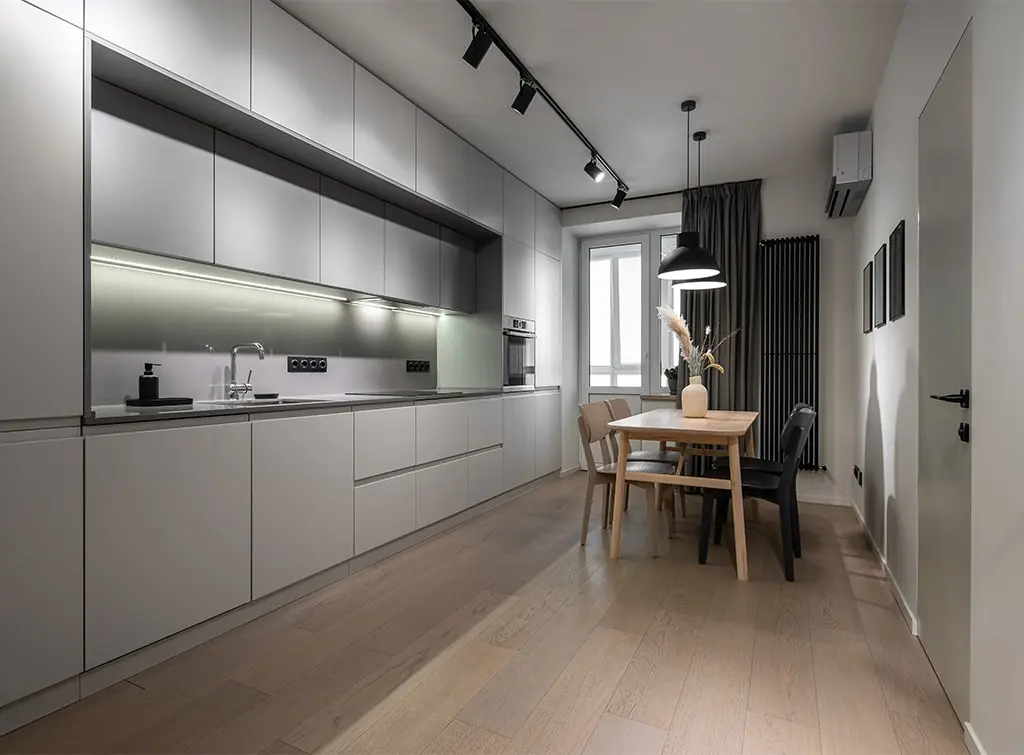
Kitchen spotlights
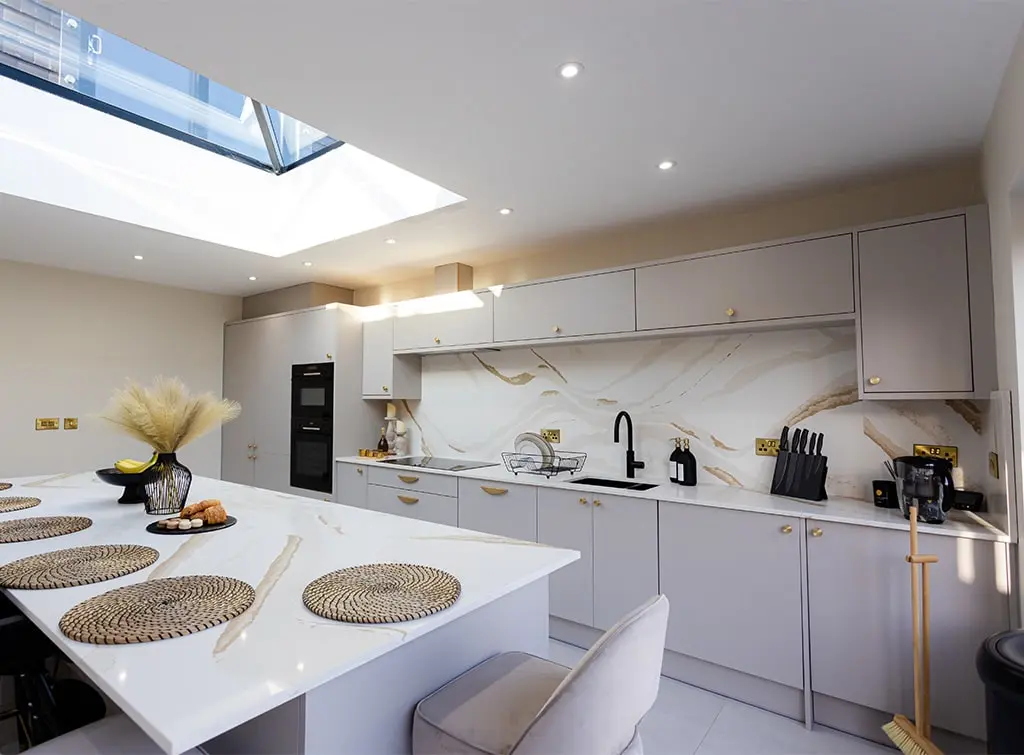
Kitchen spotlights are one of the most versatile options.
They're popular because they're versatile. They can:
Provide flexible directional lighting
Work well in almost any kitchen layout
Highlight specific work areas
Suit both traditional and contemporary kitchens
Kitchen downlights
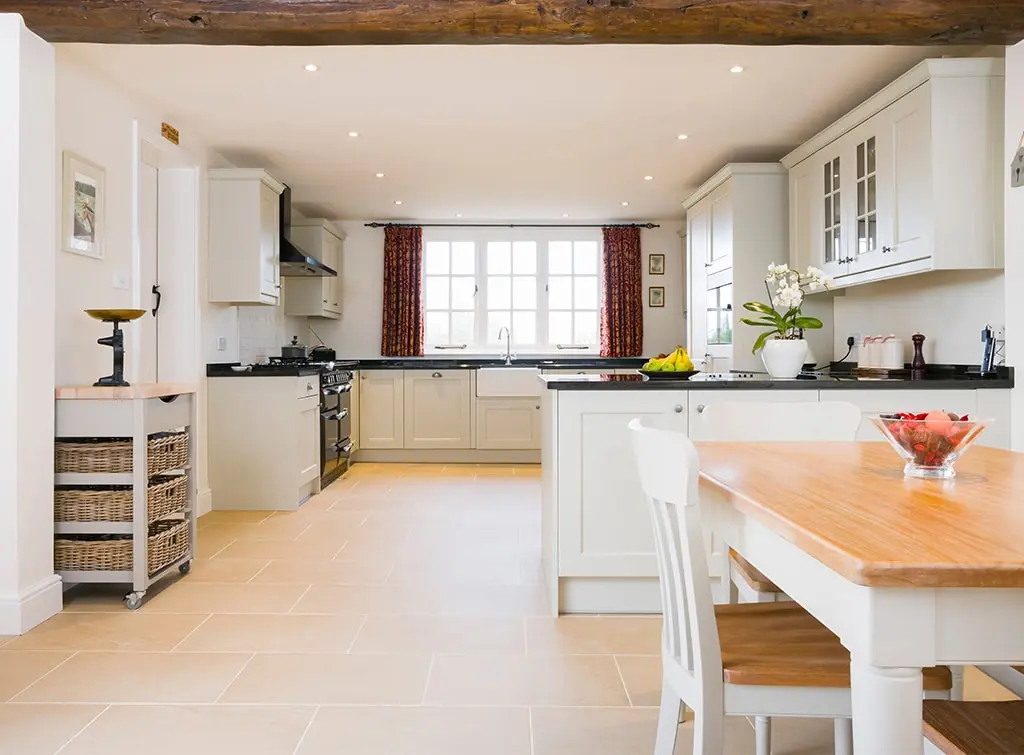
If you prefer a clean, uncluttered ceiling, recessed downlights are a great option.
They're ideal for:
Even lighting across the room
Lower ceilings
Modern kitchens
Open-plan layouts
Choose fire-rated downlights where appropriate to help maintain the integrity of the ceiling.
Under cabinet kitchen lighting
One of the simplest upgrades you can make is adding under cabinet kitchen lighting.
It's surprisingly effective because it shines directly onto the worktop, rather than creating shadows from overhead cabinets.
LED strip lighting is usually the most popular option because it's discreet, energy efficient and provides an even spread of light.
If you're only making one lighting upgrade, under-cabinet lighting often gives the biggest improvement for the least cost. It makes food preparation much easier and creates a lovely soft glow in the evening without needing the main lights on.
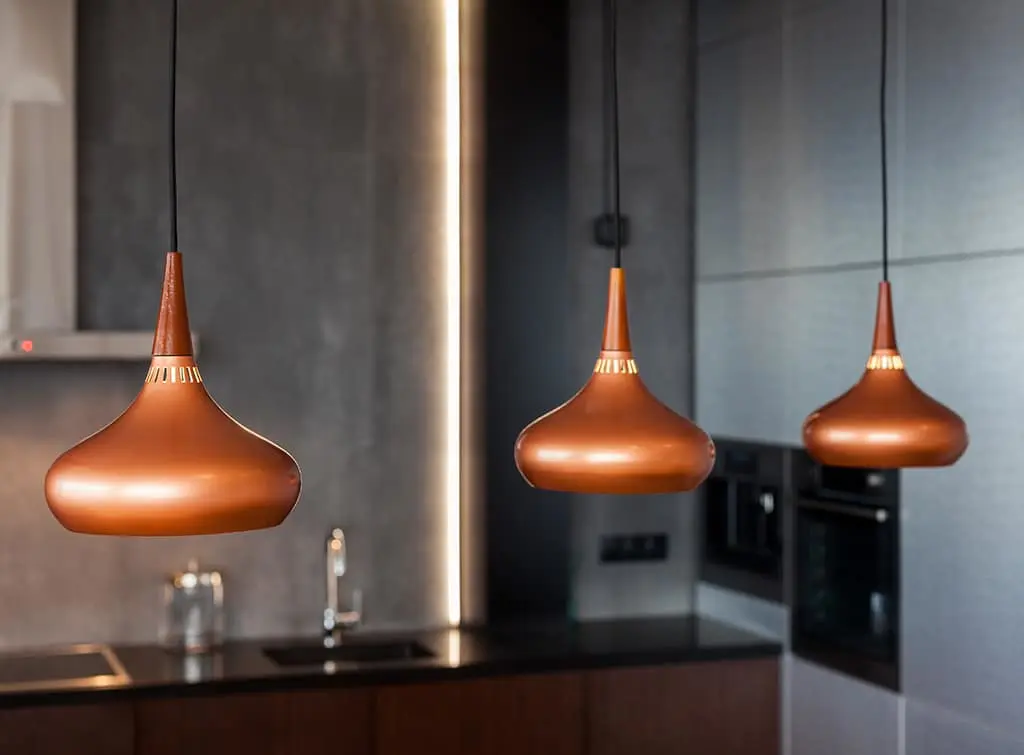
Kitchen pendant lighting
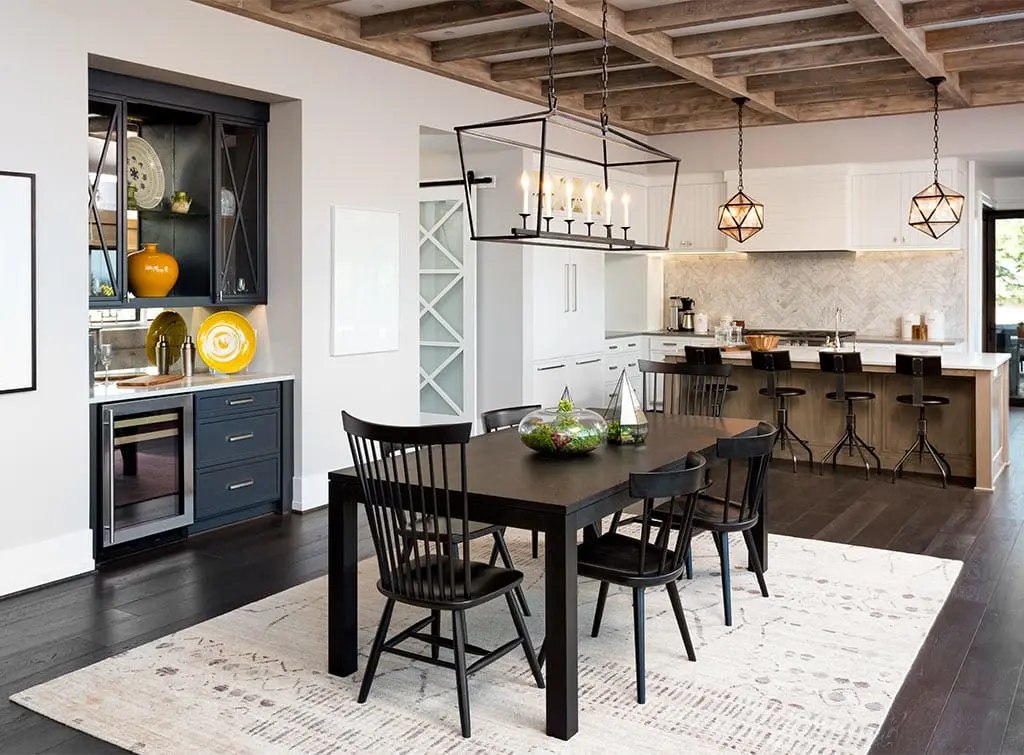
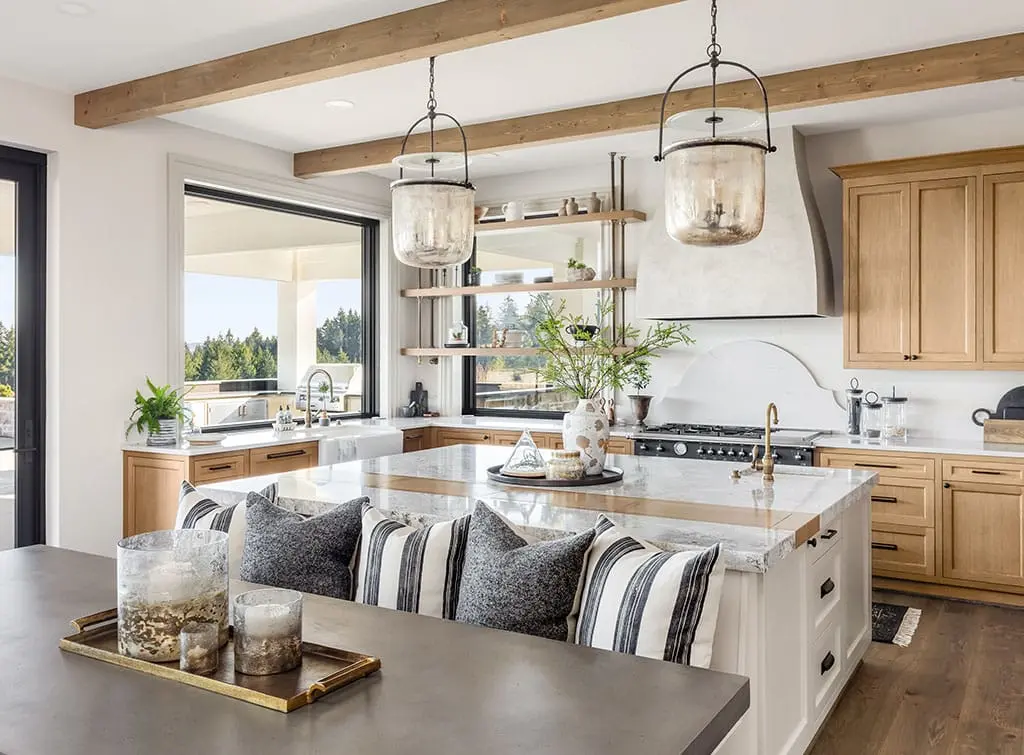
Pendant lighting remains one of the biggest kitchen lighting trends, particularly over islands and breakfast bars.
It works well because it combines practical lighting with a strong design feature.
For kitchen islands, many homeowners choose either:
Two or three matching pendants
A row of smaller pendants
One large statement pendant
If you want the light focused on the island, choose shades that direct light downwards.
As a general guide, pendant lights are usually hung around 75-90cm above a kitchen island or worktop. This gives good light without blocking views across the room.
Wall lights
Wall lights add another layer of lighting and work particularly well in kitchens where you want a softer feel during the evening.
They're ideal for:
Open shelving
Butler's pantries
Reading corners
Decorative features

We check the reviews on Checkatrade are from real people, and that trades meet our high standards.
Common kitchen lighting mistakes to avoid
Even beautiful light fittings won't work well if they're planned badly.
Some of the most common mistakes people make with kitchen lighting include:
Relying on one central ceiling light
Forgetting task lighting above worktops
Hanging pendant lights too high or too low
Choosing bulbs with the wrong colour temperature
Forgetting to install dimmer switches where appropriate
Ignoring shadows created by wall units
Small changes to the lighting layout often make a much bigger difference than buying more expensive fittings.

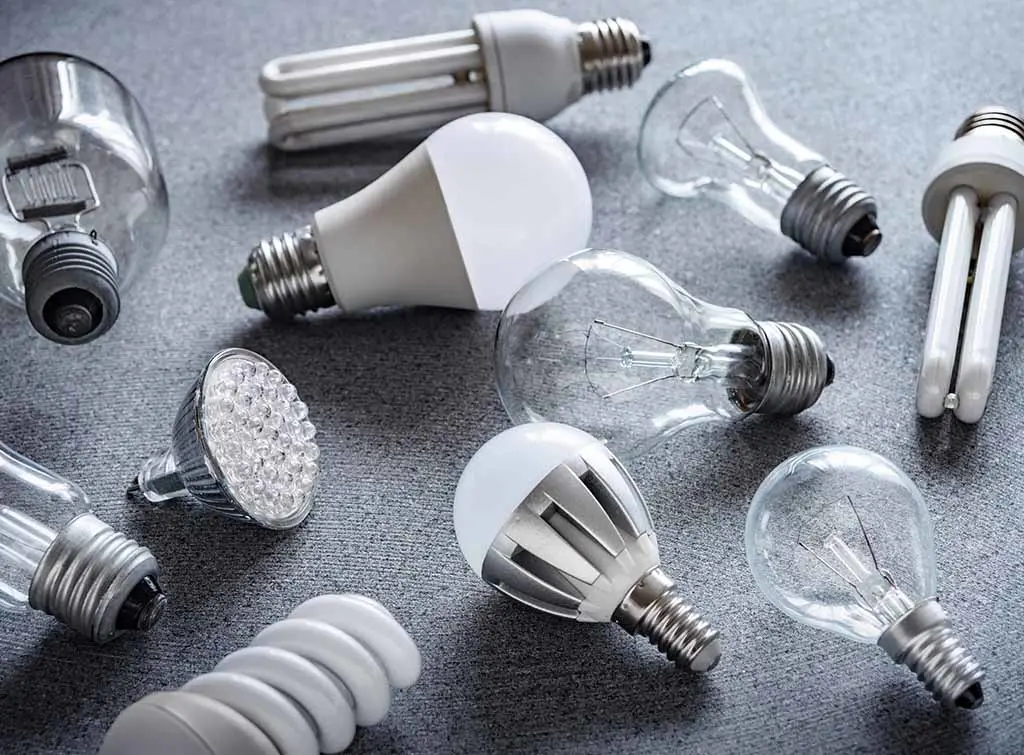
What you need to know about light bulbs
The fittings you choose are only part of the picture. The bulbs themselves have a big impact on how your kitchen feels day-to-day.
LED bulbs
LED bulbs are now the go-to choice for most kitchens because they:
Use less energy than halogen bulbs
Last much longer
Come in a wide range of brightness levels and colour temperatures
If you're replacing older bulbs, switching to LEDs is one of the easiest ways to improve your kitchen lighting while reducing running costs.
Warm white or cool white?
The colour of the light can completely change the feel of your kitchen.
Warm white has a softer, slightly yellow glow that's ideal for creating a cosy atmosphere
Cool white gives a cleaner, crisper light that's popular in contemporary kitchens and works well for food preparation
Many people choose a combination; cooler task lighting over worktops and warmer lighting in dining or seating areas.
Brightness
When buying LED bulbs, look at the lumens rather than the wattage.
Lumens tell you how much light the bulb produces, making it much easier to compare different products.
Don't choose bulbs based on brightness alone. A very bright kitchen can still feel uncomfortable if the light colour is wrong. Getting the right balance between brightness and warmth usually creates a much nicer space to spend time in.
On Checkatrade, you'll only find trades who meet our high standards and pass up to 12 checks.
Choosing the right kitchen lighting for your space
No two kitchens are exactly the same, so the best lighting layout will depend on your room's size, shape and how you use it.
Open-plan kitchens
Open-plan spaces benefit from several layers of lighting that can be switched independently.
A popular combination is:
Recessed spotlights for general lighting
Pendant lighting over a kitchen island or dining table
Under cabinet kitchen lighting for food preparation
Floor or table lamps in seating areas
Using different lighting helps define each zone without adding walls.
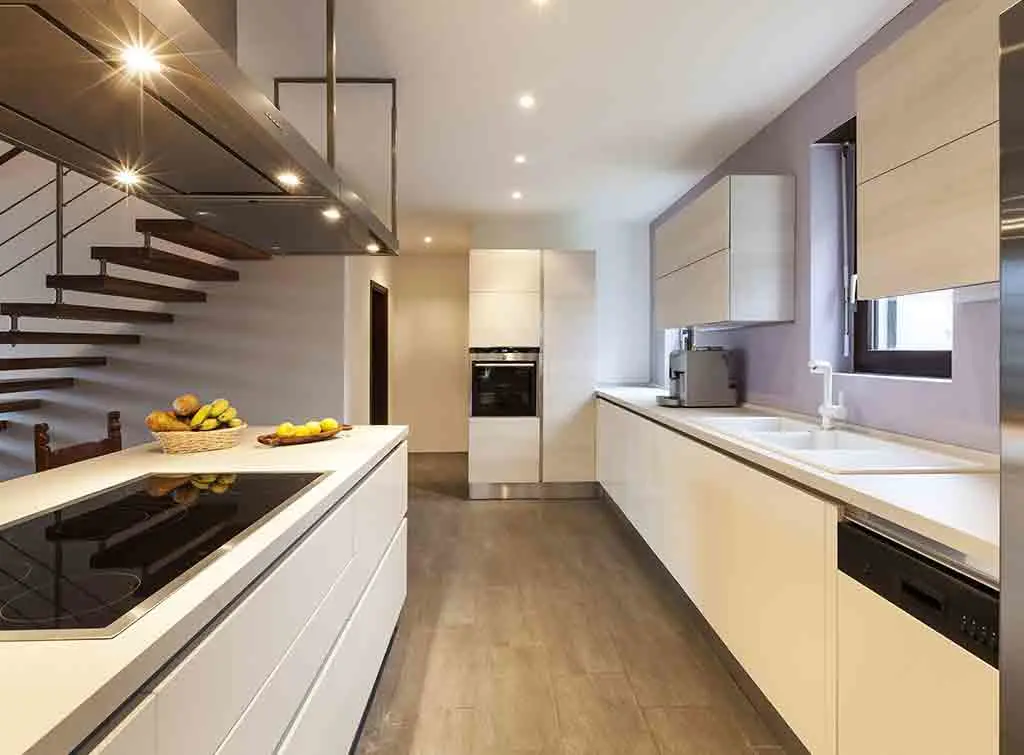
Galley kitchens
Galley kitchens are often narrower, so good lighting helps them feel brighter and more spacious.
A simple combination usually works best:
Ceiling spotlights or downlights for overall lighting
Under cabinet lighting above worktops
This gives excellent task lighting while avoiding dark shadows.
Kitchen-diners
If your kitchen flows into a dining area, lighting can help separate the different spaces.
For example:
Pendant lighting above the dining table or island
Ceiling spotlights across the kitchen
Dimmable lighting for entertaining
A table lamp if the room includes a desk or study area
Low ceilings
If your kitchen has a lower ceiling, choose fittings that don't hang too far into the room.
Recessed spotlights and flush ceiling lights help maximise headroom while keeping the space feeling open.

Kitchen lighting ideas for low ceilings: 18 brilliant solutions
If you’re on the hunt for kitchen lighting ideas for low ceilings, we’ve got some brilliant suggestions. Not sure where to start?
What is the current trend for kitchen lighting?
Kitchen lighting trends have moved away from relying on one central ceiling light.
Instead, homeowners are choosing layered lighting that combines practicality with atmosphere.
Some of today's most popular kitchen lighting ideas include:
Statement pendant lighting over islands
Under cabinet LED strip lighting
Dimmable lighting
Warm LED lighting for dining areas
Mixing decorative and practical lighting together
Rather than following trends, it's usually better to choose lighting that suits how you actually use your kitchen.
Kitchen renovation by Checkatrade member, SM London Construction Ltd
IP ratings and safety
Kitchens aren't as wet as bathrooms, but moisture, steam and splashes are still inevitable. That's why it's important to choose suitable light fittings for the location.
IP (Ingress Protection) ratings tell you how well a fitting is protected against dust and water.
They use the letters IP followed by two numbers:
The first number relates to protection against solid objects
The second shows resistance to moisture and water
The higher the second number, the greater the protection against water.
If you're unsure which fittings are suitable, a qualified electrician can advise.
Find a lighting designer near you
Kitchen lighting costs
The cost of kitchen lighting depends on:
The number of fittings
The quality of the fixtures
The complexity of the installation
Whether new wiring is needed
As a guide, fitting approximately six recessed ceiling lights typically costs around £200.
Request a quote for your kitchen lighting project
For an accurate cost for your kitchen lighting installation, compare quotes from qualified electricians working in your local area.


Kitchen lighting checklist

Before you buy your new kitchen lights:
Find a kitchen lighting specialist in your area
Good lighting can completely change how your kitchen looks and feels; whether you're cooking dinner on a Tuesday evening or entertaining friends at the weekend. And electrical work is one area where it's worth getting the job done properly.
Whether you're updating a few fittings or designing a new kitchen from scratch, experienced electricians and kitchen designers can help you choose lighting that's practical, compliant, attractive and built to last.
Request quotes from checked local electricians and lighting designers through Checkatrade and compare reviews from homeowners nearby.
Find a local tradesperson
FAQs
Layered lighting is one of the biggest kitchen lighting trends. Many homeowners combine recessed spotlights, pendant lights over islands, under-cabinet LED lighting and dimmer switches so the room works just as well for cooking as it does for entertaining.
A good rule of thumb is to use three layers of lighting: ambient lighting for the whole room, task lighting over worktops and sinks, and accent lighting to highlight features and create atmosphere.
Pendant lights are usually hung around 75-90cm above the worktop. This gives good task lighting without blocking views across the room. If you're installing more than one pendant, space them evenly across the island.
LED strip lighting is usually the most popular choice. It provides bright, even task lighting across worktops, uses very little electricity and creates a subtle glow when the main lights are switched off.
It depends on the look you're trying to achieve. Warm white creates a softer, cosier feel, while cool white provides a brighter, crisper light that's ideal for food preparation.
Not necessarily. Your light fittings should complement each other, but they don't all have to be identical. Mixing different styles can add interest, provided they suit the overall design of the room.
Many homeowners are moving away from relying on a single central ceiling light. Today's kitchens are more likely to combine several lighting types, giving you better light for cooking while creating a warmer atmosphere in the evening.
Simple tasks such as replacing a bulb are straightforward, but new wiring and electrical installations should always be carried out by a qualified electrician.
As a general guide, aim for around 5,000-10,000 lumens across the whole kitchen, depending on its size, layout and the types of lighting you choose.
LED bulbs use much less electricity than older halogen bulbs and last significantly longer. Installing dimmer switches and only lighting the areas you're using can also help reduce energy consumption.

See the tradespeople we've checked for your job