HOW-TO GUIDES
How to clean paving slabs for best results
Updated 08/26
By: Laura Macdonald
Reviewed: Content Team
A patio can go from looking fresh to decidedly grubby surprisingly quickly. A winter of rain, fallen leaves and very little sunshine is often all it takes for paving slabs to develop dirt, green algae and patches of moss.
Cleaning them can make a huge difference, but it's worth checking what your paving is made from before reaching for the pressure washer or strongest cleaner in the shed. What works well on concrete could damage a more delicate natural stone.
This guide explains how to clean paving slabs by hand or with a pressure washer, tackle moss and algae, and look after the joints once you've finished.
How to clean paving slabs step by step
Which cleaning method suits your type of patio
How to remove moss, algae and general dirt
When to use a pressure washer
Which cleaning products to be careful with
How to look after the joints once the slabs are clean
When professional patio cleaning might be worthwhile
Quick answer: What's the best way to clean paving slabs?
For everyday dirt, start with the gentlest method that will do the job:
Sweep away leaves, dirt and loose debris
Remove weeds and moss from the joints
Use warm water and a suitable mild cleaning solution
Scrub the slabs with a stiff-bristled brush
Rinse thoroughly with clean water
Allow the patio to dry and inspect the joints afterwards
For larger areas or heavier grime, a pressure washer can speed things up considerably, provided it's suitable for your paving.
Before using any cleaner, check the paving manufacturer's care instructions and test it somewhere inconspicuous. It's much better to discover a product doesn't agree with your paving in a hidden corner than right in the middle of the patio.
Find a checked patio cleaning specialist near me
Choosing the right method for your patio
There's no single best way to clean every patio. The right approach depends on the paving material, the size of the area and what you're trying to remove.
As a general guide:
Smaller patios and more delicate paving: Start with warm water, a suitable cleaning product and a stiff brush
Larger patios and hard-wearing surfaces: A pressure washer can make much lighter work of general grime
Moss and algae: Use a treatment suitable for your particular paving rather than simply scrubbing the surface
Grease, paint or cement stains: Treat the stain specifically rather than repeatedly cleaning the whole patio
If you're dealing with a particular mark, our guide to cleaning patio slabs covers paint splatters, BBQ grease, cement marks and other stubborn stains.
Method one: How to clean paving slabs by hand
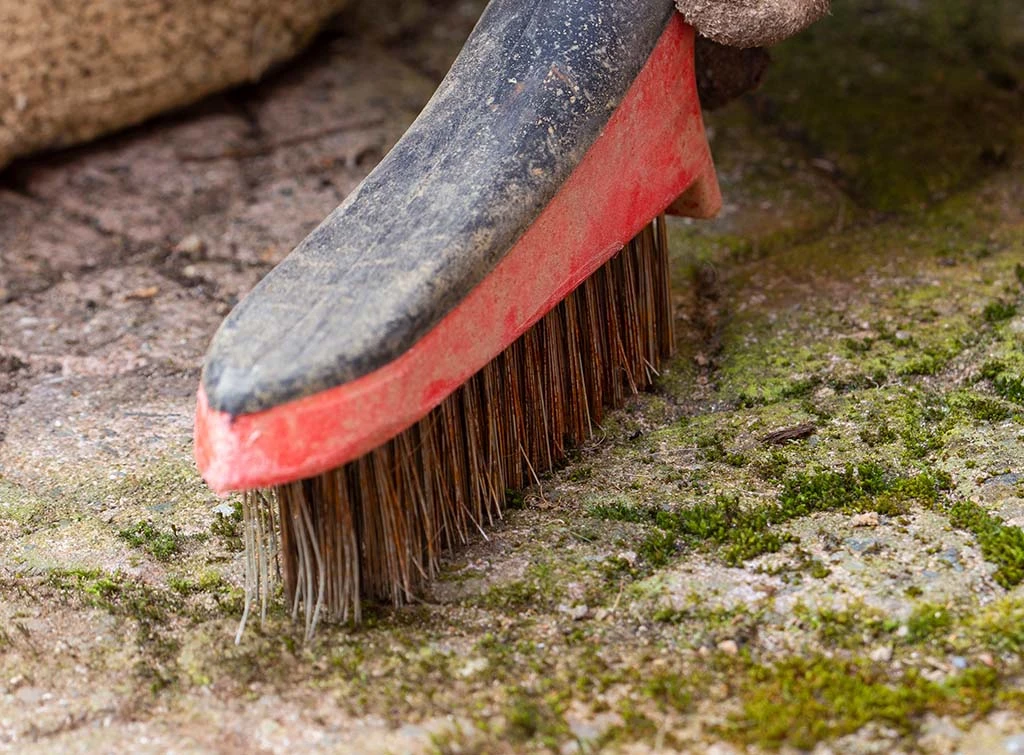
For a relatively small patio, you can get surprisingly good results with a bucket and a decent scrubbing brush.
It's also the gentler option if you have paving that could be damaged by high-pressure washing.
What you'll need
Garden broom
Joint scraper
Bucket
Stiff-bristled scrubbing brush
Warm water
Mild cleaner suitable for your paving
Step-by-step
Clear the patio: Move pots, furniture and anything else that'll get in your way, then sweep away leaves, soil and loose debris
Clear weeds and moss: Use a joint scraper to remove weeds, moss and other growth between the slabs. Sweep everything up before you start washing
Prepare your cleaning solution: Mix warm water with a small amount of mild cleaner that's suitable for your paving
Scrub the slabs: Work across the patio in manageable sections, paying extra attention to dirtier or greener areas
Rinse thoroughly: Rinse away the cleaner and loosened dirt with fresh water, taking care not to wash debris into drains unnecessarily
Leave the patio to dry: Once dry, you'll get a much better idea of whether any areas need another clean and whether the joints need attention
What can you use to clean paving slabs?
The safest option for cleaning paving slabs depends on the material.
A mild, pH-neutral cleaner is a sensible starting point for many surfaces. Specialist patio cleaners are another option, provided they're designed for your particular paving.
You'll also see household remedies such as vinegar and bleach recommended online. Be cautious with these. Acidic cleaners such as vinegar can damage acid-sensitive stone, while bleach may affect some paving, sealants, pointing, surrounding plants or finishes.
Don't assume that ‘natural’ means a homemade cleaner is safe. If you're not certain what your paving is made from, stick to a product specifically approved for that surface.
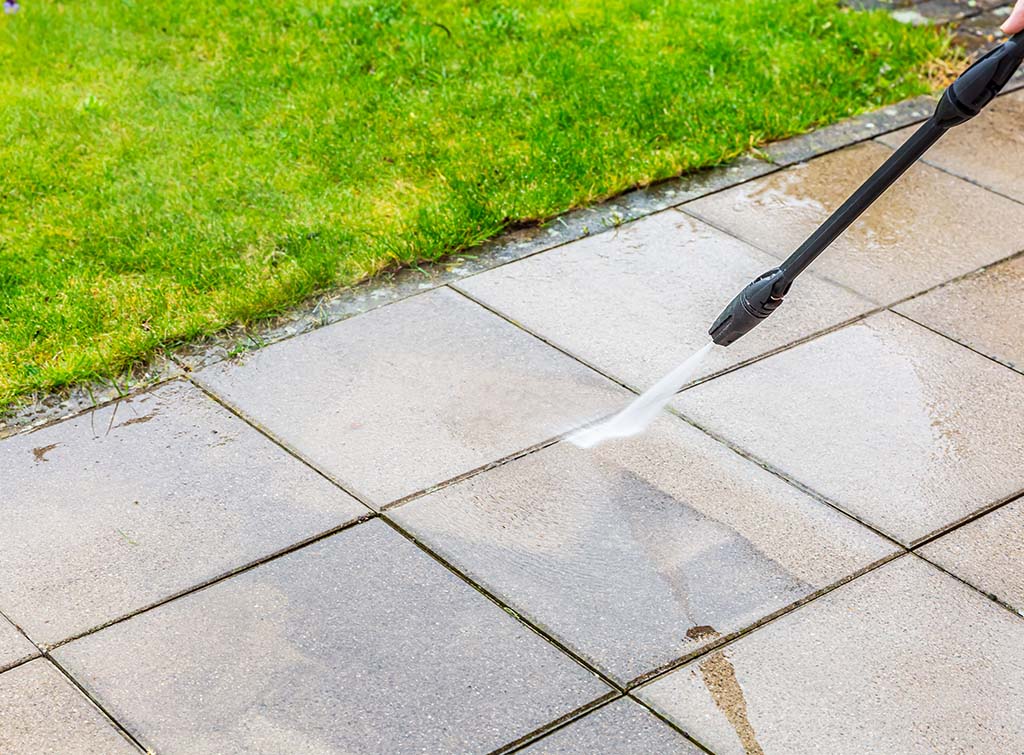
Method two: How to clean paving slabs with a pressure washer
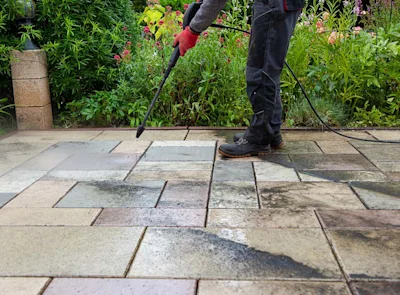
If you have a large patio that's covered in months or years of grime, pressure washing can be much quicker than scrubbing it by hand.
But more power isn't necessarily better.
Too much pressure, or holding the nozzle too close to the paving, can damage some surfaces and blast material out of the joints.
What you'll need
Protective clothing, gloves, goggles and sturdy footwear
Garden broom
Joint scraper
Pressure washer
Suitable patio or pressure-washer cleaner, if required
Step-by-step
Clear and sweep the patio: Remove furniture, pots and loose debris before starting
Remove weeds and loose moss: Clear as much growth from the joints as you can first
Set up the pressure washer: Follow the manufacturer's instructions and start with a lower pressure setting where possible
Test a small area: Choose an inconspicuous spot and make sure the pressure isn't damaging the paving or pointing
Work across the patio a section at a time: Keep the nozzle moving rather than concentrating the jet in one place. Avoid directing high-pressure water straight into the joints
Allow the patio to dry and inspect it: Once everything's dry, check for missed areas and any pointing or jointing material that's been dislodged
It's tempting to get the nozzle really close when you find a stubborn patch. That's also when you're most likely to mark the paving. Give the cleaner and brush a chance before reaching for more pressure.
How to remove moss and algae from paving slabs
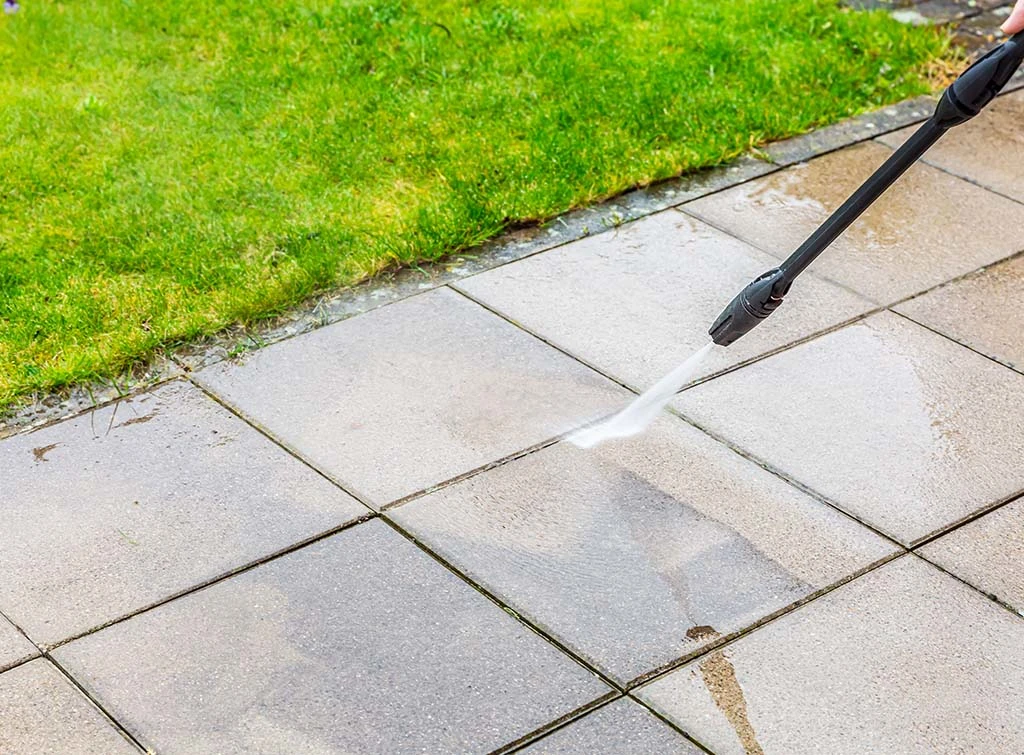
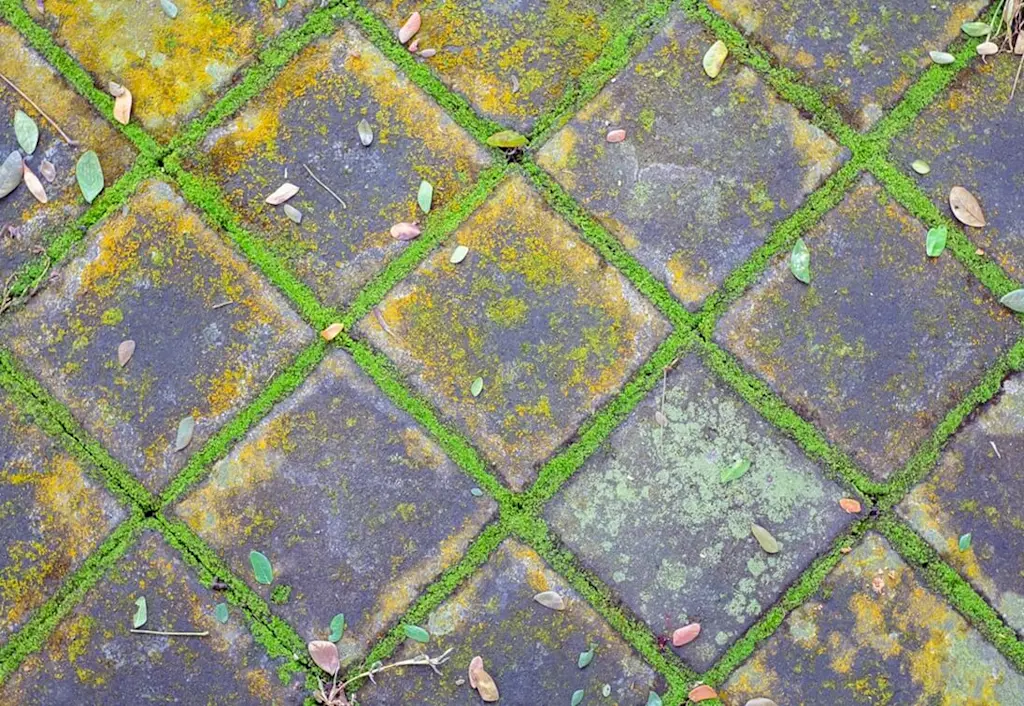
Those green patches aren't just an eyesore. Moss and algae can make paving surprisingly slippery after rain.
To remove it, start by brushing or scraping away loose growth, then apply a moss or algae treatment that's suitable for your paving and follow the manufacturer's instructions.
Don't rely on detergent alone if the moss and algae keep coming back. It may clean up the surface without properly treating the growth, so you could find those green patches returning before long.
Damp, shaded patios naturally tend to suffer more, so regular sweeping and keeping nearby vegetation trimmed can also help.
If you have block paving, see our dedicated guide to how to clean block paving for more specific advice.
What should you do with the joints after cleaning?
Cleaning your patio can remove sand or damaged jointing material from between paving, particularly if you've used a pressure washer.
Once the patio is completely dry:
Check for gaps between the slabs
Re-sand block paving where jointing sand has been lost
Repair damaged mortar joints where necessary
Deal with loose or unstable slabs rather than simply filling around them
Our guide to how to repoint a patio explains what to do if the joints need more attention.

Keen to spruce up the rest of your outdoor space? Check out our cost guides for garden clearance, driveway cleaning, and exterior painting.
Can you clean paving slabs yourself — and should you?
For a small or moderately dirty patio, cleaning paving slabs yourself is a very achievable DIY job if you're happy to put in the time.
It's usually manageable if:
You know what type of paving you have
The patio mainly has general dirt or light organic growth
You can work safely with the equipment
The paving and joints are in reasonable condition
Professional cleaning becomes more appealing if:
You have a particularly large patio
Moss and algae are extensive
There are stubborn stains
You have expensive or delicate paving
You're worried about damaging the pointing
The patio needs repairs or repointing as well as cleaning
There's something very satisfying about seeing the original colour of your paving emerge again. Less satisfying is spending a whole weekend on your hands and knees only to discover the stubborn patches haven't shifted.

Thinking about hiring a professional?
A patio cleaning specialist can identify the paving material, choose suitable cleaning products and equipment, and adjust the cleaning method to suit the condition of the surface.
That's particularly useful with natural stone or older paving, where going in too aggressively with a pressure washer can do more harm than good.
And if you're looking at a large patio that's going to take most of your weekend, there's also something to be said for having someone arrive with the right kit and getting it sorted properly.

Paving slab cleaning checklist
Find checked and reviewed patio cleaning specialists near you
If your patio needs more than a quick scrub, or you'd simply rather spend your weekend enjoying it than cleaning it, a local patio cleaning specialist can help.
With Checkatrade, tradespeople are:
Checked - Every Checkatrade member must pass up to 12 checks and commit to upholding the Checkatrade Standard
Reviewed - Over 6.2 million reviews have been published on Checkatrade about real jobs, on everything from communication, tidiness, timekeeping, and quality of work
Guaranteed - Jobs booked through Checkatrade are covered up to £1,000 (T&Cs apply)
Whether you're dealing with years of grime, slippery algae or paving that needs a little more care, search for checked and reviewed patio cleaning specialists near you and get your outdoor space looking its best again.
Browse patio cleaning services covering your area
Enter your postcode to find a top tradesperson near you
FIRST JET LTD.
10.00
(2 reviews)Services & skills
Cleaning ServicesDriveway Cleaning / Patio CleaningUPVC CleaningGutter Cleaning & ClearanceConservatory CleaningMSCS CLEANING LTD
10.00
(12 reviews)Services & skills
Cleaning ServicesDriveway Cleaning / Patio CleaningTiled Floor CleaningSolar Panel CleaningTile and Grout CleaningCUEVAS GLEAMING SERVICE LTD
10.00
(2 reviews)Services & skills
Cleaning ServicesDriveway Cleaning / Patio CleaningCleanerHoliday Let Cleaning ServicesIroning- O
Outer Shine
10.00
(1 review)Services & skills
Cleaning ServicesDriveway Cleaning / Patio CleaningBrick & Stone CleaningGutter Cleaning & ClearanceJet / Pressure Washing Crimetogrime cleaning services
10.00
(4 reviews)Services & skills
Cleaning ServicesDriveway Cleaning / Patio CleaningOffice CleaningEmergency Cleaning ServiceRoof Cleaning


FAQs
What's the best homemade patio cleaner?
Warm water with a small amount of mild, pH-neutral cleaner is a sensible starting point for many paving materials. Be careful with homemade acidic or bleach-based solutions, as they can damage certain stones, finishes, pointing or surrounding plants.
Can I pressure wash my patio myself?
Yes, provided your paving is suitable for pressure washing. Start gently, test an inconspicuous area and avoid holding a high-pressure jet close to the paving or directly over the joints.
How do I stop my patio going green again so quickly?
Remove leaves and debris regularly, keep surrounding vegetation trimmed where possible and treat recurring moss or algae with a product suitable for your paving. Shaded and damp patios may need more frequent maintenance.
Is it safe to use bleach on paving slabs?
It depends on the paving material, finish and surrounding area. Rather than assuming bleach is safe, check the paving manufacturer's guidance and use a purpose-made patio cleaner where possible.
How often should I clean my patio?
A regular sweep helps prevent dirt and organic material building up. Many patios benefit from a more thorough clean once or twice a year, although damp, shaded areas may need attention more frequently.
Why shouldn't I use vinegar on all types of paving?
Vinegar is acidic and can etch or dull acid-sensitive paving, including limestone and some other natural stones. Check the manufacturer's care instructions before using it.
Do I need to re-sand my patio after every clean?
Not necessarily. Block paving only needs re-sanding if jointing sand has been lost. Slab paving with mortar or another jointing compound should instead be checked for damaged or missing material and repaired where necessary.
More Driveway Cleaning / Patio Cleaning Articles

See the tradespeople we've checked for your job