HOW-TO GUIDES
How to measure a radiator (and get the pipe centres right)
Updated 07/26
By: Emma Potter
Reviewed: Alex Peters
Knowing how to measure a radiator correctly is key to having the most efficient heating in your home. Use this handy guide to find out how to get an accurate measurement every time.
How to measure radiator width, height and depth
What "pipe centres" means and why it matters
How to measure for a like-for-like replacement
How to size a radiator for your room
What radiator replacement typically costs
How to find a trusted heating engineer
Getting a radiator's measurements wrong is more than a minor inconvenience.
Order the wrong size and you're looking at a return, a delivery delay, and possibly a plumber's callout just to move pipework that didn't need moving.
This guide walks through exactly how to measure a radiator - whether you're replacing like-for-like, fitting a curved radiator, or sizing up for a completely new heating zone.
Find a central heating engineer near you
What are the standard radiator sizes in the UK?
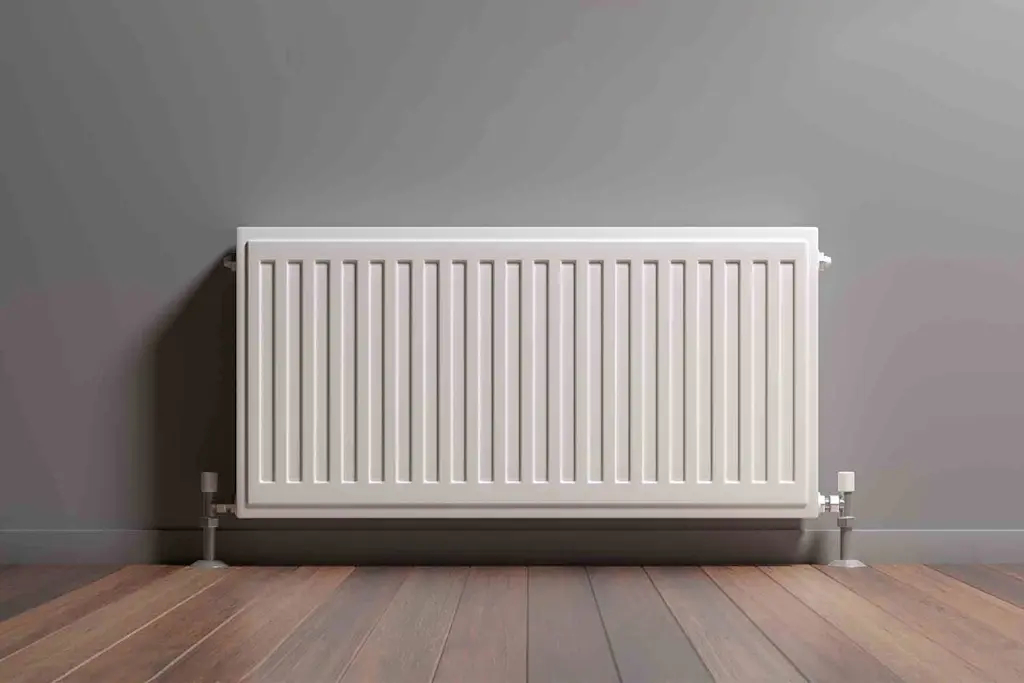
UK radiators come in a wide range of shapes and sizes, but most standard horizontal panel radiators fall somewhere between:
700mm x 1400mm at the small end
600mm x 2400mm at the largest
Knowing this range gives you a useful sense check once you've taken your own measurements - if your numbers fall wildly outside it, it's worth double-checking your tape measure technique.
Column, vertical, and designer radiators don't follow these standard dimensions as closely, which is exactly why an accurate manual measurement matters more for those styles.
Always measure the radiator itself, not the space you think it should fill. Room layouts and skirting boards can be deceptive, and a few millimetres out is enough to cause fitting problems later.
How to measure a radiator's width, height and depth
You only need a standard tape measure for this. Here's how to take each measurement accurately:
Width - Run the tape measure across the exact edge of the radiator, from one end to the other. Don't include any pipes, valves, or brackets in this figure.
Height - Measure from the bottom edge of the radiator to its highest point, again excluding the pipework beneath it.
Depth - Measure from the wall the radiator is mounted on to the front-facing surface of the radiator.
These three numbers give you the radiator's overall footprint, which is what you'll compare against the new radiator's spec sheet or the space available.

How to measure radiator pipe centres
If you're replacing a radiator, the width and height alone won't be enough - you also need to know the pipe centres, sometimes called the "pipe distance" or "valve spacing".
Pipe centres - Measure from the middle of one pipe inlet to the middle of the other. This tells you how far apart the two connection points are.
Wall to pipe centre - Measure from the wall to the centre of the pipe inlet, which tells you how far the pipework sits proud of the wall.
Matching these figures on your new radiator means it can connect straight onto your existing pipework without anyone needing to reroute anything.

Central heating engineer near me
Central heating engineers are important for keeping our homes warm and toasty throughout the year - as well as ensuring that our central heating systems are safe. Here's all you need to know.
How do you measure a radiator for a replacement?
A like-for-like radiator replacement needs slightly more care than a fresh installation, because you're working around existing valves and pipework.
Get it wrong and you'll likely need a plumber to relocate the pipes, which adds to the job.
To measure accurately for a replacement:
Width - Measure between the two valves at their widest point, including any end fittings or pipe extensions.
Height - Measure from the top of the radiator to the bottom, including legs or brackets if fitted.
Depth - Measure from the wall to the front of the radiator, so the new one doesn't protrude further than expected.
If you can't find a replacement with valves in exactly the same position, ask about a valve extender to bridge the gap. An experienced heating engineer can tell you whether one will work with your setup.
How do you measure a curved radiator?
Curved radiators, often used to fit bay windows, need a flexible tape measure - a tailor's tape works well - so you can follow the curve rather than cutting a straight line across it.
Width - Measure the horizontal distance along the curve, from one end to the other.
Height - Measure from the bottom edge to the highest point, excluding pipework.
Depth - Measure from the wall to the front of the radiator.
How to take a radiator off in 6 steps
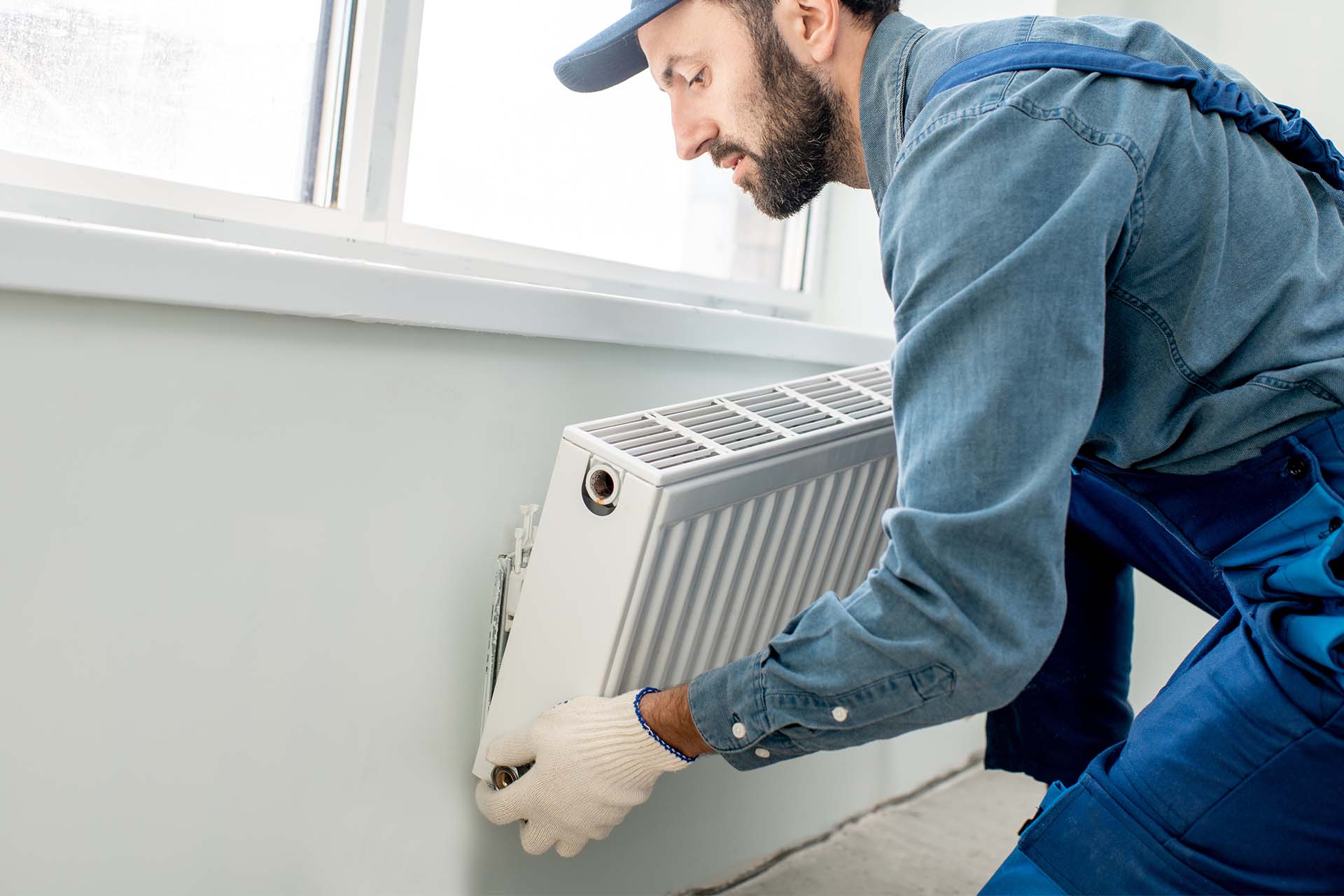
A step-by-step guide to safely taking a radiator off the wall, covering how to isolate the valves, whether you need to drain the whole system, and the tools you'll need.
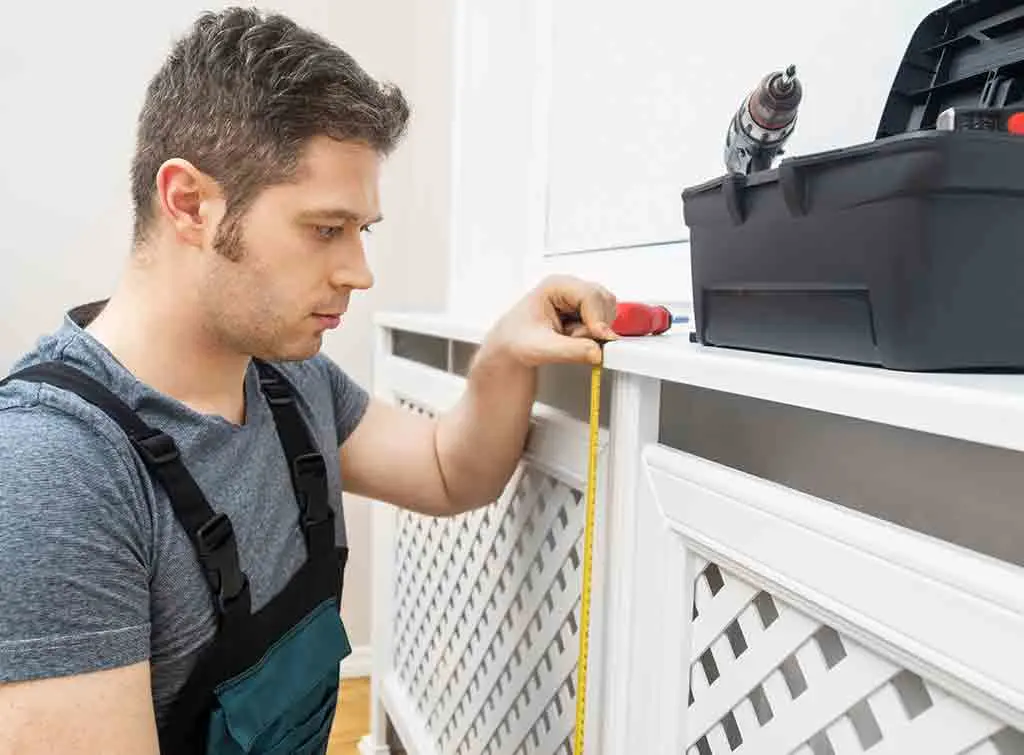
How to measure for a radiator cover
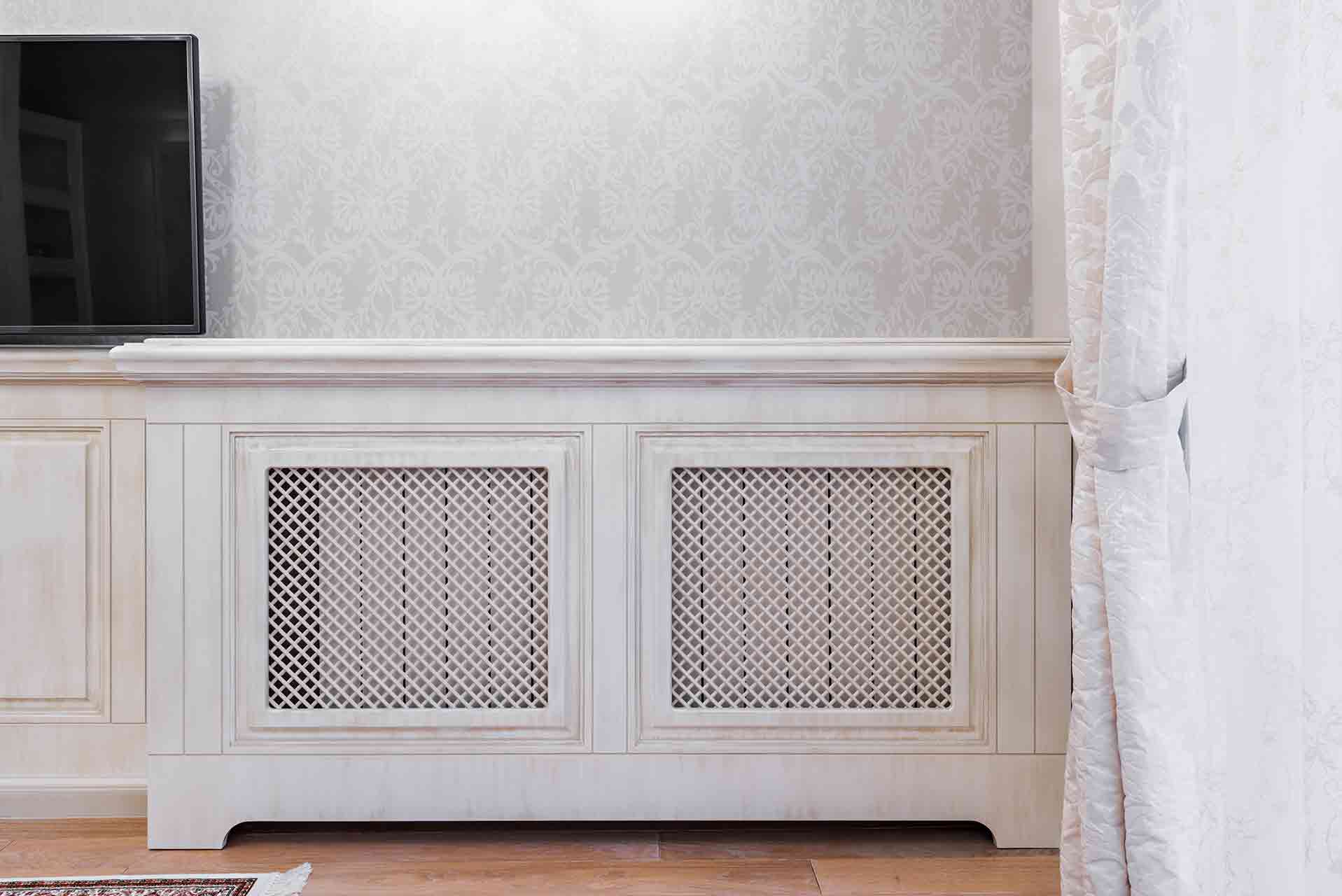
Measuring for a radiator cover isn't just a case of matching the radiator's dimensions - you need clearance for pipes, skirting boards and windowsills, plus enough ventilation space for heat to circulate properly.
Width - Measure the radiator's width including any valves and thermostats, then add 5-10cm for clearance.
Height - Measure from the floor to the top of the radiator, adding 2.5-5cm at the top for airflow.
Depth - Measure from the wall to the front of the radiator, adding roughly 5cm for clearance.

How do I size a radiator for my room?
Once you know a radiator's physical dimensions, it's worth checking whether that size will actually heat the room properly. This is where a BTU calculator comes in - it factors in things a tape measure can't tell you, including:
Insulation - Poorly insulated rooms, such as those with single glazing, need a higher heat output than well-insulated ones.
Windows and external walls - More glazing or exposed walls generally means you'll need a bigger radiator.
Aspect - North-facing rooms tend to run colder and often need a larger radiator to compensate.
Not sure what size or output you need? Try Checkatrade's AI-assisted pricing tool to get a guide estimate for your radiator installation before you speak to a heating engineer.
Job Estimate Calculator

What does radiator replacement cost?
Measurements sorted, the next question is usually cost. Prices vary depending on radiator size, type, and whether any pipework needs adjusting, so it's always worth comparing a few quotes before committing.
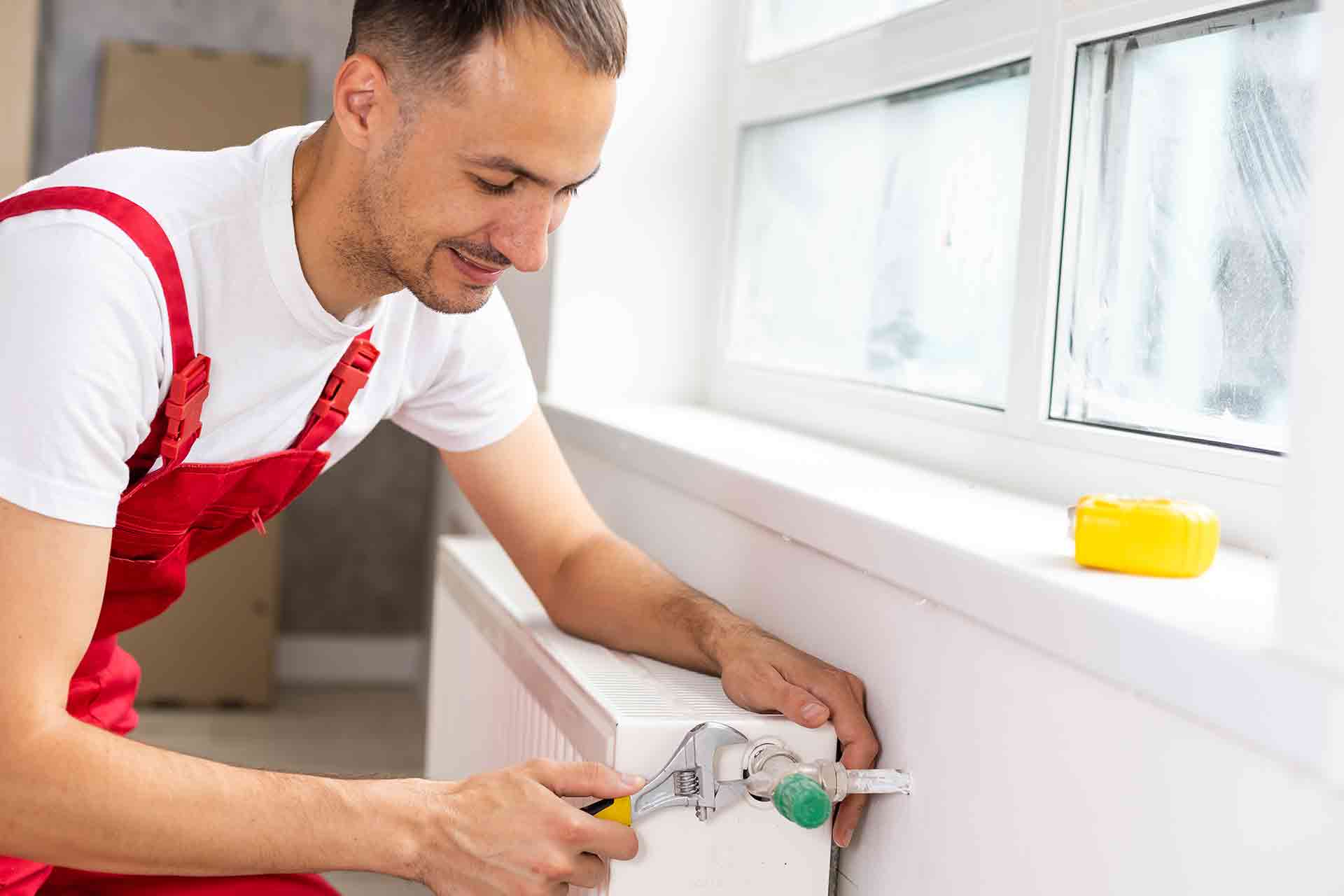
Radiator replacement: Cost breakdown 2026
If your radiators aren’t heating properly, look outdated, or you’re upgrading your central heating system, replacing a radiator can improve comfort and efficiency. Discover the average cost to replace a radiator in the UK in our comprehensive guide.
How to find a heating engineer to help
With so many measurements to get right, it's worth getting a second opinion from a professional plumber or heating engineer - particularly if you're dealing with an awkward space, a curved radiator, or mismatched pipe centres.
An experienced engineer can also advise on positioning, output, and whether a radiator cover will interfere with heat distribution before you buy one.
Find a central heating engineer
Enter your postcode to find a top tradesperson near you
RAPID PLUMB 247 LTD
10.00
(6 reviews)Services & skills
Central HeatingAir Source Heat Pump Installation - ASHPEmergency Central Heating RepairGas Boiler InstallationGas Boiler Servicing / RepairTower Heating Services Ltd
10.00
(167 reviews)Suggested Services
Landlord Gas Safety Certificate (CP12)£83 / jobAnnual Boiler Service£114 / jobSmart Thermostat Installation£120 / fixtureAZ Plumbing Contractors Ltd
10.00
(251 reviews)Services & skills
Central HeatingAir Source Heat Pump Installation - ASHPGround Source Heat Pump Installation - GSHPEmergency Central Heating RepairAir Source Heat Pump Servicing / Repair - ASHPA&E Gas Plumbing Services
10.00
(44 reviews)Services & skills
Central HeatingGas Boiler InstallationGas Central Heating InstallationSmart ThermostatsEmergency Central Heating RepairHighgate Heating and Plumbing Ltd
10.00
(542 reviews)Services & skills
Central HeatingGas Boiler InstallationEmergency Central Heating RepairGas Cooker InstallationGas Central Heating InstallationNotting Hill Gas & Heating Ltd
10.00
(123 reviews)Services & skills
Central HeatingGas Boiler InstallationAir Source Heat Pump Installation - ASHPGas Cooker InstallationGas Central Heating Installation



If the job involves more than just swapping a radiator - say a full heating engineer upgrade, or new pipework that needs a plumber - it's worth lining up the right trade for the job before you proceed.
Radiator measuring checklist

Measuring radiator checklist
Before you proceed...
FAQs for measuring radiators
Measure from one exact edge of the radiator to the other for width, and from the bottom to the highest point for height, without including any pipes or valves.
Pipe centres are the distance between the middle of one pipe inlet and the middle of the other. It's the key measurement for making sure a replacement radiator connects to your existing pipework without any adjustments.
Measure the radiator itself, then add clearance for pipes, skirting boards and windowsills, plus extra space at the top for ventilation.
Use a BTU calculator, which factors in room dimensions, insulation levels, window size, and aspect to recommend an appropriate heat output.
No. Measuring a radiator, including its pipe centres, can be done without draining the system - you'll only need to drain it if the radiator is being removed or replaced.
Start with a BTU calculator for the most accurate figure, then confirm with a heating engineer, who can also advise on the best position for it in the room.
You'll get a far more accurate result with a standard tape measure - for curved radiators, a flexible tailor's tape is best so you can follow the curve properly.
More Central Heating Engineer Articles
See the tradespeople we've checked for your job