EXPERT ADVICE
How to tell if your house needs rewiring
Updated 07/26
By: Olivia Scammell
Reviewed: Kim Staples

If you suspect your home's electrics need updating, you'll no doubt have several questions. In this post, we outline how to tell if your house needs rewiring, what the process involves, how long it takes, and how much it might cost.
The warning signs your wiring is failing
Whether you need a full or partial rewire
How messy and disruptive a rewire really is
How long a full house rewire takes
What it costs to rewire a house in 2026
How to find a qualified electrician for a rewire
Many homeowners living in older properties wonder how to tell if their house needs rewiring. Homes tend to need a full rewire every 25 years, so if you live in an older property or have concerns about your property's wiring, that may be you.
In this guide, we'll walk through the signs that your house needs rewiring, what the job actually involves, and what it's likely to cost.
Find an electrician to rewire your house
How to tell if your house needs rewiring
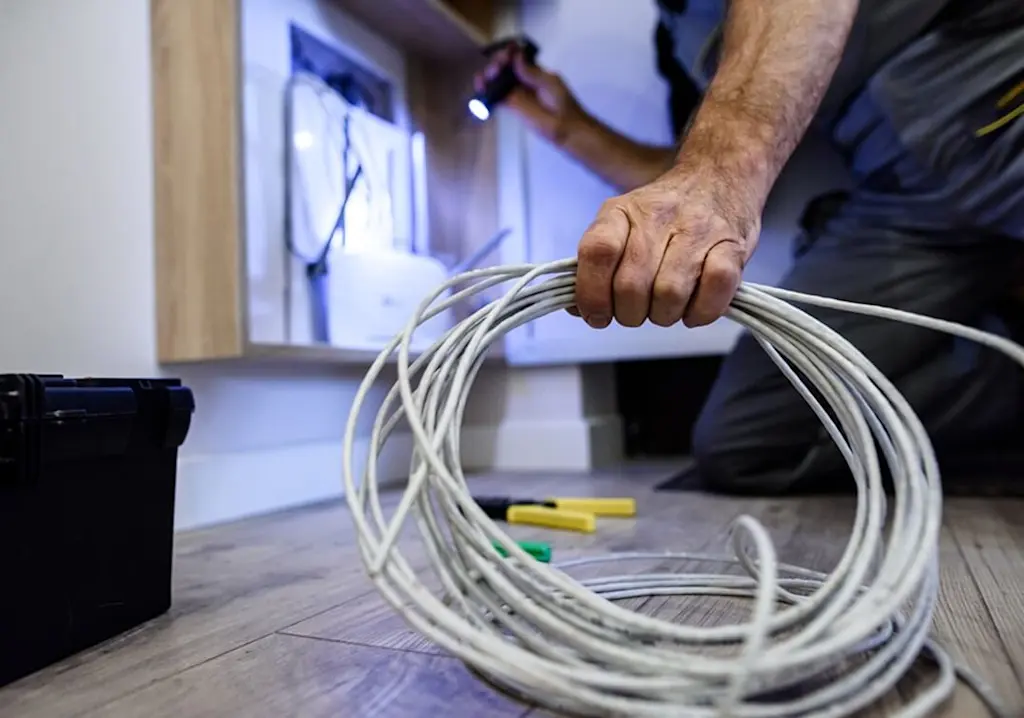
Homes typically need a full rewire every 25-30 years, so if you're in an older property, or you've never had the wiring checked since moving in, it's worth paying attention to a few tell-tale signs.
If any of these sound familiar, it's worth having an emergency electrician or a rewiring specialist take a look before the problem gets worse.
If you're unsure how old your wiring is, ask an electrician for an Electrical Installation Condition Report (EICR). It's the definitive way to find out what state your electrics are really in, rather than guessing from symptoms alone.
1. Burning smells
If you regularly smell burning around your home but are unable to identify the source, there may be an electrical fault somewhere.
Turn off the power at the circuit and contact an electrician immediately. They will conduct a thorough check of your home's wiring.
2. Discoloured switches or plugs
Discolouration of the outlets or switches can be a sign of either a loose connection or faulty wiring. Loose connections can cause arcing or sparking, which can lead to small fires that discolour the outlets' surface.
Again, this warning sign should not be ignored. Contact a qualified electrician as soon as possible.
3. Flickering lights
If your lights flicker or get dimmer on occasion, you may need to replace your light bulbs or check that they're screwed in properly.
There’s also the possibility of a more serious underlying problem you aren’t aware of, such as faulty wiring.
If you suspect that your lights may be flickering due to an electrical rewiring fault, call an emergency electrician without delay.
4. Blown fuses or tripping circuit breakers
Designed as a safety measure to prevent electrical fires, circuit breakers will cut off any electrical flow when a circuit can no longer handle the number of amps.
When your electrical system becomes worn and can no longer handle the amount of electricity required for your home, the chances are a fuse will blow or the circuit will trip.
Bad wiring is usually a direct cause of trips and blows, and will certainly need addressing sooner rather than later. When appliances become too hot, this can also lead to trips and blows.
5. Socket problems
Over time, sockets can wiggle or even fall out the wall, which means they'll need replacing.
If your wall sockets are hanging out the wall, the wiring can become exposed. This can be dangerous for any young children or pets you may have in the home.
Sizzling or buzzing noises are also a frequent problem for wall sockets and will also need investigating by an electrician who knows what to look for. They will be able to tighten the outlets back into place or replace them altogether.
6. Aluminium wiring
According to the Consumer Product Safety Commission (CPSC), aluminium wire connections are more likely to fail which can cause overheating. Overheating could lead to a fire, with aluminium wiring considered to be more of a risk than copper wiring.
The letters ‘AL’ on the wiring jacket will indicate that the wires are aluminium, but if you're unsure, an electrician can assist you.
7. Electrical shocks
Even the smallest electrical shock is a huge warning sign. If plugging an electrical appliance into the wall socket has ever resulted in a shock, more often than not, there will be an issue with the outlet rather than the appliance.
Electric shocks of any kind should never be ignored. If you have experienced a shock, step away from the wall socket and contact an electrician to check the wiring in your home.
Other signs
Beyond active warning signs, older properties can carry quieter clues too:
Cast iron switches
No labelling on the consumer unit
A wooden-backed consumer unit
Round-pin sockets rather than modern 3-pin
Fewer than two sockets per room
Plugs that get noticeably hot when in use

Find a qualified electrician for your house rewiring
If you've experienced any of the warning signs listed above, or want a professional assessment to know if your house needs rewiring, contact a qualified electrician.
Only tradespeople who pass our checks are on Checkatrade. Simply search your postcode to get started.
Find qualified electricians working in your area
What does rewiring a house involve?
A full rewire typically means:
Replacing all electrical cables in walls and floors
Installing a new consumer unit
New back boxes on every switch and socket
Rewiring all lighting and power circuits
Rewiring phone and TV aerial points
It's also a common opportunity to add extra sockets, move switches, or wire in smart home features, security systems, or integrated speakers while the walls are already open.
DIY rewiring is not recommended unless you have genuine electrical experience. Even then, the work must be signed off by a NICEIC or NAPIT-registered electrician to meet Part P of the Building Regulations and confirm it's safe.
How messy is rewiring a house?
As you might imagine, completing a house rewire is a messy job. It's renowned for being dusty, dirty, and disruptive.
Walls and ceilings get cut into, floorboards are lifted, and dust travels further than you'd expect.
An experienced electrician will use techniques like fishing cables through existing cavities to keep this to a minimum, but it's worth planning for some upheaval, especially if you're staying in the property while the work happens.
However, an experienced electrician will have the tools and know-how to help keep disruption to a minimum.
Ask your electrician whether they can work room by room rather than emptying the whole house at once. It takes a little more time, but it keeps at least part of your home usable throughout.
How long does a full house rewire take?
A full house rewire generally takes 2-10 days, depending on the size of the property, how accessible the wiring is, and whether the house is occupied during the work.
Occupied properties generally take longer, since electricians need to make good as they go and can't leave live cables exposed overnight.
Can you rewire a house without taking the walls down?
Yes. Electricians commonly fish cables through existing wall and ceiling cavities, or cut narrow channels that are easily plastered over afterwards.
It's rarely necessary to strip a room back to brick just to rewire it, though a renovation is often the most convenient time to do it if you have one planned.
Can you partially rewire a house?
Yes, to an extent. If just one part of your electrical circuit has issues or safety problems, it might be possible to replace or upgrade just this section.
However, this only really works where the existing installation is well laid out and clearly documented. In older homes where nobody's entirely sure what connects to what, a partial rewire can end up more complicated (and costly) than starting fresh.
Find an electrician to rewire your house
How often does a house need to be rewired?
It's recommended your home is completely rewired every 25-30 years to make sure it's up-to-date with current building regulations.
How much does it cost to rewire a house?
On average, this is what you can expect to pay to rewire your house or flat:
For a 1-bed flat: £3,000–£4,800
For a 2-bed flat: £3,800–£5,800
For a 3-bed house: £4,450–£8,000
For a 4-bed house: £6,080–£9,380
For a 5-bed house: £7,500–£12,500
Every project will differ as there are many variables involved, including:
The size and layout of the property
The quality of fixtures and fittings required
The number of sockets and outlets
The complexity of the existing wiring
Whether the property is occupied
For more detailed information, including the cost of an Electrical Installation Condition Report (EICR), check out our guide to the cost of rewiring a house.
How much does it cost to rewire a house in the UK?
Bought a new property or looking to upgrade the wiring in your existing house? Find out the average house rewiring costs to help plan your budget.
Can you get your house rewired for free?
Rewiring is a significant cost, so it's always worth checking whether your local authority offers grants or loans for essential home improvements.
You're most likely to qualify if you're on a low income, receiving certain benefits, or living in a listed or older property.
Availability varies by council, so contact yours directly to ask what's on offer.
Find a qualified electrician near you
It's incredibly important to make sure you hire a qualified electrician for your house rewire.
The good news is that you're in the right place to start looking for a trusted electrician with Checkatrade. Simply search your postcode to get started, and we'll show you electricians who cover your area so you can compare your options.
Find an electrician to rewire your house

FAQs
Look out for burning smells, discoloured sockets, flickering lights, frequent tripping, loose or hot sockets, and any electric shocks from appliances. If you notice several of these together, or your home hasn't had an EICR in over a decade, it's time to call an electrician.
Generally, yes. Electricians can work faster - and therefore more cheaply - in an empty property because there's no furniture to work around and no need to reinstate power at the end of each day.
If you're planning a house move or major renovation, that's often the most cost-effective time to rewire.
No, rewiring doesn't require planning permission. It does, however, need to comply with Part P of the Building Regulations, and the finished work must be certified by a registered electrician or signed off by building control.
It's more disruptive than moving out, since electricians need to work around your schedule and reinstate power to essential rooms (like the kitchen) at the end of each day.
Expect some dust, noise, and temporary loss of power to individual circuits while work is ongoing.
A full rewire replaces every cable, socket, and switch in the property.
A partial rewire only replaces the wiring in one circuit or area. It's only advisable where the rest of the electrical system is in good, well-documented condition.
EICR prices vary by property size, but typically range from around £100 to £200 for an average home. Our electrical safety check cost guide covers current EICR pricing in more detail.
No. Notifiable electrical work in England and Wales must be certified by a registered electrician or signed off by building control under Part P, so DIY rewiring isn't recommended.
Getting it wrong risks major issues such as fires, and getting it uncertified can cause problems if you come to sell the house.

Check out our electrician hub for all the information you need in one place. There's everything from the cost of adding plug sockets to hanging a chandelier!


See the tradespeople we've checked for your job