COST GUIDES
Heat pump vs air conditioner cost: Everything you need to know
Updated 06/26
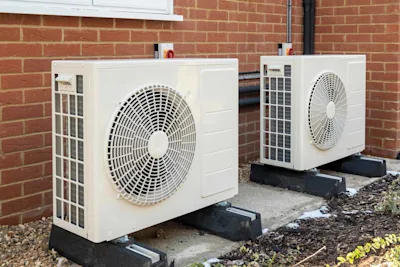

If you're looking for the best way to heat and cool your home, you're probably looking at air source heat pumps and air conditioners. But how do they compare, and how much do they cost - both upfront and long-term?
Fast Facts
An air source heat pump costs around £2,000 - £4,000 to supply and install
A ground source heat pump costs around £12,000 - £30,000 to supply and install
Air conditioning costs around £620 - £890 for a wall-mounted unit, plus £1,750 - £3,000 for installation
Most air con units can only provide cooling - you'll still need a heating system in the winter
A key difference is that a heat pump can both heat and cool your home, while on the other hand air conditioning is only for cooling.
A heat pump can cost more to install, but can replace your boiler entirely. An air conditioner costs less upfront, but you'll still need a heating system.
Let's take a closer look at how the costs compare.
Heat pump vs air conditioner cost comparisons
Installing an air source heat pump costs around £2,000 - £4,000, and installing a ground source heat pump costs around £12,000 - £30,000 (including supply of the units themselves).
In comparison, an air conditioning unit costs around £620 - £890 (wall-mounted unit) plus £1,750 - £3,000 for installation.
Looking for a trusted tradesperson to install your heat pump or AC unit? Enter your postcode to find installers on Checkatrade who work locally to you.
Find a local tradesperson
Heat pump vs air conditioner – running cost differences
The running costs of a heat pump vs an air conditioner are very similar.
The main thing that makes a difference to running costs long term comes in the winter: warming your home with an air con unit is either impossible or very expensive, so you'll need to pay for another heating method.
Both types of systems are seen as highly efficient because of the way they operate - they transfer heat rather than generate it.
It's difficult to compare the running costs side by side, as they'll depend on several factors - including the system's efficiency and your current energy prices, usage patterns, and climate conditions.
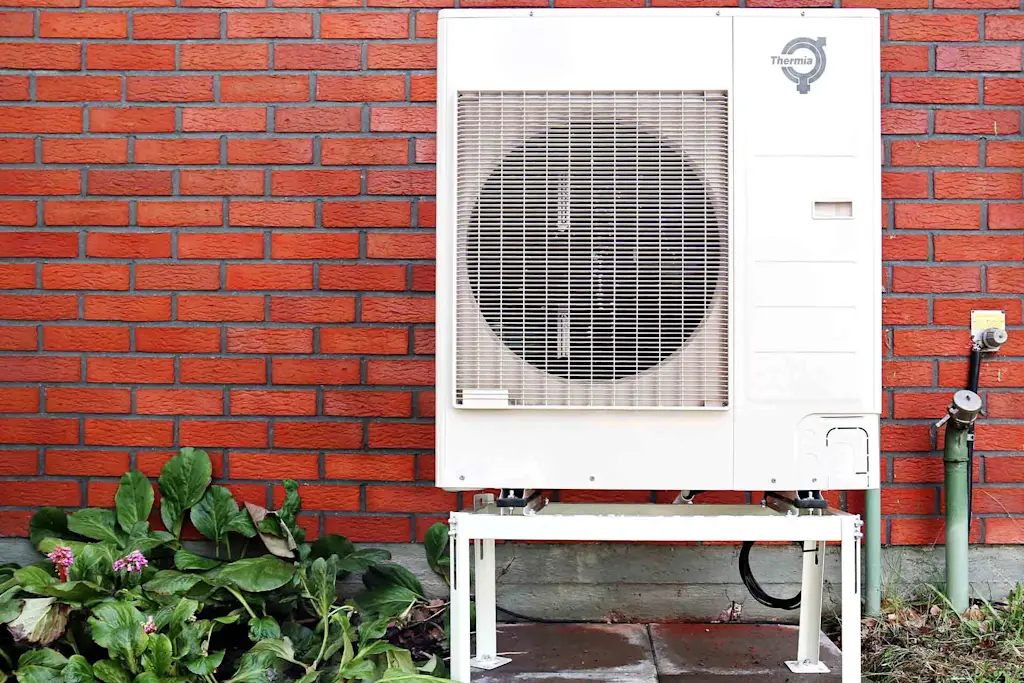
Is a heat pump more expensive than an air conditioner?
Yes, a heat pump is more expensive to install than an air conditioner. But it costs less to run a heat pump in the long term.
The full comparison depends on various factors and the specific requirements of your home.
While heat pumps may have higher upfront costs and be slightly more expensive to install, they offer significant long-term savings through energy efficiency and dual functionality
On the other hand, air conditioners have lower upfront costs but can result in higher running expenses - in part due to the need for a separate heating system

Whether you want to make an old home more energy efficient, learn more about air source heat pumps, or discover eco-friendly ways to heat your home, at Checkatrade, we're here to help.
Heat pump cost estimates
The cost of installing a heat pump varies depending on factors such as the type of heat pump, the size and capacity of the system, the complexity of the installation, and any additional requirements specific to your property. Overall:
Air-to-air air source heat pumps cost around £2,000 - £4,000 to supply and install
Air-to-water air source heat pumps cost around £7,000 to supply plus £8,000 to install
Ground source heat pumps cost around £12,000 - £30,000 to supply and install
Upgrading to a heat pump from a gas, oil, electric, or LPG heating system? You may be eligible for a Boiler Upgrade Scheme grant. See if you're eligible and apply via Ofgem.
Heat pump unit costs
The cost of most heat pump units themselves ranges from £2,000 - £4,000 for the supply and installation of an air-to-air air source heat pump with a heating capacity of 5kW.
The cost of an air-to-water air source heat pump, meanwhile, is around £7,000 to supply plus £8,000 to install.
For comparison, you're looking at around £12,000 - £30,000 for the supply and installation of a ground source heat pump (typically 4-12kW).
However, this depends on factors such as the type, capacity, brand, how easy/difficult the installation is, and extra features.
For example, ground source heat pumps are usually more expensive due to additional installation requirements, such as a ground loop system. You also need a large enough outdoor space to install one. Because of this, they're not a viable option for everyone.
Related content: Heat pump efficiency: An expert overview.
Data verified by our professional estimators
Estimators are CIOB & RICS members
Installation costs
On average, the installation cost of a heat pump in the UK can range from £2,000 - £4,000+ for an air-to-air air source heat pump, £8,000 for an air-to-water heat pump, or £12,000 - £30,000+ for a ground source heat pump.
The installation costs of a heat pump depend on several factors, including:
The complexity of the installation
Size of your property
Need for any additional components or modifications
Labour rates in your area
Ground source heat pump installations are generally more expensive due to the garden excavation required to install a ground loop.
Remember to factor in the costs of servicing and maintaining your heat pump too.

Additional components
Depending on your specific requirements, additional components such as hot water cylinders, radiators, underfloor heating systems, or ventilation systems may be necessary.
As a result, these components add to the overall installation cost of a heat pump.
Controls and thermostats
Upgrading or installing controls and thermostats to optimise the heat pump's efficiency and performance may incur additional costs.
Insulation and building modifications
Ensuring proper insulation and any necessary building modifications to improve energy efficiency and maximise the heat pump's effectiveness may require some extra budget.
A professional can advise you on the best heat pump type, size, and any additional components or modifications needed.
Always make sure a qualified professional carries out the installation.
While the upfront cost of installing a heat pump may be higher compared with a traditional heating system, the long-term energy savings and potential government incentives or grants, such as the Boiler Upgrade Scheme, can help with the cost of a new heat pump.

On Checkatrade, you'll only find trades who meet our high standards and pass up to 12 checks.
Air conditioner cost estimates
Air conditioners are specifically designed to cool indoor spaces. The unit draws in warm air from the room and passes it over an evaporator coil filled with a refrigerant. The refrigerant evaporates, absorbing heat from the air and cooling it.
In terms of costs, you're looking at around £620 - £890 for a standard wall-mounted unit, plus £1,750 - £3,000 for installation.
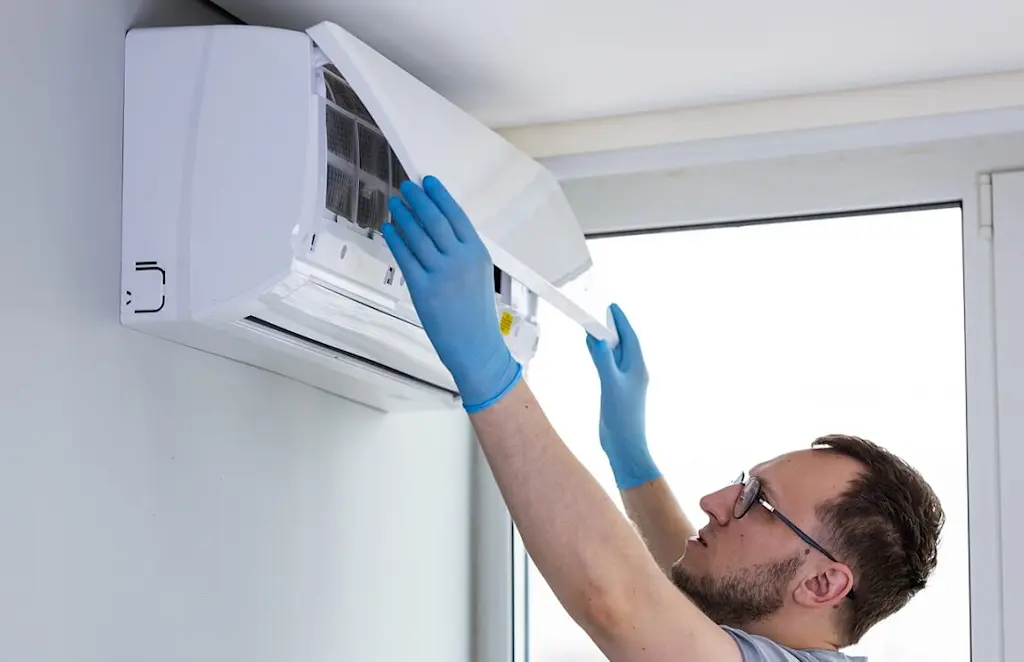
Air conditioner unit cost
Costs vary by brand, but as a guide, a 12,000 BTU unit normally costs around:
£300 - £420 for a portable unit (no installation required)
£620 - £890 for a wall-mounted unit (plus installation costs)
£830 - £1,190 for a ducted, ceiling-mounted HVAC system (plus installation costs)
The cost of an air conditioner unit varies based on several factors. This includes the type and size of the unit, its energy efficiency, and the specific requirements of your home.
The size of the room will determine how many BTUs are required to cool the room, which in turn will determine the size of the unit required.
Installation costs
The installation cost of an air conditioner unit in the UK ranges from £1,750 - £3,000 (or more), depending on factors such as the complexity of the installation, the type of unit (split system, window unit, or portable unit), and any additional requirements specific to your home.
It's a good idea to get around three quotes from HVAC installers to compare.
Running costs
As an approximate guide, the running cost of a 1kW-5kW air conditioner unit can range from 8p to 37p per hour of operation (based on electricity prices from 1 July 2026).
However, this depends on factors such as the unit's size, efficiency, and the electricity tariff in your area.
In the UK, electricity is typically priced in kilowatt-hours (kWh). Air conditioner energy consumption is measured in kilowatts (kW), and the running cost is calculated by multiplying the energy consumption (kW) by the cost per kilowatt-hour (kWh) of electricity.
To estimate the running costs, you need to consider the energy efficiency ratio (EER) or seasonal energy efficiency ratio (SEER) of the unit. The higher the EER or SEER rating, the more energy-efficient the unit is (and the lower the running costs are compared to less efficient models).

Air conditioning: Everything you need to know
Ever wondered how air conditioning works? Discover our helpful guide to learn more above types of air conditioning, how they work and installation costs.

How to optimise your air conditioner's performance
Regular maintenance, such as cleaning filters, ensuring proper insulation, and undertaking periodic servicing, will help optimise the efficiency of your unit and potentially reduce its running costs.
To get a more accurate estimate of the running costs for your specific air conditioner unit:
Check its energy efficiency rating
Consult the manufacturer's specifications
Use online calculators or energy cost estimators provided by energy suppliers
Always remember to consult with HVAC professionals or energy experts. They'll assess your specific requirements, provide detailed cost estimates, and offer guidance on energy-efficient options that suit your needs and budget.
Find a HVAC technician near you

What is an air-to-air heat pump, and how does it compare?
An air-to-air heat pump works like an air conditioner, but it works in reverse too - it pulls heat from the outside air to warm your home in winter, then runs the cycle backwards to cool it in summer.
Unlike an air-to-water heat pump, which heats your radiators and hot water, an air-to-air system delivers warm or cool air directly into rooms through wall-mounted units.
For a UK home, an air-to-air heat pump typically costs £2,000 - £4,000 to supply and fit.
That makes it cheaper than an air-to-water heat pump or a ground source heat pump, but more expensive than an air con unit.
Running costs are lower than a standard air conditioner for heating, because the system moves heat rather than generating it. The trade-off is that it won't heat your hot water or work with your existing radiators — so it suits homes that already have a separate hot water system.
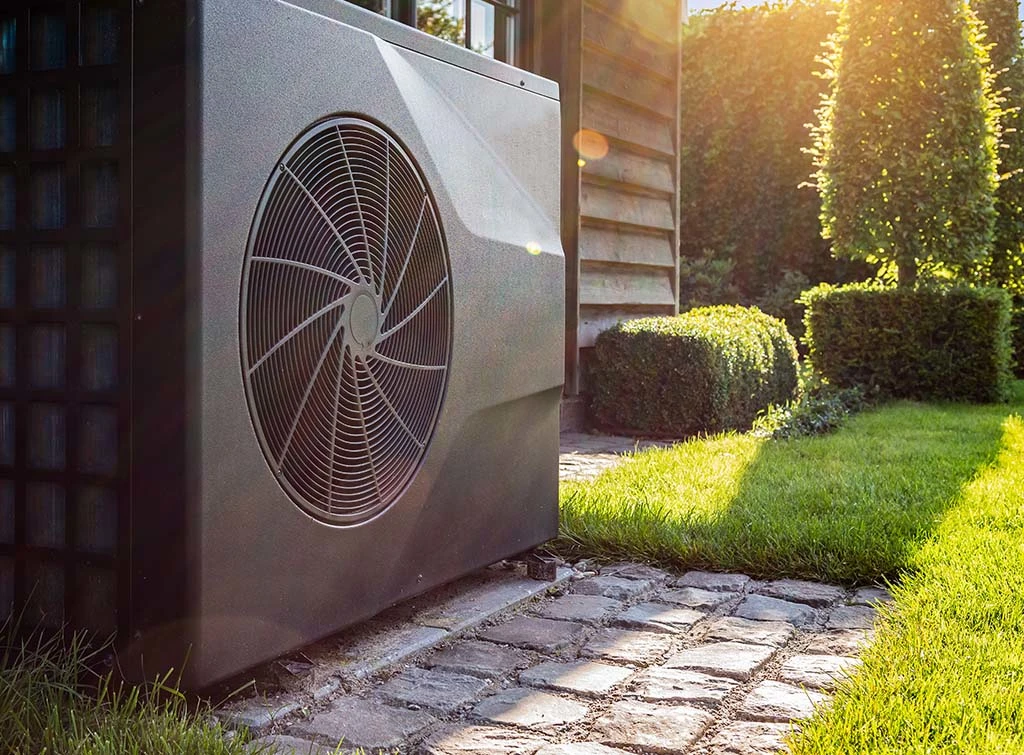
Get an estimated quote for your new heating system
Our job estimate calculator can help you compare how much your different cooling and heating systems can cost.
Just type in a few details, such as the type of heat pump you're considering and the size of your home, and the tool will give you a rough quote for supply and installation. Give it a try!
Job Estimate Calculator

Pros and cons of heat pumps vs air conditioning units
Pros of heat pumps
Energy efficiency: Heat pumps are renowned for their exceptional energy efficiency. By transferring heat rather than generating it, they offer significant savings on heating and cooling costs compared to traditional systems
Dual functionality: With a heat pump, you don't need separate cooling and heating systems. It can also be used to provide hot water to your home. This saves space and reduces installation and maintenance expenses
Environmentally friendly: Heat pumps utilise renewable energy from the air or ground, making them environmentally friendly and helping you reduce your carbon footprint
Long-term savings: Although heat pumps often have higher upfront costs, their energy efficiency and potential long-term utility savings often make them more cost-effective in the long run
Cons of heat pumps
Climate limitations: Heat pumps work most efficiently in moderate climates. In extremely cold regions, their heating capacity diminishes, which can make running one a little more expensive
Higher upfront costs: Heat pumps tend to have higher installation costs compared to air conditioners, due to advanced technology and additional components
Pros of air conditioners
Cooling efficiency: Air conditioners excel at cooling, particularly in hot climates. They're designed to deliver instant and powerful cooling for a comfortable home
Lower upfront costs: Air conditioners generally have lower initial installation costs compared to heat pumps, making them a more budget-friendly option for those prioritising upfront expenses
Cons of air conditioners
Limited function: Air conditioners can heat rooms but aren't typically suited to heating larger homes. Plus, they don't provide hot water for washing and showering
Noise: Air conditioning units can be noisy, especially older models, which can make a humming sound

Which is right for your home?
If you live in a moderate climate and prioritise energy efficiency and versatility, a heat pump is the better choice for you. Heat pumps provide both heating and cooling capabilities, offering year-round comfort and potential savings on your bills over time. They're also environmentally friendly as they use renewable energy sources.
However, if you already have an efficient boiler that you're happy with, an air conditioner is likely the more cost-effective option to keep cool in the summer. Air conditioners are highly efficient at cooling and have lower upfront costs.
As a basic guide...
You want to replace your boiler and want one system for heating and cooling: Heat pump
You already have a boiler and just want to cool your home in summer: Air conditioner
You want the lowest upfront cost: Air conditioner (portable or wall unit)
You want the lowest long-term running cost: Heat pump
You're in a poorly insulated home and haven't upgraded yet: Air conditioner for now - though heat pumps work best with good insulation
You want to reduce your carbon footprint: Heat pump
Ultimately, it's worth basing your decision between a heat pump and a traditional air conditioning unit on your specific needs, local climate conditions, and long-term financial considerations.
You may even find a hybrid heat pump system is the best solution.
Remember to compare different models, consider energy efficiency ratings, and talk to HVAC installers to make an informed decision that matches your specific needs and preferences.
Find a local tradesperson

FAQs: Heat pump vs air conditioner
A heat pump can both heat and cool your home, but an air conditioner can only cool (most standard models, at least).
Both work by moving heat rather than generating it - a heat pump just runs that process in both directions.
For heating, yes - a heat pump is significantly cheaper to run than electric resistance heating, and also cheaper than running an air conditioner in heat mode.
For cooling only, running costs are broadly similar. The bigger saving with a heat pump comes from replacing your boiler, not from the cooling side.
Yes. An air-to-air heat pump can both cool your home in summer and heat it in winter. It can do everything that an air conditioner can If you're buying a cooling system from scratch, an air-to-air heat pump is worth comparing directly with a split-system air conditioner.
The only thing it can't do is heat water.
For a home that doesn't have gas central heating, or one that wants a single system for heating and cooling without a ground loop, yes - an air-to-air heat pump is a practical and increasingly common choice for UK homeowners.
Running costs are lower than electric heating, and installation is less disruptive than an air-to-water system.
The main ones disadvantages of heat pumps are:
Higher upfront cost than an air conditioner
They work best in well-insulated homes
Air-to-air models don't heat your hot water
See the tradespeople we've checked for your job