EXPERT ADVICE
What are the most efficient radiators?
Updated 08/26
By: Imogen Beech
Reviewed: Kim Staples
If your radiators are taking forever to warm a room, or your heating bills keep creeping up, the radiator itself could be part of the problem.
Which radiator materials heat rooms fastest
How to size a radiator correctly using BTU
Whether electric or wet radiators suit your home
What smart controls and TRVs actually save you
How much a radiator upgrade typically costs
How to avoid common efficiency mistakes
Not all radiators are created equal, the material, size, and type you choose all affect how efficiently a room heats up, and how much it costs to keep it that way.
This guide breaks down what actually makes a radiator efficient, which types perform best in different rooms, and what to weigh up before you replace or upgrade yours.
Find a central heating engineer near you
What makes a radiator "efficient"?
An efficient radiator heats a room quickly, holds that heat well, and doesn't waste energy in the process.
Three things drive this:
The material it's made from
Its size relative to the room
How well it's controlled
Get any one of these wrong and you'll pay for it, either with a room that never quite feels warm, or a boiler that runs longer than it needs to.
Before you spend money on a new radiator, check your current one is actually the problem. A radiator that's cold at the top usually just needs bleeding, not replacing.
Wet system vs electric radiators
Most UK homes run "wet" radiators connected to a gas or electric boiler via pipework.
Electric radiators, by contrast, plug straight into the mains and heat up using an internal element, with no boiler or pipework required.
Wet (plumbed) radiators
Cheaper to run where you already have gas central heating
Heat multiple rooms from one central heat source
Better suited to whole-house heating
Electric radiators
100% efficient at the point of use - all the electricity they draw becomes heat, with no losses through pipework or a boiler
Straightforward to install room-by-room, useful for extensions, garages, or homes without gas
Cost more to run per unit of heat than gas
Many models now come with programmable thermostats and app-based scheduling built in, so you're only heating rooms when you need to
Neither is universally "more efficient" - it depends on your setup. A well-controlled electric radiator in an occasionally used room can easily beat an oversized, badly controlled gas radiator running all day.

How much does an electric radiator cost in 2026?
Are you considering installing an electric radiator to crank up the heat in your home? Here's how much to budget.
Radiator materials compared
The material a radiator is made from affects how fast it heats up, how long it holds heat, and how it responds to your thermostat.
Material | Heat-up speed | Heat retention | Best for |
|---|---|---|---|
Aluminium | Fastest | Lower | Rooms needing quick bursts of heat, works well with smart TRVs |
Mild steel | Moderate | Moderate | Most homes, the standard, balanced choice |
Cast iron | Slowest | Highest | Rooms you want to stay warm long after the heating's off |
Stainless steel | Fast | Moderate | Bathrooms and high-moisture rooms, resists corrosion |
Aluminium is the most thermally efficient material because it's such a good conductor.
It responds almost instantly when your thermostat calls for heat, and cools down quickly too, so you waste less energy once a room's up to temperature.
Cast iron works the opposite way. It's slower to heat, but it keeps radiating warmth long after the heating's switched off, which suits rooms where you want steady background warmth rather than quick top-ups.

Radiator types and how efficient they are
Panel radiators are the standard flat radiator found in most UK homes. Double panel (Type 22) versions have two heating panels rather than one, giving noticeably more heat output for a similar footprint - worth choosing over single panel in most rooms.
Column radiators have multiple vertical tubes and a larger surface area, which can mean better heat output, though they're often chosen for looks as much as performance.
Vertical radiators free up wall space below and can be just as efficient as horizontal versions of the same output, useful in narrow rooms or hallways.
Low water content radiators need the boiler to heat far less water to reach temperature, so they respond faster to thermostat changes and reduce the energy used on every heating cycle. These are a good match for modern condensing boilers and heat pumps.
Fan-assisted radiators use a small fan to push warm air out faster, heating a room in a fraction of the time of a standard radiator of the same size. They're increasingly recommended alongside heat pumps, since they help distribute the lower-temperature heat a heat pump produces more effectively than a standard radiator can.
Low surface temperature (LST) radiators are designed for safety in schools, care settings, and homes with young children or vulnerable adults. They have a lower surface temperature and enclosed casing. Efficiency is similar to a standard panel radiator of the same output.

What are the pros and cons of fan assisted radiators?
Fan assisted radiators can deliver up to 3x more heat output than conventional radiators of the same size. But are they really all they’re cracked up to be? Here are the main pros and cons.
Getting the size right (BTU)
Even the most efficient radiator material is wasted if the radiator is the wrong size.
Radiators are rated in BTU (British Thermal Units), a measure of how much heat they can output.
Too small, and the radiator will run constantly trying to heat the room, using more energy for a result that's still not quite warm enough.
Too large, and you'll overheat the room and waste energy, often ending up turning the radiator down or off, which defeats the point of choosing an efficient model in the first place.
BTU requirement depends on room size, ceiling height, number of external walls, window size, and insulation levels.
A heating engineer can calculate this properly during a survey, it's one of the most common reasons a "new" radiator still doesn't perform as expected.
Thermostatic radiator valves (TRVs) and smart controls
A badly controlled radiator wastes money no matter how efficient it is.
Thermostatic radiator valves let you set a different temperature for each room individually, rather than heating your whole house to the temperature the coldest room needs.
Smart TRVs go a step further, letting you schedule heating room-by-room from an app, and some learn your habits over time to heat rooms only when they're likely to be used.
Paired with an efficient radiator, this is often where the real savings come from: not heating rooms you're not using.
If you only upgrade one thing this winter, fitting TRVs to radiators that don't have them is usually the best-value way to cut heating waste, well below the cost of replacing the radiators themselves.

How much does an efficient radiator cost?
Costs vary a lot depending on radiator type, size, and whether you're replacing an existing radiator or fitting a new one from scratch.
As a general guide, removing and replacing a standard double panel radiator costs an average of £200.

Radiator replacement: Cost breakdown 2026
If your radiators aren’t heating properly, look outdated, or you’re upgrading your central heating system, replacing a radiator can improve comfort and efficiency. Discover the average cost to replace a radiator in the UK in our comprehensive guide.
Get a fixed quote for your exact setup before you commit to a radiator type, since size and material both move the price.
Find a central heating engineer near you
Do radiator covers or reflectors affect efficiency?
No, covers and reflectors don't improve heat output on their own.
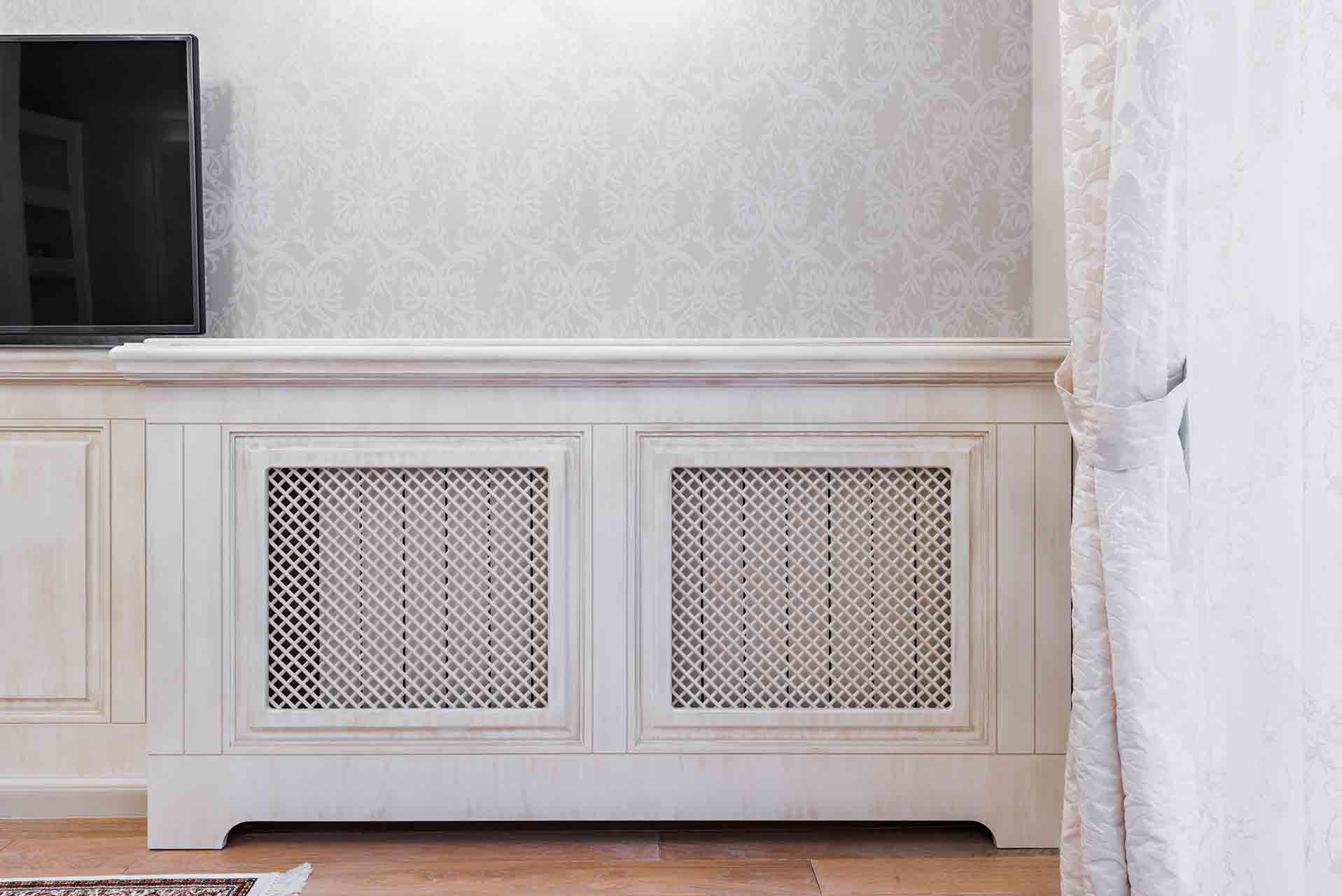
Radiator covers are popular for safety, noise reduction, and hiding an unattractive radiator, but a badly designed one can actually trap heat and reduce how much reaches the room.
If you want one, choose a cover designed with proper venting rather than a solid box.
Radiator reflector panels, fitted behind a radiator on an external wall, can help redirect heat that would otherwise be lost through the wall back into the room. It's a low-cost, easy addition rather than a replacement for an efficient radiator.
Radiator covers cost: 2026 UK price guide
Whether you’re looking for a way to maximise storage or simply hoping to make unsightly radiators more aesthetically pleasing, installing radiator covers is a great solution. But how much do radiator covers cost? We’ll break it all down here.
Finding the right person to fit your radiator
Radiator work sounds simple, but getting it wrong, wrong BTU sizing, poor pipework, an unbalanced system, can leave you with cold rooms and higher bills despite spending money on new radiators.
Get the job assessed by someone who knows what they're doing, whether that's swapping a single radiator or replacing every radiator in the house.
Find a central heating engineer near you

Need reassurance? All tradespeople pass up to 12 checks before joining, and we keep checking after.
Preparing for a radiator upgrade
Sort these five things before you commit to new radiators, so you don't end up paying for an upgrade that underperforms.

Before you upgrade your radiators
FAQs
Aluminium is the most thermally efficient radiator material, since it conducts heat quickly and responds fast to thermostat changes. For whole-room efficiency though, correct sizing and good controls (TRVs) usually matter more than material choice alone.
Not usually per unit of heat, because electricity costs more than gas per kWh in most UK tariffs. However, electric radiators are 100% efficient at the point of use and let you heat individual rooms only when needed, which can offset the higher unit cost in occasionally-used spaces.
An oversized radiator can waste energy by overheating a room, prompting you to turn it down or off, which cancels out any benefit. A correctly-sized radiator, based on a proper BTU calculation, is more efficient than simply going larger.
A double panel radiator uses more energy only because it puts out more heat. For a room that needs that output, it's more efficient than an undersized single panel radiator working overtime to compensate.
Yes, if you need a room to warm up quickly. They heat a room faster than a standard radiator of the same size and pair particularly well with heat pumps, which produce lower-temperature heat that benefits from being actively circulated. They cost more upfront, but that's usually justified in rooms where speed matters.
Yes, fitting TRVs (especially smart ones) lets you heat only the rooms you're using, rather than your whole house to one temperature. It's often the best-value efficiency upgrade you can make, well below the cost of replacing radiators.
Only if it's poorly designed. A solid, badly vented cover can trap heat and reduce how much reaches the room, but a well-vented cover has minimal impact. No cover improves efficiency though, only sizing, material, and controls do that.
Radiator size is calculated in BTU based on room dimensions, ceiling height, number of external walls, window size, and insulation. A heating engineer can calculate this accurately during a home visit, it's the single biggest factor in whether a radiator performs efficiently.
See the tradespeople we've checked for your job