IDEAS
Outdoor lighting ideas to transform your garden
Updated 08/26
By: Content Team
A garden that goes dark the moment the sun sets is a garden that's only half used.
The right outdoor lighting stretches your evenings outdoors, makes your space feel bigger and safer after dark, and turns ordinary features into something worth looking at.
Which lighting styles create the best evening atmosphere
How to highlight plants, water features, and garden structures
Ways to light paths, steps, and driveways safely
What powers garden lights, and which option suits you
Roughly what outdoor lighting installation costs
How to find a qualified electrician for the job
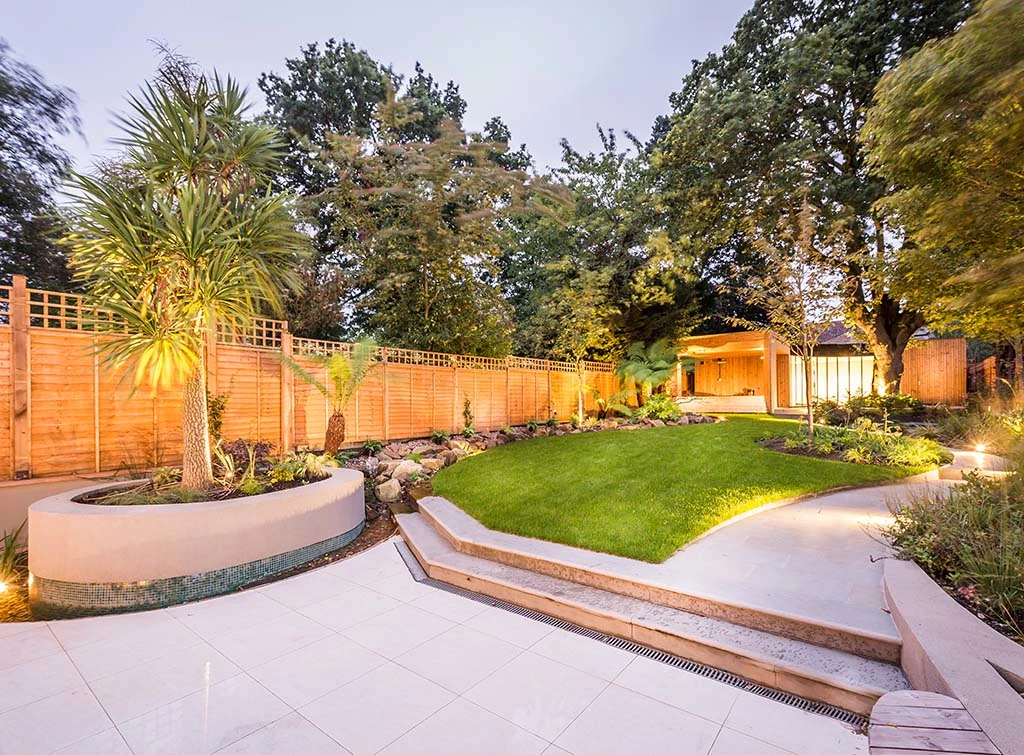
Lighting is one of the simplest ways to get more out of your garden, whatever the size or budget.
Below is a range of outdoor lighting ideas covering ambience, aesthetics, and safety, plus what you need to know about power and regulations before you buy.
Find an electrician for your garden lighting project
Outdoor lighting ideas for ambience
Calm, screen-free evenings outdoors are good for you, and warm lighting is what makes people want to linger. These ideas are about creating a mood rather than illuminating a specific task.
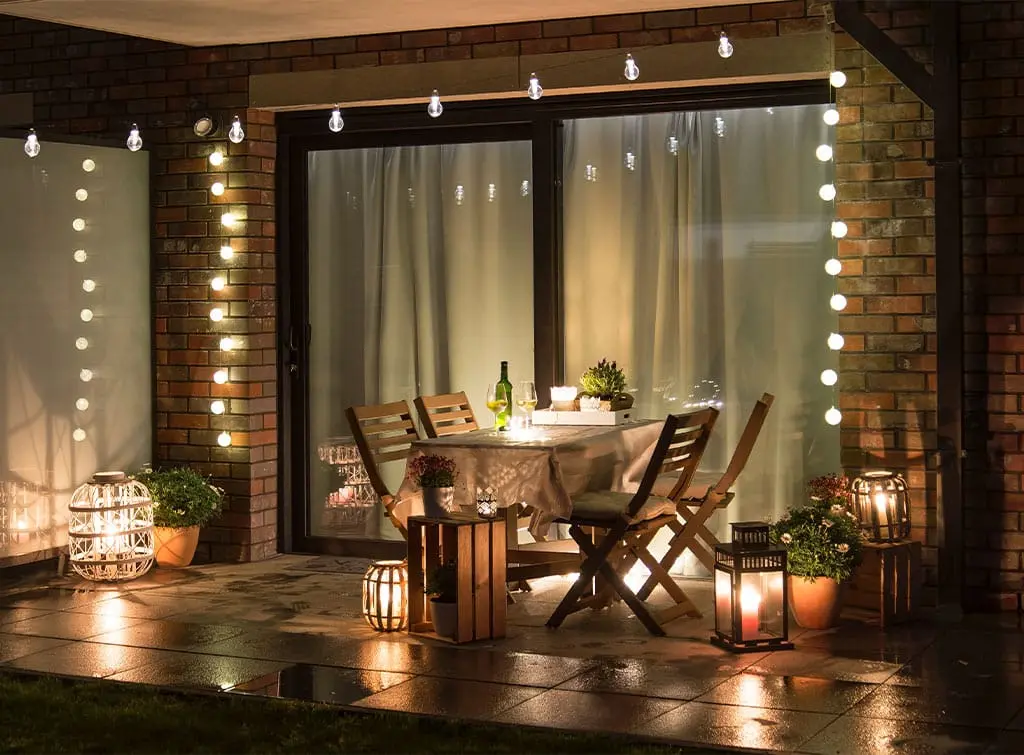
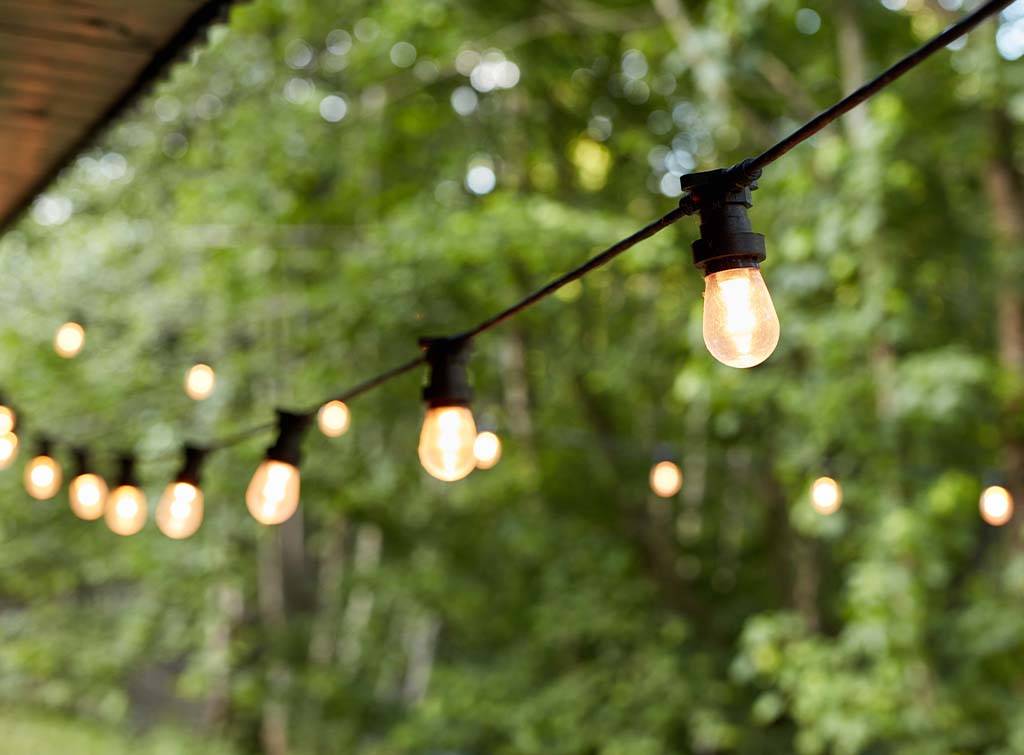
1. Festoon lights
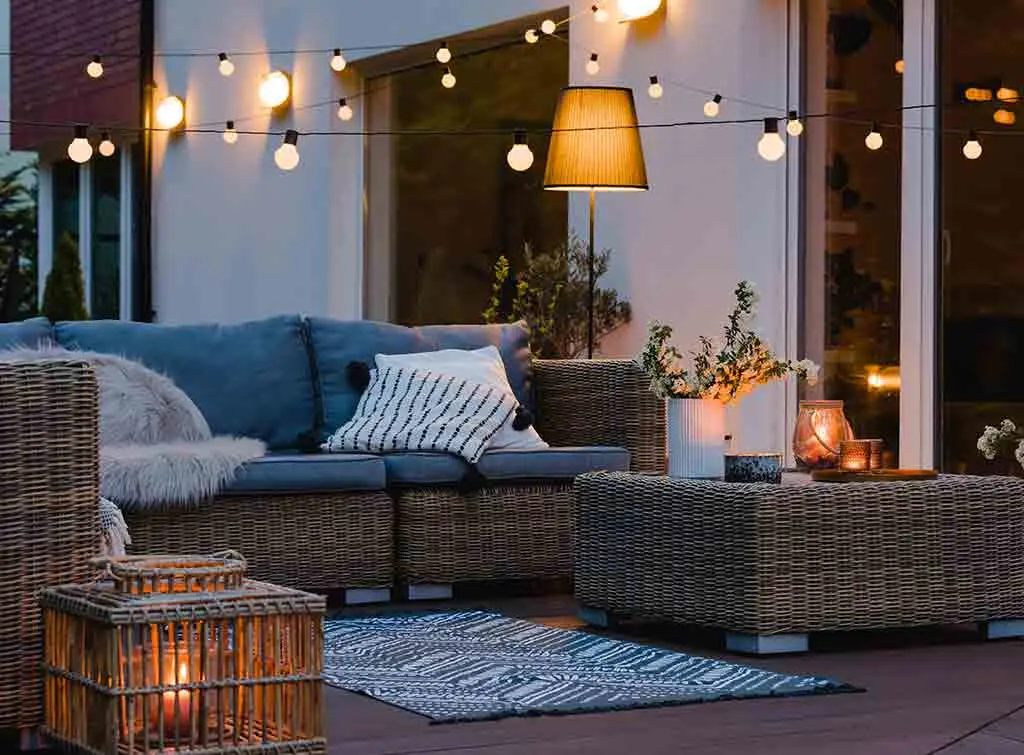
Dress your outdoor space in festoon lights for an instantly cosy, party-ready atmosphere.
Pair them with comfortable seating and a few blankets and you've got a setup that works well into autumn evenings, not just summer.
2. Mini lanterns on a balcony
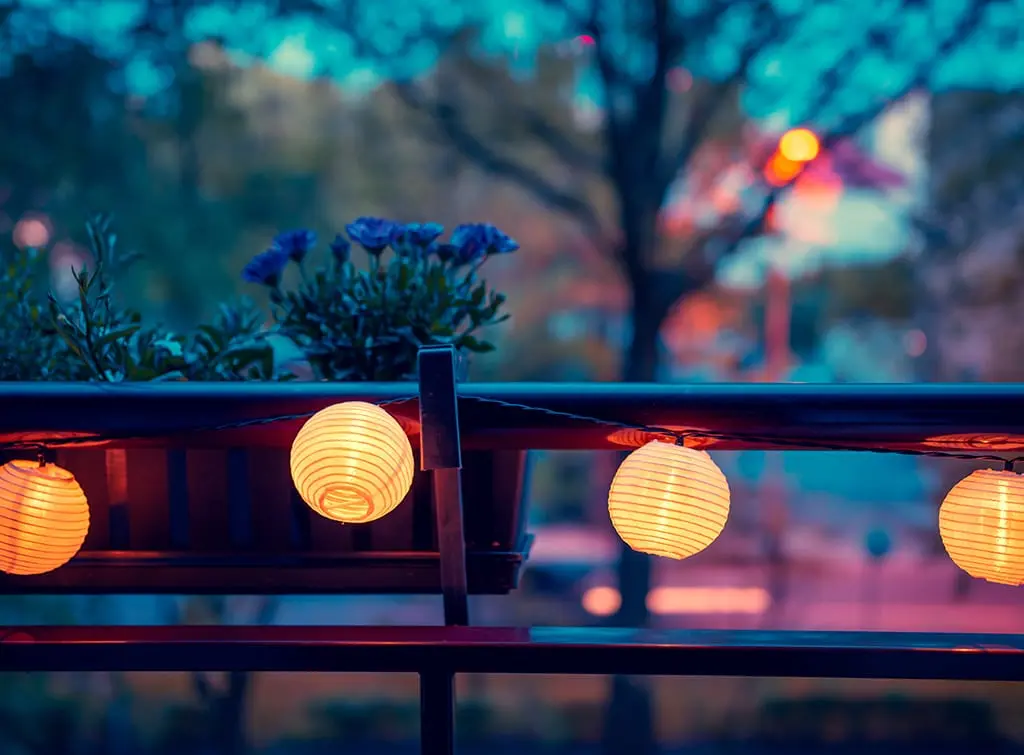
Under a covered balcony, string mini lanterns along the railings for a warm glow that doesn't eat into your space. It's a good option for alfresco dining after work, even in a small footprint.
3. Fairy lights through a garden border
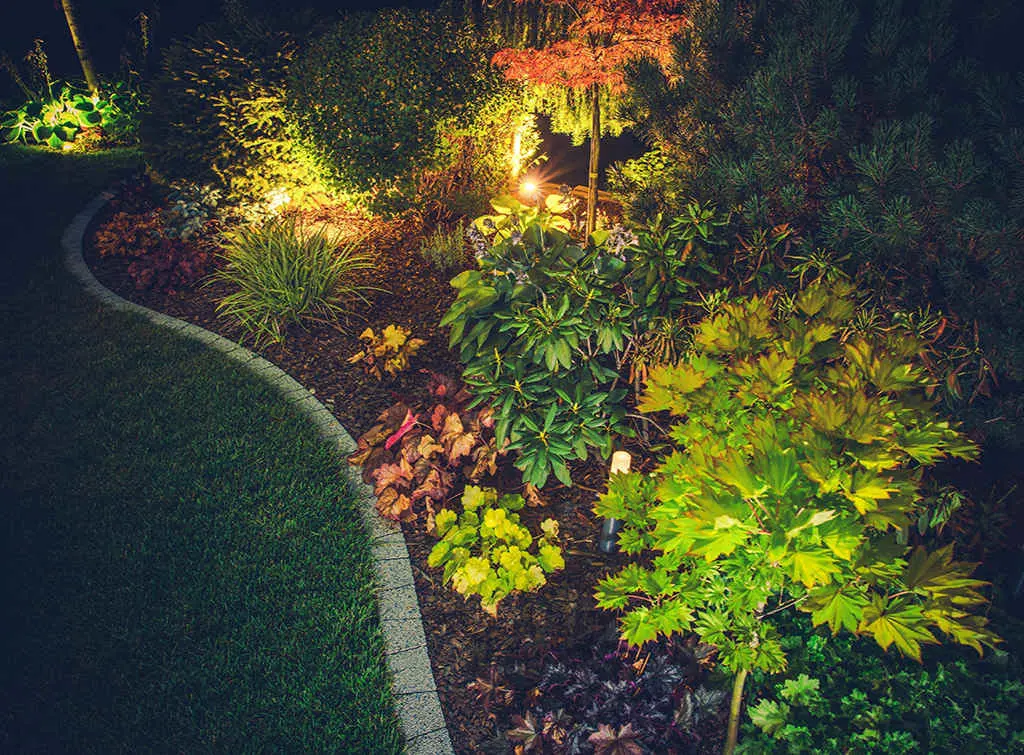
Weave low-level fairy or rope lights between shrubs and plants along a border. You still get to enjoy the colour and texture of your planting after dark, just with a softer, more atmospheric glow.
Warm white (2700-3000K) bulbs create a cosier feel than cool white, which can look clinical outdoors.
4. Garden fence lighting
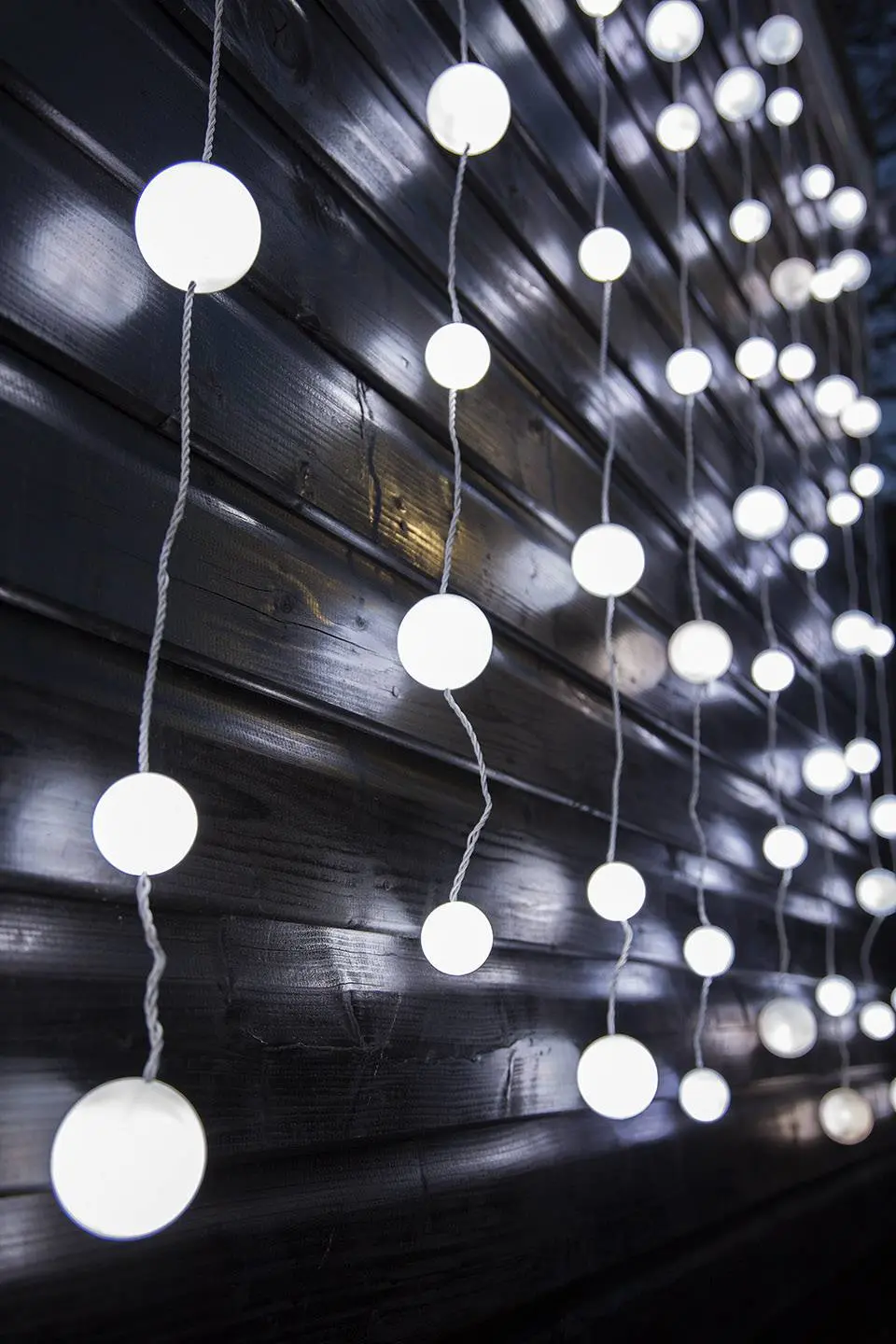
Enclosing your garden in threads of light works in any size space. Hang string lights along the top of your fence, use standalone stake lights along the perimeter, or mount individual fixtures directly onto the fence panels.
5. Rope lights along decking
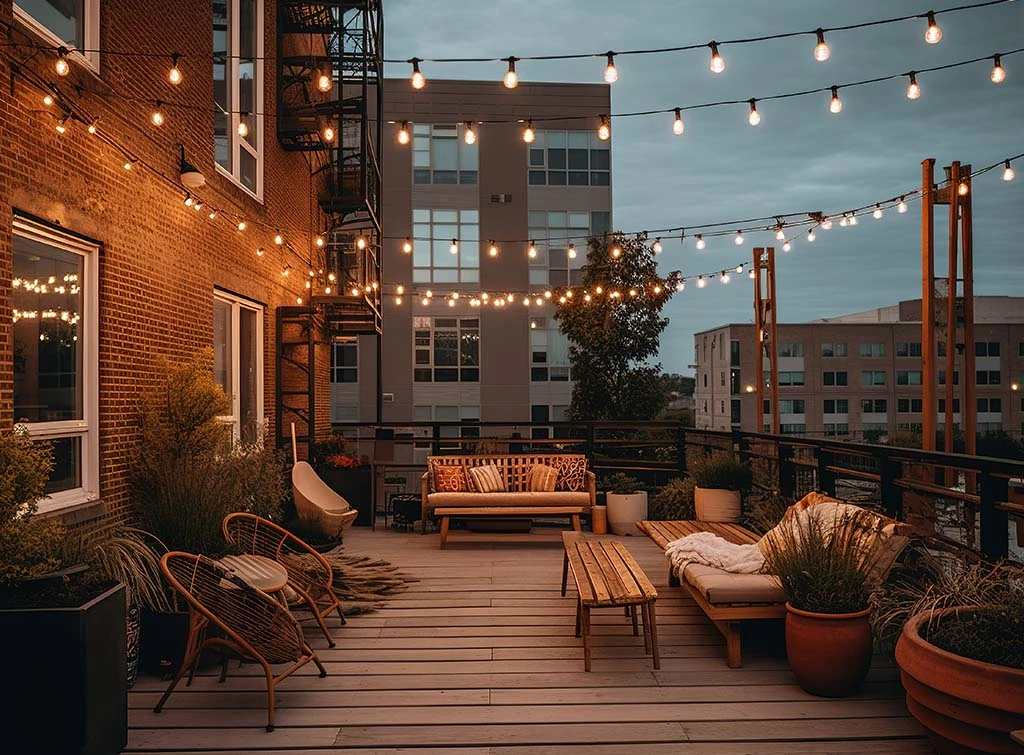
Rope lights tucked under the edge of decking or step risers give a subtle, modern glow without any visible fixtures during the day. They're inexpensive to buy and simple to run off a low-voltage transformer.

Outdoor lighting ideas for aesthetic appeal
A layered lighting scheme outside works the same way it does indoors: a mix of heights, intensities, and focal points reads as considered rather than accidental.
6. Uplight architectural plants and trees
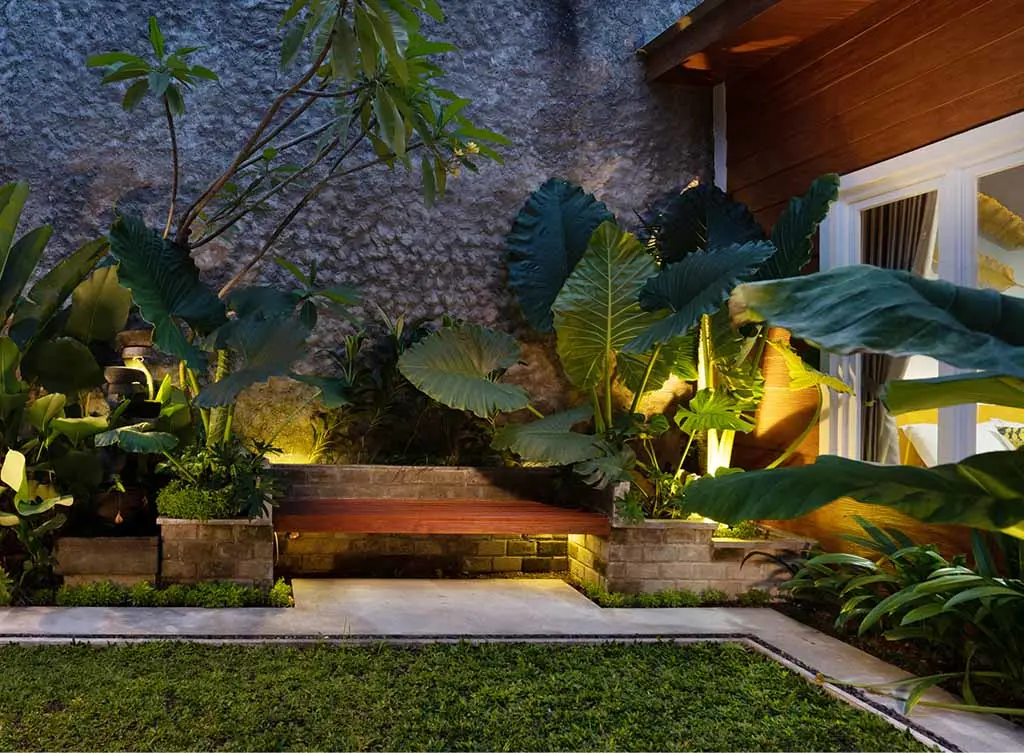
Carefully placed uplighters at the base of trees or structural plants throw dramatic shadows and highlight shape against the night sky. It's one of the most effective ways to add depth to a garden after dark.
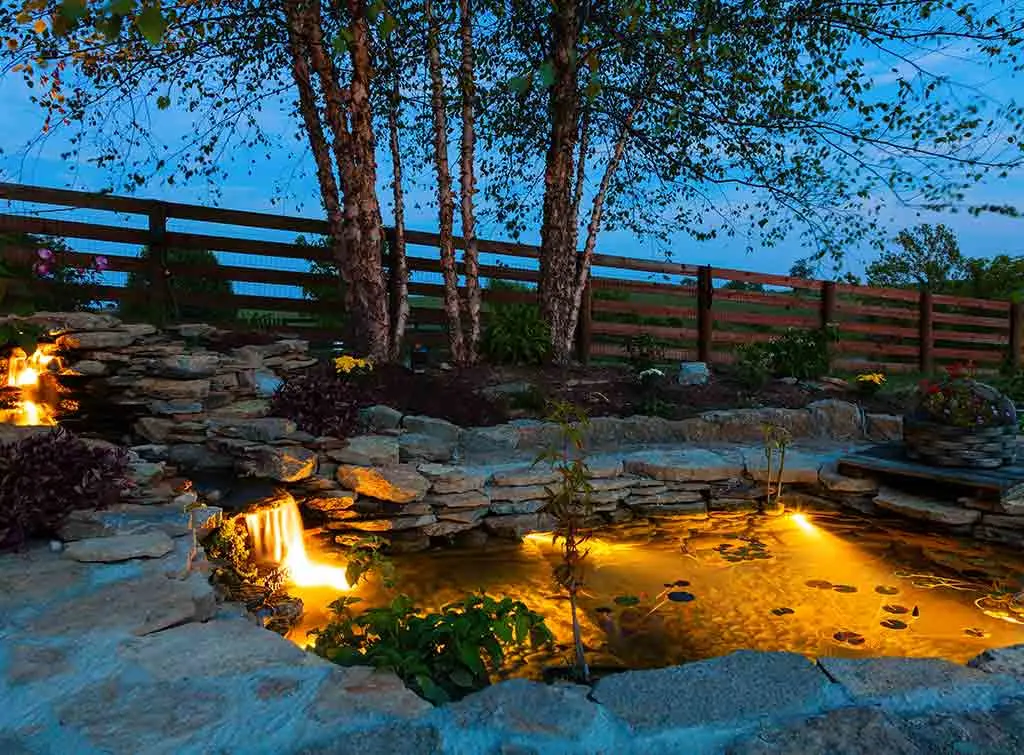
7. Light a water feature
Installing lights in or around a water feature gives it a golden glow and lets you see fish or moving water in the evening.
Submersible LED lights are widely available and low-voltage, so they're relatively simple for a qualified electrician to wire in safely.
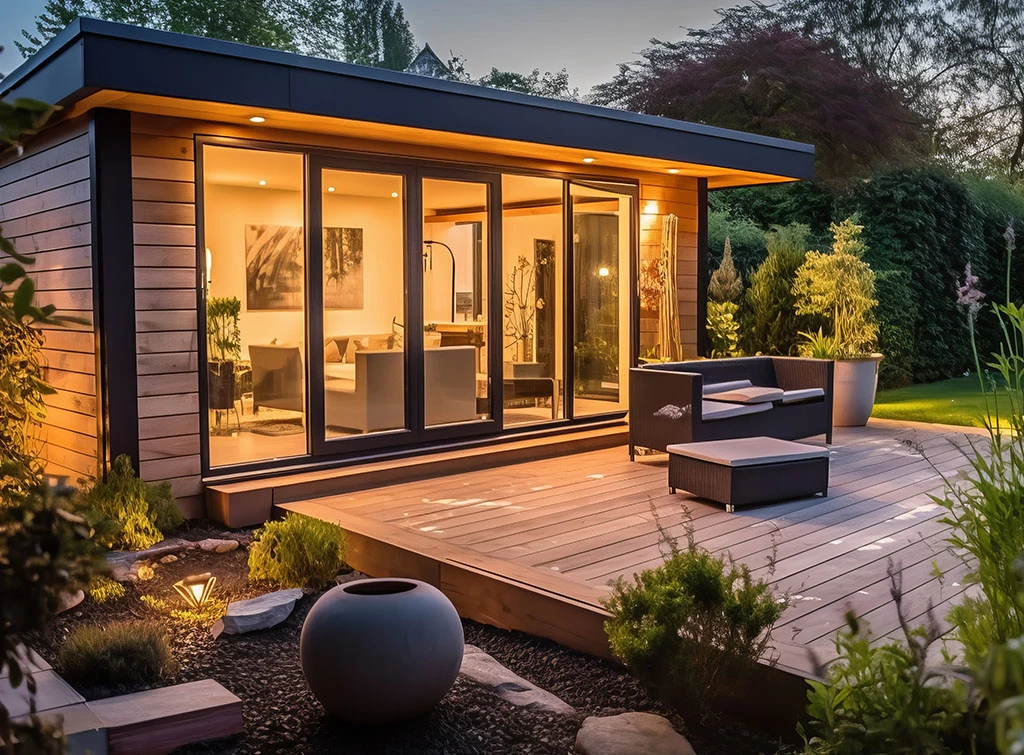
8. Light up a garden shed or garden room
Uplighters around the base, or downlighters hidden in the eaves, brighten a garden room or shed without dazzling anyone nearby. It also gives the structure a lovely evening silhouette from the house.
9. Spotlight sculptures and garden art
Adjustable spotlights aimed at a statue, birdbath, or piece of garden art turn it into a genuine focal point at night, not just something you glance past in daylight.
Position the fixture low and angled upward for the most dramatic effect.

Outdoor lighting ideas for safety and security
Lighting isn't only decorative. Well-placed fixtures reduce the risk of trips, help you see who's at the door after dark, and make a property look occupied and less appealing to opportunists.
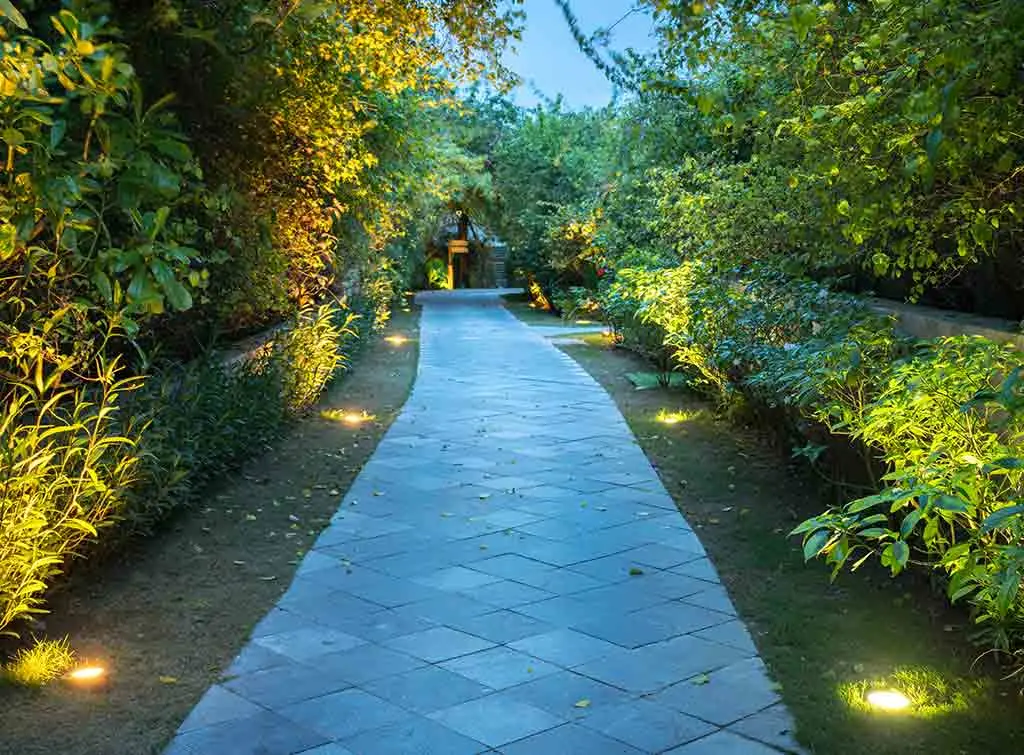
10. Garden path lighting
Path lights highlight uneven ground and prevent trips and falls. Options include illuminated stepping stones and flat, floor-mounted lights embedded along the edges of a walkway.
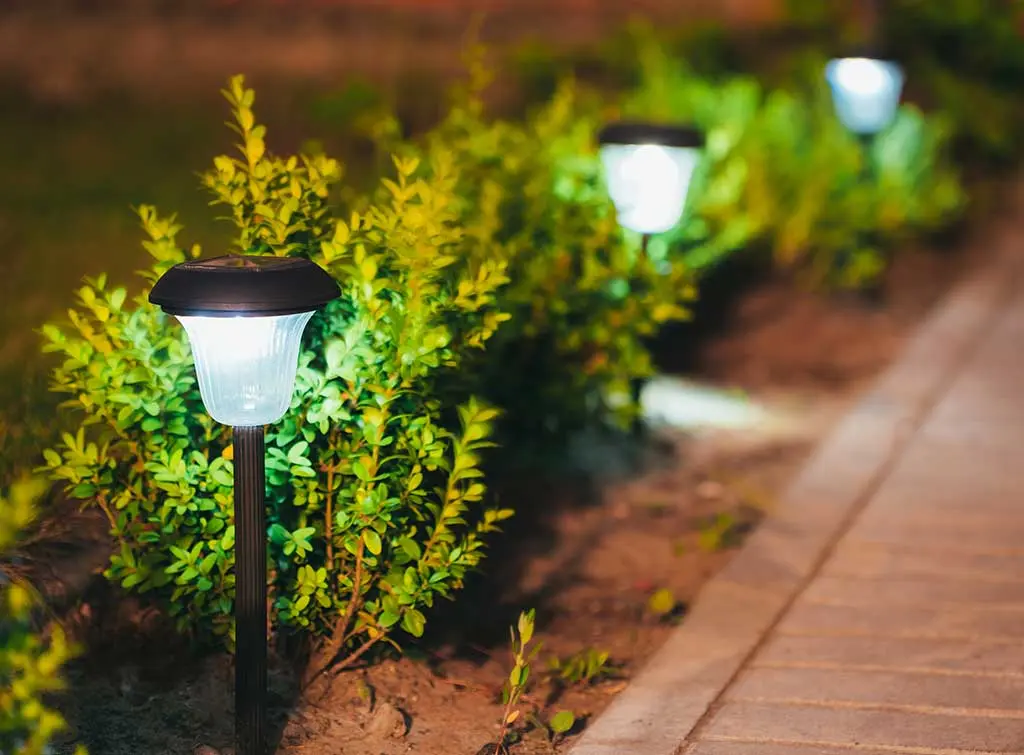
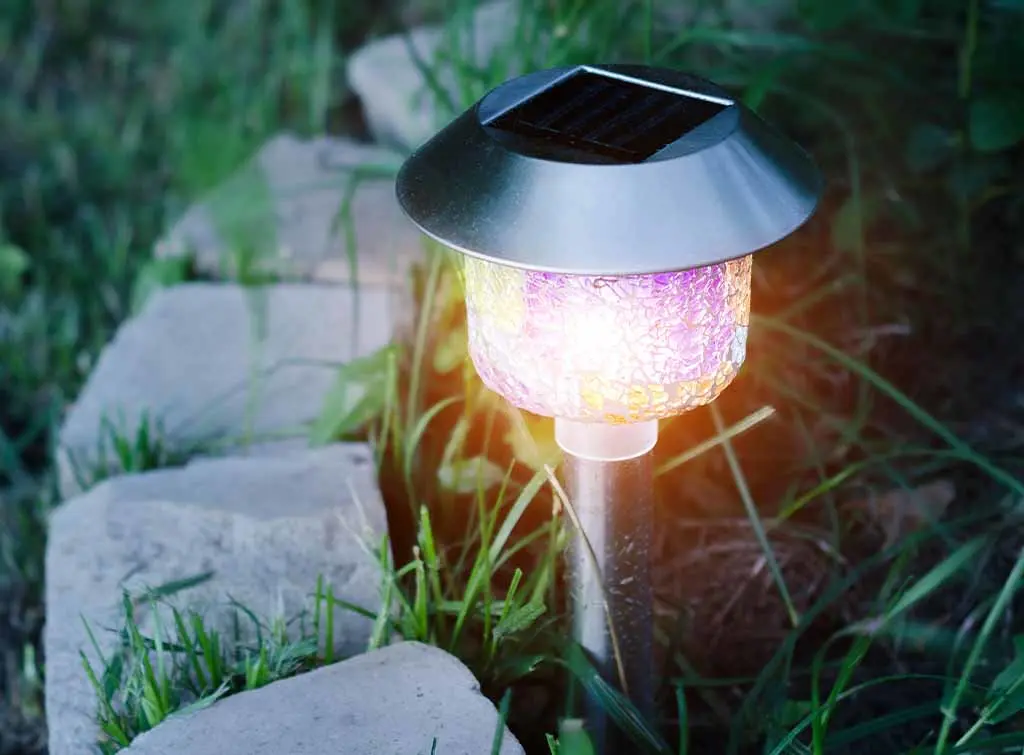
11. Solar lights for a walkway
Solar-powered lights are a cost-effective, wire-free option. They charge during the day and switch on automatically after dark, with no running costs to worry about.
Solar lights need at least 6 hours of direct sunlight to charge properly. If your path is shaded, they'll disappoint you.
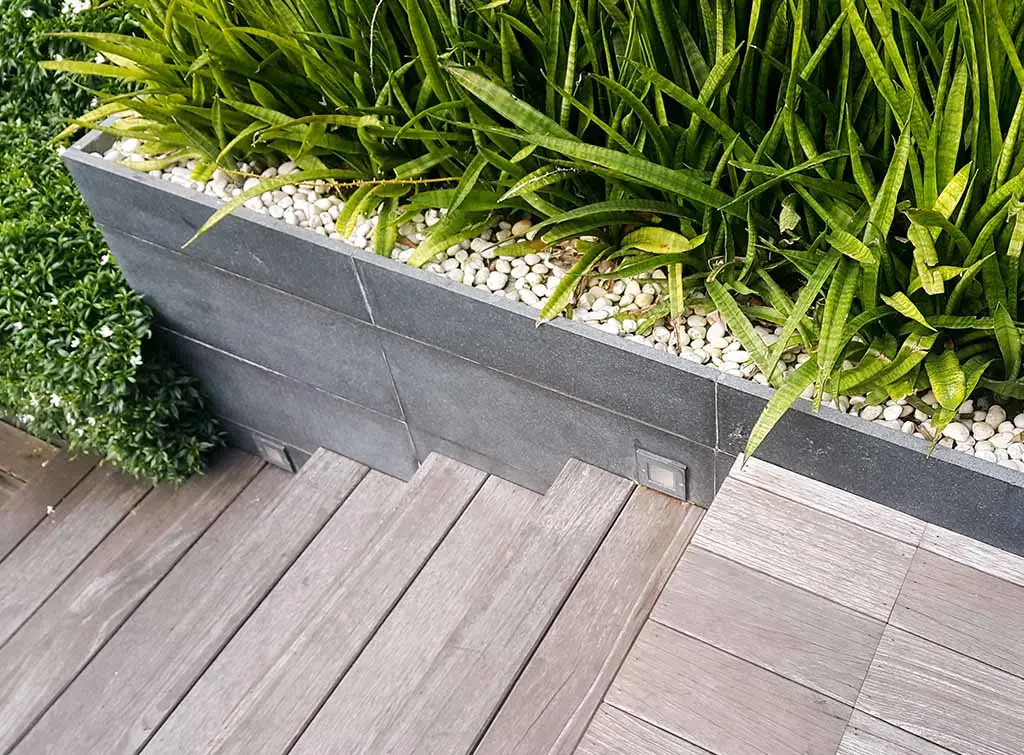
12. Illuminate steps with built-in lights
Reduce the risk of accidents on garden steps by recessing lights into the base of each tread. It's practical and creates a striking feature at the same time.
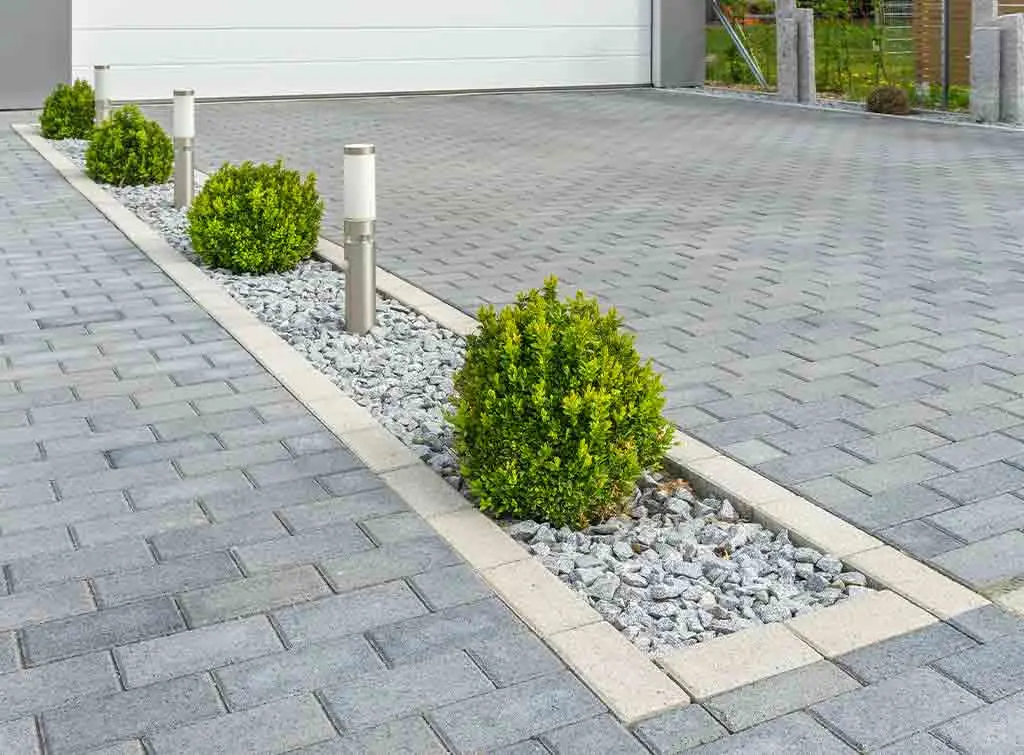
13. Driveway lighting
If streetlights don't reach your driveway, mains-powered lighting improves visibility and security at night. This is a job for a qualified electrician, since it involves an outdoor circuit.

Drive Over Lights: Cost breakdown 2026
Floor lighting offers a practical solution for illuminating exterior space but it can also add a stylish effect at the same time. In this guide, we look at the average drive over lights cost that you can expect to pay in the UK.
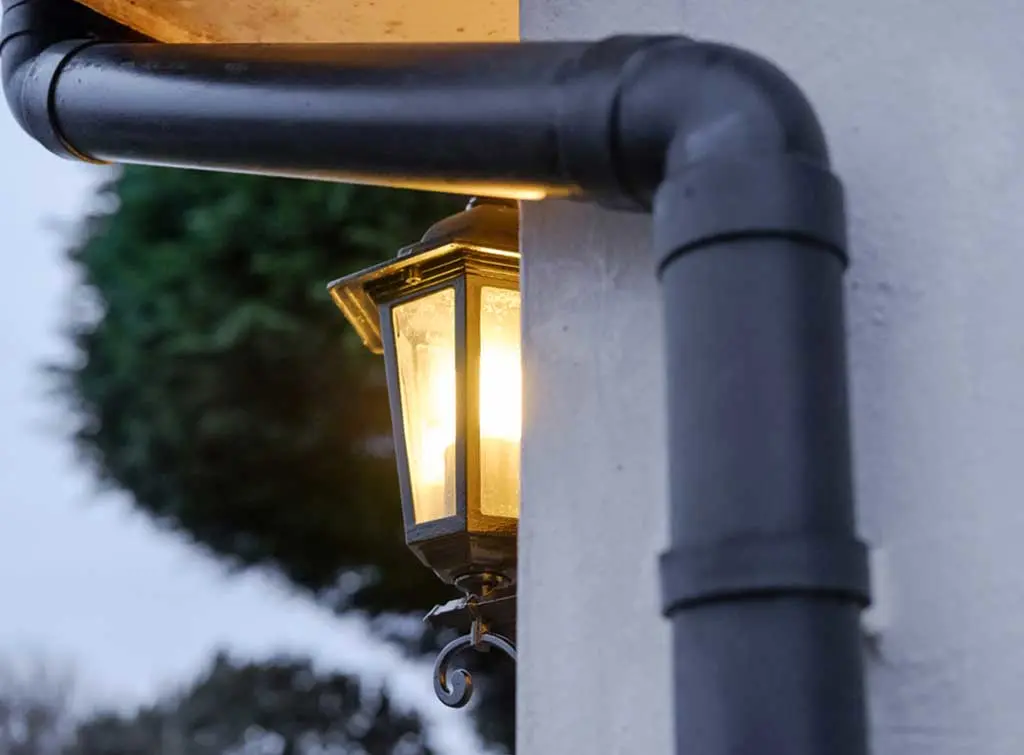
14. Motion-sensor security lighting
A security light with a passive infrared (PIR) sensor only comes on when it detects movement, which makes it more effective as a deterrent and cheaper to run than a light left on all evening.
Position sensors to cover approach routes like gates and side passages, not just the front door.
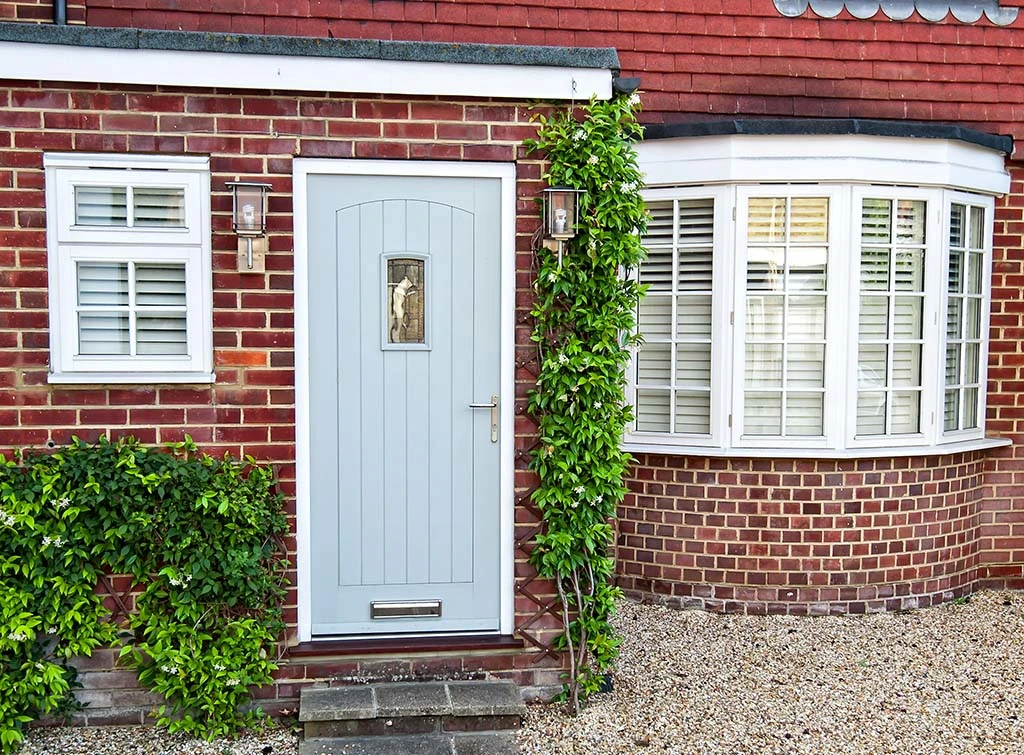
15. Porch and front door lighting
A well-lit porch helps visitors and delivery drivers find your door safely and adds genuine kerb appeal.
Wall-mounted lantern-style fixtures either side of the door are a classic choice that suits most house styles.

We check the reviews on Checkatrade are from real people, and that trades meet our high standards.
Outdoor lighting installation cost calculator
Job Estimate Calculator

Costs vary a lot depending on how many fixtures you want, whether they're mains-wired or solar, and how much cabling work is involved. For a full breakdown, see our exterior lights installation cost guide.
Get quotes for your lighting project
How garden lights are powered
There are four main ways to power outdoor lighting, and the right one depends on where you're lighting and how permanent you want the setup to be.
Power source | Best for | Things to consider |
|---|---|---|
Solar | Paths, borders, low-level accent lighting | No wiring, but depends on sun exposure |
Battery | Portable lanterns, temporary setups | No installation, but batteries need replacing |
Mains-wired | Driveways, security lights, permanent fixtures | Needs a qualified electrician; most reliable output |
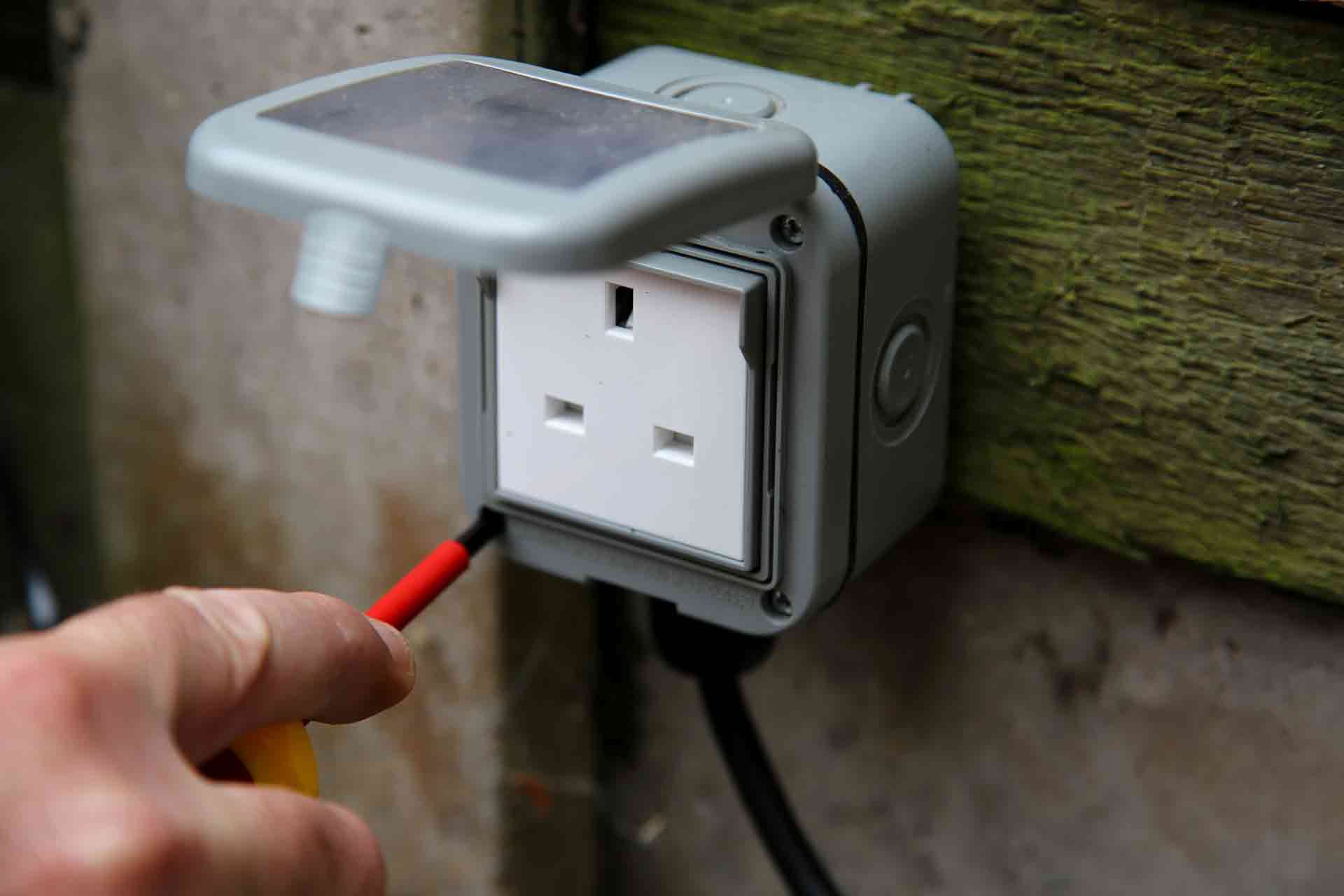
Outdoor plug socket | Powering lights plus other garden tools | Must be RCD-protected and correctly installed |
An outdoor plug socket is worth considering if you want flexibility, since it can also power a lawnmower, hedge trimmer, or leaf blower.
It must include an RCD (residual current device) and be installed to comply with current electrical safety regulations.
Check the IP (Ingress Protection) rating on any fixture before buying. Anything used outdoors should be rated at least IP44, and lights near water or in exposed spots should be higher.
Who to call for garden lighting
The right trade depends on the job. For anything involving mains wiring, an electrician is essential and, in most cases, a legal requirement.
For structural work like building a garden room or fitting a fence that you'll be lighting, you may need a carpenter or landscaper alongside your electrician. If you're wiring lighting near a water feature, always confirm with your electrician that the fittings and cabling are rated for use near water.

For bigger garden projects, you might also need a landscaper for structural changes or a carpenter for built-in seating and features you plan to light.
Find garden lighting providers near you
Enter your postcode to find a top tradesperson near you
AC Electrical (Surrey) Ltd
10.00
(66 reviews)Services & skills
ElectricianGarden LightingHouse RewiringEnergy Efficient LightingExtractor FansGlow-bell Ltd
10.00
(53 reviews)Services & skills
ElectricianGarden LightingExtractor FansElectric RadiatorsLED LightingAZ Electrical Engineering Services Ltd
10.00
(16 reviews)Services & skills
ElectricianGarden LightingElectric CookersElectrical ContractorsElectric HeatingDB Electrical Services
10.00
(71 reviews)Services & skills
ElectricianGarden LightingElectric Gate WiringElectric StovesHouse RewiringSparky City Ltd
10.00
(13 reviews)Services & skills
ElectricianGarden LightingElectric RadiatorsExtractor FansFuseboard / Consumer Unit InstallationWhat Electrics! Ltd
10.00
(66 reviews)Services & skills
ElectricianGarden LightingHouse RewiringElectrical ContractorsElectric Radiators


On Checkatrade, you'll only find trades who meet our high standards and pass up to 12 checks.
Garden lighting installation checklist

Garden lighting installation checklist
FAQs
There are four main options: solar, battery, mains-wired, or an outdoor plug socket. For mains-wired lighting or an outdoor socket, hire a qualified electrician to keep the installation safe and compliant.
Yes. An outdoor plug socket is useful for lighting and for powering tools like lawnmowers and hedge trimmers. It must be weatherproof, correctly installed to comply with council and electrical safety rules, and protected by an RCD.
For anything mains-wired, yes. Solar and battery-powered lights don't need professional installation, but any lighting connected to your home's electricity supply should be fitted and certified by a qualified electrician.
IP (Ingress Protection) rating tells you how resistant a fixture is to water and dust. Outdoor lights should be rated at least IP44, with higher ratings needed for fittings that are directly exposed to rain or submerged near water features.
Generally yes. Motion-sensor lights use less electricity, last longer, and are often more effective as a deterrent because sudden movement draws attention, whereas a light left on all evening can just fade into the background.
Angle spotlights and uplighters downward or toward the feature you're highlighting rather than outward, and avoid very bright, unshielded fixtures near boundary fences. Warm, low-level lighting is far less likely to cause complaints than harsh floodlighting.
They can, but performance depends on sun exposure. Lights need roughly 6-8 hours of direct sunlight to charge fully, so they'll underperform in shaded spots or through a grey winter.
Most domestic garden lighting doesn't need planning permission. It's worth checking with your local council if you're in a conservation area or considering very bright, permanently mounted floodlighting near a boundary.

See the tradespeople we've checked for your job