PLANNING GUIDES
All you need to know about asbestos removal
Updated 02/26
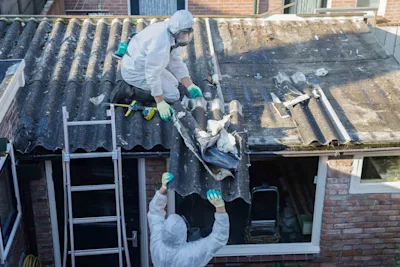
By: Emma Potter
Reviewed: Laura Macdonald
Discovering — or even just suspecting there might be — asbestos in your home can feel unsettling.
It often comes to light just as you’re planning renovations, or right in the middle of them, or during the process of buying or selling.
The important thing to know is that finding asbestos doesn’t automatically mean you’ve got an emergency on your hands. What matters most is whether it’s damaged or likely to be disturbed.
Whether asbestos needs to be removed — or can be safely managed
What a professional survey and removal process involve
How disruptive the work can be and how to plan for it
When to deal with asbestos during a renovation project
Why asbestos needs careful planning — not panic
Asbestos was widely used in UK buildings until it was banned in 1999. Because of that, many homes built before 2000 still contain some asbestos-containing materials (ACMs).
Left alone and in good condition, these materials are usually low risk.
The real risk begins when asbestos is drilled, sanded, cut, broken or removed without proper containment.
That’s when fibres can become airborne and pose a health risk — and why careful, well-planned, professional handling matters.
If you accidentally disturb suspected asbestos, don’t attempt to clean it yourself. Avoid vacuuming or sweeping. Close the door if you can, leave the area undisturbed, and contact a licensed professional for advice.
Where asbestos is most commonly found in UK homes
Asbestos was used in a wide range of building materials. In domestic properties, it’s most often discovered in:
Plaster and textured coatings (including Artex ceilings and walls)
Cement garage roofs and corrugated sheets
Fireboard panels
Insulation around older boilers
Pipe lagging
Ceiling tiles
Floor tiles and flooring lined with bitumen
Soffits and gutters
Insulation boards in cupboards or lofts
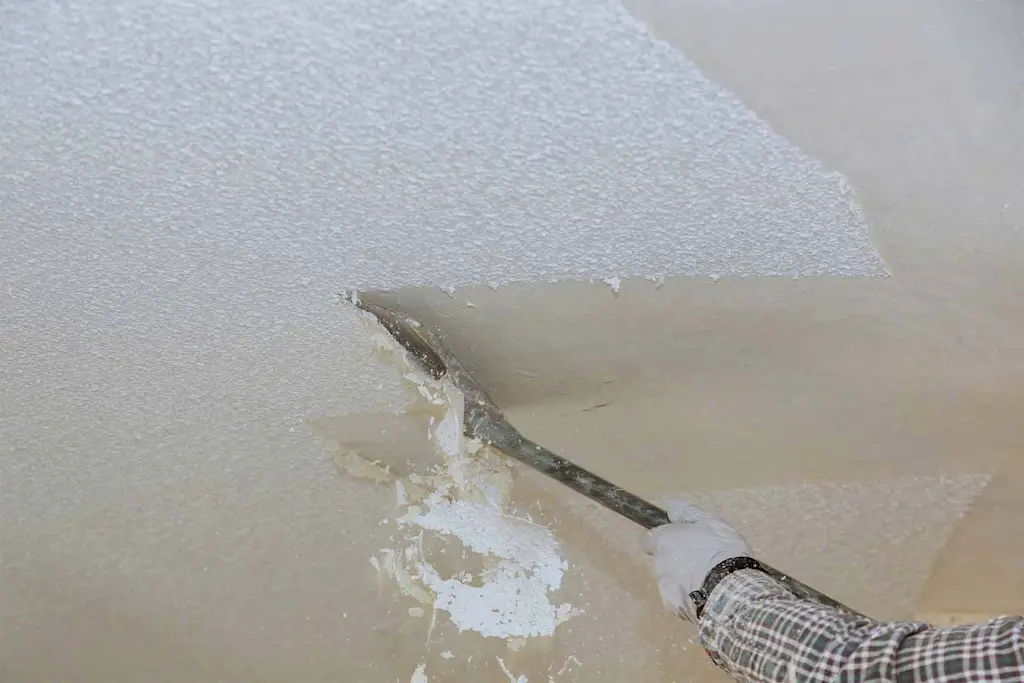
Textured coatings and older plaster finishes are among the most frequent discoveries during renovation work — particularly when ceilings are being skimmed, sanded or removed.
If your home was built before 2000 and you’re planning to knock through a wall, replaster, or even just redecorate, it’s smart to factor in asbestos testing early on instead of risking an unwelcome surprise halfway through.
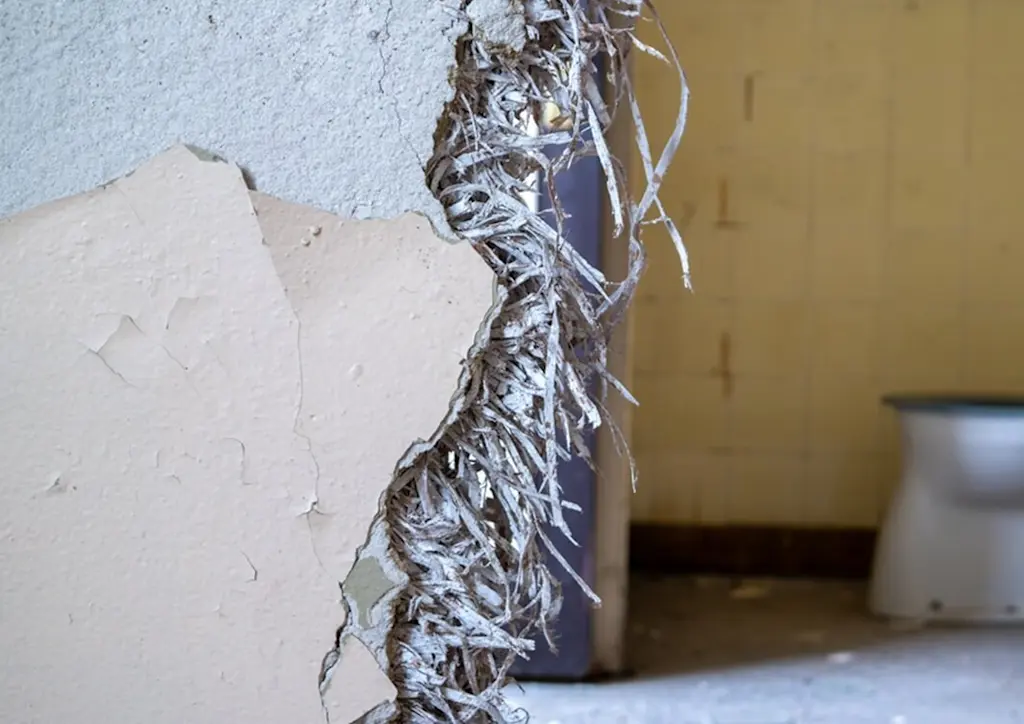
The first step — arranging an asbestos survey
Removal shouldn’t even be considered until a proper asbestos survey has been carried out by a qualified, UKAS-accredited surveyor.
The survey will:
Confirm whether asbestos is present
Identify the material type
Assess its condition
Determine whether removal or management is required
Often, the outcome is less dramatic than you expect. Not all asbestos needs to be removed — in fact, sometimes the safest thing to do is leave it alone if it’s in solid, undamaged condition.
If renovations are on the horizon, or you’re altering ceilings, flooring or insulation, arranging a survey at the outset can prevent delays later — and avoids exposing other trades to unnecessary risk.
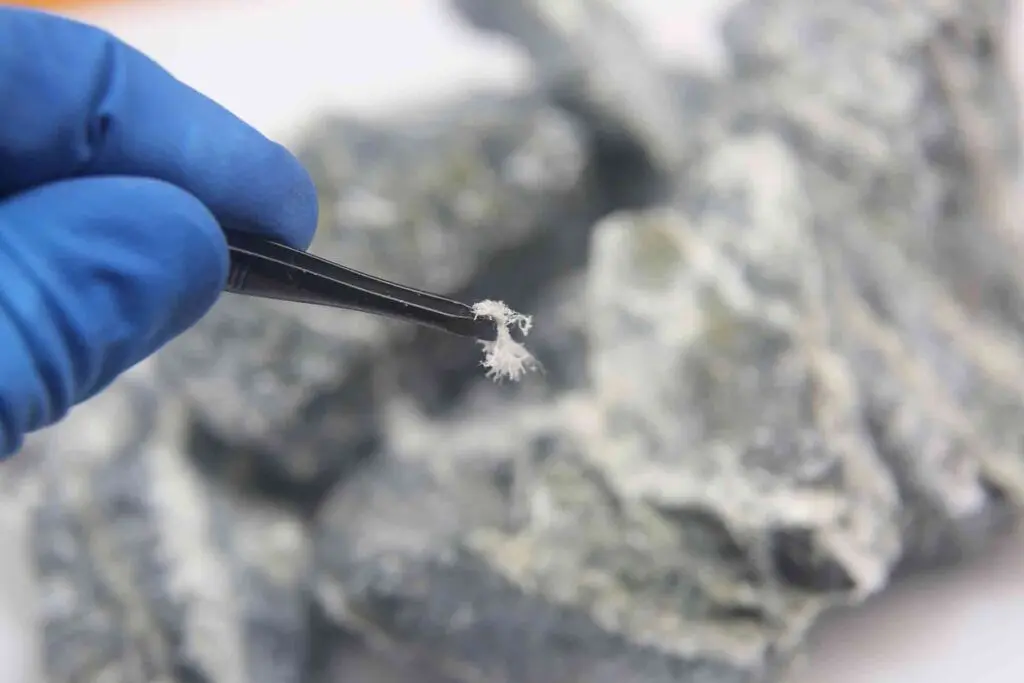
Does all asbestos need to be removed?
No. Asbestos that is intact and unlikely to be disturbed can often be safely managed in place.
In most domestic situations, there are two practical routes:
Encapsulation
Sealing the asbestos material to prevent fibre release
Typically less disruptive, lower cost, and quicker to complete than removal
Removal
Required where asbestos materials are damaged, deteriorating, or likely to be disturbed during renovation
Choosing removal “just in case” can increase disruption and cost unnecessarily. The survey findings should guide your decision, based on both the material and what you’re planning to do in the space.
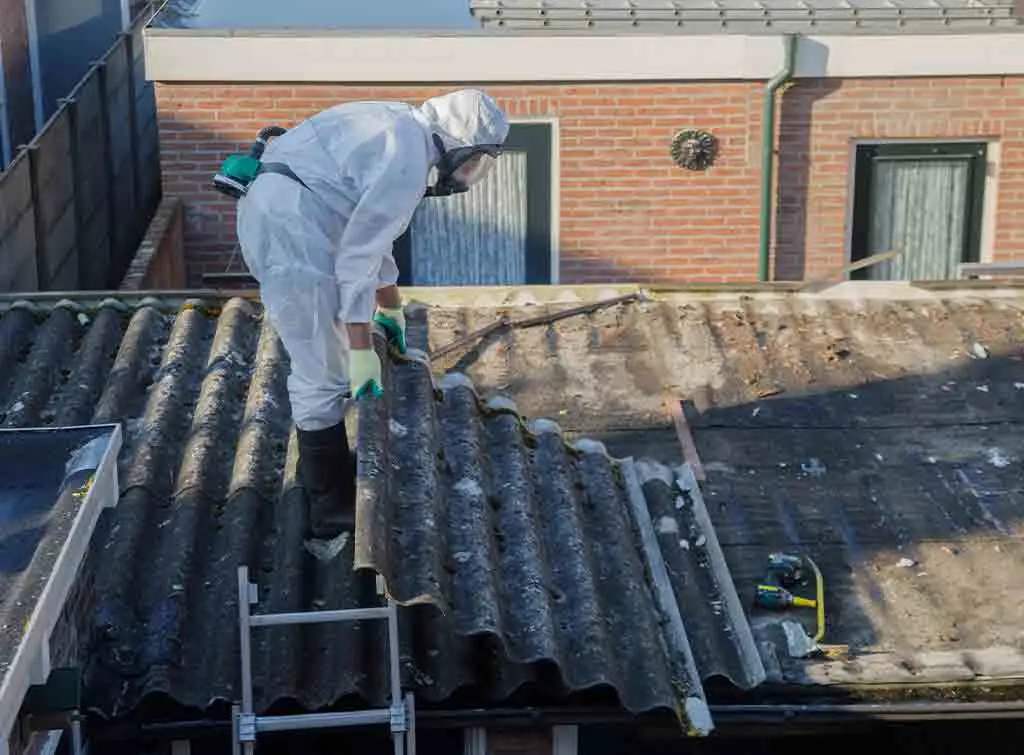
What the asbestos removal process involves
Professional asbestos removal is a carefully controlled process. The exact setup depends on the material type and how enclosed the space is.
If you’re a homeowner wondering what actually happens, here’s what to expect:
1. Preparation and containment
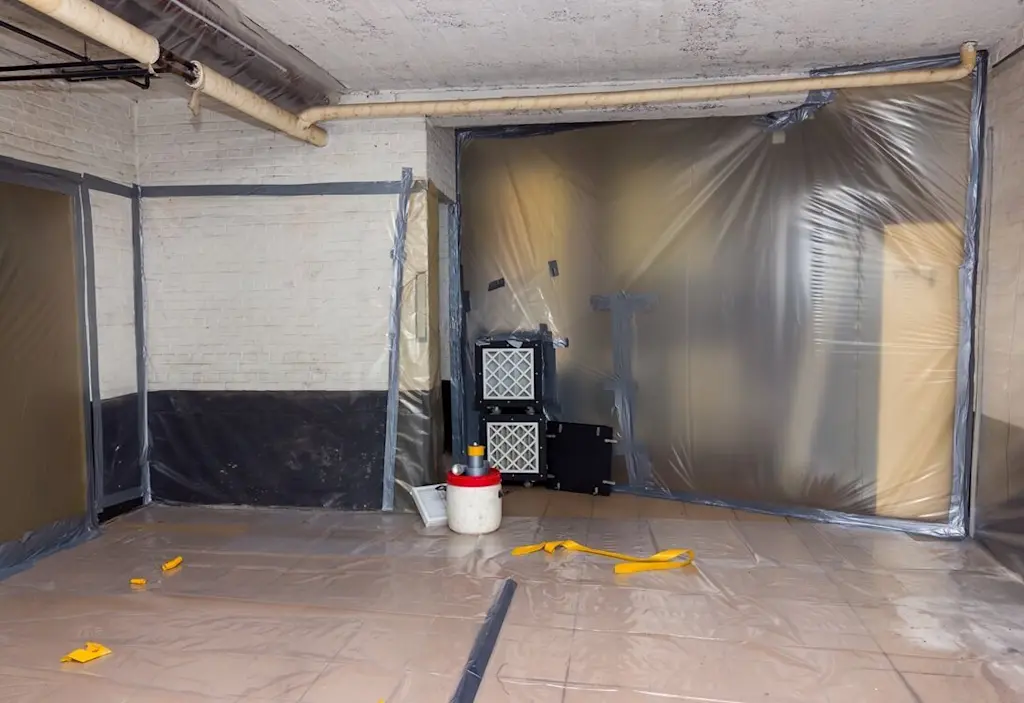
First, the affected area is sealed off so fibres can’t spread.
Specialist sheeting and negative air pressure systems may also be installed to keep the rest of your home safe and clean.
2. Controlled removal
Then, materials are dampened to reduce fibre release and carefully taken out.
Waste is double-bagged in approved asbestos waste bags to prevent contamination.
3. Decontamination
Once removal is complete, the area is cleaned using specialist filtration vacuums.
Surfaces are wiped down thoroughly before the space is reopened.
4. Safe disposal
All waste is transported under a hazardous waste carrier licence to an authorised disposal facility.
5. Clearance certification
Finally, a formal inspection — sometimes including air testing — confirms the area is safe to use again.
You might not see much happening during the removal process — and that’s actually a good sign. The less visible action, the better the containment.
How disruptive is asbestos removal?
The level of disruption depends largely on the material involved and how accessible it is.
A small encapsulation job may be completed in a day with minimal impact on the rest of your home.
More intrusive removal — such as insulation boards, pipe lagging, or damaged materials — can create more dust and require stricter containment. In these cases:
Entire rooms may need to be sealed
Access to parts of the home may be temporarily restricted
Air monitoring may be carried out
Staying elsewhere for a short period might be recommended
When removal is more invasive, the dust risk increases if it isn’t tightly controlled — which is why experienced contractors take containment so seriously.
If asbestos is discovered halfway through a renovation, other work often has to pause until clearance certification is issued.
Planning ahead, ideally before builders even step through the door, helps avoid these interruptions and keeps your renovation running smoothly.
When should asbestos removal happen during renovation?
Ideally, asbestos is dealt with right at the beginning of a project, before:
Loft conversions
Ceiling removal or replastering
Kitchen or bathroom rip-outs
Structural alterations
Demolition work
Addressing it upfront protects other trades, reduces contamination risk, and avoids the frustration of having to undo completed work.
Do you need licences or certification?
Some types of asbestos removal can only legally be carried out by a licensed contractor under HSE regulations.
Higher-risk materials — such as insulation boards and pipe lagging — require licensed removal.
Contractors should:
Follow the Control of Asbestos Regulations 2012
Hold appropriate hazardous waste carrier licences
Provide clearance certification where required
If you’re unsure, ask to see documentation. Any reputable contractor will be happy to show you.
For added peace of mind, ask your tradesperson if they are a member of the Asbestos Removal Contractors Association.

On Checkatrade, you'll only find trades who meet our high standards and pass up to 12 checks.
How much does asbestos removal cost?
Once you understand what’s involved, the next natural question is cost. There isn’t a single price that fits every home. Costs depend on:
The type of material
Its condition
How easy it is to access
Whether full removal or encapsulation is needed
An asbestos survey typically costs between £200-£1,000.
As a ballpark guide, asbestos removal tends to cost somewhere between £950 and £3,750, depending on scope. Per-square-metre costs often average around £225.
Removal costs can vary significantly depending on scope and complexity. Our asbestos removal cost guide dives deeper into the numbers.
Quotes should reflect the specific risks, layout, and access requirements of your property — always compare more than one written quote before you hire.
It's worth contacting your local council to see if they offer reduced rates for asbestos removal.

Planning checklist before starting asbestos removal
Thinking about hiring a professional?
"Blue A were brilliant & I would 100% recommend them. From the first contact to the quote stage to the job being carried out the service was brilliant. They dealt with our Asbestos safely, with such care & just gave brilliant service throughout all aspects of the job."
– Verified Checkatrade Review (Location SL4)
You can check out Blue A Ltd’s profile to see their credentials and read recent customer reviews in full.

Find asbestos removal specialists near you
Asbestos removal is a safety-critical job, so choosing the right tradesperson matters.
Through Checkatrade, you can compare professionals who are:
Checked – Passing up to 12 verification checks and committed to upholding the Checkatrade Standard
Reviewed – Verified reviews about real jobs on everything from communication, tidiness, timekeeping, and quality of work
Guaranteed – Work booked through Checkatrade is covered by our £1,000 guarantee (T&Cs apply)
When you’re ready to move forward, search your postcode to compare licensed asbestos removal specialists working in your area and request quotes with confidence.
Find a local tradesperson

Yes — if your property was built before 2000 and you’re planning renovations, an asbestos survey is usually worthwhile. It confirms whether asbestos is present and helps you avoid unexpected delays or safety risks during building work.
Not always. In domestic properties, a survey isn’t legally required unless asbestos is suspected during work — but it is strongly recommended before renovations in older homes to ensure work is carried out safely.
No. Asbestos removal should only be carried out by trained professionals, particularly for higher-risk materials. Disturbing asbestos without proper containment can release hazardous fibres.
There isn’t a fixed national minimum for asbestos removal, but many contractors have a call-out or minimum job charge due to safety setup and disposal requirements. Even small jobs often reflect the cost of containment and licensed waste handling.
Asbestos work in the UK is governed by the Control of Asbestos Regulations 2012. These set out licensing requirements, safety procedures, waste disposal rules, and when work must be notified to the HSE.
The HSE requires asbestos to be properly identified, managed, and removed safely where necessary. Certain high-risk materials must be handled by licensed contractors under strict containment procedures.
In many cases you'll need an asbestos removal certificate. Licensed asbestos removal work typically includes a clearance certificate confirming the area is safe after completion.
Yes — once asbestos removal has been completed correctly and clearance certification issued, the affected area is considered safe for normal use. Professional containment and cleaning procedures are designed to prevent ongoing exposure.
More Asbestos Services Articles

See the tradespeople we've checked for your job