COST GUIDES
Flat roof replacement costs in 2026
Updated 02/26
By: Content Team

All flat roofs reach their expiry date at some point. Find out how much a flat roof replacement costs and how to find a reliable roofer to help.
Are you getting mixed messages about what type of flat roof replacement is right for your home and your budget? Then you’ve come to the right place.
Here, we look at all the costs involved in a flat roof replacement – from traditional tried-and-tested methods like torch-on felt and asphalt, to more modern alternatives like EPDM rubber. We’ll also compare the pros and cons of each to help you make an informed decision.
But first up, let's look at the upfront costs.
How much does a flat roof replacement cost in the UK?
As a general guide, a standard flat roof replacement will cost between£2,800 to £7,500.
Meanwhile, a flat roof replacement cost per square metreis roughly£75per m².
But prices vary according to the materials you use. For instance, if you're looking at getting your bay window flat roof replaced with hardwearing EPDM rubber, this will cost more than traditional torch-on felt material. It's approximately£85per m².
Let's look into some other estimated costs for a flat roof installation job in the UK.
| Type of roof replacement | Low - High cost per m² (+VAT) | Average per m² (+VAT) |
|---|---|---|
| Standard flat roof cost | £50 - £110 | £75 |
| Felt (bitumen) flat roof | £50 - £80 | £65 |
| EPDM rubber flat roof | £80 - £100 | £90 |
| GRP fibreglass flat roof | £95 - £120 | £107.50 |
| Asphalt flat roof | £50 - £70 | £60 |
| Green flat roof | £75 - £110 | £100 |
| Pitched bay window felt roof | £40 - £60 | £50 |
| Pitched bay window fibreglass roof | £95 - £120 | £107.50 |
| Pitched bay window EPDM flat roof | £80 - £90 | £85 |
| Liquid plastic roofing (waterproof coating) | £20 - £28 | £24 |
| Cost to convert a flat roof to a pitched roof | £3,000 - £4,500 | £3,750 |
| Last updated: December 2024 Our costs are ballpark averages - get a local tradesperson to quote now | ||
These costs are a good place to start. However, your flat roof replacement cost will vary based on many factors, including the material used and job size. That's all up next.
Or, if you're keen to get going finding a reputable roofer near you, just search your postcode in Checkatrade's free directory below.
Find a local tradesperson
Factors affecting flat roof replacement costs
Think the flat roof costs above seem reasonable? In most cases, they are.
However, there are some additional costs which you might need to budget for. They include:
Removal of the existing flat roof
Scaffolding hire if needed
Replacement of guttering, fascias or soffits if needed
Extra insulation to help the roof meet building regulations (more on that below)
The type of material you choose – as you can see above, they a big shift in price point depending on what you choose
The size of the roof and the complexity of the job – for instance, if you’ve got skylights that need to be worked around, this could be an extra cost
Labour charges depending on where you live in the UK – prices tend to be higher in London and the South-East
Let’s dig deeper into the costs with our handy cost calculator below.
Flat roof replacement cost calculator
Do you have the rough measurements of your flat roof to hand and know what material you’d like to install? Why not use our flat roof cost calculator to get a rough idea of the costs involved?
Enter your roof dimensions (m2):
Type of flat roof (choose one)
Item | Avg Unit Cost | Your Cost |
|---|---|---|
£75.00 per m² | ||
£65.00 per m² | ||
£90.00 per m² | ||
£100.00 per m² | ||
£1,850.00 per m² |
Add items (specify quantity of each)
Item | Avg Unit Cost | Your Cost |
|---|---|---|
Roof inspection | £250.00 each | |
Removing existing roof | £2,000.00 each | |
Extra cost for scaffolding (per week) | £900.00 each | |
Skip hire (per skip) | £300.00 each | |
Insulation | £960.00 each | |
Gutter installation | £775.00 each |
Estimated overall cost:
£0.00
Working with professional estimators, we collate cost estimates for the common home improvement and repair jobs in the UK. All the costs are estimates only and for accurate costs for your particular requirements, you are encouraged to reach out to professional tradespeople to receive a quote for your job. Read our disclaimer for more information.
Find a local tradesperson
Flat roof materials: which one should you choose?
Cost isn’t the only deciding factor when choosing what flat roof material is right for you. The look and durability of your new flat roof replacement are also important considerations.
Below are the most common flat roof materials used in the UK and their pros and cons:
1. Flat felt roof replacement cost
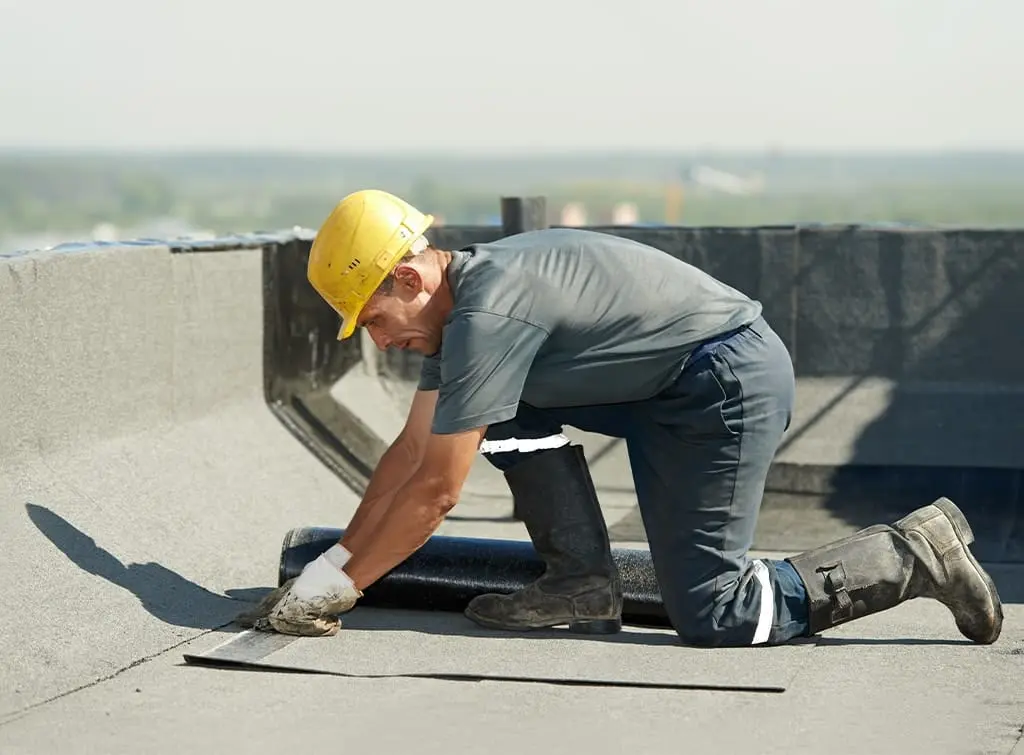
There are various felting options, but not all are created equal. Shed felt, and self-adhesive felt, are readily available in DIY stores, but they are only suitable for smaller DIY projects like sheds and perhaps flat roofs for porches.
For sizable flat roof replacements, you’ll want torch-on felt (also known as bitumen), which our cost guide references above.
Pros of torch-on felt roofs:
Long-lasting – Has a life expectancy of 15–20 years when installed and maintained properly
Weather and UV resistant– Can withstand rain, wind, frost and short heat waves. You can also add solar reflective paint to protect it. This will be an additional cost of approximately£24
Cost-effective– Less expensive than other flat roofing options like EPDM, you're looking at paying £65per m² for torch-on felt
Flexibility – Can be cut to size and moulded easily
Low maintenance – Needs minimal upkeep once installed other than the occasional clean
Choice – Comes in a variety of finishes and colours
Fire resistant – Some torch-on felt products come with fire-resistant properties to improve your home’s safety
Cons of torch-on felt roofs:
Time-consuming – Three layers need to be applied with a blow torch. We think this is a job best left to a professional roofer
Weathering – Potential for fading or cracking over time
Limited lifespan – It’s not as durable as other flat roof options like EPDM (that’s up next)
2. EPDM rubber
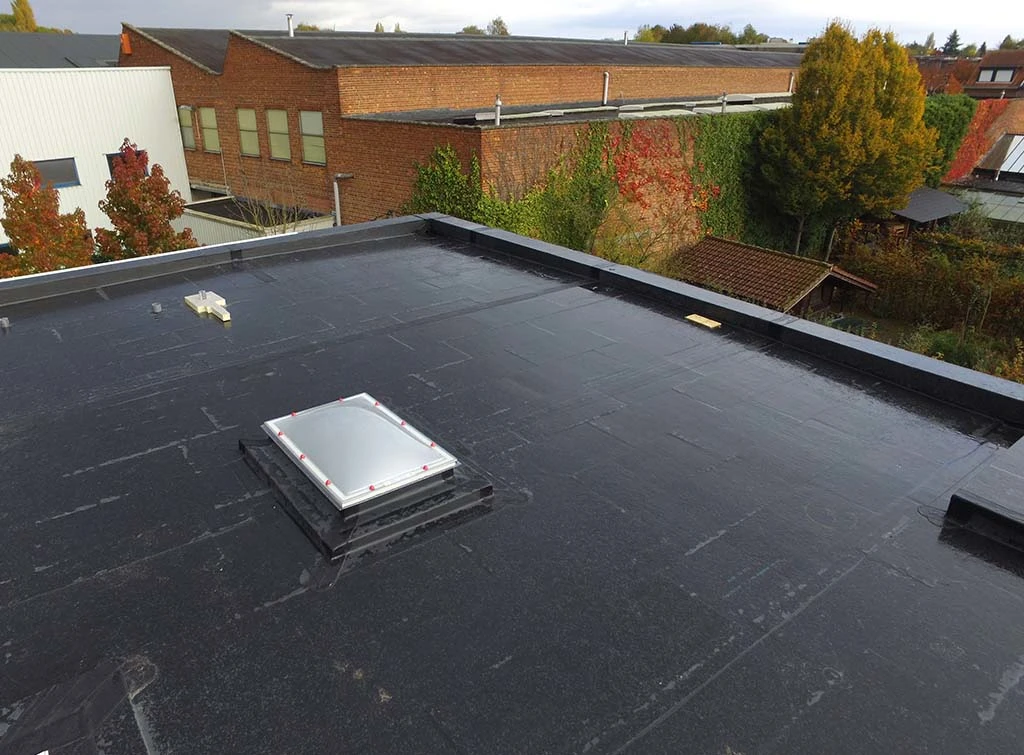
EPDM is a synthetic rubber compound that comes in large sheets to minimise seams. When it comes to durability, EPDM is regarded as a ‘step up’ from felt roofing.
Pros of EPDM rubber:
Long-lasting – Can last 30-50 years when professionally installed and well-maintained
Weather and UV resistance – Including extreme weather conditions such as prolonged heat waves and heavy snow
Eco-friendly – Made from recyclable materials and has a lower environmental impact than petroleum-based alternatives
Insulating properties – Helps to retain heat and keep temperatures cool in winter
Easy installation – Comes in large, lightweight sheets which are bonded to the roof deck using adhesive or mechanical fastening, making the installation quicker
Flexibility – Can expand and contract with temperature changes, so there’s less risk of cracks forming
Cons of EPDM rubber:
High upfront cost– More expensive than torch-on felt to buy, and it requires a professional to install. You're looking at £90per m² for EPDM rubber
Limited choice – Only comes in black, rubber finish, so it might not suit all styles of homes
Puncture risk – Though very durable, there is a risk that sharp objects can puncture EPDM
Risks if not professionally installed – Water leaks or weakening to seals can happen if it’s not correctly bonded
Chemical reactions – EPDM can sometimes damage PVC windows or skylights
3. GRP fibreglass
Made from polyester resin reinforced with glass fibres, GRP is one of the most hard-wearing flat roof materials you can install.
Pros of GRP fibreglass:
Long-lasting – Can last up to 30 years when installed and maintained properly
Low maintenance – Apart from occasional cleaning, it requires very little maintenance
Watertight – It’s seamless, so less prone to leaks – perfect for the UK’s wet weather
Durability – Stands up against all weathers and UV rays
Choice – Can be finished in various colours and textures
Light-weight – Helpful if minimising strain on your roof structure is important
Cons of GRP fibreglass:
High upfront cost– GRP fibreglass comes in at around £107.50per m², making it the most expensive of all the flat roof options listed here
Installation restrictions – Requires dry weather for installation
Weathering – Prone to cracking over time in very cold conditions as it’s not as flexible as other roofing, such as EPDM
Time-consuming – Longer to install due to the layering and curing processes and needs a professional
Risks if not professionally installed – Weak spots, leaks, or cracking can happen if the resin curing process isn’t carried out correctly
4. Asphalt
Asphalt is heated and poured onto the roof to create a seamless, watertight layer. Additional layers may be installed for durability and insulation before a fine layer of stone chippings or mineral felt is added for protection.
Pros of asphalt roofs:
Durability – Highly resistant to water and can last for 20–30 years with proper maintenance
Cost-effective– Relatively inexpensive compared to modern alternatives like EPDM or GRP. Asphalt works out at a reasonable £60per m², making it one of the cheapest options in our roundup
Ease of repair – Small damages can be easily patched, and maintenance is straightforward
Thermal properties – Offers good insulation when combined with a suitable underlayer
Seamless finish – The smooth surface reduces the risk of leaks
Overlaying – You can overlay it onto an existing asphalt roof as long as there's no moisture under the existing asphalt and any blisters are heated out
Cons of asphalt flat roofs:
Susceptible to cracking – Asphalt can become brittle over time, particularly in periods of heatwaves
Regular maintenance – To prevent issues such as pooling water or minor cracks turning into larger problems
Weight – Heavier than some modern roofing materials and may require additional structural support
Less eco-friendly – Asphalt is produced with fossil fuels
Heat absorption – Is prone to absorbing heat easily, making the building warmer in summer unless reflective coatings are added
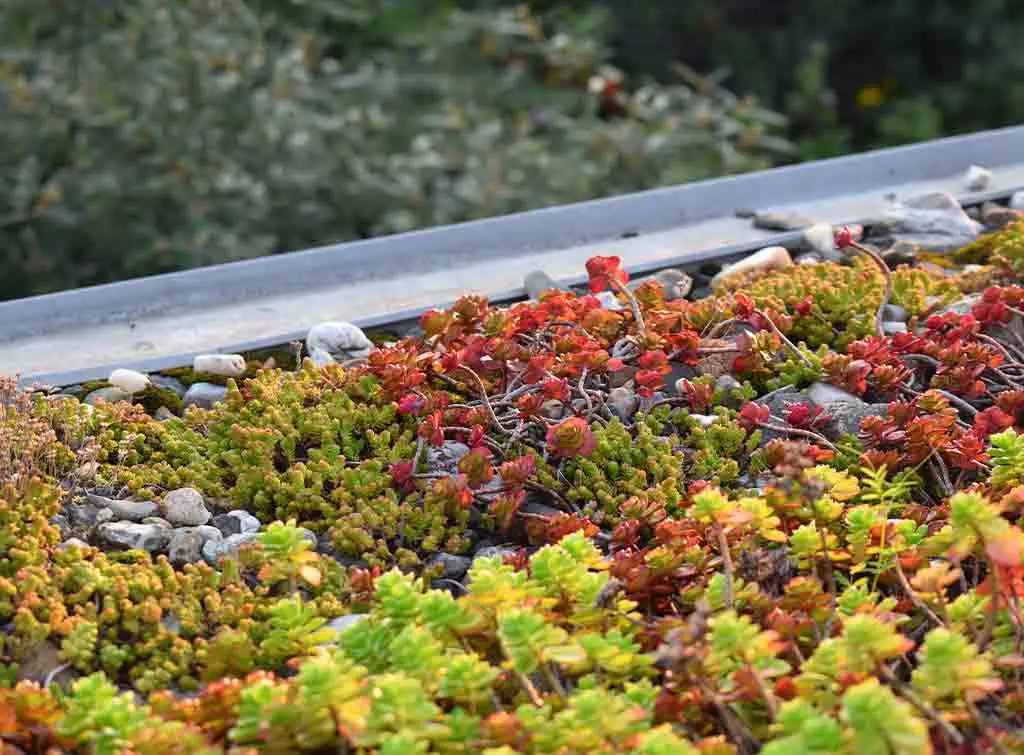
5. Green roofs
An increasing number of homes are installing green roofs, and for good reason.
Pros of green roofs:
Look – They soften the exteriors of your home and can transform an otherwise 'dead space' into a colourful focal point
Prevents flooding – Helps reduce rainwater runoff by absorbing rainwater
Energy-efficiency – Green roofs provide excellent insulation, keeping houses cooler in summer and warmer in winter
Biodiversity – Supports local wildlife, such as birds and other pollinators
Durability – Protects the underlying roofing materials from UV damage and extreme temperature fluctuations
Increased saleability – Can enhance the value of a property, appealing to eco-conscious buyers
Noise reduction – The vegetation layer dampens sound
Cons of green flat roofs:
High upfront cost– More expensive than conventional flat roofs due to materials, waterproofing, and labour, you're looking at paying £100per m²
Requires a sturdy roof structure – Needs to support the additional weight of soil, plants, and water
High maintenance – Needs regular care, including weeding, watering, and making sure the drainage systems remain clear
Leak risks – If there’s damage to the membrane lining or it’s incorrectly installed
Installation complexity – You need to install various layers, including waterproofing layer, root barrier, and drainage systems
Curious to learn more about the process of green roofs? Check out our expert advice guide to green roofs.
How to find a competent roofer for your flat roof replacement
Finding a reliable flat roof specialist on Checkatrade is simple.
Just search for an expert by following these three simple steps:
Use a professional directory
Save time by using a professional directory (like Checkatrade!).
We're so confident in the quality of the trades on Checkatrade that if you book through us, we guarantee their work up to £1,000. Guaranteed for 12 months – Eligibility criteria and T&Cs apply.

Read online reviews
A review from a previous customer is one of the best ways to check a tradesperson's professionalism.
At Checkatrade, we check all online reviews to ensure they're from real people and that trades meet our high standards.

We check the reviews on Checkatrade are from real people, and that trades meet our high standards.
Compare quotes
Get at least three quotes from experienced roofers local to you. That way, you can be sure you're getting the best tradesperson and price for the job. Search your postcode to get started.
Find a local tradesperson
Flat roof replacement: frequently asked questions
How long does it take to replace a flat roof?
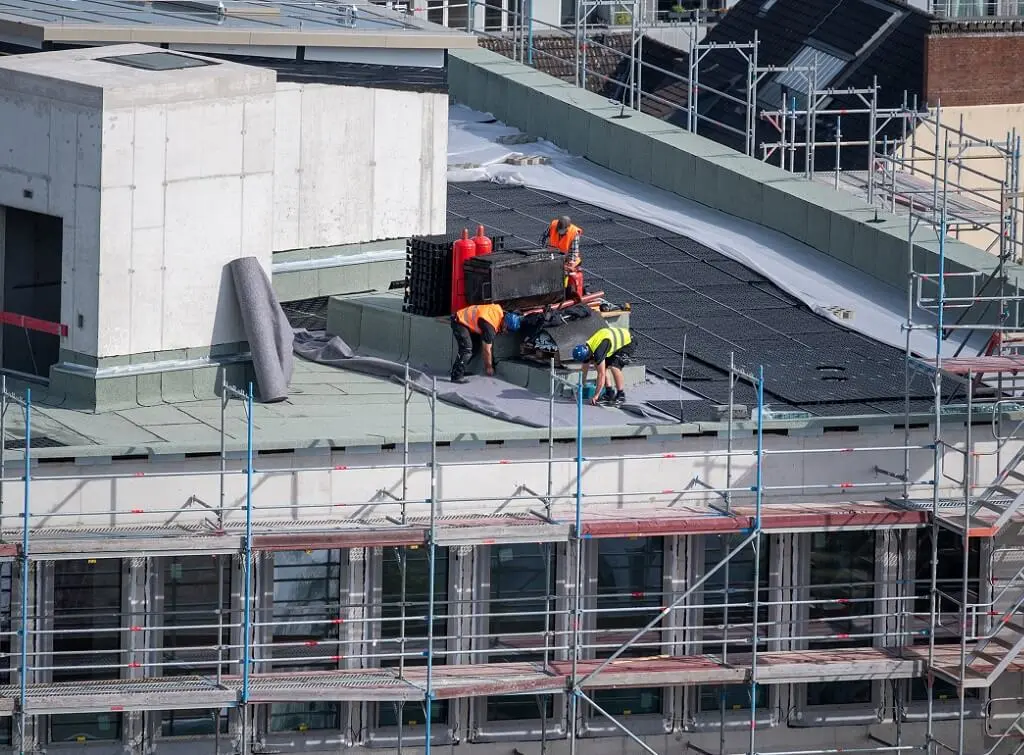
That all depends on the size of the roof and the type of material you choose. To give you a rough idea, replacing a torch-on felt roof of a flat roof extension in the UK typically takes 1 to 3 days. But it's always best to ask a professional roofer directly.
How long do flat roofs typically last?
On average, you can expect a flat roof to last anywhere from 15 - 30 years. But it all depends on the type of materials used, the quality of installation, and the amount of maintenance work carried out.
Are flat roofs more expensive to replace than pitched roofs?
Generally speaking, flat roofs work out cheaper as they are not as structurally complex to install. You can weigh up the costs of both in our flat roof vs pitched roof cost guide. But as a rough guide, you're looking at an average of £3,750 to convert a flat roof to a pitched roof.
Does a replacement flat roof require building regulations?
It will depend on the extent of changes to the roof. If more than 50% of the roof is being replaced, then you will need to submit a building control application. If there are structural alterations, change in performance, or expected weight change, these will also need to be approved by your local authority.
How do you know if your flat roof needs replacing?
Some of the most common tell-tale signs include:
Water pooling on your flat roof
Signs of rips and/or tears in the roof itself
The roof flashing is separating
Water spots, or signs of dampness or mould, appearing on the ceiling in your home
The protective membrane of your flat roof is coming loose
The roof fasteners are noticeably loose
Any of the above signs shouldn’t be ignored. If left for too long, they could cause damage to your home. You’ll want a flat roof specialist to take a look as soon as possible.
Ready to find an experienced roofer to help replace your flat roof? Hire trusted, competent tradespeople on Checkatrade today.
Find a local tradesperson
More Flat Roofing Installation Articles

See the tradespeople we've checked for your job