IDEAS
Stylish mounted TV ideas for every room in your home
Updated 07/26
By: Lara Sargent
Reviewed: Alex Peters
Be inspired by our mounted TV design ideas that are easy on the eye and a stylish way to hang up your screen at home.
Where a wall-mounted TV works best in each room
How to keep cables and wires completely out of sight
Which rooms suit a corner mount or a full media wall
How to fit a TV safely in a bathroom or kitchen
What a professional TV mounting service typically involves
Roughly how much professional installation costs
TVs have got thinner and lighter, but they still take up a lot of visual space - some screens now stretch to 98 inches.
Mounting your TV on the wall instead of balancing it on a stand or cabinet is one of the easiest ways to free up floor space and give a room a sleeker, more contemporary feel.
A wall-mounted TV also means one less thing for toddlers, pets, or an overenthusiastic hoover to knock over.
The trade-off is that it's a more permanent job:
You'll need to drill into the wall
The right fixing points will need to be found
Cables trailing down afterwards will need to be considered and dealt with
Done well, though, a mounted TV can become a genuine feature of the room rather than an eyesore you try to hide.
Below are mounted TV ideas to suit every room in the house, along with tips on cables, costs, and when it's worth calling in a professional.
Find a TV wall mounting expert
1. Living room mounted TV ideas
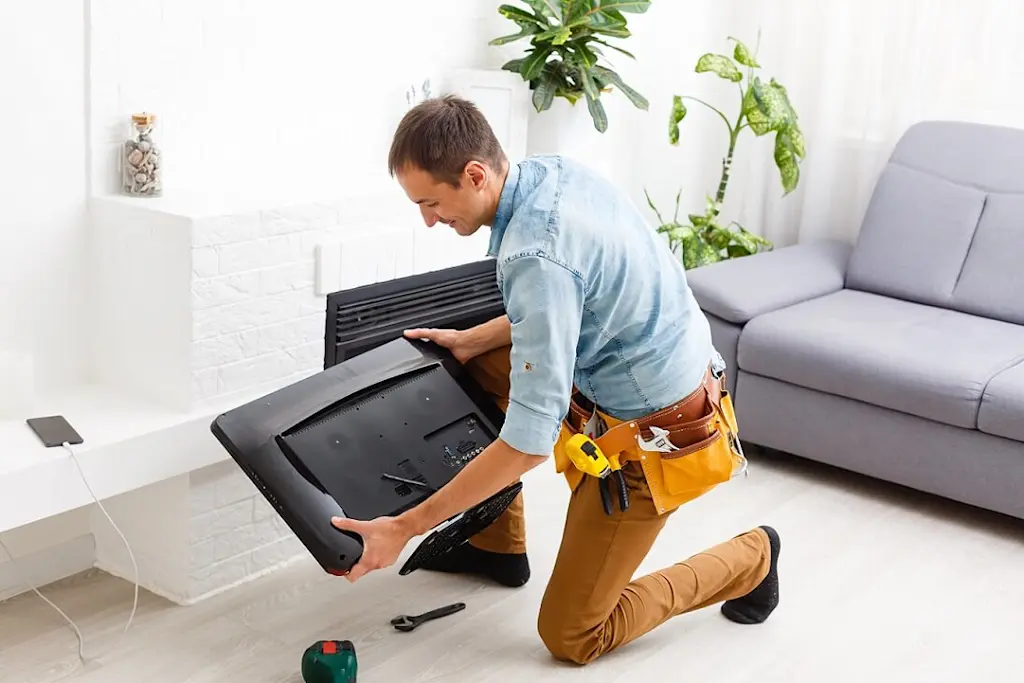
The living room is where most people start, and it's also where a mounted TV has the biggest visual impact.
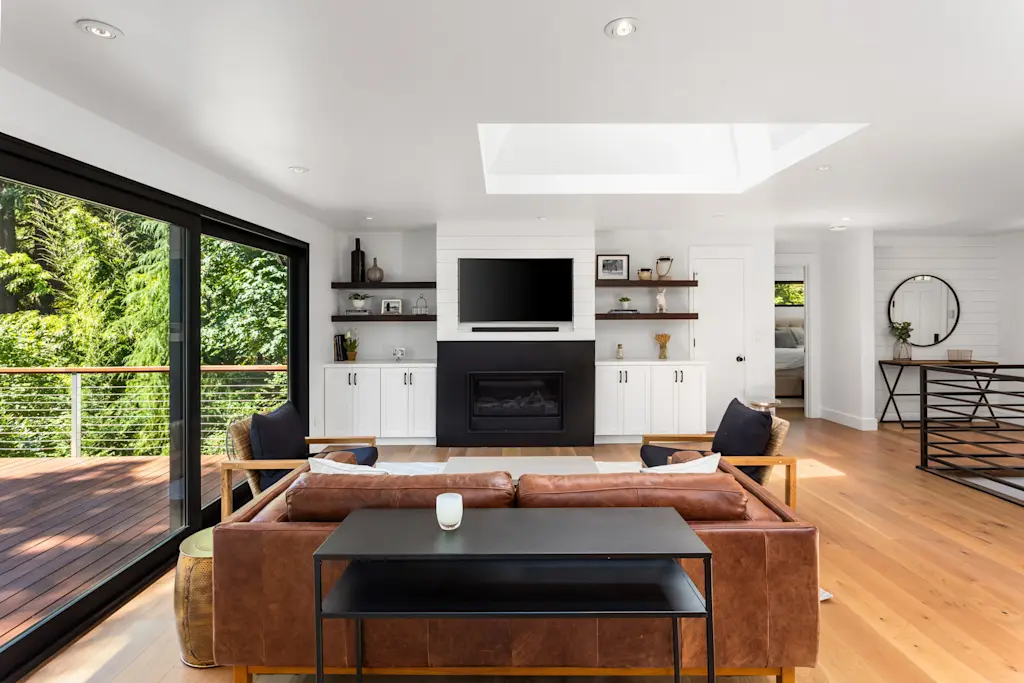
Positioning the screen above a fireplace is still one of the most popular choices, as it keeps the room symmetrical and avoids sacrificing floor space to a separate media unit.
If you'd rather not build a room around the TV, try:
Flanking the screen with floating shelves or alcove cabinetry so it reads as part of the joinery, not an add-on
Choosing a wall colour close to the TV's bezel so the screen "disappears" when it's off
Adding a soundbar directly beneath the screen on a slim wall bracket to avoid extra cables trailing from a separate speaker unit
Before you commit to a spot above a fireplace, check the viewing height from your usual seating position. Eye level while seated is the general rule - too high and you'll be craning your neck through every film.
2. Wall mounted bedroom TV ideas
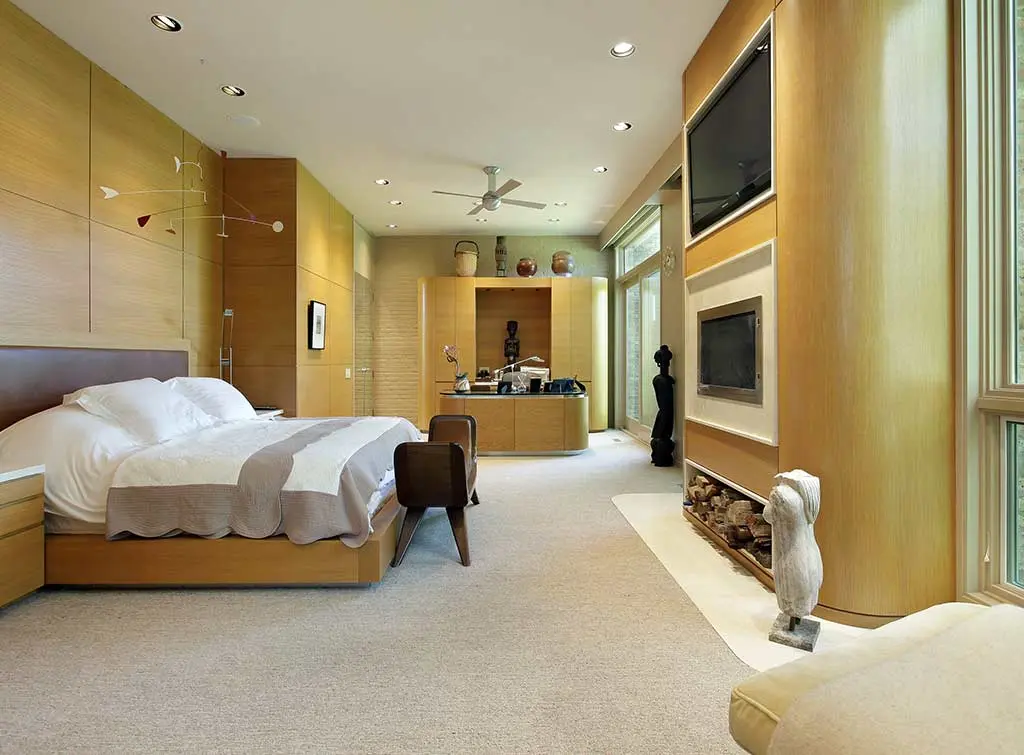
There's nothing more relaxing than a Sunday morning box set from bed, or escaping a busy family living room for a film in your own space. A few ways to make a bedroom TV feel considered rather than bolted on:
Choose a neutral or pale wall colour - off-white, grey and sage all work well as a restful backdrop
Or go the other way and camouflage the screen against a darker colour like inky blue, charcoal or emerald green
Build a gallery wall around the TV, mixing in prints and art in varying sizes so the screen becomes one element among several
Use an existing alcove, checking your screen size fits comfortably before you start drilling
Make a feature of the wall itself with metallic paint, timber slats, or a textured plaster finish behind the screen
If your bedroom has a plaster wall without accessible studs, our guide to mounting a TV on a plaster wall without studs covers the fixings you'll need.
3. Wall mounted corner TV ideas
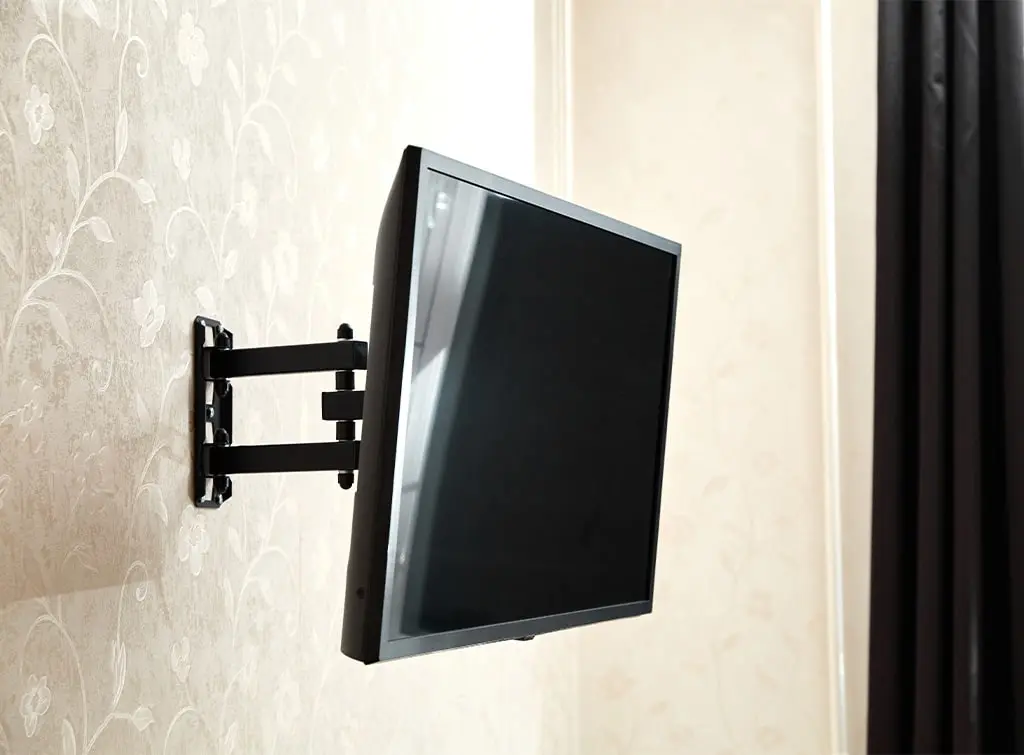
Mounting a TV in a corner is a smart move if wall space is tight, and it tends to encourage a more sociable seating layout, with chairs and sofas angled in rather than lined up against one wall.
A few things apply to corner mounts specifically, though most are worth checking for any wall-mounted TV:
Confirm your TV's weight and VESA hole pattern match the mount's wall plate and arms
Locate your wall studs before you buy a mount, since corner mounts often need a specific bracket designed for angled fixing
Choose a corner-specific mount - standard flat-wall brackets won't sit correctly in a corner
Get the height right by sitting in your usual spot and checking the sightline before drilling
Add corner shelving strong enough for a media box or games console, with cable tidies to keep everything looking neat
4. Mounted TV ideas for small spaces
Where space is tight, a wall-mounted TV is often the answer rather than the problem.
Freeing up the floor space a stand or cabinet would otherwise take is one of the simplest wins in a small room, and a corner mount (see above) is particularly useful if wall space is limited too.
For something more ambitious, a carpenter can build a false shelving unit or bookcase front that lifts to reveal the screen when you want it, keeping the room feeling uncluttered the rest of the time.
If your screen is black and flat, painting the surrounding wall in a dark shade will also help it recede visually.
5. TV media wall ideas
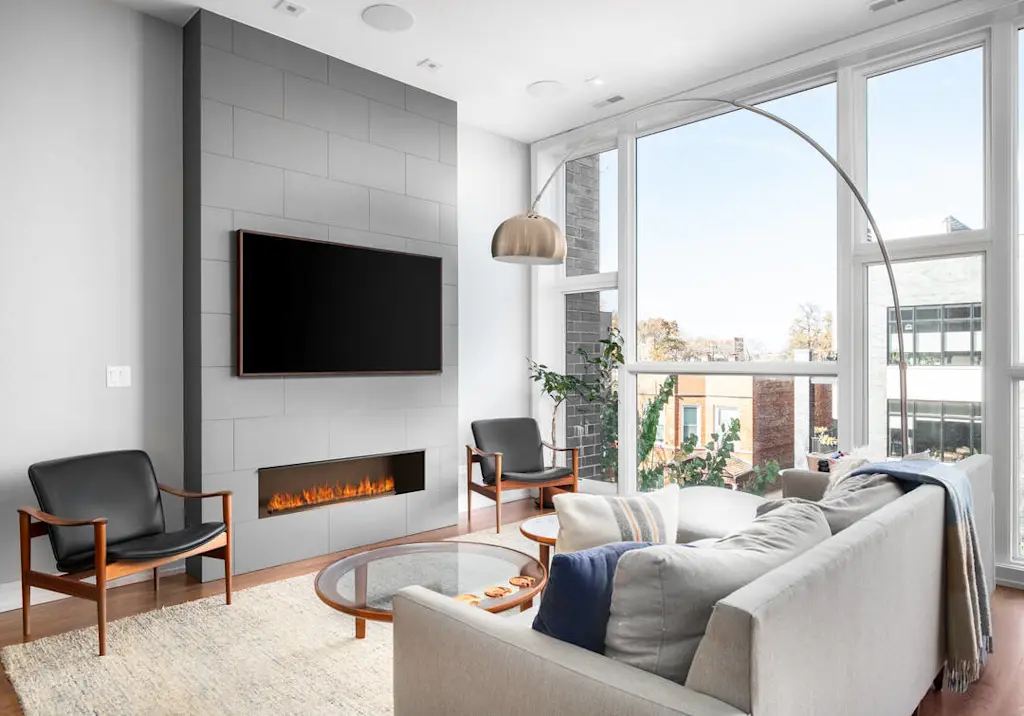
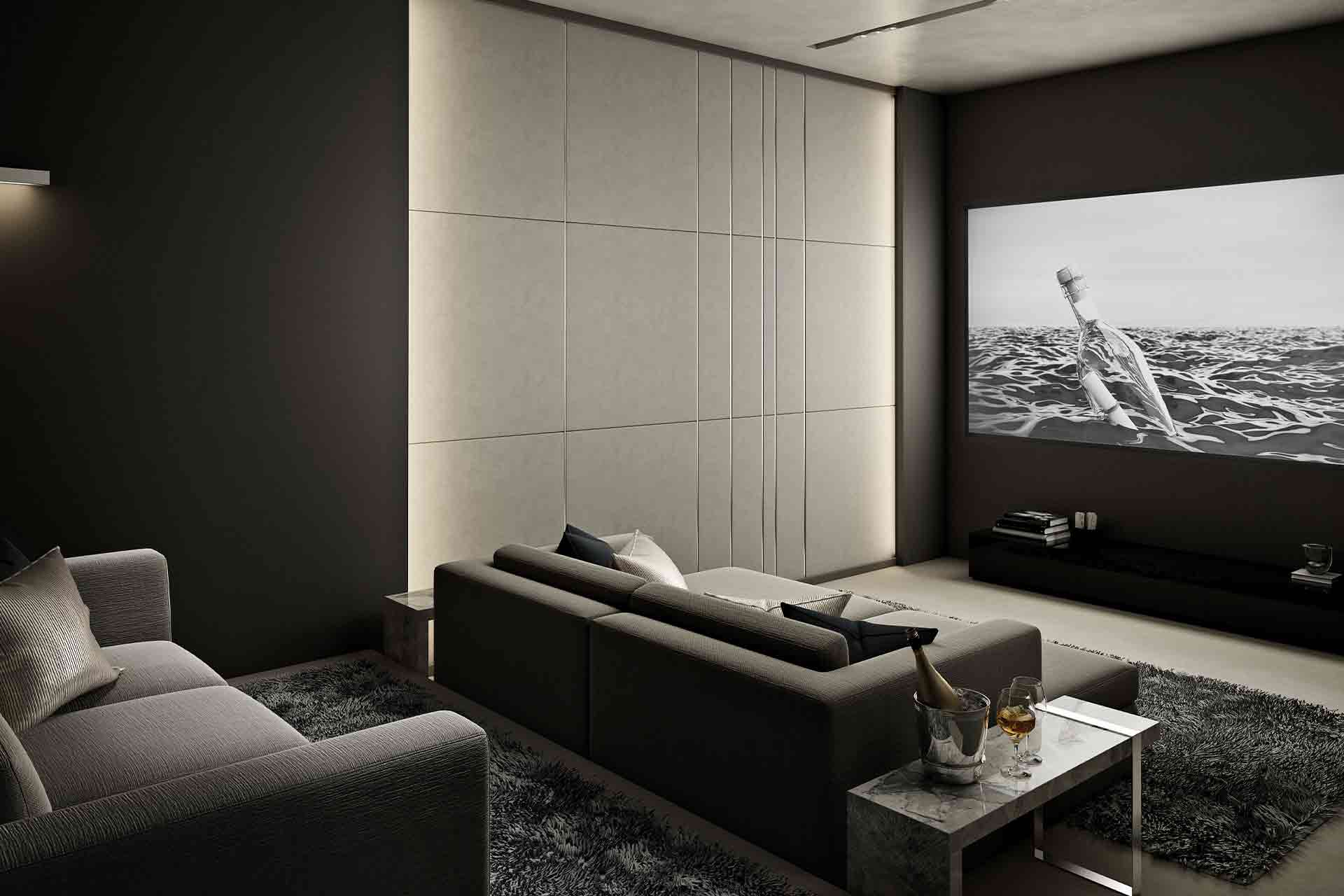
A media wall is one of the most popular ways to create a streamlined focal point for a TV, and it works just as well in a period property as it does in a new build.
The screen is usually recessed into a false wall, with cables chased in and completely hidden - no trailing wires, no visible plugs.
Media walls often incorporate other features too, such as an electric fire or built-in shelving either side of the screen.
Because it typically involves building a stud wall with plasterboard, it's worth planning the electrics and any fireplace element together from the outset - our guide to partition wall costs is a useful starting point if you're weighing up the wider build.

Planning your media wall
In this guide, we've put together our top tips to help you with your media wall installation project. Keep reading to find out more... What is a media wall? A media wall is a custom-made wall, typically used to store and display entertainment equipment. These installations are a popular interior
TV wall mounting cost calculator
Costs for TV mounting and media wall builds vary a lot depending on the wall type, whether cables need chasing in, and if any electrical or fireplace work is involved.
Try Checkatrade's AI-assisted pricing tool below to get a fast estimate based on your specific job.
Job Estimate Calculator


6. Install a wall-mounted TV in the kitchen
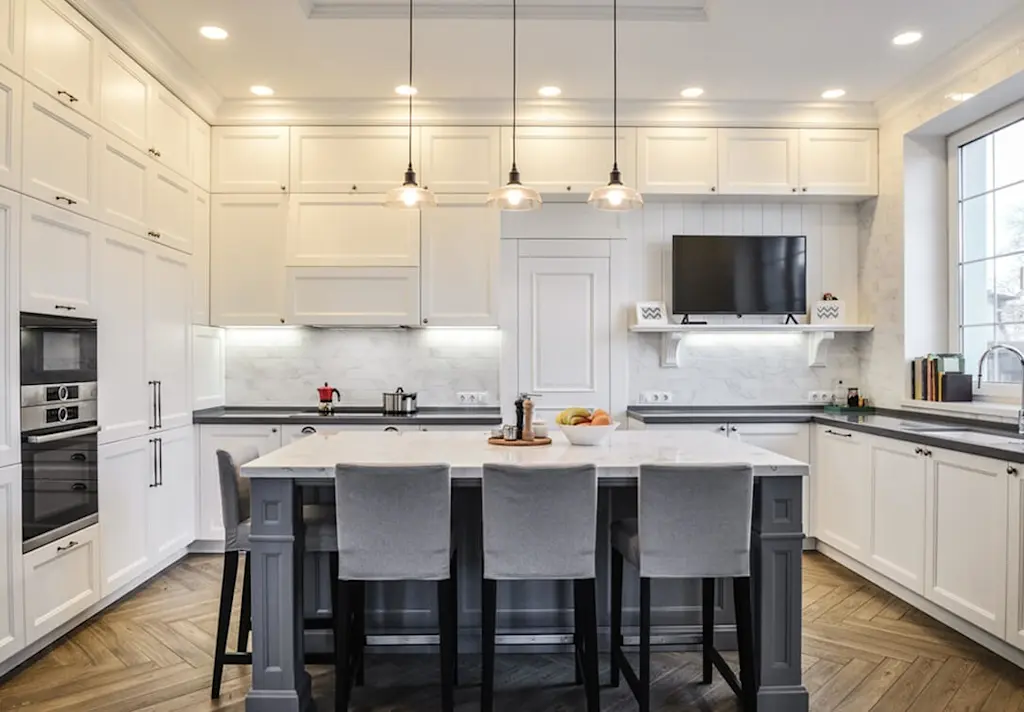
Kitchens have become the hub of the home, especially in open-plan layouts where the cooking, dining and living space blend together.
A few things worth thinking through before you mount a TV in the kitchen:
Hide the screen behind pocket doors that fold back into cavities either side of the unit when you want to reveal or conceal it
Position it based on how you'll actually use it - facing the hob for cooking-along content, or angled towards a sofa for evening viewing
Keep it well away from steam and water, so avoid mounting directly above a hob or sink
Size the screen so it's readable from every part of the kitchen, not just the spot directly in front of it
Add ceiling or cabinet speakers if sound quality matters to you, since kitchen acoustics rarely flatter a TV's built-in speakers
Find a TV wall mounting expert
7. Bathroom TV ideas
While technically something to consider, there are building regulations about electrics to consider with this idea.
Bathrooms can almost become mini spa retreats, and a waterproof TV is part of that for a lot of homeowners - there's a lot to be said for a favourite series playing while you soak.
This is one area where it's worth being strict about the right equipment: you'll need a TV and remote genuinely rated for bathroom conditions, not a standard screen in a splash-proof case.
If a TV is part of a wider bathroom refresh, our bathroom renovation planning guide covers layout and cost considerations you'll want to factor in alongside it.

On Checkatrade, you'll only find trades who meet our high standards and pass up to 12 checks.
8. Outdoor and patio mounted TV ideas
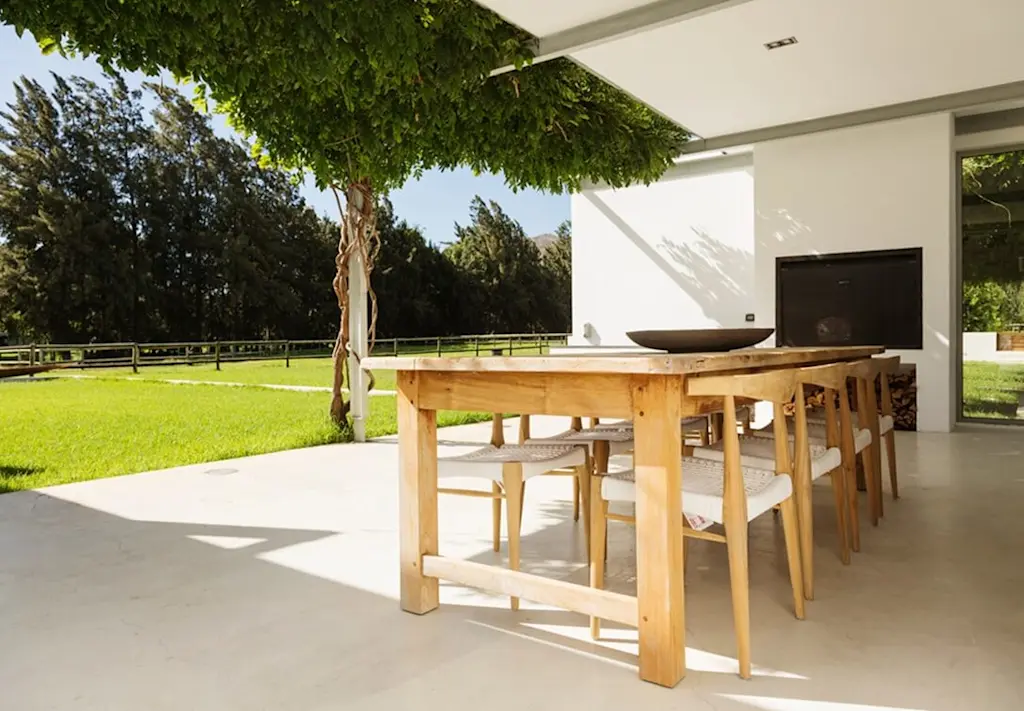
If you spend your summer evenings outside, a weatherproof TV mounted on a sheltered exterior wall - under a pergola or covered patio, for example - turns a garden into a genuine second living space for match nights and film evenings.
Outdoor TVs need weatherproof housing and outdoor-rated cabling, so this is very much a job to plan with a professional rather than adapt an indoor setup.

Outdoor electricians near me
You will need to hire an outdoors electrician if you want to add sockets or lights to your home's exterior. Let us help you to find reputable, high quality electricians in your area. How to find outdoor electricians near you For the safety of yourself and your home, all electrical work should be
9. Home gym mounted TV ideas
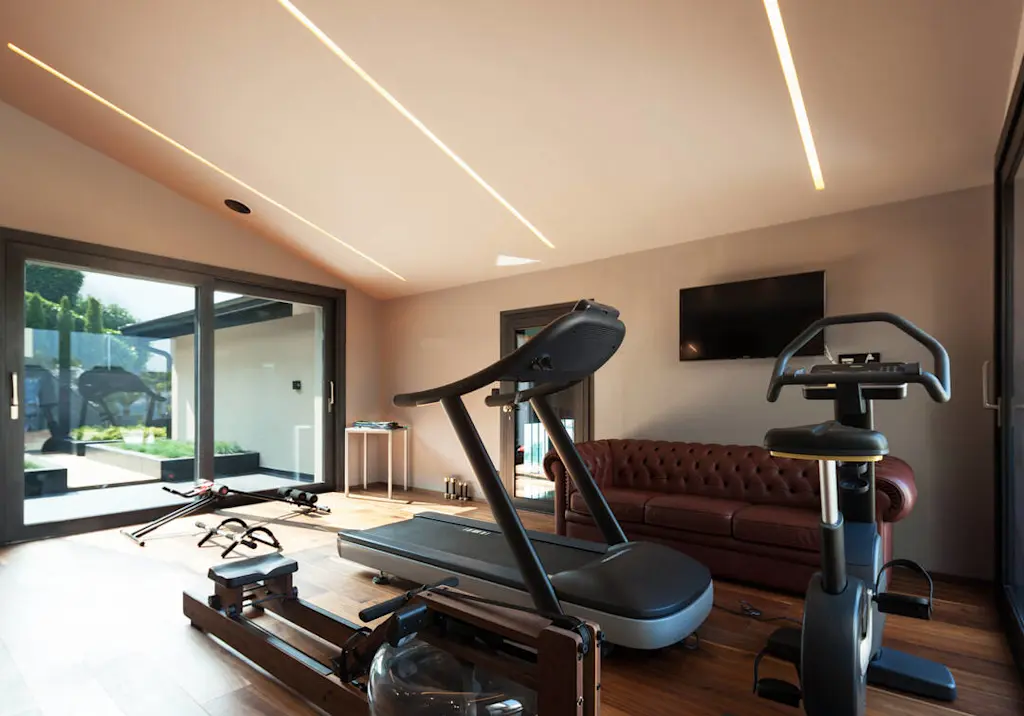
A mounted TV in a home gym keeps a workout space multi-purpose without cluttering the floor.
Position it at a height you can see clearly from a treadmill, bike, or mat, and consider a tilting mount so you can angle the screen depending on whether you're standing or on the floor.
If you're building out a dedicated space with sound in mind, our guide to home cinema installation costs is worth a look, since a lot of the same audio-visual thinking applies.
Find a TV wall mounting expert
10. Wall mounted TV ideas to hide cords
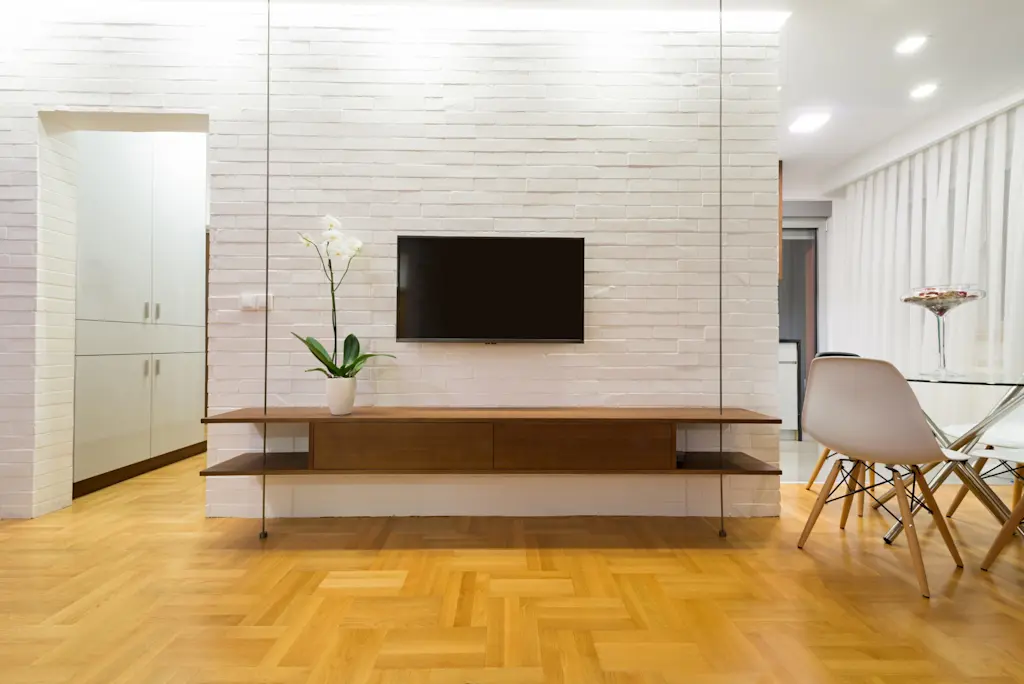
Trailing cables are one of the most common complaints about a wall-mounted TV, and they're also a trip hazard if they run anywhere near floor level.
Our full guide on how to hide TV wires goes into more detail, but here are the main options, roughly in order of effort:
A self-adhesive cable tidy stuck to the wall below the TV - cheap, no drilling, and can be painted to match the wall
Furniture placed to catch and hide wires as they run down from the TV, using adhesive cord clips to keep them tidy
A light timber frame built around the TV that you paint or wallpaper, with a cut-out for the mount and the wires hidden behind it
Cables run behind plasterboard in a stud wall - more permanent and a bigger job, but a genuinely invisible finish
Cables chased into solid brick or plaster - the most involved option, since it means cutting into the wall, adding a conduit, then re-plastering and redecorating
Anything beyond a surface-mounted cable tidy involves working near electrics, and cutting into brick or plaster walls especially is not a job to improvise. It's worth getting a qualified electrician involved for anything past the simplest options.
Who to call for a mounted TV project
The right trade depends on how ambitious the job is.
A simple bracket fit is often within reach of a general handyperson or TV aerial installer, while chasing cables into walls, adding sockets, or wiring in ceiling speakers needs a qualified electrician.
For a full media wall or built-in unit, you'll usually want a carpenter to build the structure, working alongside an electrician for the cabling.

For anything beyond a basic bracket fit, it's worth bringing in a qualified electrician for cabling and sockets, or a carpenter if you're building a full media wall.
How to find a tradesperson to mount your TV
Before you book anyone, it's worth getting a couple of quotes and asking to see photos of similar jobs they've completed - a media wall build and a straightforward bracket fit are very different jobs, so make sure whoever you hire has done the specific type of work you need.
Find TV wall mounting services
Enter your postcode to find a top tradesperson near you
Aerial Services Ltd
10.00
(219 reviews)Services & skills
TV Aerials / Satellite ServicesTV Wall MountingCommunal Aerial / SatellitesTV Aerial / Satellite InstallationVideo / Audio RepairAntenna Ltd
10.00
(411 reviews)Services & skills
TV Aerials / Satellite ServicesTV Wall MountingTV Aerial / Satellite InstallationVideo / Audio RepairEmergency TV Aerials / Satellite ServiceAlpine Aerials WiFi & CCTV
9.96
(616 reviews)Services & skills
TV Aerials / Satellite ServicesTV Wall MountingTV Aerial / Satellite InstallationCommunal Aerial / SatellitesNetwork CablingLondon Aerials
9.97
(512 reviews)Services & skills
TV Aerials / Satellite ServicesTV Wall MountingTelevision PointsFreeviewFreesatA1 Installations
9.97
(139 reviews)Services & skills
TV Aerials / Satellite ServicesTV Wall MountingTV Aerial / Satellite InstallationCommunal Aerial / SatellitesTelevision Points


Before you book: TV mounting checklist

TV wall mounting checklist
Before you book a TV mounting job...
TV mounting FAQs
Costs vary depending on the wall type, whether cables need chasing in, and if any additional electrical work is involved. Our media wall cost guide and home cinema installation cost guide break down typical price ranges for different setups.
Most modern flat-screen TVs have VESA mounting holes on the back and can be wall mounted, but you'll need a bracket rated for your TV's weight and screen size. Very large or heavy screens need a heavier-duty mount and, in some cases, additional wall reinforcement.
A simple bracket fit onto an existing wall doesn't usually require an electrician. However, if you want cables chased into the wall, new sockets added, or speakers wired in, a qualified electrician is the right person to call.
A self-adhesive cable tidy painted to match the wall is the simplest no-drilling option. Positioning furniture to catch the cables as they drop, or building a slim timber frame around the TV, are also effective without any permanent alterations.
Yes, but you'll need a TV and remote specifically rated as waterproof for bathroom use, not just a standard screen in a protective case. It's worth getting professional advice on placement to keep it well clear of water sources and steam.
As a general rule, aim for the centre of the screen to sit at eye level from your usual seated position. This varies by room, so it's worth testing the height with the TV held in place before you drill any fixing holes.
If you want a completely streamlined finish with no visible cables, sockets, or a separate media cabinet, a media wall is usually worth the investment. It's a bigger job than a standard bracket fit, so it makes sense mainly if you're already planning wider room renovation work.
Yes, alcoves are a popular spot for a mounted TV, but check the alcove's width and depth against your screen size first, since the recess can restrict how large a TV will comfortably fit.
See the tradespeople we've checked for your job