HOW-TO GUIDES
How to level a garden
Updated 05/26
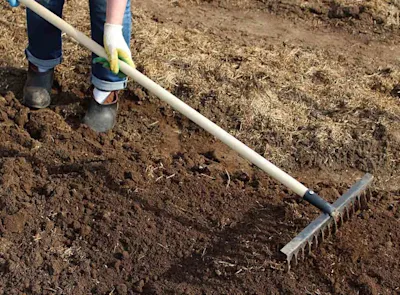
By: Olivia Scammell
Reviewed: Laura Macdonald

Whether you have a sloping garden or an uneven lawn, you'll know they can present their fair share of challenges.
This guide explains how to level a garden properly, what tools you’ll need, how to flatten uneven lawns, and when it’s safer (and often easier) to bring in a professional landscaper.
How to measure a garden slope properly
What tools and materials you’ll need
How to level a garden step by step
How to level a lawn before turfing or paving
Why retaining walls and drainage matter
When it’s worth hiring a landscaper
Maybe water always gathers in one corner after rain. Perhaps your lawn feels lumpy underfoot, or you’ve realised a patio, shed or decking project is going to need a level base before anything else can happen.
The good news is that many smaller levelling jobs are manageable with time, patience and the right tools. The less-good news? Once slopes become steeper, retaining walls enter the picture, or drainage starts becoming part of the conversation, things can get complicated.
Why might you need to level a garden?
Sometimes homeowners want to level a garden purely for aesthetics. Other times, it’s about making the space more usable.
Some of the most common reasons people level a garden include:
Uneven or bumpy lawns
Water pooling after rain
Improving drainage
Minimising soil erosion and improving lawn health
Creating flatter family-friendly spaces
Making steep gardens easier to maintain
A slightly uneven lawn is very different from a genuinely sloping garden. Small bumps are often manageable DIY jobs. Larger changes in height usually need more planning, and sometimes structural support.
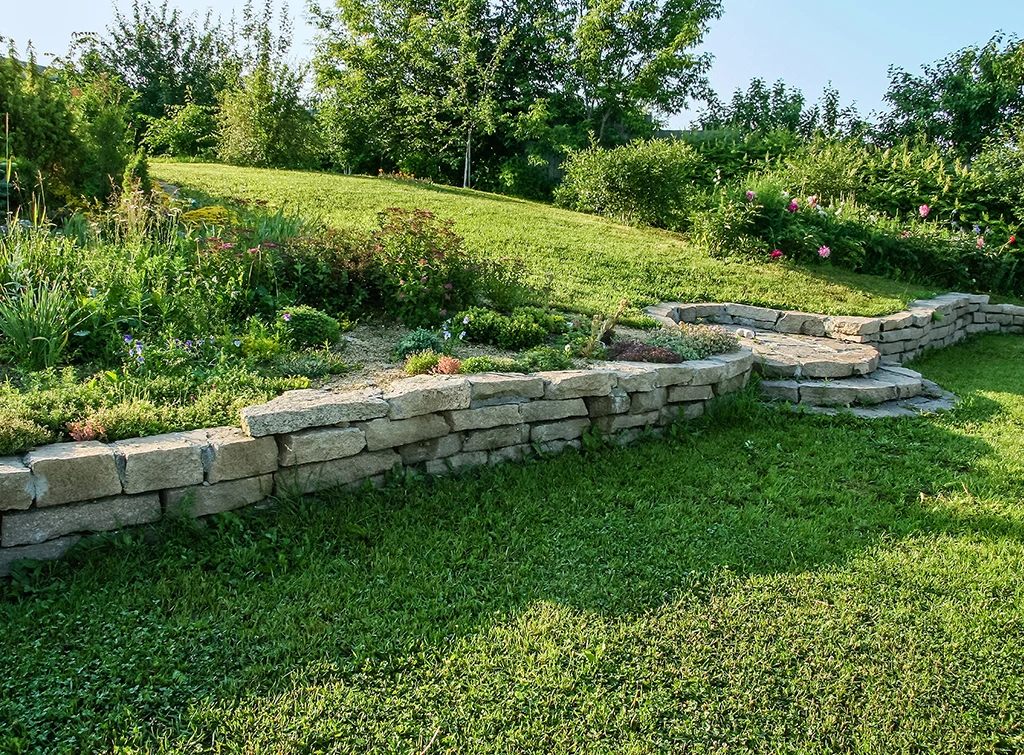
What does garden levelling involve?
In simple terms, garden levelling means redistributing soil to create a flatter, more stable surface.
For small lawns, that might involve little more than a bag of topsoil, a bit of raking and compacting.
For larger sloping gardens, however, the process becomes much more involved. It often includes:
Measuring levels carefully
Removing turf
Moving large amounts of soil
Compacting the ground properly
Improving drainage
Building retaining walls
That’s usually the point where a straightforward weekend project starts becoming landscaping work.
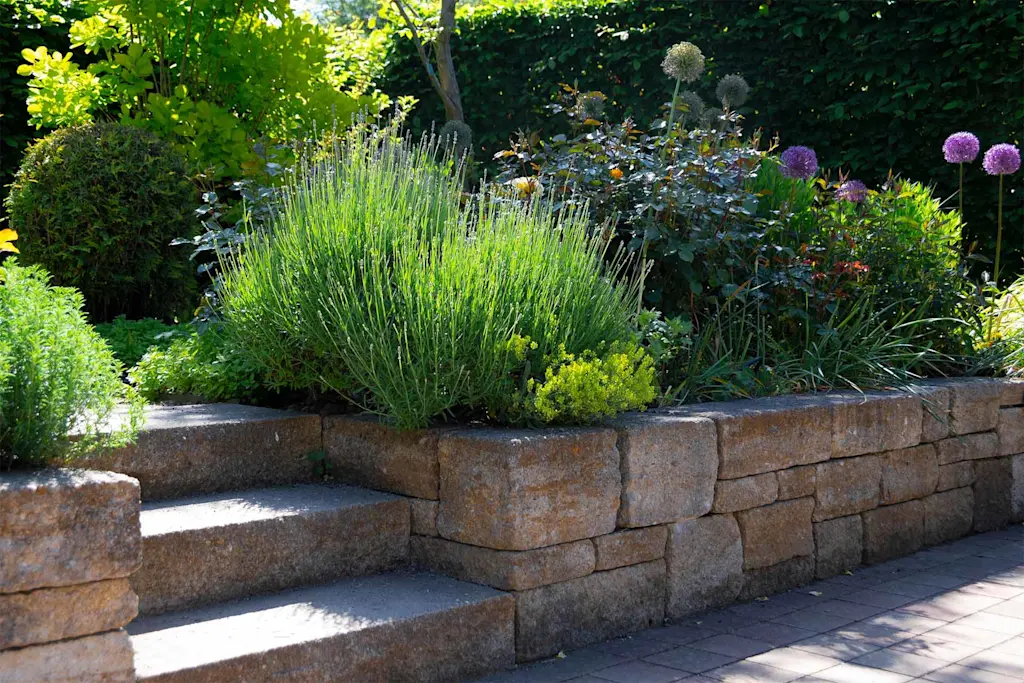
Measuring a garden slope properly
Figuring out the extent of the slope is key to understanding how best to level your garden. This is the stage many people are tempted to rush, but it can lead to expensive remedial work further down the line.
To measure the slope of your garden:
Place a stake at the top of the slope
Place another at the bottom
Tie the string to the bottom of the stake at the top of the slope, and to the top of the stake that's at the bottom of the slope
Use a spirit level to make sure the string is level
At the bottom stake, measure from the ground to the top of the string
That measurement gives you the 'rise' of the slope and will be the height of your retaining wall.
If measurements are even slightly wrong, patios, retaining walls and drainage can all end up uneven later on. It’s one of the main reasons larger garden levelling projects are often handed to professionals.
Tools and materials you’ll need
The exact tools you'll need depends on the scale of your project.
For smaller levelling jobs:
Spirit level
Stakes and string
Shovel
Rake
Wheelbarrow
Topsoil
Grass seed or turf
Garden roller or soil compactor
For larger slopes:
Retaining wall materials
Compactor plate
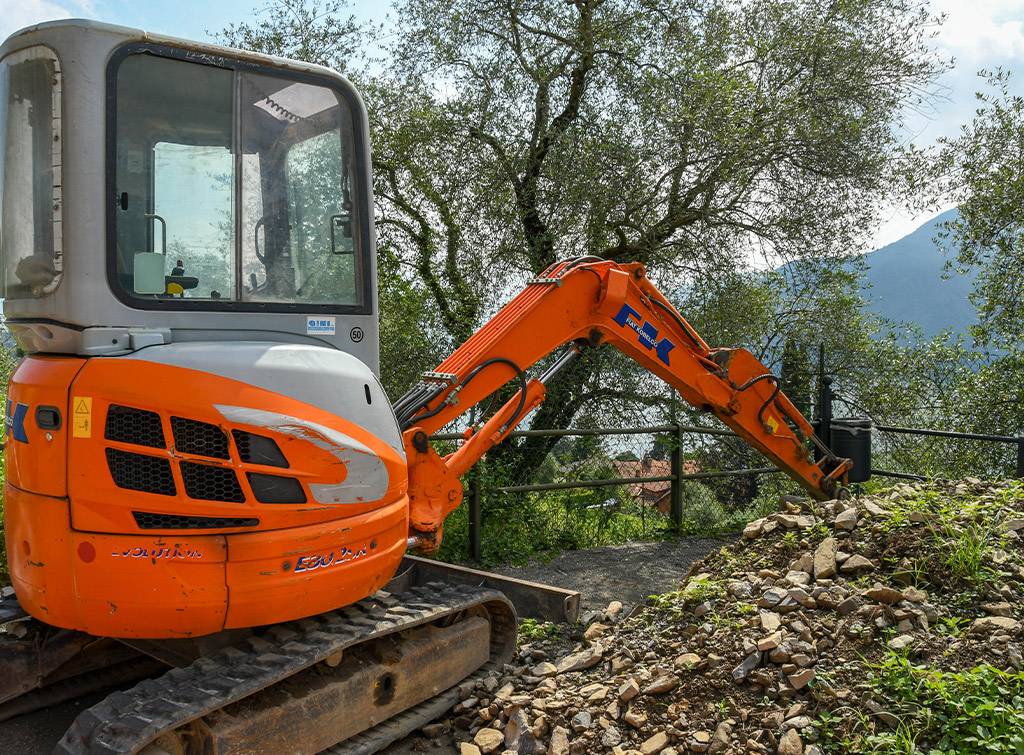
Mini digger
Drainage materials
Rotavator
A mini digger can make a huge difference on larger gardens, but they’re much less forgiving than they look.
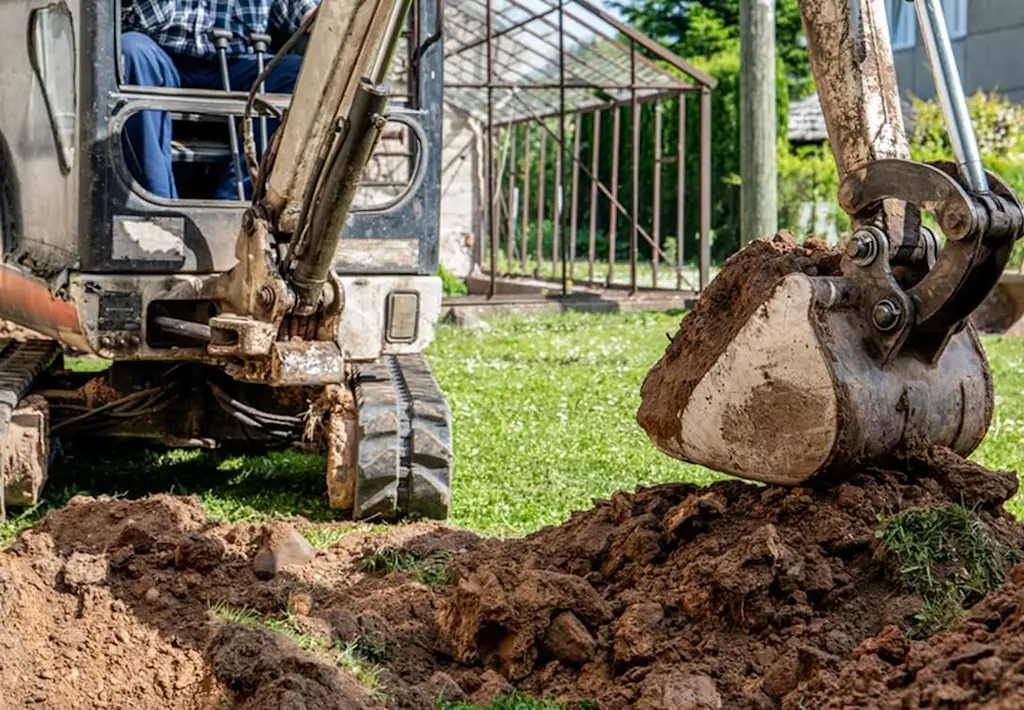
How to level a sloping garden
If you’re levelling a garden for paving, turfing or general landscaping, the overall process usually follows the same broad pattern.
Step 1: Clear the area
Start by removing:
Old turf
Weeds
Stones and debris
Any unwanted planting
If you’re reusing turf elsewhere, lift it carefully and keep it damp.
Step 2: Measure and mark levels
Use stakes, string and a spirit level to work out where the final level needs to sit.
Patience really pays off here. A garden that looks 'roughly level' now can end up noticeably uneven once the paving, decking or turf goes down.
Step 3: Move and redistribute soil
This is the physically demanding bit.
Depending on the slope, you may need to:
Add topsoil to lower areas
Remove soil from higher sections
Build the level gradually in layers
On larger projects, this can involve shifting a surprising amount of earth.
Remember, wet soil is much heavier than dry soil, so if you’re moving it by hand, choose your timing carefully.
Step 4: Build retaining walls if needed
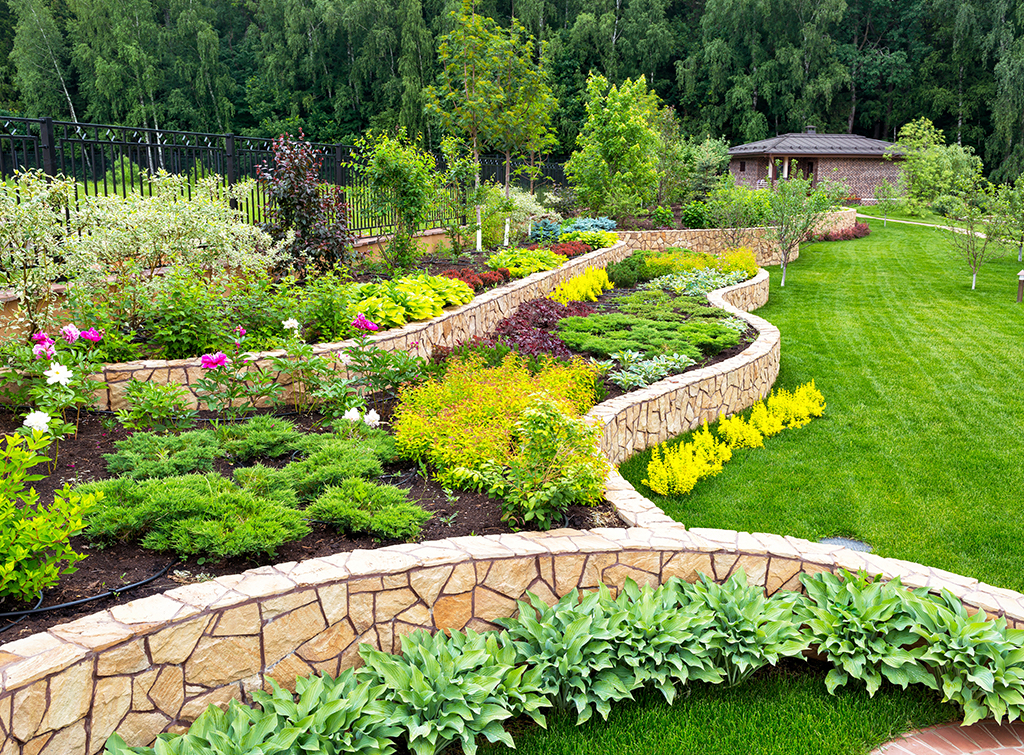
If your garden has a noticeable slope, retaining walls may be needed to safely hold the soil in place.
Popular materials for retaining walls include:
Timber sleepers
Brick
Concrete blocks
Stone
Terraced gardens can work beautifully, but retaining walls need to be structurally sound and properly drained. Anything much over around 600mm high is usually worth discussing with a professional landscaper or builder.
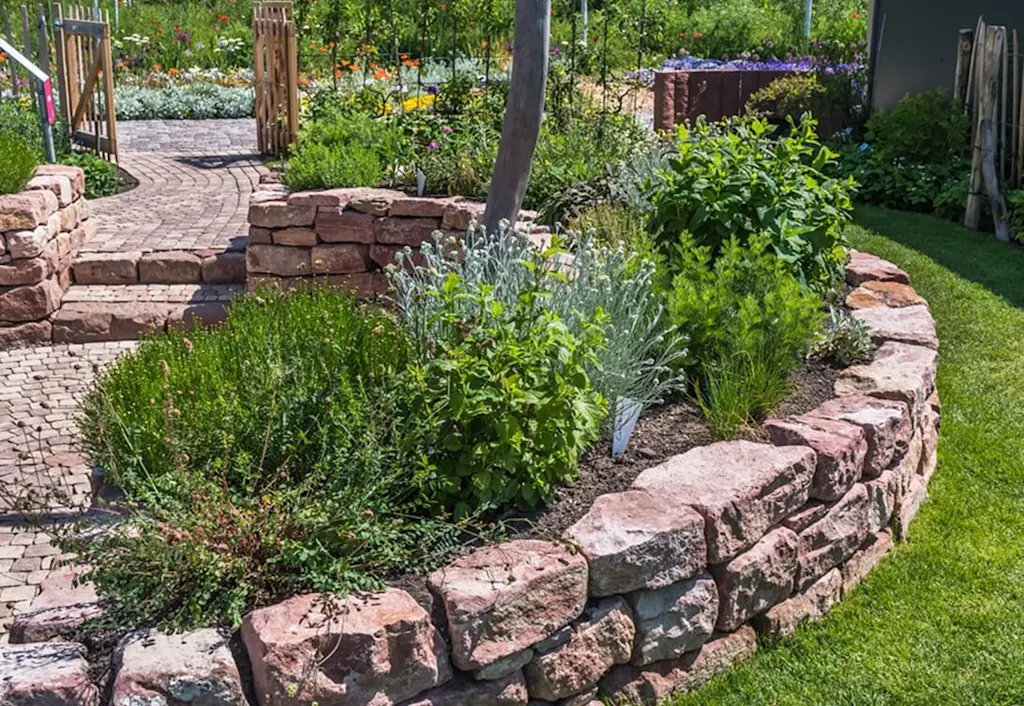

Building an interlocking retaining wall
Find out about the benefits of an interlocking retaining wall and how to create one in your sloping garden.
Step 5: Compact the soil properly
Compacting the soil is one of the most important parts of levelling a garden, and one of the easiest to underestimate.
Without proper compaction:
Paving can sink later
Lawns become uneven again
Water drainage can worsen
Features like sheds or patios may shift over time
Use a compactor plate or roller and work slowly across the area until the surface feels firm and stable.
Freshly moved soil nearly always settles more than people expect. Rushing straight to paving or turfing often leads to dips appearing later.
Step 6: Leave the ground to settle
For larger projects especially, leaving the soil to settle naturally before finishing the surface is often worth the wait.
Smaller lawn levelling jobs may only need a day or two
Larger landscaping projects sometimes benefit from significantly longer settling periods
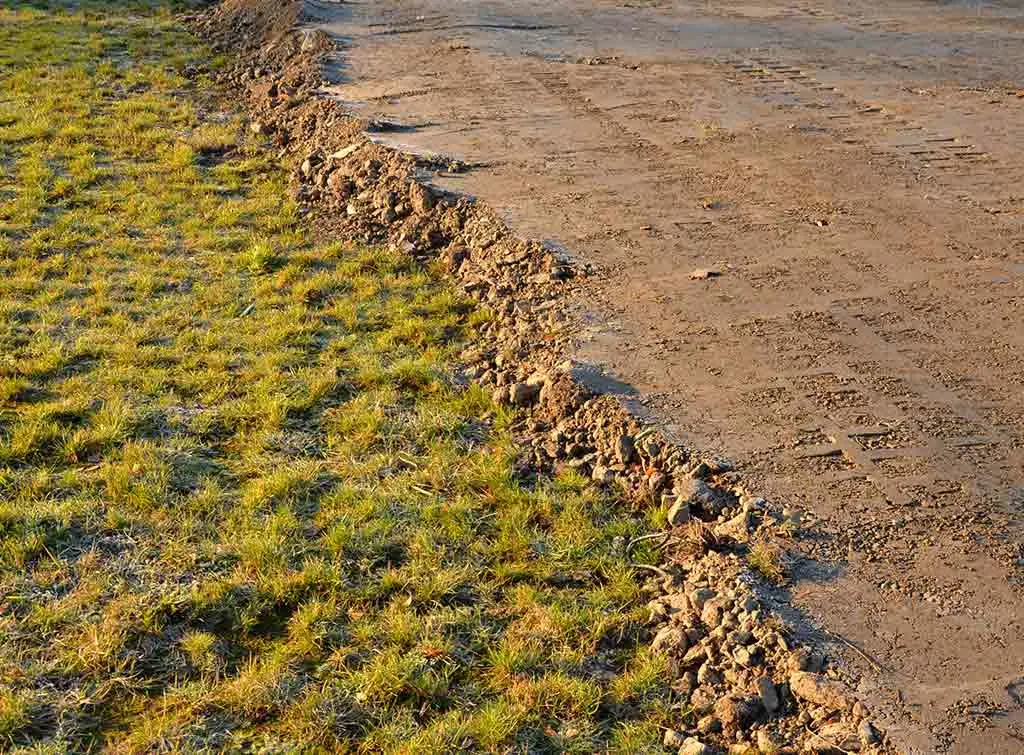
How to level an uneven lawn
It's not uncommon to have a few lower patches in your lawn, maybe a few bumps, shallow dips, or uneven turf after years of use. The good news is, levelling a lawn is usually simpler than flattening a full garden slope.
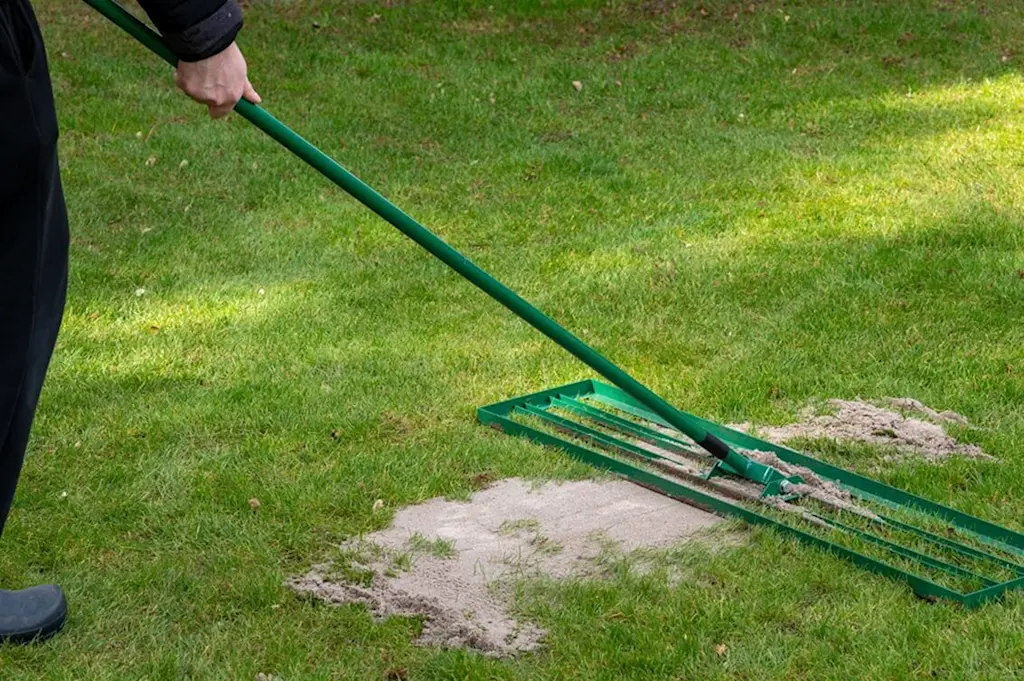
For shallow dips (1–2cm)
Apply a mix of topsoil, sand and compost to the sunken patches of lawn (a ratio of 2:2:1 usually creates a good levelling mix to fill in any gaps but provide enough moisture for your grass to grow)
Rake it level
Compact the soil with your feet
Allow it to settle for a few days; if it sinks, top it up
In dry, sunny weather, water the area to keep it moist
Once you're happy with the new level, sprinkle over a layer of grass seed
Water it gently three or four times a day for the first couple of days to encourage germination
Once the seeds have sprouted, keep watering the grass every day until it’s fully established. Fill any patchy bits with more grass seed and repeat
For deeper dips (2–3cm)
Be sure to water the area you wish to level out in advance so the lawn is pliable and doesn’t disintegrate when you try and move it
Use a shovel to get underneath the roots of the grass that is not level so that you can lift each section, taking care not to break the roots
Peel back the layers to expose the soil underneath. Use a fork to turn the soil and get rid of any big lumps and stones. Top it up with soil mix and compact it with your feet
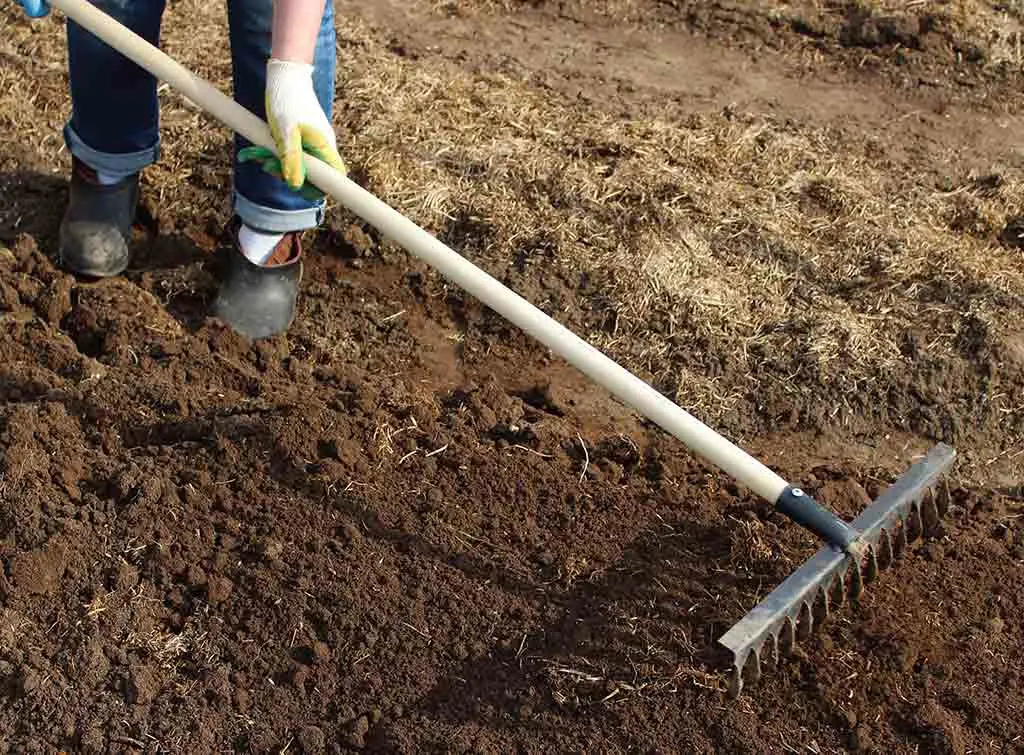
Use a rake to level the surface and apply more soil mix if needed
Fold the flaps of turf back into place and fill any gaps with extra soil mix. Sprinkle with grass seed and water the area regularly over the next couple of days to make sure the grass and your new lawn is healthy
Spring is usually the easiest time to level a lawn because the grass recovers more quickly and the soil is easier to work with.

How to level a garden before turfing
If you’re laying new turf, the surface underneath matters enormously.
Before turfing:
Rake the soil into a fine, even texture
Remove stones and debris
Compact lightly
Water the soil
Apply pre-turf fertiliser if needed
Once the turf arrives, lay it as quickly as possible (fresh turf dries out surprisingly fast in warm weather).
Bed in the turf by 'tamping' it down and pressing lightly
Cover any exposed edges with soil to stop it from drying out
Water regularly
For a more comprehensive guide, check out our blog: How to lay turf: Keeping it green for a step-by-step run through.
How to improve drainage after levelling
Levelling alone doesn’t always fix garden drainage issues.
In fact, poor levelling can sometimes make them worse by trapping water in the wrong areas.
Effective ways to improve drainage include:
Creating gentle falls away from the house
Adding drainage channels
Installing soakaways
Improving soil structure
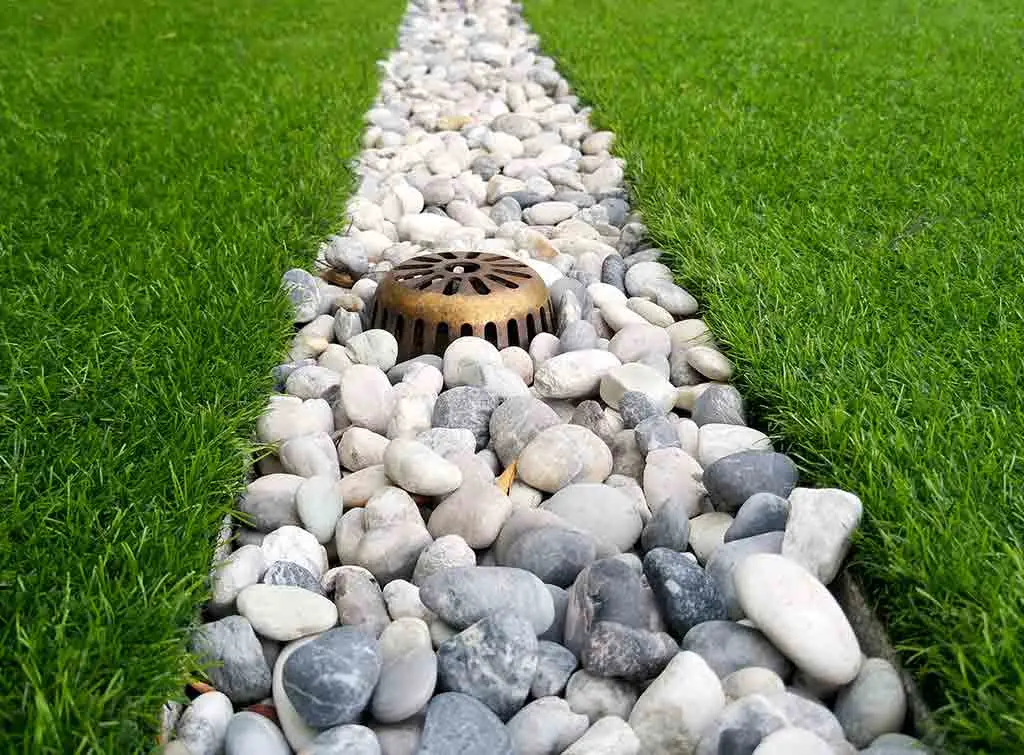
Using gravel or permeable surfaces
Retaining walls should also include drainage or weep holes so water pressure doesn’t build up behind them.
Can you level a garden yourself — and should you?
Smaller lawn levelling jobs are often manageable (and quite satisfying) DIY projects.
But once you’re looking at moving large amounts of soil, altering levels significantly, building retaining walls, hiring machinery, or changing drainage patterns, it’s usually worth stepping back and thinking carefully before tackling it alone.
DIY garden levelling is usually manageable if:
The slope is mild
You’re mainly fixing lawn unevenness
No structural work is involved
Drainage is already good
It’s usually worth hiring a landscaper if:
Your garden slopes heavily
Retaining walls are needed
Water pooling is already a problem
Machinery is required
You’re preparing for paving, decking or structures
Getting the garden flat is one thing. Making sure water doesn’t start pooling afterwards is often the trickier part.
How much does it cost to level a garden?
The cost of levelling your garden will vary depending on:
Your garden size
The severity of the slope
Soil removal required
Drainage work
Machinery hire
Having said that, for smaller lawn levelling jobs, you may only be looking at the cost of topsoil and labour.
Larger sloping gardens can quickly turn into fairly major landscaping projects.

Thinking about hiring a professional?
Here’s what recent Checkatrade customers said about hiring a landscaper:
"We recently had some work completed at our property by Jimmy and his team, including excavation, new soil installation, turf laying and rolling, and some border work. They were hardworking, professional, and communicated clearly throughout the whole process. The quality of their work has completely transformed our outdoor space. We’re very pleased with the result and would highly recommend Jimmy and his team for any landscaping work."
Verified reviewer, J.G PROPERTY AND LANDSCAPING SERVICES LTD, (Location BN3 )
"We are very pleased with the work carried out at our property. The men (Tony and Cameron) were punctual, polite and very hard working. They did a brilliant job and left the front house/garden clean and tidy. Would highly recommend this company to all who are looking for a good job done well and reasonably priced."
Verified reviewer, Tony Britton Landscaping & Construction, (Location SP11)
Find landscapers near you
Some garden levelling jobs only need a rake and a bit of patience. Others involve drainage, retaining walls and heavy groundworks, which is usually when professional help becomes invaluable. With Checkatrade, all our tradespeople are:
Checked - Every Checkatrade member must pass up to 12 checks and commit to upholding the Checkatrade Standard
Reviewed - Over 6.2 million reviews have been published on Checkatrade about real jobs, on everything from communication, tidiness, timekeeping, and quality of work
Guaranteed - Jobs booked through Checkatrade are covered up to £1,000 (T&Cs apply)
Search your postcode to find checked and reviewed landscapers working in your area.
Find trusted landscapers near you
Enter your postcode to find a top tradesperson near you
Digs Gardens Limited
10.00
(40 reviews)Services & skills
LandscaperArtificial GrassGarden StructuresPond ConstructionSleepersAll Seasons Tree Surgeons
10.00
(214 reviews)Services & skills
LandscaperPlay AreasSleepersGarden StructuresArtificial GrassPrimescape Builders Ltd
10.00
(13 reviews)Services & skills
LandscaperBrickwork in the GardenHard LandscapingDeckingSummer House Design / ConstructionIRONCLAD CONSTRUCT LTD
10.00
(2 reviews)Services & skills
LandscaperArtificial GrassHard LandscapingSoft LandscapingTurfingEL LANDSCAPE BUILD
10.00
(32 reviews)Services & skills
LandscaperPlay AreasSleepersWater GardensGrounds MaintenanceGaz&mir Construction Ltd
10.00
(49 reviews)Services & skills
LandscaperArtificial GrassLandscape ContractorBrickwork in the GardenPlay Areas


FAQs
How much does it cost to level a garden?
Costs vary depending on the garden size, slope severity, drainage work and whether retaining walls or machinery are needed. Small lawn levelling jobs are much cheaper than full landscaping projects involving drainage and retaining walls.
Can you level a garden yourself?
Yes, small lawn levelling jobs are often manageable DIY projects. Larger sloping gardens usually need more planning, drainage consideration and sometimes professional landscaping work.
Do you need planning permission to level a garden?
Planning permission isn't usually needed for minor levelling work. However, significant landscaping changes, retaining walls or major ground alterations may sometimes require permission or structural consideration.
What is the best soil for levelling a lawn?
A mix of topsoil, sand and compost is commonly used for levelling an uneven lawn because it balances drainage, nutrients and stability.
How long does garden levelling take?
Small lawn levelling jobs may take a day or two. Larger sloping gardens can take considerably longer depending on the scope of the work, for example, drainage, retaining walls and soil movement.
How do you improve drainage after levelling?
Drainage can be improved by creating gentle slopes away from the property, adding drainage channels or improving soil structure. Retaining walls should also include drainage holes or gravel backfill.
Can you level a garden with a rotavator?
Clear your garden, remove any weeds, then turn on your rotavator and let it churn the soil for you. Then add or remove the right amount of soil to create an even surface, rake and water.
See the tradespeople we've checked for your job