IDEAS
Kitchen tile design ideas: 15 ways to update your kitchen in 2026
Updated 07/26
By: Sarah P
Reviewed: Alex Peters
Your kitchen tiles do more than look good. They protect your walls and floors from water, grease and everyday knocks, so getting the design right matters just as much as getting the practicalities right.
Which kitchen wall tile trends are worth the investment
How to choose tiles for splashbacks, floors, or both
What to consider before tiling a whole wall
How grout colour changes the whole look
Roughly what kitchen tiling costs to budget for
How to find a tiler you can trust
Whether you're planning a full kitchen renovation or just refreshing a splashback, there's a huge range of kitchen tile design ideas to choose from - patterned, textured, bold, muted, or somewhere in between.
This guide rounds up the styles homeowners are loving right now, along with the practical details that'll help your project go smoothly.
Find a reviewed tiler near you
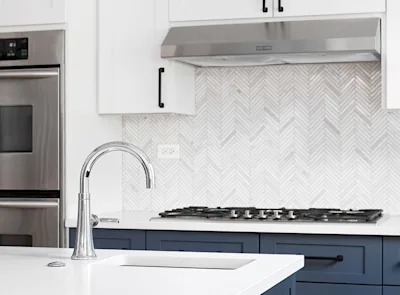
Popular kitchen wall tile ideas
Kitchen walls are the biggest opportunity to make a statement, whether that's through colour, pattern, texture, or the direction the tiles are laid.
Here are the wall tile trends worth considering for your next refit.
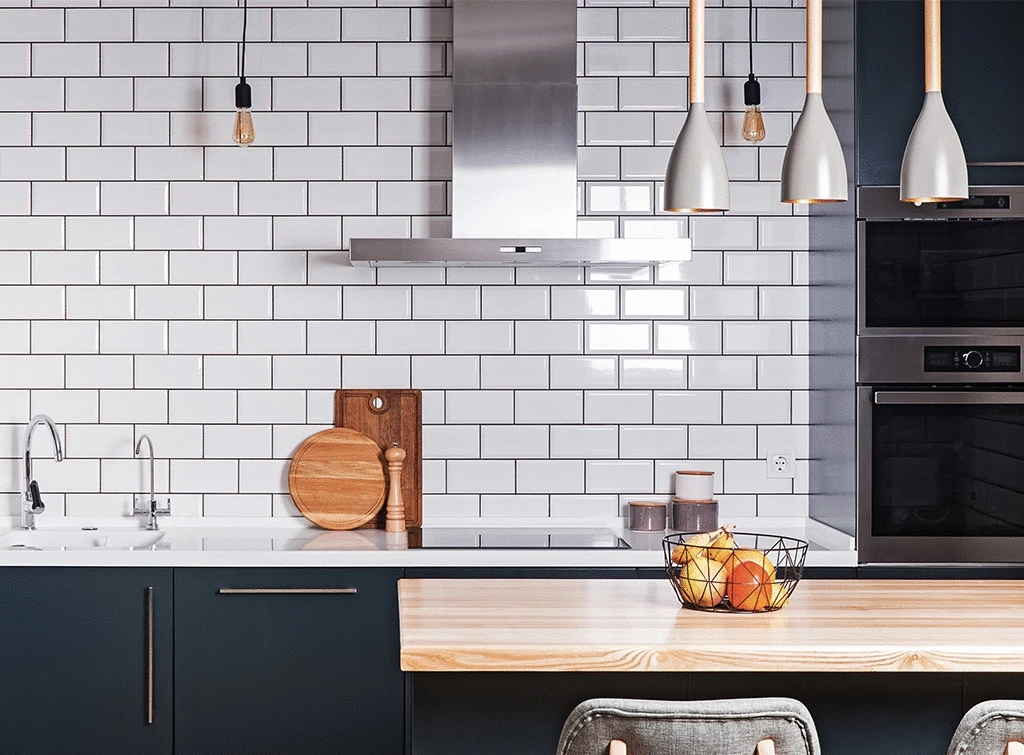
1. Simple subway tiles
Subway (or metro) tiles remain a firm favourite for good reason. Their classic rectangular shape and budget-friendly price make them one of the easiest kitchen tile ideas to get right, whatever your kitchen style.
You can lay subway tiles in a herringbone, vertical, or horizontal layout depending on the look you're after, and a dark or contrasting grout colour will really bring out their shape.
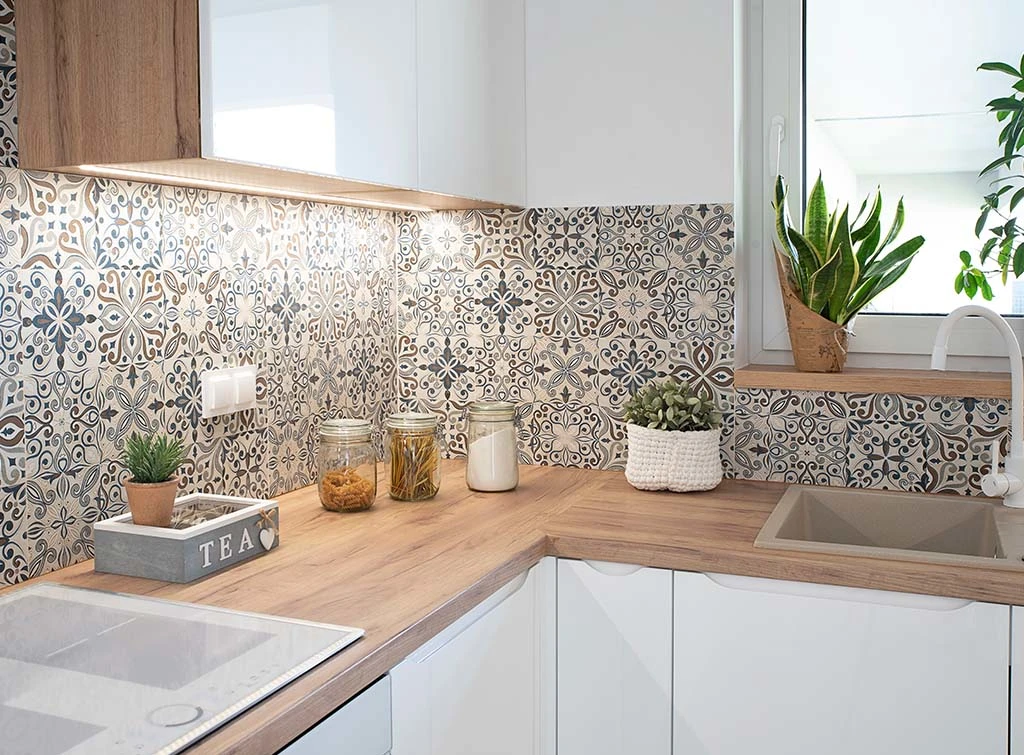
2. Patterned and characterful tiles
Patterned, Victorian-style tiles are having a real moment, and they're not just for floors. Bringing a patterned design to your kitchen walls or splashback is an easy way to add personality to an otherwise neutral space.
Blue, brown and cream tones with an intricate repeating pattern work particularly well against plain white cabinets and light wood worktops, letting the tiles do all the talking.
If you're nervous about committing to a bold pattern across a whole wall, try it on a single splashback first. It's a smaller investment and easier to change later.
3. Go bold with colour
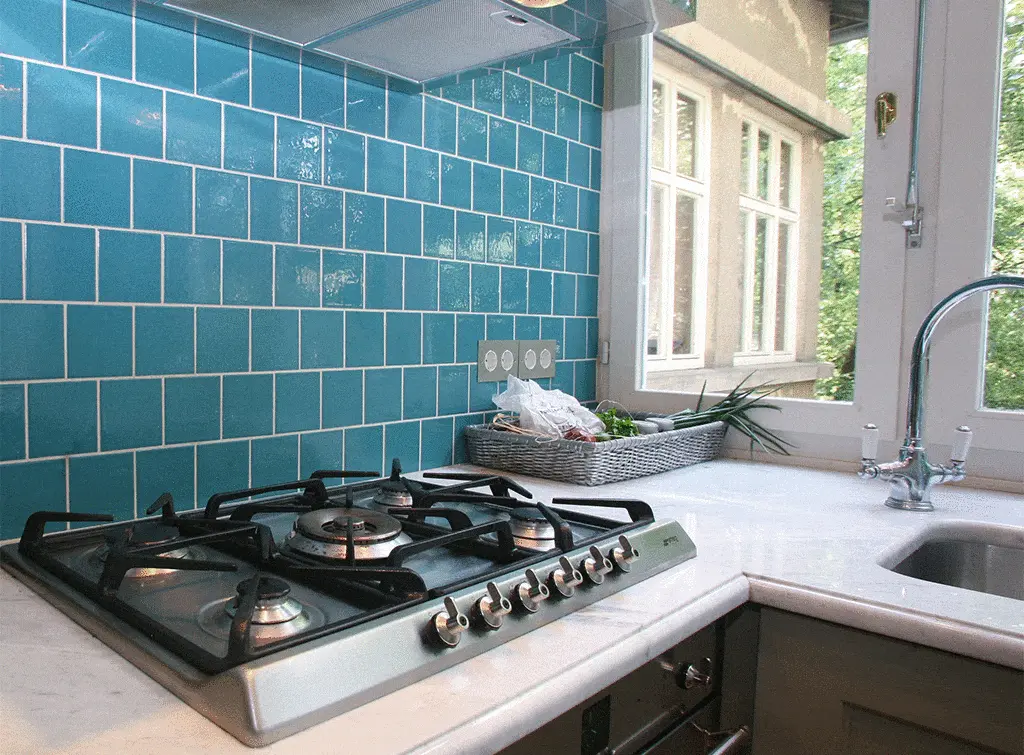
A statement colour is one of the cheapest, easiest ways to breathe new life into a kitchen. Deep greens, bold blues and vivid reds all create striking contrast against white or neutral cabinetry, and give the room an instant focal point.
Pairing a bold splashback with white grout keeps the look crisp, while a glossy worktop in a contrasting neutral tone helps the colour really pop.
4. Dabble with different directions
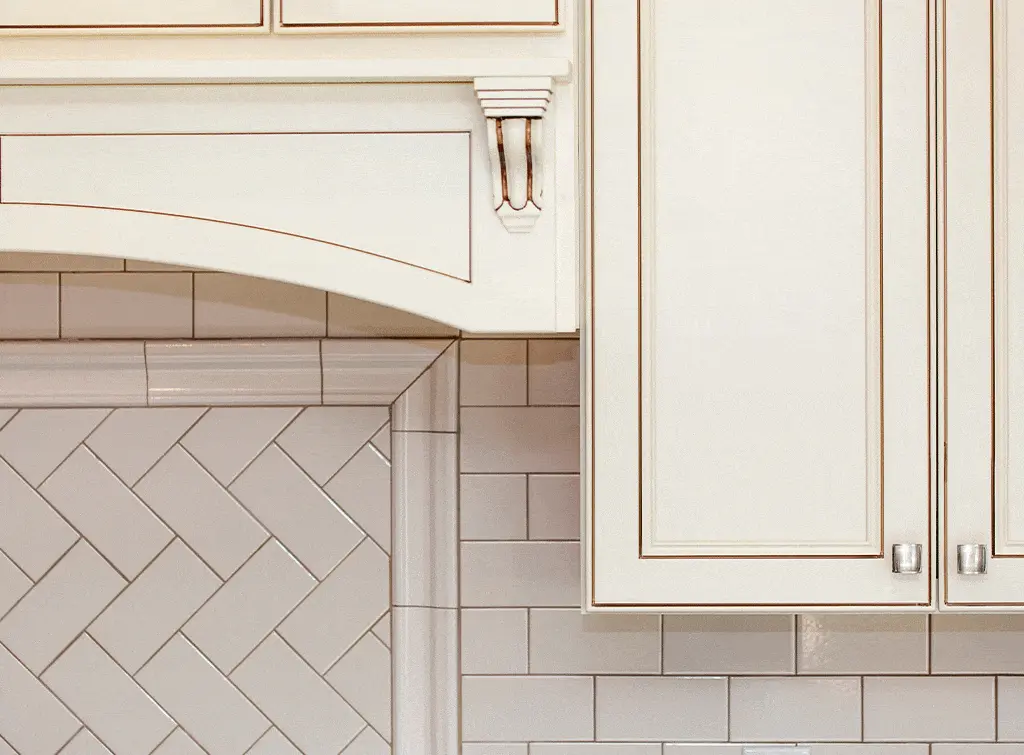
If a plain white or country-style kitchen feels a little flat, changing the direction of your subway or metro tiles is a simple fix. Laying tiles at a 45-degree angle creates visual interest without changing the tile itself, and it works well on both walls and floors.
This trick is especially useful in narrower spaces, like galley kitchens, where angled tiling can make the room feel wider.
5. Pick pastels
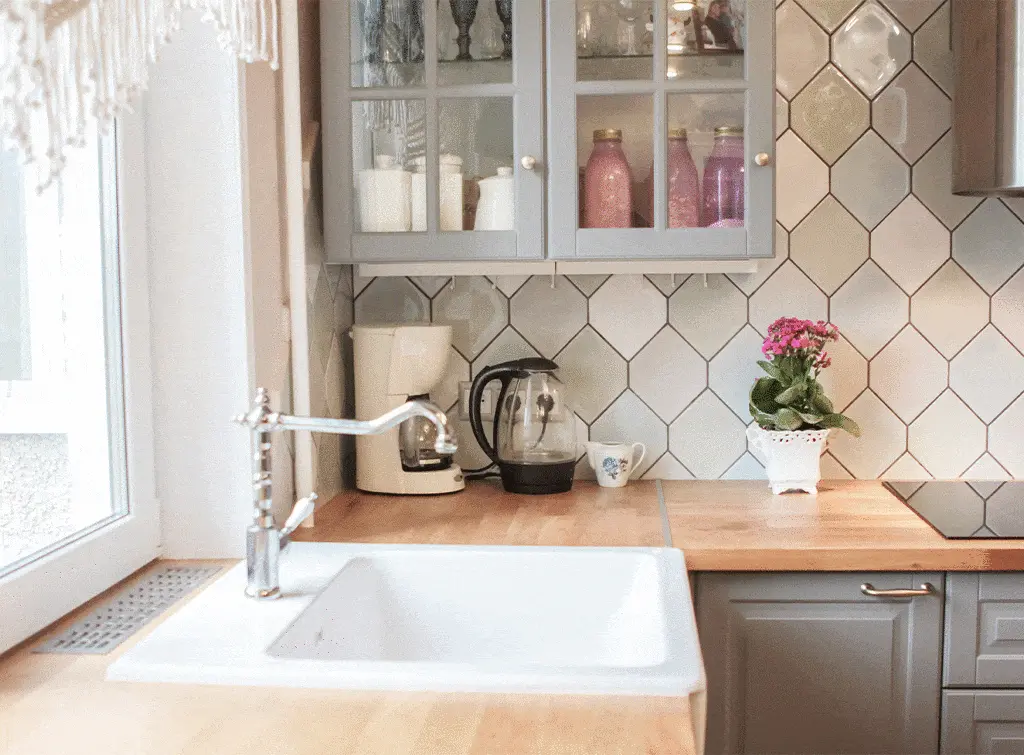
Pastel tiles bring a fun, uplifting feel and suit country-style kitchens particularly well. Using several shades of the same pastel colour creates a sense of depth, while a black or brown grout gives the finish a sleeker, more contemporary edge.
6. Stack metro tiles vertically
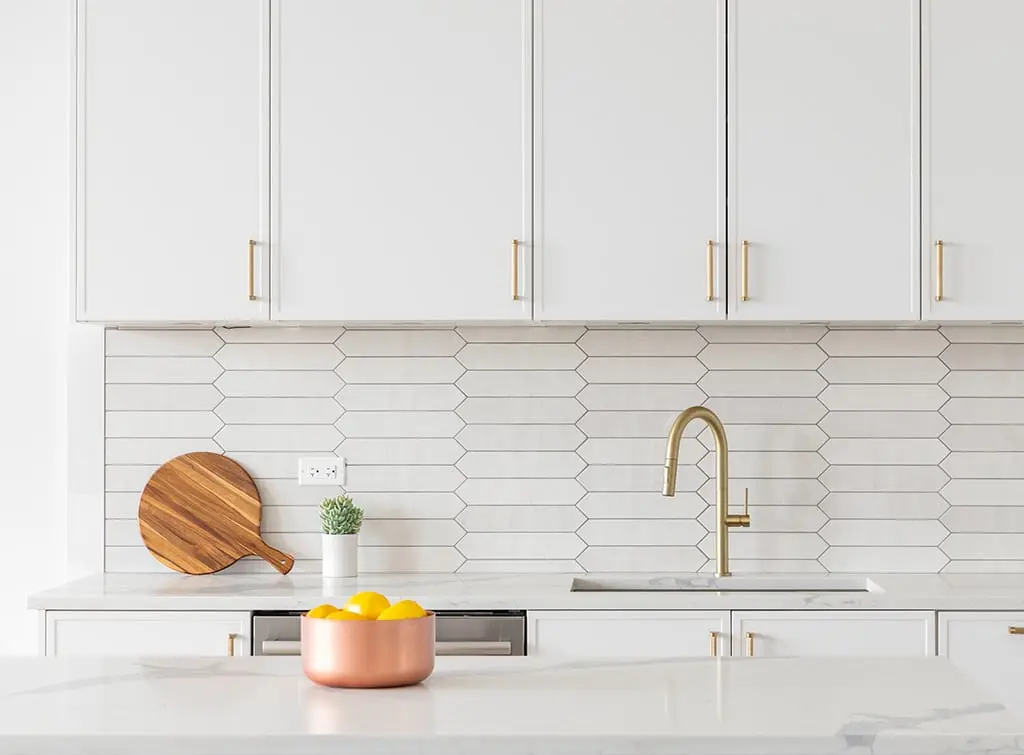
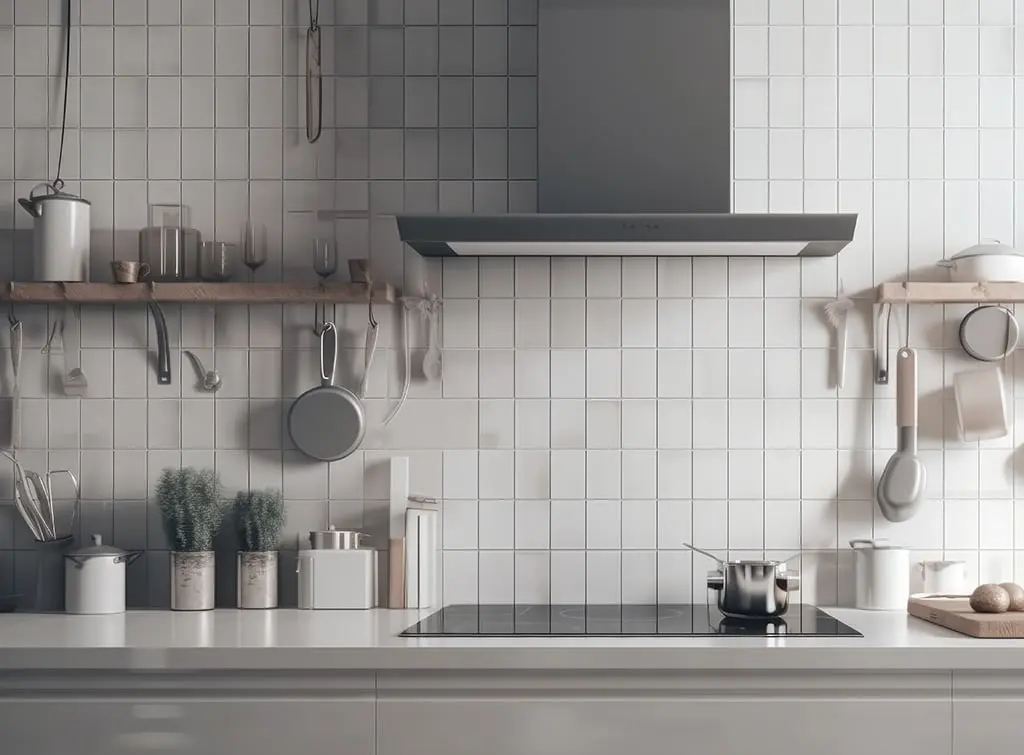
Stacking metro tiles lengthways rather than the traditional brick-bond pattern gives an otherwise classic tile a more modern feel. Pair it with a light, minimal grout line so the tiles read as one continuous surface.
7. Tile the whole wall
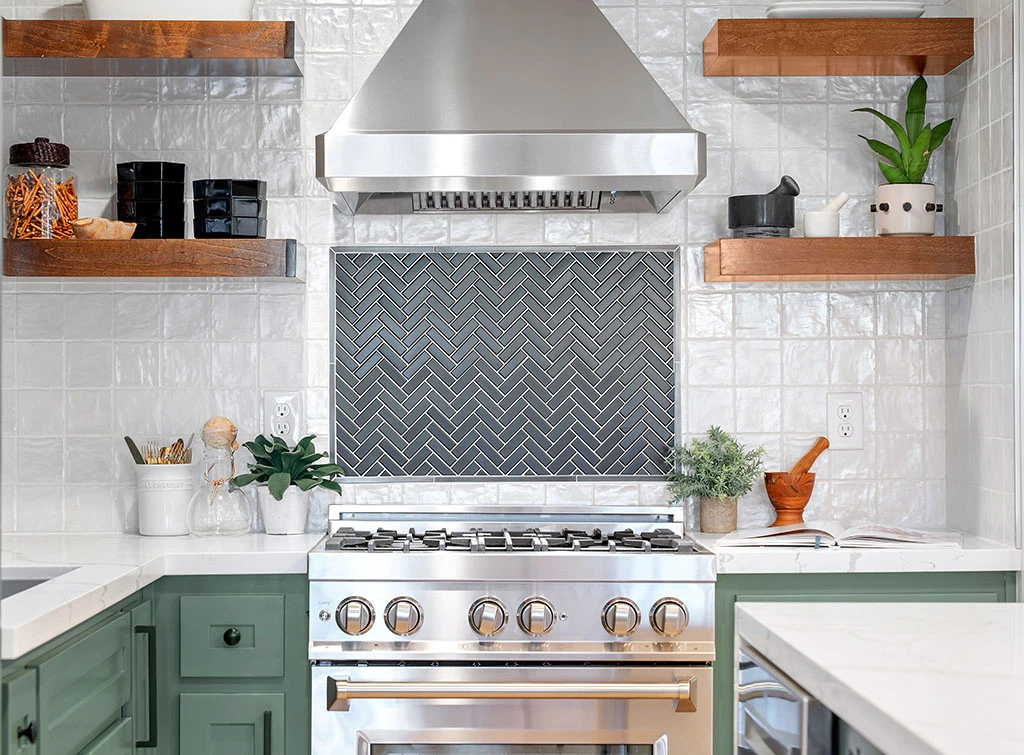
For a maximalist look, skip the splashback-only approach and tile floor to ceiling. Taking neutral or white tiles all the way up draws the eye upward, which can make a kitchen feel taller and more spacious.
Full-height tiling is a bigger job than it looks, particularly around sockets, extractor fans and cabinetry, so it's worth bringing in an experienced tiler rather than tackling it as a DIY project.
Get quotes for full-wall tiling
8. Stop halfway
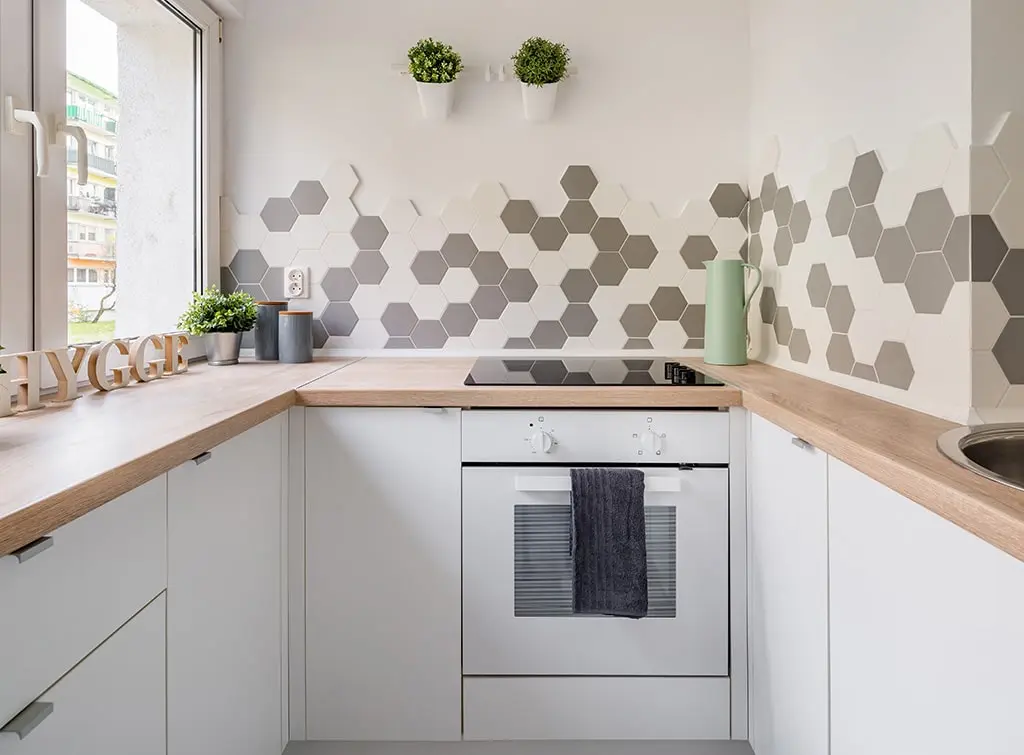
Not every kitchen needs floor-to-ceiling tiles. Tiling the lower half of the wall and painting the upper half in a complementary colour is a popular way to add contrast without the cost of a full tiling job.
How far you take the tiles up the wall usually comes down to worktop height and personal preference, but marble-effect tiles paired with a deep blue or green paint above is a combination that consistently works well.
If a hard stop feels too dramatic, hexagonal tiles arranged in a gradient are a softer way to transition from tile to paint.
9. Turn to textured tiles
3D and textured tiles add depth without relying on colour or pattern. Look out for:
Sharp geometric shapes
Undulating wave patterns
Subtly raised, textured finishes
These tiles catch the light differently depending on the angle you view them from, which makes them a good option if you want a feature wall that still feels understated.
10. Exposed brick-effect tiles
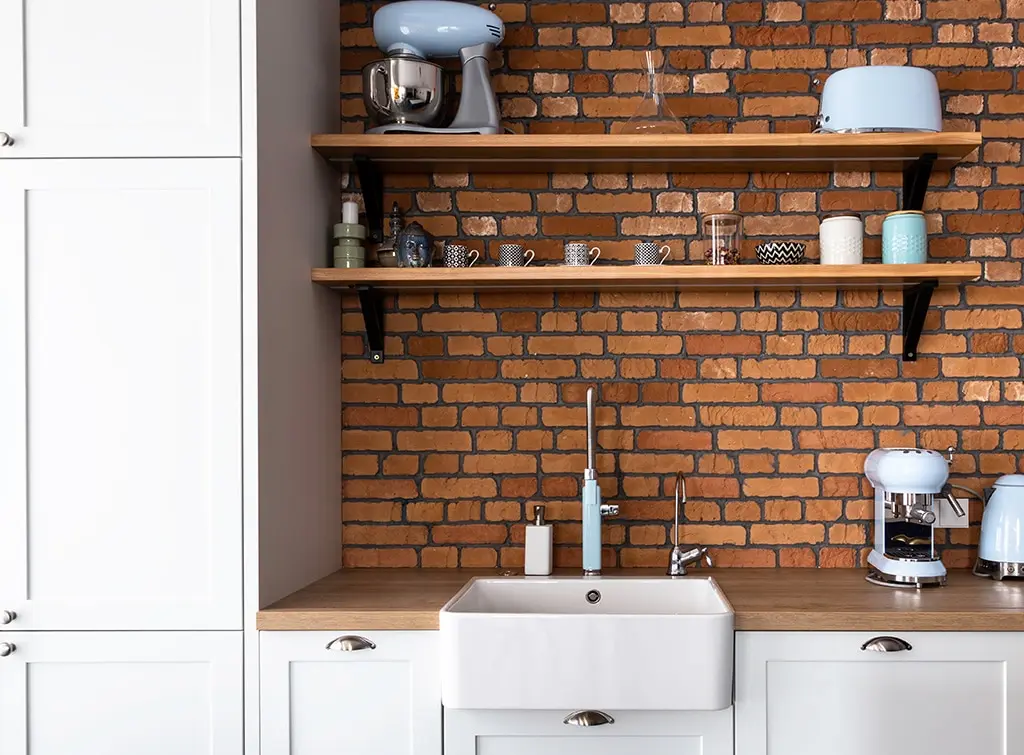
Brick-effect tiles bring an industrial or rustic feel without the structural work of exposing a real wall. They're manufactured to look and feel like natural red clay brick, and work particularly well in newer homes where the mix of old and new adds character.
Always seal brick-effect tiles with a matt sealer once they're grouted. It makes them far easier to wipe down and keeps grease from soaking into the textured surface.

Kitchen splashback tile ideas
Your splashback takes the most day-to-day wear in the kitchen, protecting the wall around your hob and sink from grease, steam and splashes. Because it's a smaller area, it's also the easiest place to experiment with a bolder design.
For more inspiration specific to this part of the kitchen, our kitchen splashback ideas guide is worth a look too.

17 tiled kitchen splashback ideas
Tiles are a fantastic choice for a kitchen splashback – they’re practical, durable and they look great too! Check out these tiled kitchen splashback ideas for all the inspiration you need.
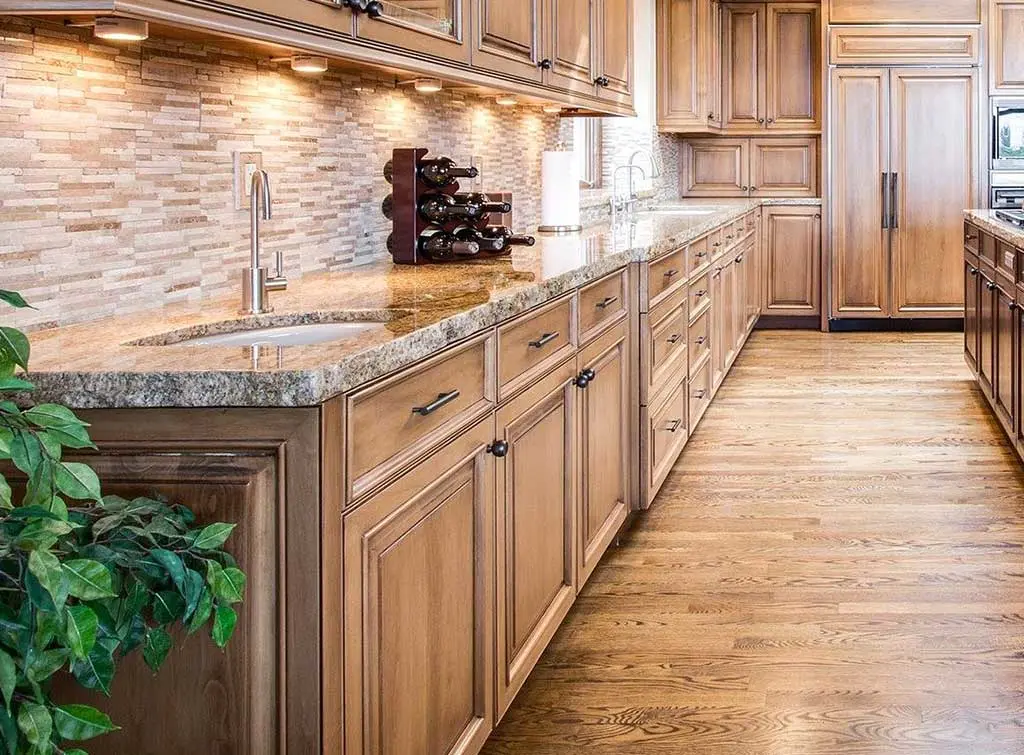
11. Vertical tile stacking
Vertical stacking works especially well in gaps between cabinets, where a small run of tiles would otherwise look like an afterthought. Mixing patterns, colours or textures in these narrow strips adds interest without overwhelming the room.
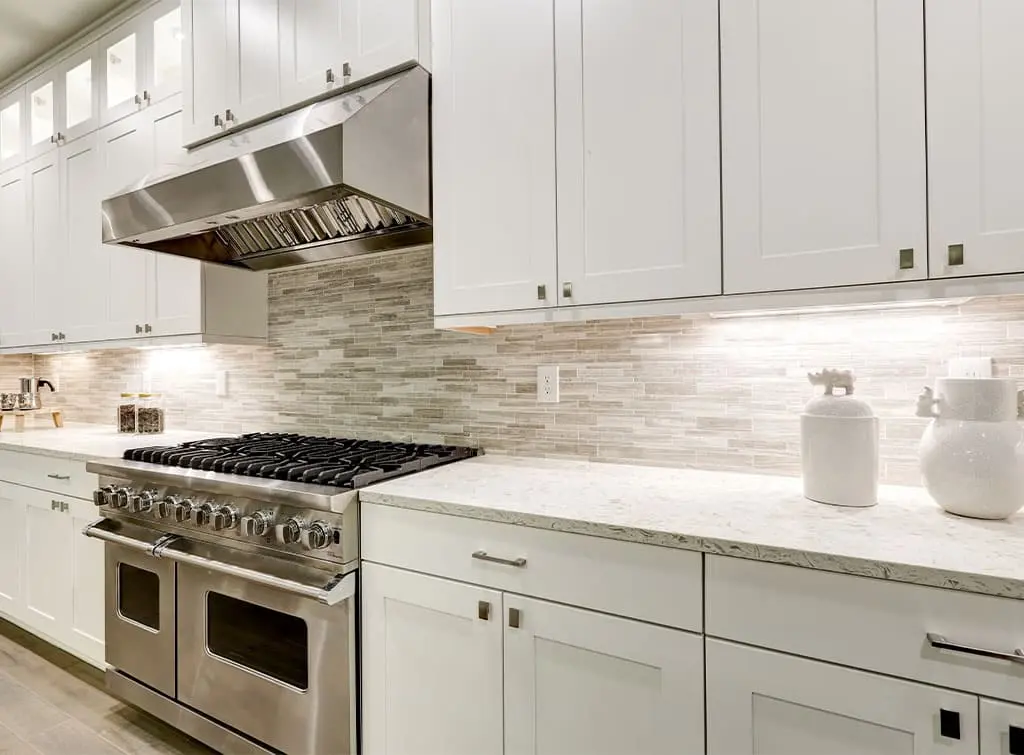
A neutral, split-face effect tile in this kind of gap pairs nicely with wood cabinetry and under-cabinet lighting.
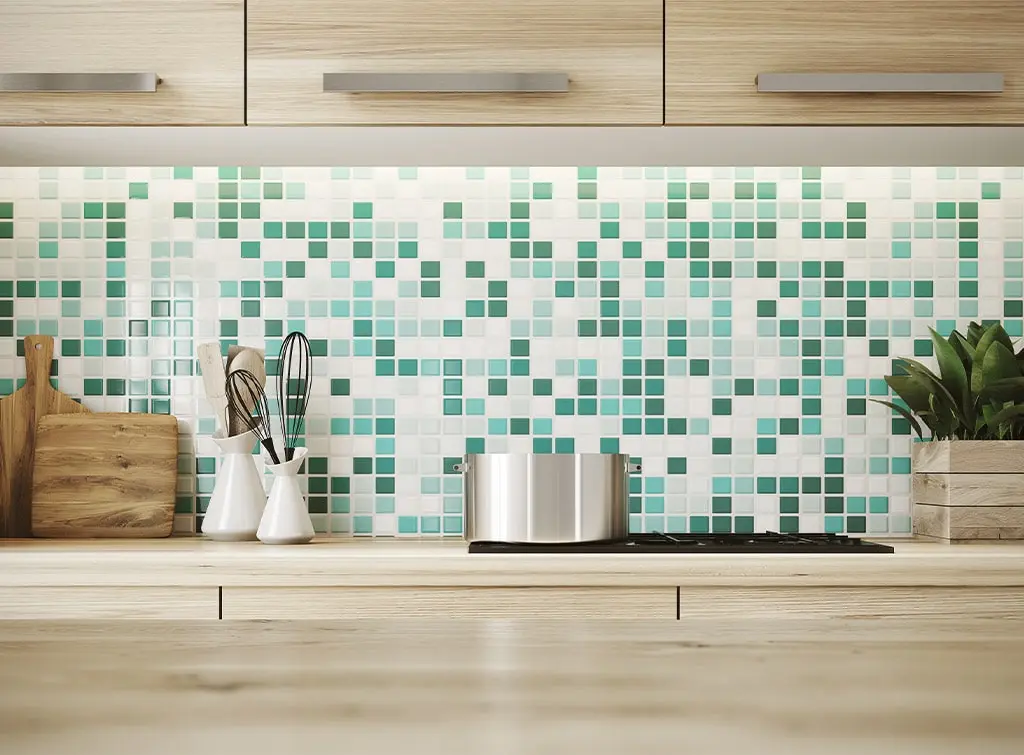
12. Mini-mosaic tiles
Mini-mosaics are easy-to-clean, durable, and resistant to heat, frost and moisture, which makes them a genuinely practical splashback choice as well as a decorative one. Many come pre-mounted on mesh sheets, which makes them more straightforward to mount and grout than individual tiles.
Bold colours like green paired with white create a bright, energetic feel, while neutral mosaic shades offer a warmer, more understated look.
If you like the mosaic look but want something with more shine, marble-effect splashback tiles are worth comparing before you decide.
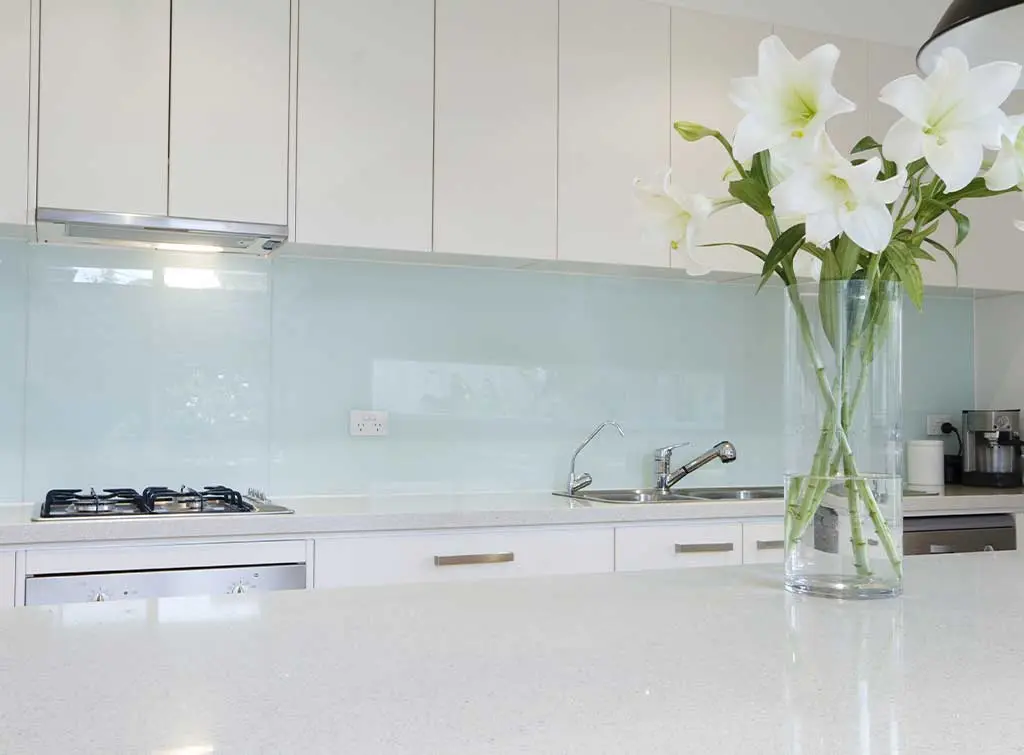
13. Pastel acrylic splashbacks
An acrylic splashback is a good option if tiling feels like too big a job, or if you want a brighter, more seamless finish. Acrylic is low-maintenance and wipes clean easily with a cloth and warm soapy water.
It's worth knowing that acrylic can show fingerprints, streaks and scratches more readily than tile, so it may need a little more upkeep in a busy kitchen.
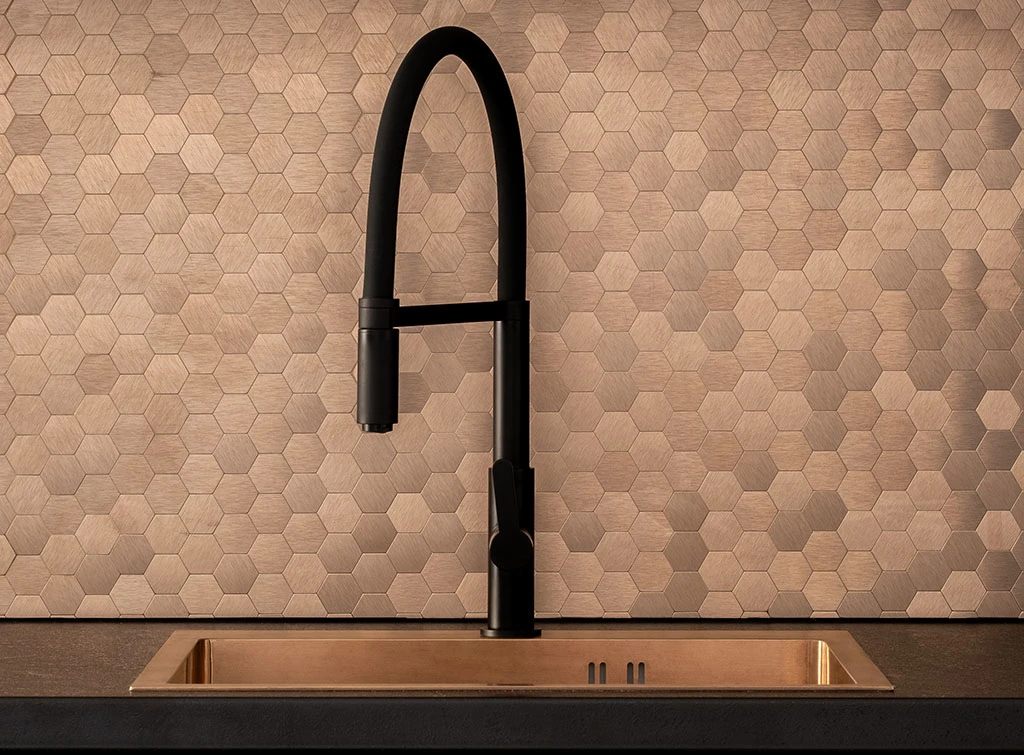
14. Gold and copper accents
Gold or copper-effect tiles bring a metallic, statement finish to a splashback. Rose gold mini hexagonal tiles paired with a matt black tap and a matching worktop is a combination that reliably looks expensive.
This is a fiddlier tiling job than most, thanks to the smaller tile size and the precision needed to keep the metallic finish looking even, so it's one worth leaving to a recommended tiler.

If your project involves more than tiling, it's worth comparing quotes from a kitchen fitter, a kitchen designer, or a tiler, depending on how much of the room you're changing.

Kitchen floor tile ideas
Floor tiles have a different job to do than wall tiles. As well as looking good, they need to be non-slip, water-resistant and durable enough for a room that sees constant foot traffic.
15. Porcelain and natural stone
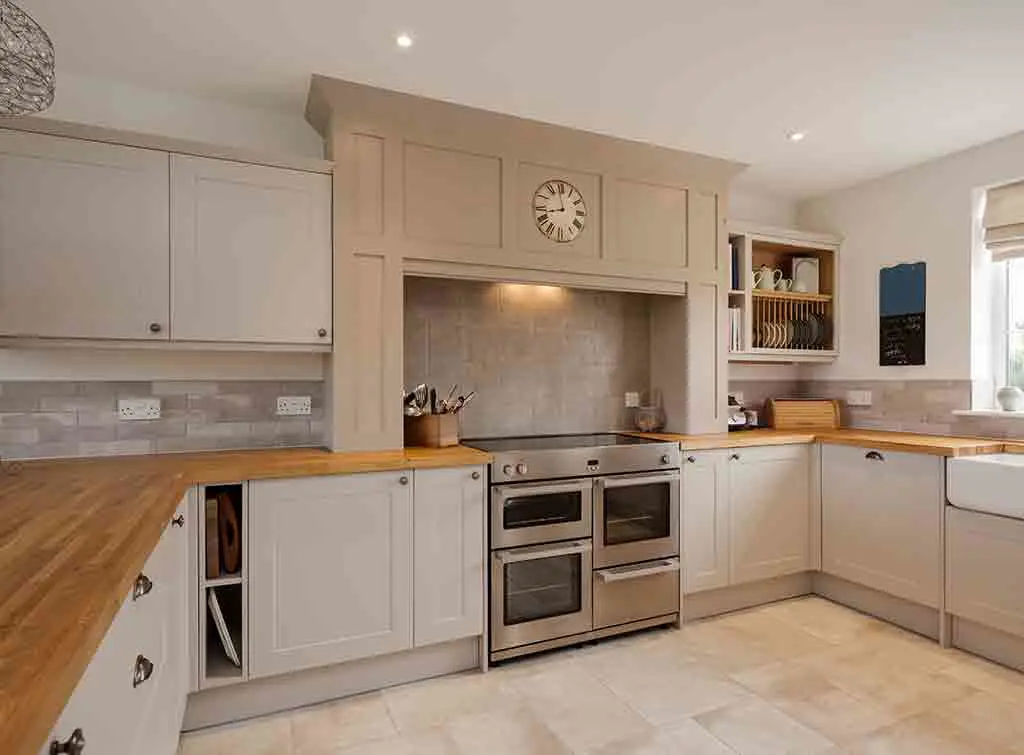
The two most popular choices for kitchen floors are porcelain and natural stone, and both are hardwearing options.
Natural stone brings a more muted, rustic feel and is commonly available as:
Porcelain, meanwhile, is a sturdy, water-resistant option that suits high-traffic rooms like kitchens and bathrooms. It's available glazed or unglazed, and unglazed (matte) tiles offer better grip underfoot, even if they're not quite as glossy as their glazed counterparts.
For a wider look at flooring beyond tile, our kitchen floor ideas guide covers other popular materials too.

Porcelain tile flooring costs 2026: UK pricing guide
Discover the average cost of installing porcelain floor tiles in your home, including the cost per m², labour costs, and typical project costs.
Choosing the right grout
Grout is easy to overlook, but it has a big effect on the finished look of any kitchen tile design idea on this list.
Contrasting grout (dark on light tiles, or vice versa) makes the tile shape and pattern stand out - ideal for subway or geometric layouts.
Matching grout creates a more seamless, continuous surface - better suited to full-wall tiling or mosaic designs where you want the tiles to read as one block of colour.
Coloured grout can add a design detail in its own right, but check with your tiler how it will age, since some colours show dirt more than a standard grey or white.
Grout does eventually need replacing, especially around a sink or hob where it takes the most moisture. Our guide to changing grout colour explains what's involved if you want to update it without re-tiling.
Kitchen tiling cost calculator
Kitchen tiling costs vary a lot depending on tile type, the size of the area, and whether you're tiling walls, floors, or both. Rather than guessing, it's worth using Checkatrade's AI-assisted tile flooring cost calculator to get a personalised estimate based on your job.
Job Estimate Calculator

For a broader breakdown of labour and material costs, our tiling cost guide is a good next step.

How much does tiling cost in 2026?
Discover average tiling costs in the UK, including bathroom, kitchen, and floor tiling prices per m², alongside tips to budget wisely.
Finding a tiler you can trust
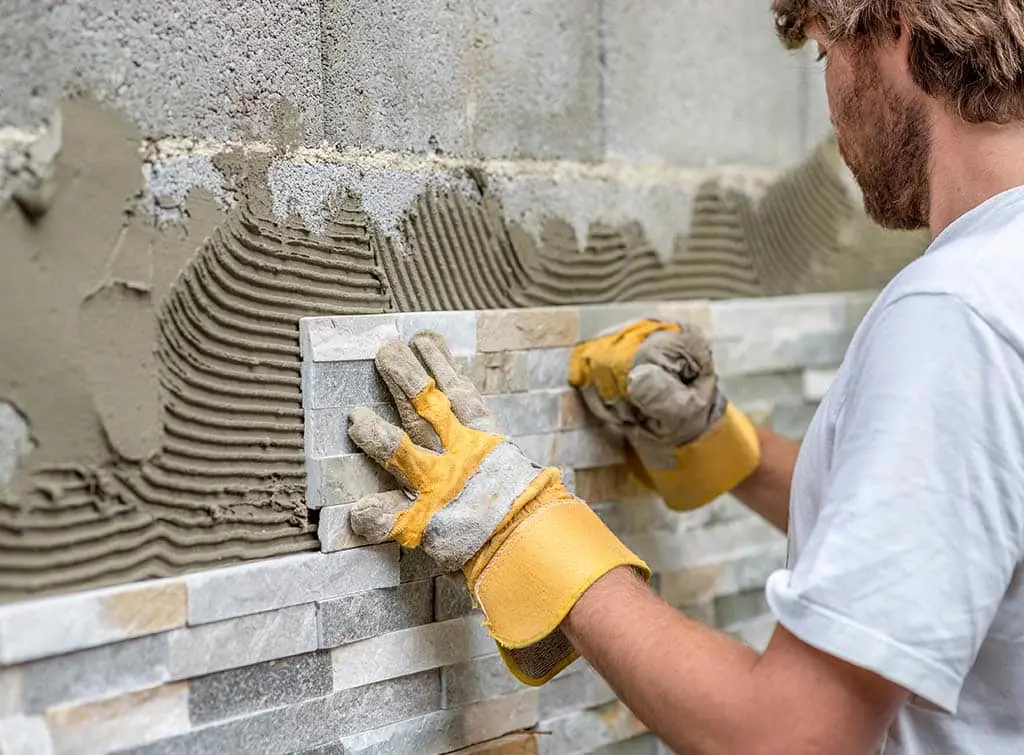
Some of the ideas in this guide, like full-wall tiling or intricate mosaic and metallic finishes, are genuinely tricky to get right without experience.
A poorly cut tile or an uneven grout line is much more noticeable at eye level on a kitchen wall than it would be on a floor.

On Checkatrade, you'll only find trades who meet our high standards and pass up to 12 checks.
When you're comparing tilers, it's worth asking to see photos of previous kitchen jobs specifically, since wall tiling, floor tiling and splashback work all call for slightly different skills.
Our hiring a tiler guide covers the questions worth asking before you book anyone in.
Browse local tilers
Enter your postcode to find a top tradesperson near you
Solakov Tiling
10.00
(8 reviews)Services & skills
Tiler - TilingBrick TilingMosaic TilesCeramic TilingNatural Stone TilesMCA Construct
10.00
(5 reviews)Services & skills
Tiler - TilingBrick TilingFloor TilingMosaic TilesNatural Stone TilesReda Builders Ltd
10.00
(36 reviews)Services & skills
Tiler - TilingWall TilingSlate TilesHand Made TilesMosaic TilesDE DECORATION
10.00
(19 reviews)Services & skills
Tiler - TilingBrick TilingPorcelain TilesHand Made TilesTile SupplierAG Oakes Tiling
10.00
(182 reviews)Services & skills
Tiler - TilingWall TilingQuartz TilingTile SupplierPorcelain TilesSTAN'S TILING LTD
10.00
(28 reviews)Services & skills
Tiler - TilingBrick TilingPorcelain TilesNatural Stone TilesCeramic Tiling


Preparing for your kitchen tiling project
Before your tiler starts, a bit of preparation will help the job go smoothly:

Before your tiler arrives
FAQs
Not every wall tile needs to be fully waterproof, but any tile near a sink, hob or splashback area should be water-resistant and properly sealed, along with the grout around it.
Bold splashback colours and full-wall tiling in neutral tones are both proving popular for 2026, alongside a resurgence of patterned, Victorian-style tiles.
In some cases, yes, provided the existing tiles are sound, flat and firmly attached. A tiler will be able to check whether your walls need to be stripped back first.
A splashback can often be completed in a day or two, while a full-wall or floor tiling job typically takes several days, depending on the size of the room and any prep work needed.
It's a matter of preference. Matching floor and wall tiles can make a small kitchen feel larger and more cohesive, while contrasting tiles create more visual interest in bigger spaces.
Larger format tiles generally make a small kitchen feel more spacious, since fewer grout lines create a cleaner, more continuous surface.
It's recommended. Mosaic and metallic finishes involve more intricate cutting and precise grouting than standard tiles, so hiring an experienced tiler reduces the risk of an uneven finish.
Well-maintained grout can last many years, but grout near a sink or hob may need attention sooner due to constant moisture exposure. Our regrouting cost guide explains what's involved.
More Tiler - Tiling Articles
See the tradespeople we've checked for your job