IDEAS
Small ensuite bathroom ideas for compact and narrow spaces
Updated 06/26
By: Content Team
Reviewed: Laura Macdonald
Adding an ensuite can completely change how your bedroom works day to day. Even a small ensuite gives you somewhere private to get ready in the morning, unwind in the evening and avoid queuing for the family bathroom.
And while it might seem like you need lots of spare space, that's rarely the case. Some of the best ensuites are tucked into unused corners, loft conversions, alcoves and narrow spaces that would otherwise go underused.
Whether you're looking for small ensuite bathroom ideas, small narrow ensuite ideas or inspiration for an ensuite loft conversion, these practical design tips can help you make the most of the space you have.
Small ensuite bathroom ideas
Small narrow ensuite ideas
Ensuite loft conversion ideas
Small ensuite shower room ideas
Storage solutions for compact ensuites
Layout ideas for awkward spaces
Ways to make a small ensuite look bigger
Common mistakes to avoid
Can you fit an ensuite into a small space?
Many homeowners assume they need a large spare room or generous floorplan, but compact ensuites can work brilliantly when the layout is carefully considered from the start. You can often fit an ensuite into a much smaller space than you might expect.
Some popular locations for a small ensuite include:
Unused corners of bedrooms
Loft conversions
Areas beside fitted wardrobes
Spare cupboard spaces
Narrow sections of larger bedrooms
The key is making every fixture work hard. In a small ensuite, there is very little room for wasted space, so choosing the right shower, storage and layout becomes especially important.
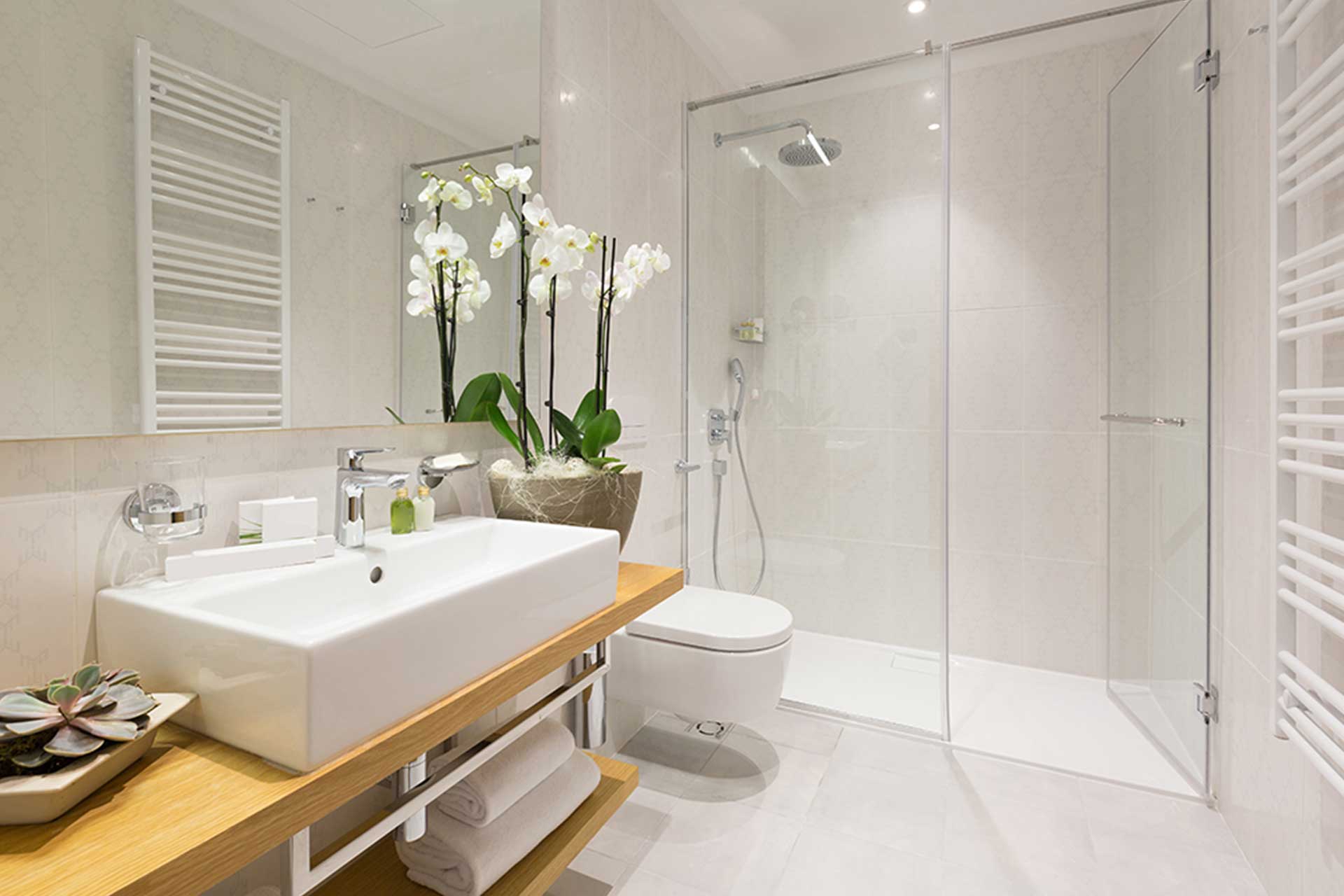
A small ensuite doesn't have to look small. Some of the most effective design choices aren't about adding space at all – they're about creating the impression of it. Light colours, large-format tiles, good lighting and clear glass shower screens can all help a compact ensuite appear brighter, more open and less crowded. Sometimes a few thoughtful design decisions can make a bigger difference than an extra square metre ever would.
What are the best layouts for a small ensuite?
On that note, what are the best layouts for an ensuite that's on the smaller side?
The best small ensuite layouts keep the room easy to move around while making the most of every available centimetre.
In most compact ensuites, the goal is usually the same:
Free up as much floor space as possible
Reduce visual clutter
Create a layout that feels comfortable to use every day
Prioritise the shower
If space is limited, many homeowners choose a shower rather than a bath.
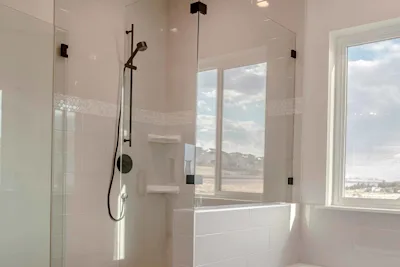
A walk-in shower or compact enclosure often provides everything you need while freeing up valuable floor space elsewhere in the room.
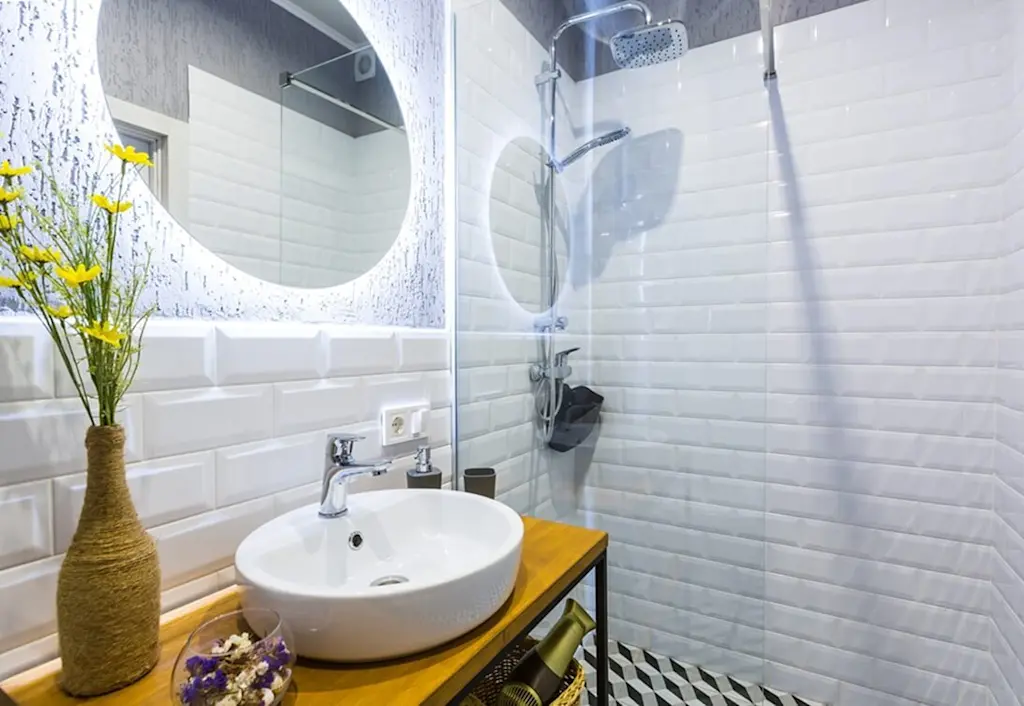
Use corners wisely
Corners are often the hardest-working areas in a small ensuite.
Corner showers, corner basins and cleverly positioned storage can help awkward spaces become far more practical.
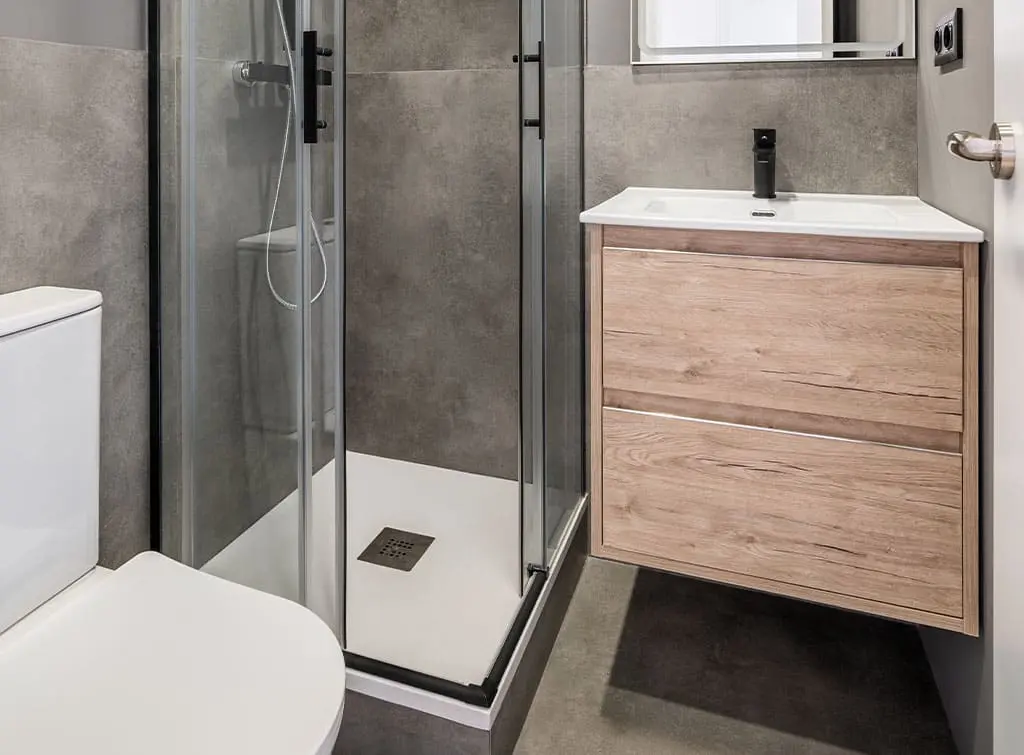
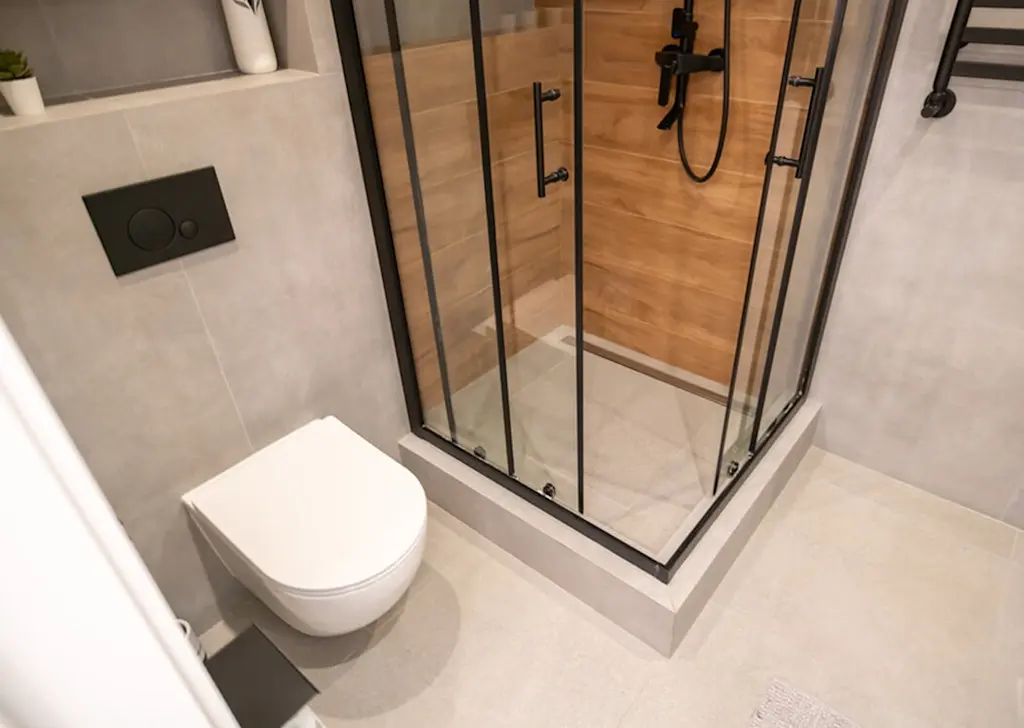
Keep fixtures off the floor
Wall-hung toilets and floating vanity units help expose more floor area, which can make compact bathrooms appear more open.
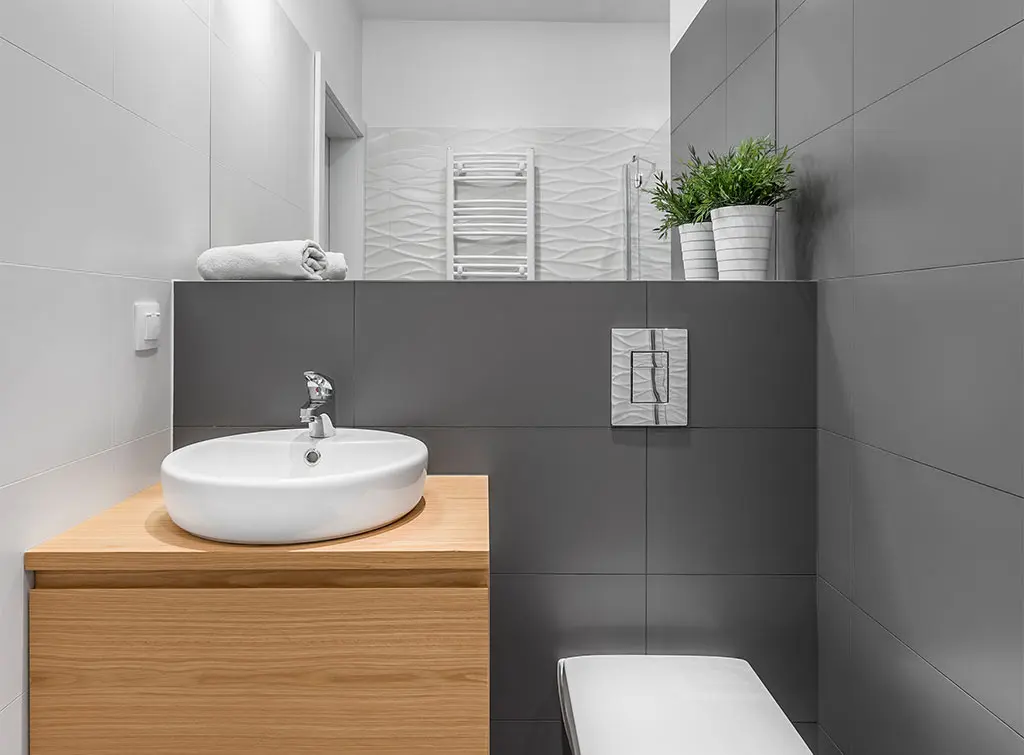
Keep the layout simple
Matching finishes, concealed pipework and streamlined fittings can help a small ensuite feel less busy and more cohesive.
If you're exploring small ensuite shower room ideas, you'll often find that simplicity works better than trying to squeeze too many features into the room.
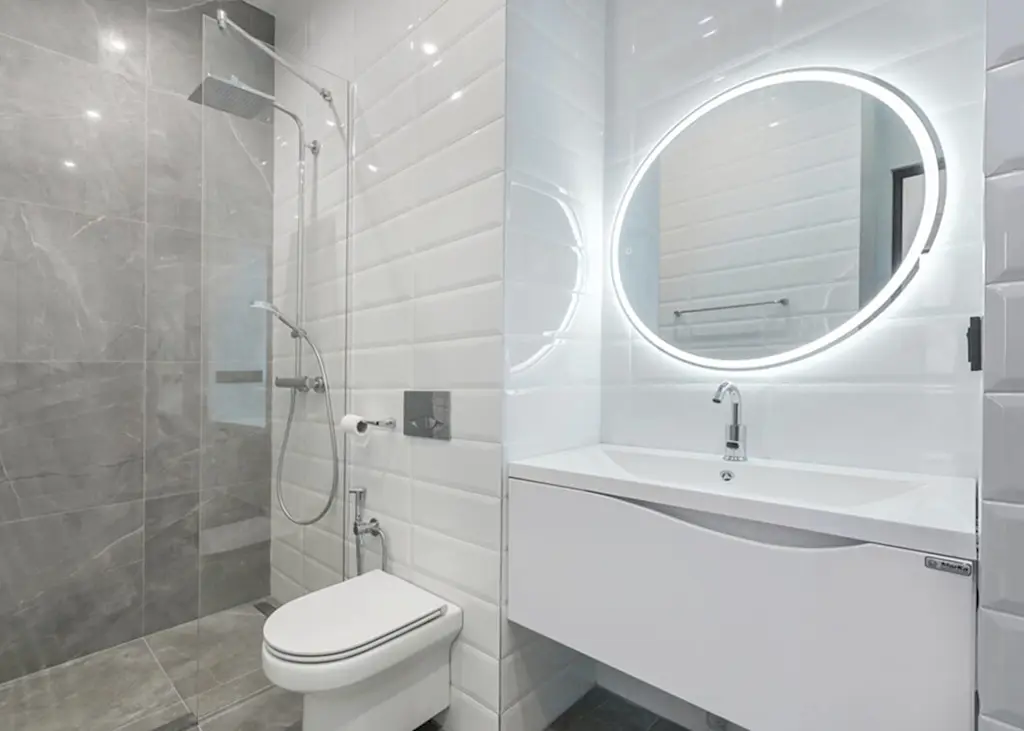
Small narrow ensuite ideas
If 'narrow' is your concern, don't worry, narrow spaces can be surprisingly effective for ensuites.
In fact, some of the most successful small narrow ensuite ideas focus on working with the shape of the room rather than fighting against it.
A few practical approaches include:
Installing a walk-in shower at one end of the room
Choosing wall-mounted storage instead of bulky furniture
Using sliding or pocket doors where possible
Fitting a narrow vanity unit
Using large mirrors to reflect light and create depth
Long, narrow spaces often benefit from a simple design scheme too. Keeping colours light and finishes consistent can help the room appear wider than it actually is.
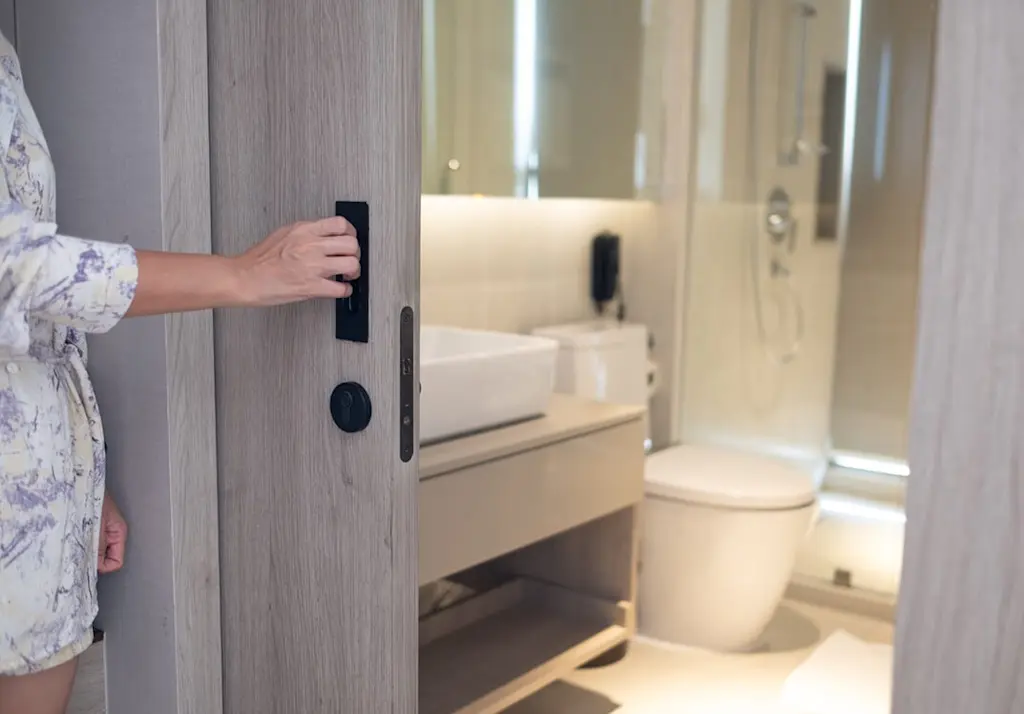
Don't forget to think about the door. In a narrow ensuite, the way a door opens can have a big knock-on effect. Many people focus on fitting in the shower, toilet and basin, only to realise later that the door swing limits where fixtures can go. A pocket or sliding door can sometimes free up valuable wall and floor space that would otherwise be unusable.
Ensuite loft conversion ideas
Loft conversions are one of the most popular places to add an ensuite.
While sloping ceilings can create design challenges, they also create opportunities to use spaces that might otherwise go unused.
Popular ensuite loft conversion ideas include:
Positioning the toilet beneath the lowest part of the ceiling
Using roof windows to maximise natural light
Choosing compact sanitaryware designed for loft spaces
Creating built-in storage within the eaves
Installing a walk-in shower beneath sloping ceilings
Good planning is especially important in loft ensuites, as factors like drainage, ventilation and available head height can influence the final layout.
If you're considering this type of project, our small bathroom planning guide can help you understand what's involved before work begins.
Measure, measure, measure! This applies to any bathroom design, but it's especially important in a small loft ensuite where sloping ceilings can catch you out. Think about how high your showerhead can be fitted for comfortable use, whether your basin depth will allow the door to open fully, and how much usable wall height you'll have for a toilet or storage unit.
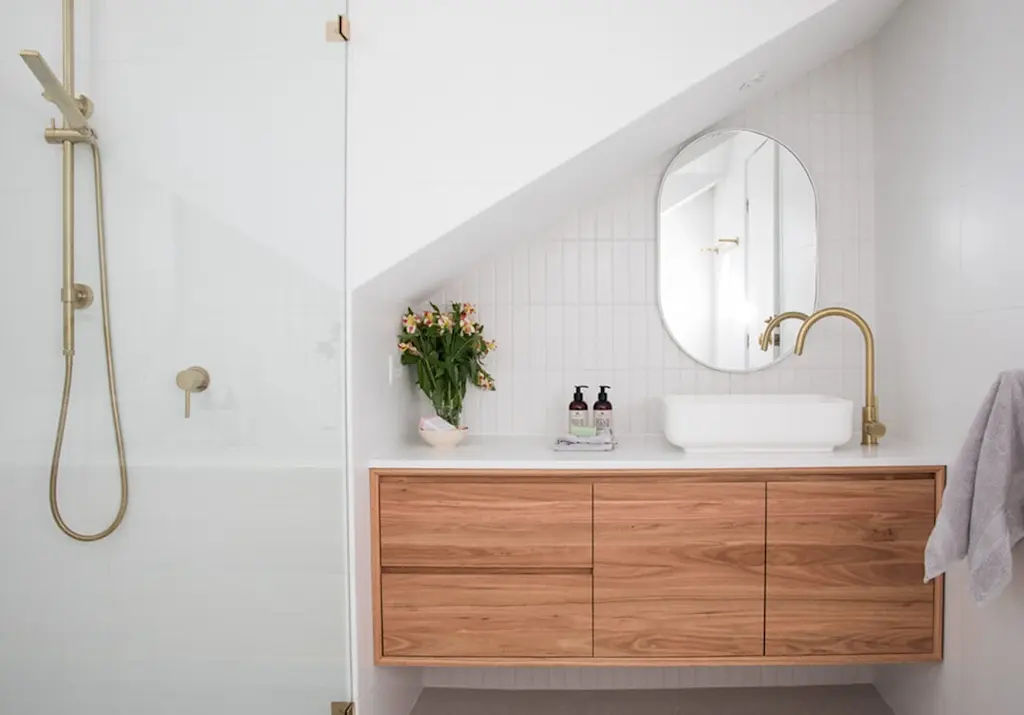
Small ensuite shower room ideas
For many homeowners, removing the bath altogether creates the most practical ensuite layout.
Small ensuite shower rooms often feel more spacious because they prioritise open floor space and reduce visual clutter.
Some popular ideas include:
Frameless glass shower screens and concealed shower valves (less visual clutter)
Walk-in showers (no shower door)
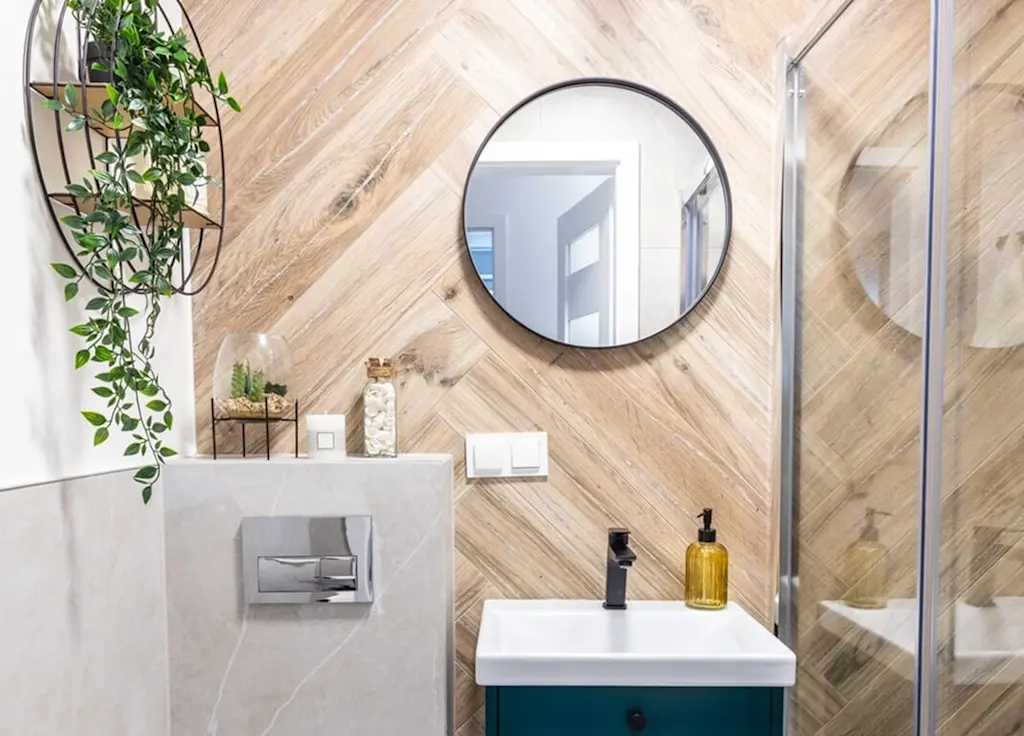
Recessed shelving (for toiletries and a pop of greenery)
Slimline vanity units
Take a look at our small shower room design guide for more inspiration for a compact ensuite.
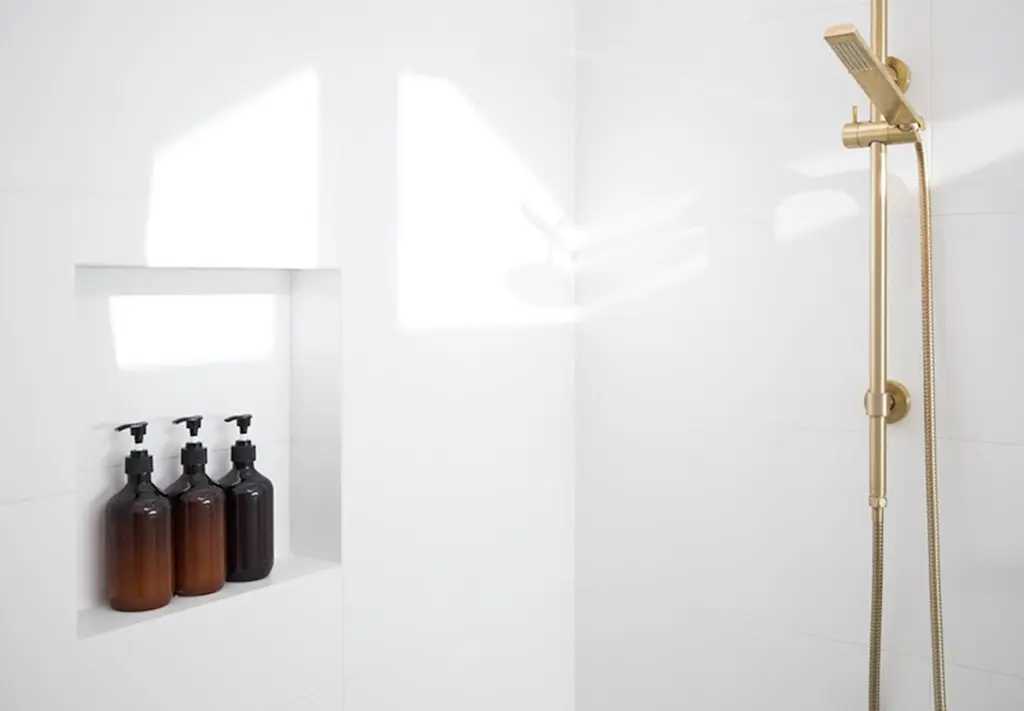
Small ensuite wet room ideas
Wet rooms can be an excellent option when space is limited.
By removing the need for a traditional shower enclosure and tray, wet rooms can create a more open and streamlined finish.
Some practical small ensuite wet room ideas include:
Using a single glass screen instead of a full enclosure
Installing wall-mounted fixtures
Building storage into alcoves
Choosing large-format tiles
Adding underfloor heating to free up wall space
If you're considering this route, our small wet room planning guide explains more about waterproofing, drainage and layout considerations.
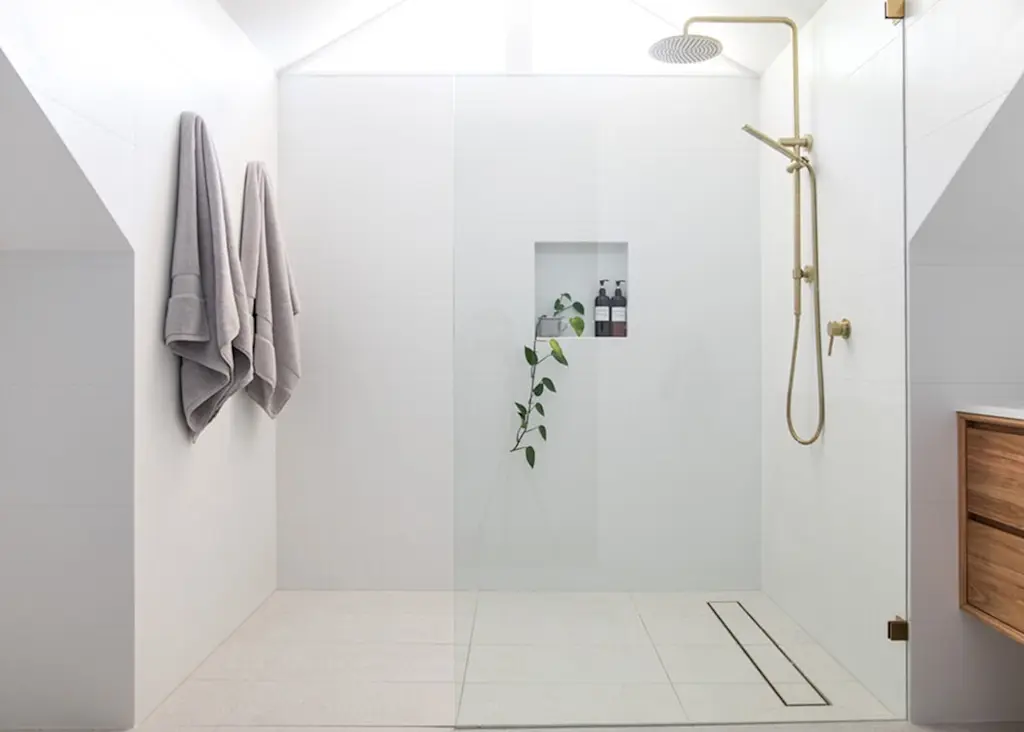
Small bathroom ideas that maximise storage
Good storage is often the difference between an ensuite that feels calm and one that constantly feels cluttered.
In smaller spaces, vertical storage usually works hardest.
Some practical options include:
Recessed shelving
Mirrored cabinets
Tall narrow storage units
Wall-mounted baskets
Floating shelves (narrow)
Under-sink organisers (tiered to maximise storage potential)
Over-door storage
Don't underestimate the value of good storage. One thing many people discover after installing a new ensuite is how quickly everyday items can take over a small space. Keeping toiletries neatly tucked away not only reduces visual clutter, but also makes the room easier to clean and maintain. It's one of the best ways to keep your ensuite looking fresh and feeling organised long after the renovation is finished.
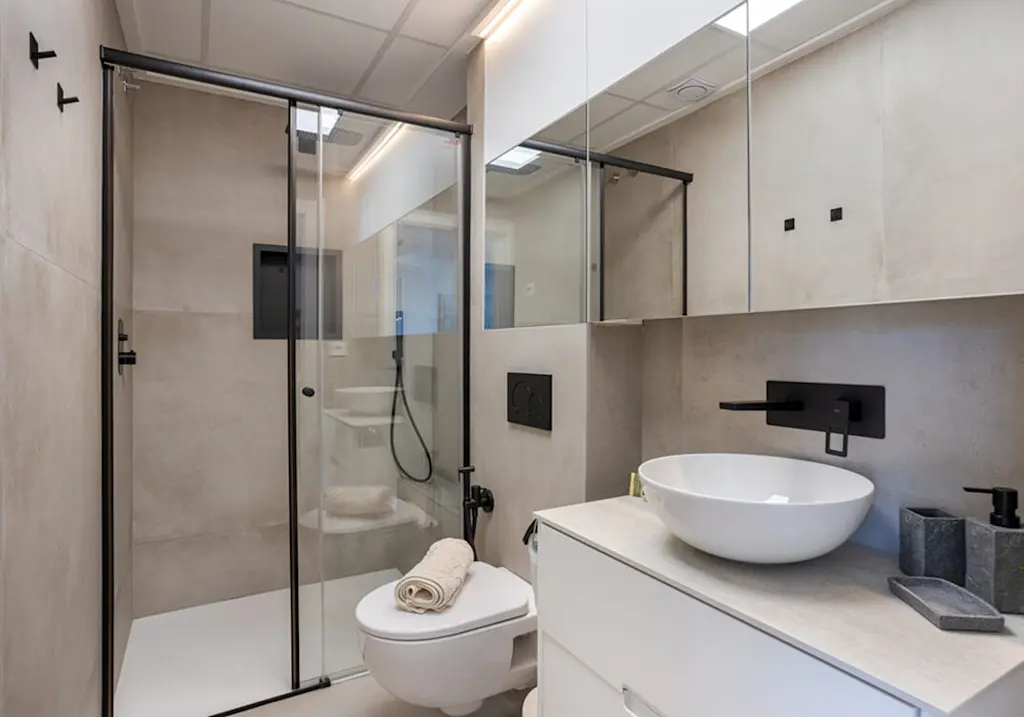
What colours work best in a small ensuite?
Lighter colours are often the easiest way to make a small ensuite appear brighter and more spacious.
Soft whites, warm neutrals, pale greys and muted greens can all work well in compact bathrooms.
If you want to introduce stronger colours, consider using them as accents through:
Towels
Accessories
Artwork
Feature tiles or wall panels
This helps add personality without overwhelming the room.
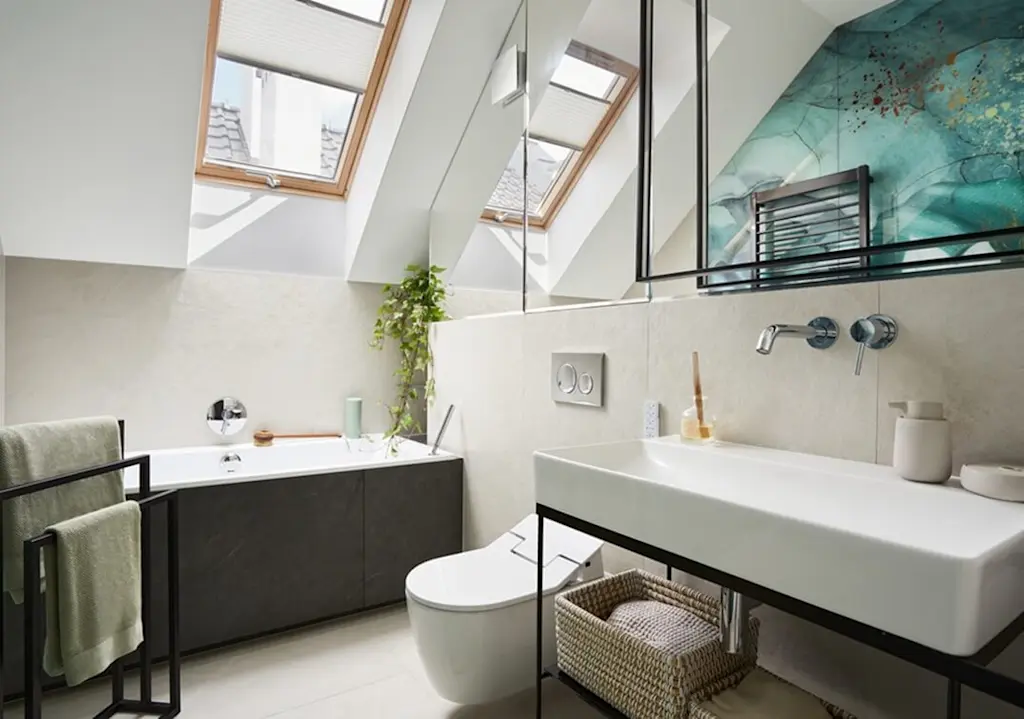
What tiles work best in a small ensuite?
Large-format tiles are often one of the best choices for small ensuites.
Because they create fewer grout lines, they can help the room appear less 'busy' and more open.
Other popular options include:
Stone-effect tiles
Vertical stack tiles
Neutral porcelain tiles
Subtle textured finishes
Matching wall and floor tiles
Natural materials, warm finishes and simple colour palettes often create the most timeless results.
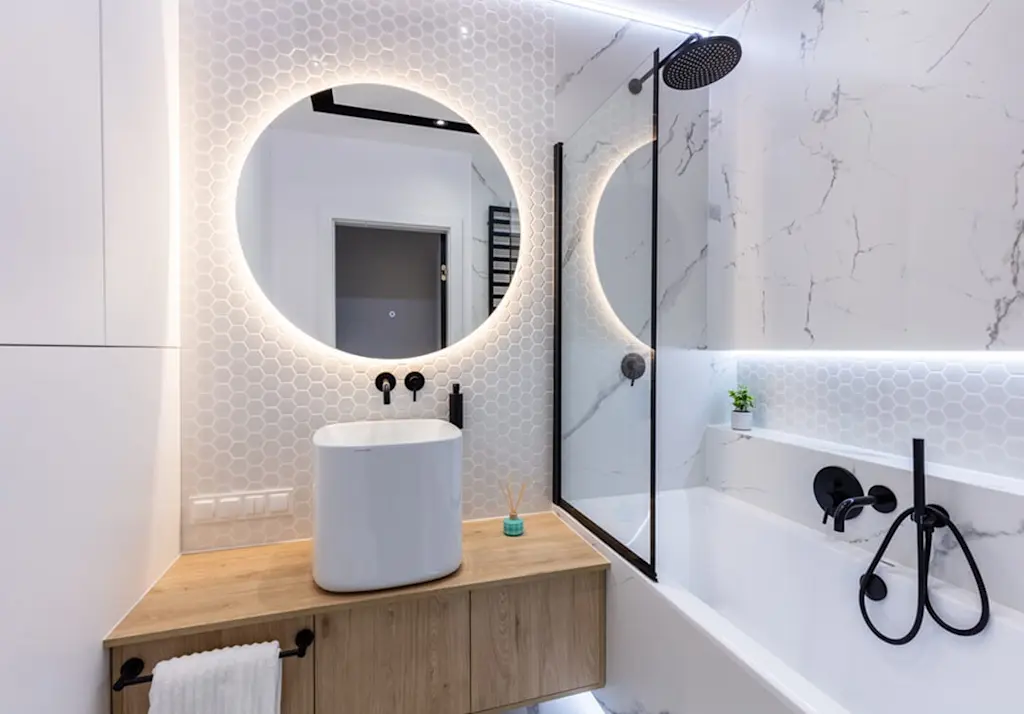
Common mistakes in small ensuites
Small ensuites can work beautifully, but there are a few mistakes that regularly cause problems.
Some of the most common include:
Choosing oversized fixtures
Forgetting storage during the design stage
Using too many dark finishes
Overcrowding the room with accessories
Ignoring ventilation requirements
Installing awkwardly positioned doors
One thing many people only realise afterwards is how important movement space is. Even a beautifully designed ensuite can become frustrating if you're forever bumping into the basin, balancing toiletries on every available surface or draping damp towels wherever there's space. In a small room, those everyday inconveniences quickly add up, which is why layout is just as important as the overall design.

Before finalising your design, consider:
Is a small ensuite worth it?
For many homeowners, the answer is yes. A well-designed ensuite can make daily routines easier, reduce pressure on the main family bathroom and create a more private space within your home.
While every property is different, an ensuite can also make a home more attractive to future buyers, particularly where there is only one main bathroom.
If you're still weighing up the investment, it can be helpful to compare bathroom renovation costs and understand what different types of projects typically involve.
When it's worth getting help
Small ensuites often look straightforward on paper, but compact spaces can be challenging to design well.
Layout, plumbing, ventilation, waterproofing and storage all need to work together, especially when every centimetre matters.
If you're considering adding an ensuite to a bedroom, loft conversion or unused corner of your home, speaking to a bathroom fitter early on can help you understand what's realistic for your space and budget.
Find a local tradesperson
For more ideas like this, explore the rest of the Checkatrade blog for practical home inspiration, renovation advice and design ideas.
FAQs
Is 1.2 m wide enough for an ensuite?
Yes, a 1.2 m-wide space can often accommodate a compact ensuite, particularly if you choose space-saving fixtures and a carefully planned layout. The exact amount of space you'll need depends on the shower, toilet and basin you choose.
What is the average cost of an ensuite bathroom?
The cost of an ensuite varies depending on the size of the room, fixtures, plumbing work and finishes. For current pricing information, see our bathroom cost guide.
What are the best layouts for a small ensuite?
The best small ensuite layouts maximise floor space and minimise visual clutter. Walk-in showers, wall-mounted fixtures and corner layouts are often popular choices in compact bathrooms.
What is the smallest ensuite possible?
Many small ensuites can fit into surprisingly compact spaces, although the minimum practical size depends on the layout and fixtures. Careful planning is often more important than overall square footage.
Can you put an ensuite in a loft conversion?
Yes, many loft conversions include an ensuite bathroom. Sloping ceilings and awkward angles can present design challenges, but compact fixtures and thoughtful layouts can make excellent use of the available space.
What is the best shower for a small ensuite?
Walk-in showers and corner shower enclosures are often the best options for small ensuites because they maximise usable floor space while keeping the room feeling open.
Does a small ensuite add value?
A well-designed ensuite can make a property more attractive to buyers, particularly in family homes where additional bathroom facilities are highly valued. The amount of value added will vary depending on the property and local market conditions.
See the tradespeople we've checked for your job