IDEAS
Kitchen worktop ideas: 12 durable and stylish options for every budget
Updated 10/26
By: Sarah P
Reviewed: Kim Staples

Your worktops take more wear than almost anything else in the kitchen: hot pans, spills, chopping, and even homework. The best kitchen worktop ideas balance stylish looks with practical qualities that suit how you actually use the room.
How to choose the right worktop
A full rundown of your main options
Budget worktop ideas that look good
How to refresh worktops without replacing them
A few unique ideas for kitchen worktops
How to find a worktop fitter
In this guide, we'll go over your main options for kitchen worktops to inspire your brand new kitchen. These 12 options cover stone, wood, laminate, and more, so you can compare what suits your home and your budget.

How to choose a kitchen worktop
Choose your worktop around how you use the kitchen first - then you can decide on the look and colour you want.
Cabinets get most of the attention, but your worktops sit at eye level and take the daily wear.
Ask yourself:
How durable should it be? Busy family kitchens suit hard-wearing, easy-clean surfaces such as quartz or granite.
How much upkeep are you happy with? Solid wood needs regular oiling and natural stone needs sealing, while laminate and quartz need much less maintenance.
What's your budget? Laminate, painted and overlay worktops tend to cost less than solid stone - see our kitchen worktop replacement cost guide full the full details.
How will it look with the rest of the room? Think about your cabinets and flooring, and your wider kitchen colour scheme and style.
Ask for a full-size sample and look at it in your own kitchen, in daylight and under your evening lights. A worktop can look very different in your own home compared to the showroom.
1. Granite worktops

Granite is a popular choice for kitchens that get heavy use. It's a hard natural stone that stands up well to scratches and heat, and every slab has its own pattern, so no two worktops look the same.
Sealing: Granite is porous, so ask your supplier how often to seal it to help prevent stains
Choosing a slab: Many stone suppliers let you pick your piece in person before it's cut
Weight: Stone is heavy, so ask your fitter to check your cabinets can take it
For prices, see our granite vs concrete countertops cost guide.
2. Quartz worktops

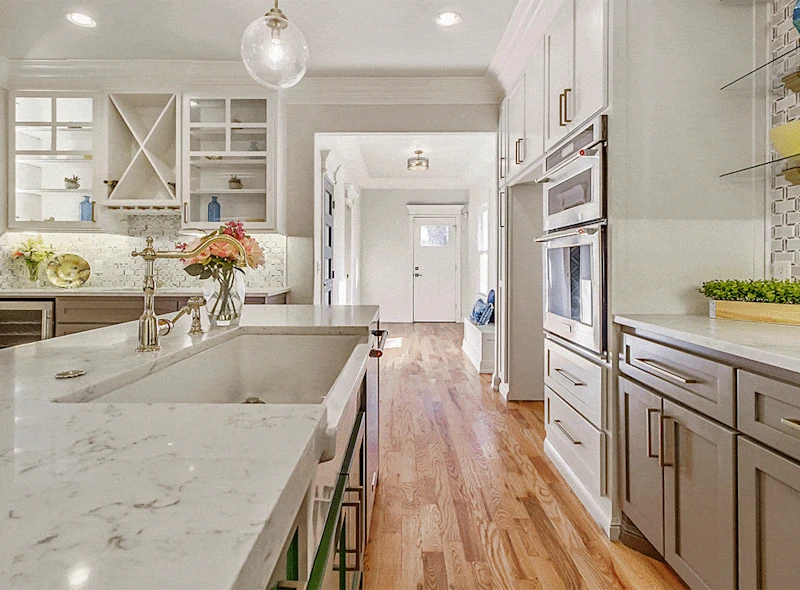
Quartz worktops are made from crushed quartz mixed with resin and pigments, so you get a wide range of colours and a consistent pattern.
They're hard-wearing, non-porous, and easy to wipe clean, and they don't normally need sealing.
Heat: The resin can be damaged by very hot pans, so invest in some trivets
Style: Quartz suits modern and traditional kitchens alike
Torn between quartz and granite? Read our quartz vs granite cost comparison and the difference between quartz and granite worktops.
3. Solid wood worktops

Solid wood worktops bring warmth to modern, farmhouse and cottage kitchens. An oak kitchen worktop is a popular pick, and wood comes in a range of grains and colours that you can oil or stain.
Wood needs more care than stone. It isn't resistant to water, stains or scratches, so oil it regularly and wipe spills quickly. If it gets marked, you can repair the worktop by sanding it back and re-oiling it.
Wood and water don't mix, so consider stone or quartz around the sink. For an idea of costs, see our butcher block countertop cost guide.
4. Marble worktops

Marble gives a classic, veined look and stays cool to the touch, which bakers love. It's a softer stone than granite, though, so it can stain and etch - that is, it can get dull marks from things like lemon juice and wine.
Marble suits you if you like a lived-in look or you're happy to wipe up spills quickly. Seal it as your supplier advises, and look at your slab before it's cut to check you like it.
If it does get damaged, our guide to repairing a marble countertop can help.
5. Laminate worktops

Laminate is a popular go-to budget option. Modern prints copy wood, stone, and concrete in plenty of colours and finishes, so you can get the look of pricier materials for less.
Everyday wear: Laminate is fine for normal family use and wipes clean easily
Heat and water: Keep hot pans off it, and make sure joins and cut-outs are sealed, because water getting under the edges can make the board swell
See our kitchen worktop replacement cost guide for what a new laminate worktop could cost you.
6. Compact laminate worktops

Compact laminate is a dense, solid board, rather than laminate on a chipboard core. It can be cut thinner than standard worktops, often to around 12mm, which gives a slim, modern edge that works well in minimalist kitchens.
Some ranges can also be used for splashbacks and kitchen island ends, so ask your supplier what's available.
7. Painted kitchen worktops

If your worktops are in good shape but stained or dated, kitchen worktop paint can freshen them up for the cost of a tin and a weekend.
Use a paint made for worktops, and clean and prepare the surface first
Expect it to scratch sooner than a new surface, and keep hot pans off it
Paint your cabinets the same colour for a calm look, or pick a contrasting shade
8. Cover or overlay your existing worktops

If the worktop underneath is sound but the surface is scratched or chipped, covering it can cost less than replacing it.
There are two main ways to do this:
Worktop overlay: A thin new surface, such as a laminate or stone-effect finish, fitted over your existing worktop
Vinyl wrap: A self-adhesive film that's quick to apply - just check its heat rating before using it near the hob
Ask your fitter whether your current worktop is flat and sound enough, and how an overlay will affect the edges and the sink and hob cut-outs.
9. Mix materials

Mixing materials gives your kitchen a layered look and solves practical problems. For example, use wood or laminate across most of the room and stone or quartz around the sink, where water can do the most damage to a worktop.
Stick to two materials so the kitchen doesn't feel busy.
10. Zone your kitchen with different worktops

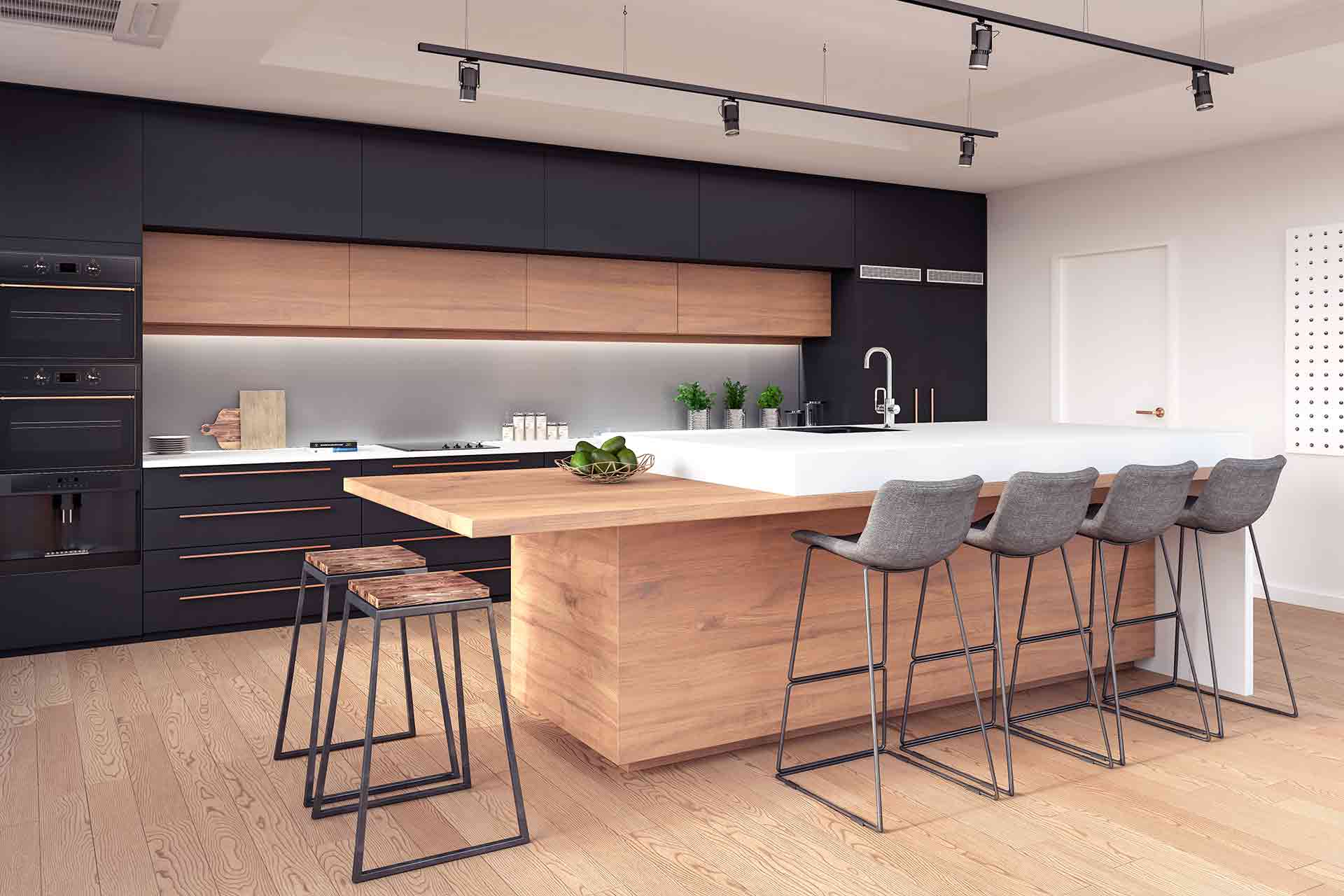
Zoning uses different materials for different jobs. You could pick stone on an island for food prep, and wood for the end to dine on. Oak worktops with matching shelves make a strong feature.
Try balancing light and dark colours: pale wood next to heavily veined marble works well, while two dark, heavy surfaces side by side can feel gloomy.
For more layouts, see our kitchen island ideas and breakfast bar ideas.
11. Add texture

Textured finishes add depth to a plain worktop. A honed finish gives a soft, matte look, and some stone is available with a leathered finish that has a subtle grain you can feel.
A matte worktop pairs well with simple kitchen wall tiles.
12. Match your worktops across the kitchen

Using one worktop material across every surface is the simplest way to get a cohesive look.
Oak worktops that match your island, breakfast bar, and shelving look neat, especially in a small kitchen.
Other kitchen worktop materials to consider
Corian and solid surface: Joins can be barely visible, and a range of finishes are available
Polished concrete: Gives a powerful industrial look, though you'll need to factor in lead time and regular sealing
Recycled glass: This has pieces of recycled glass set in a binder, offering a unique look
Browse all our kitchen worktop guides, or start planning the whole room with our kitchen renovation planning guide.

Looking for some additional kitchen upgrades? Whether pricing up a kitchen renovation or hiring specific trades, we're here to help.
How to find a worktop fitter
To get started installing brand new worktops in your kitchen, enter your postcode into our search. We'll show you the worktop installers who operate in your area.
Find worktop fitters near you
Choose someone who works in your area and has fitted the material you want. Stone, for instance, needs accurate cutting for joins and cut-outs, so ask to see photos of previous work.
Our guide to hiring a worktop fitter can help, and our guide to how to fit a kitchen worktop shows what the job involves.
Compare a few quotes from multiple tradespeople, and check what's included, such as measuring, removing the old worktop, sealing, and making good.

Need reassurance? All tradespeople pass up to 12 checks before joining, and we keep checking after.
And remember that if your hob or sockets are moving, gas work needs a Gas Safe registered engineer and electrical work needs a qualified electrician.
Kitchen worktop FAQs
Quartz and granite are hard-wearing choices for busy kitchens; laminate suits tighter budgets; and solid wood brings warmth if you're happy to oil it. It all depends on how you use your kitchen.
It's best not to. Granite copes with heat better than most surfaces, but quartz resin, laminate, and wood can all be damaged by a very hot pan. Use a trivet or heat-proof mat whenever you can.
Laminate worktops can last 10+ years, with careful use and well-sealed edges and cut-outs, laminate can last many years. Heat and standing water cause most of the damage.
Yes, if the worktop underneath is sound. You can paint it, fit a worktop overlay, or apply a vinyl wrap.
Ask a fitter to check the surface first, as an uneven or damaged worktop may not take a cover well.
Natural stone such as granite and marble usually needs sealing, and wood needs regular oiling. Laminate joins and cut-outs should be sealed during fitting.
Quartz, meanwhile, doesn't normally need sealing.
A kitchen fitter or a specialist worktop installer can fit kitchen counters. Stone is often cut and fitted by the supplier's own team.
If gas or electrical work is involved, you'll need a Gas Safe registered engineer or a qualified electrician too.


See the tradespeople we've checked for your job