PLANNING GUIDES
The 2026 guide to planning a patio
Updated 04/26
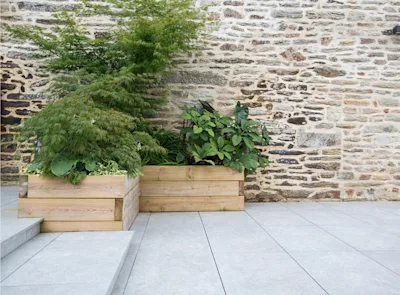
By: Laura Macdonald
Fast Facts
The average patio size for a family of four would be around 10m²
A new patio typically starts at around £1,700
A good patio is more than just design. Drainage, ground levels and sub-bases are also important considerations
Hiring an experienced patio installer means your patio is built to a high standard
Planning the perfect patio for your garden can feel overwhelming with so many options available.
Don't worry. In this complete guide to patio planning, we'll walk you through all the key considerations, including:
Layout and design ideas
Paving materials
Patio costs
What's involved in building a patio
Keen to skip ahead and get a professional to plan the job for you from beginning to end? See which patio laying experts are nearby by searching your postcode below.
Find a local tradesperson
Why plan a patio for your garden?
Adding a patio isn't just a stylish addition – it also has an important functional role to play!
Here are some of the main benefits of installing a patio.
Increases your living space – It can also make your property feel bigger by giving you more usable space
Low maintenance – Aside from the odd patio clean and the occasional repair, your patio should last for many years without requiring significant upkeep
Increase kerb appeal – With so many materials, layouts, and designs to choose from, paving can enhance your home's visual appeal
Add value – Some studies suggest that adding a patio to your garden could add as much as 20% to the value of your home
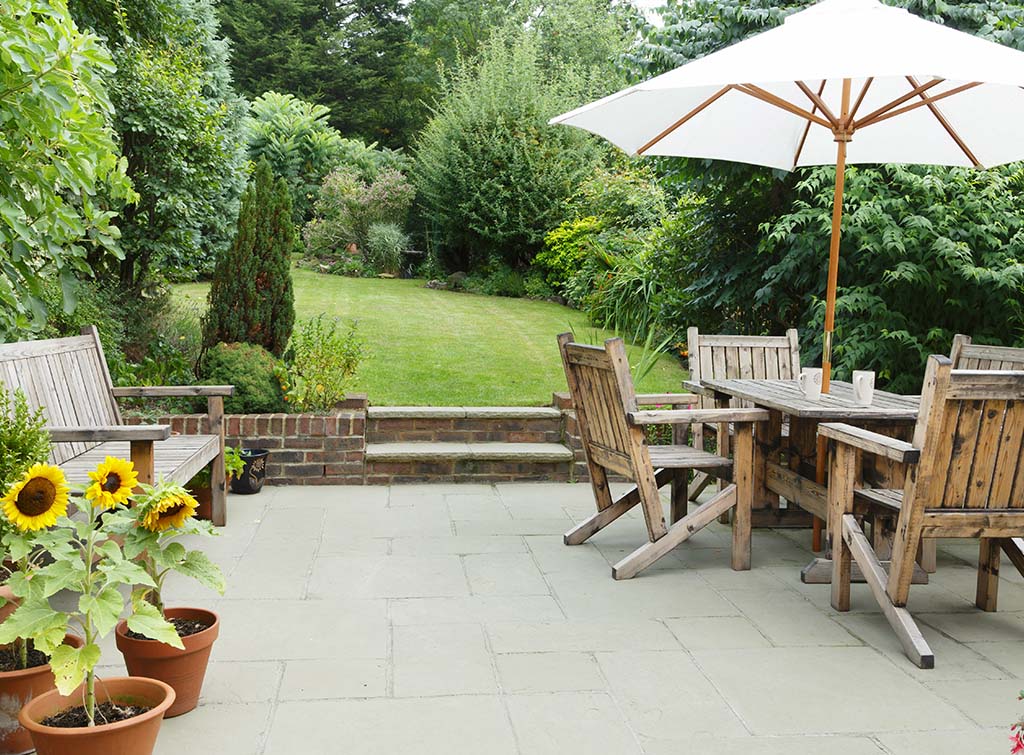
Patio installation near me
Looking for patio installation near you? Find experienced patio installers for porcelain, sandstone or concrete patios, plus clear UK costs, with Checkatrade's free directory.
Patio planning: Step-by-step
With so many different decisions to make when you're planning a patio, it's difficult to know where to start.
Here, we'll walk you through all the key considerations to help you plan your new paving area with confidence.
And don't worry. Local landscapers will also be happy to help if you get stuck!
Step 1: Check if you need patio planning permission
Most new patios and paving projects won't need planning permission, especially if they’re installed at or near ground level. However, there are some exceptions to keep in mind:
Sloping sites – If your patio requires major embanking or terracing, this could be classed as an engineering operation and may need planning permission
Front gardens and driveways– Additional rules apply to help manage surface water runoff and protect public drainage systems
If you’re unsure, it’s always best to check with your local council before starting work.
Step 2: Plan your patio location
Many people install a patio adjacent to the back of their home because it offers greater privacy and it's convenient for outdoor dining. Others choose to place their patio where the garden catches the last of the day's sun.
Other more practical considerations include:
Is the patio easily accessible from your home? – Or do you need a pathway incorporated into the design?
Are there existing structures or landscape features that could influence positioning? – Such as a hot tub, water feature, or mature trees?
Does the area have suitable drainage and level ground?
Step 3: Plan your patio layout and shape
It's important to assess the outdoor space available and consider how you want to use your patio. For example:
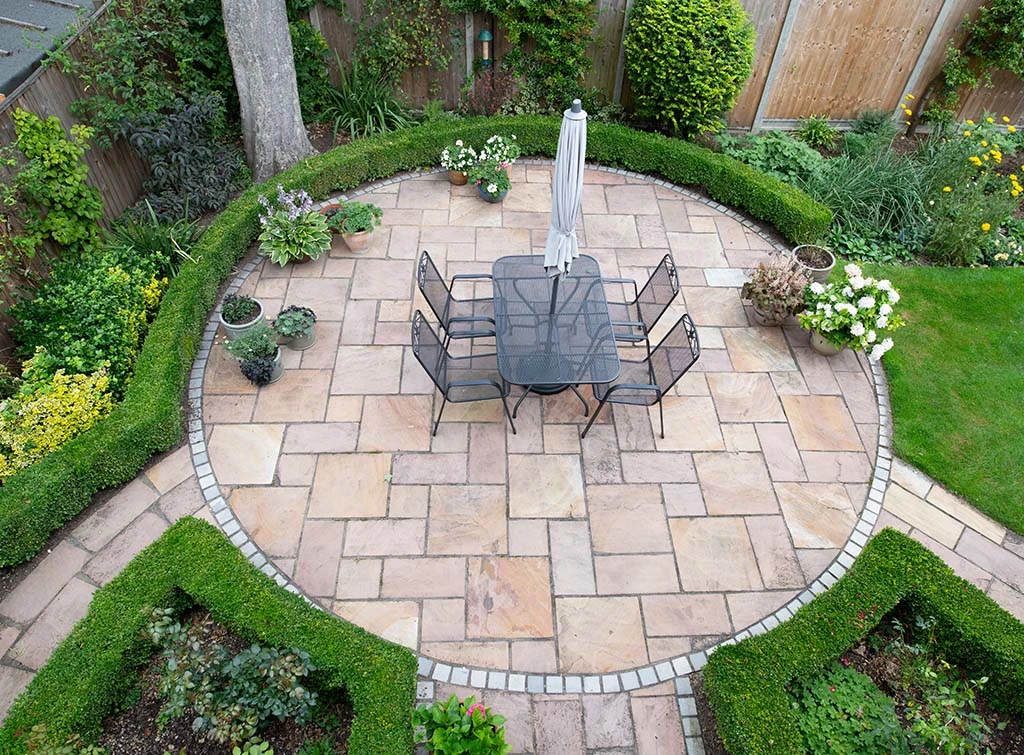
What shape would work best? – Square or rectangular-shaped patios are the most common (and easier to install), but that doesn't mean you can't choose to have a curved edge design
Are you planning to create zones? – Many people choose to have one area for dining and a separate space for lounging
Step 4: Plan your patio size
Dreaming of a large alfresco dining table? Then you'll want to get your patio sizing spot-on. Here's some tips to steer you:
Allow around 2.5m² per person if you plan to use your patio for dining
The average patio size for a family of four would be around 10m² - or up to 20m² if you regularly host up to eight people
Try to leave about 1m between objects such as garden seating, hot tubs or sun loungers
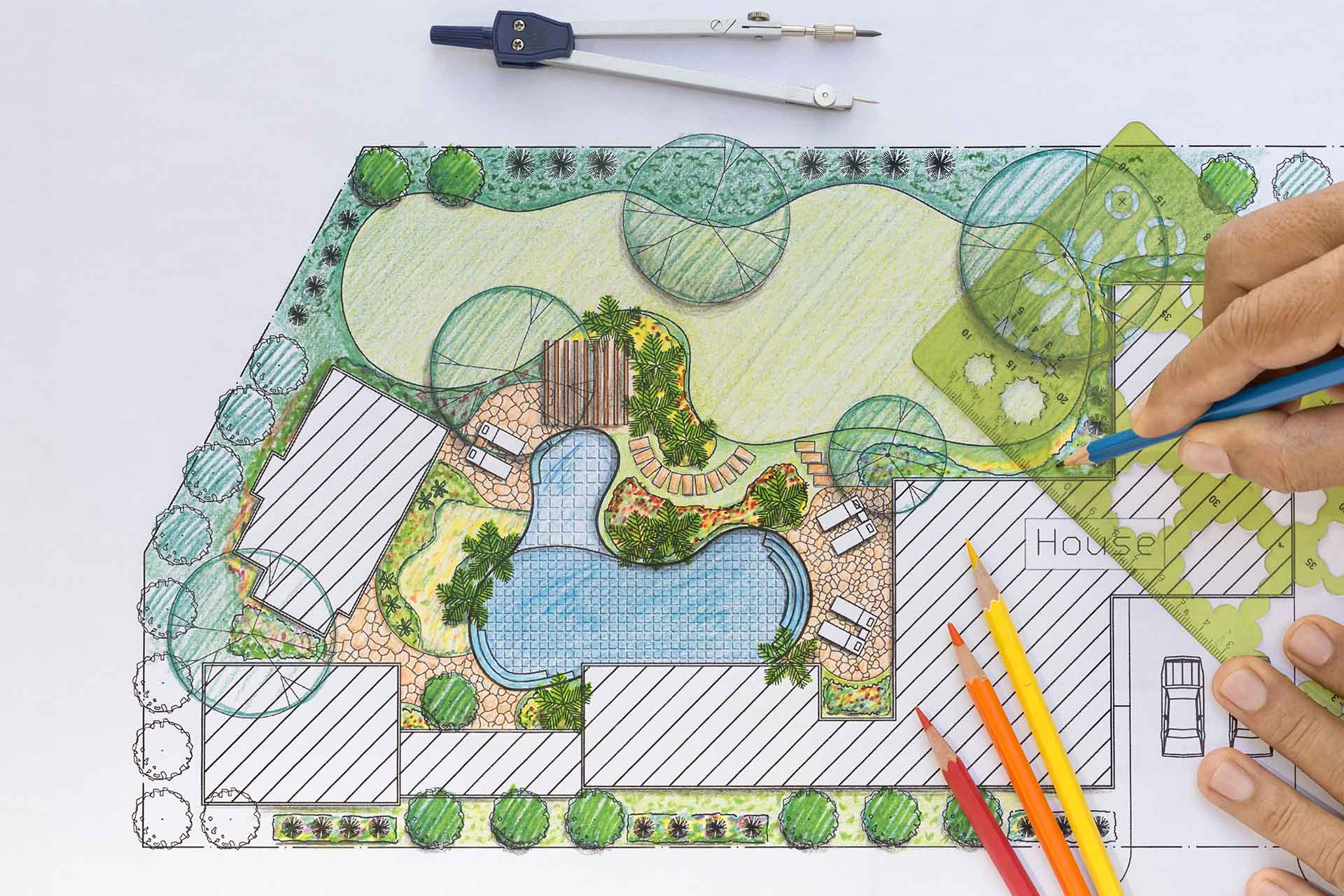
We always recommend drawing your patio out to scale or measuring out the dimensions in your garden using rope as a boundary. This way, you can get a good feel for whether your patio is big enough, and how much of your garden it will take up.
Step 5: Choose your paving materials
The materials you choose and how you use them will have a huge impact on your finished patio design.
Some common paving materials include:
Concrete
Flagstone
Slate
Limestone
Sandstone
Brick
Granite
Some of the most eye-catching patio design plans involve a combination of materials. Head over to our garden patio ideas for some of our favourite outdoor patio design pictures.
Other factors to consider before building a patio
Here's the other important factors to consider when designing your patio that sometimes get missed:
1. Maintenance
Some patio materials need more TLC than others to keep them looking their best. So make sure you choose a material that you're confident you can keep on top of:
Natural stone patios, such as sandstone or slate, are durable and long-lasting. However, they may require regular cleaning or sealing to prevent staining and weathering
A brick patio has a rustic charm that is also very forgiving
2. Patio height
It's important to consider how your patio will fit into the overall look and feel of your garden:
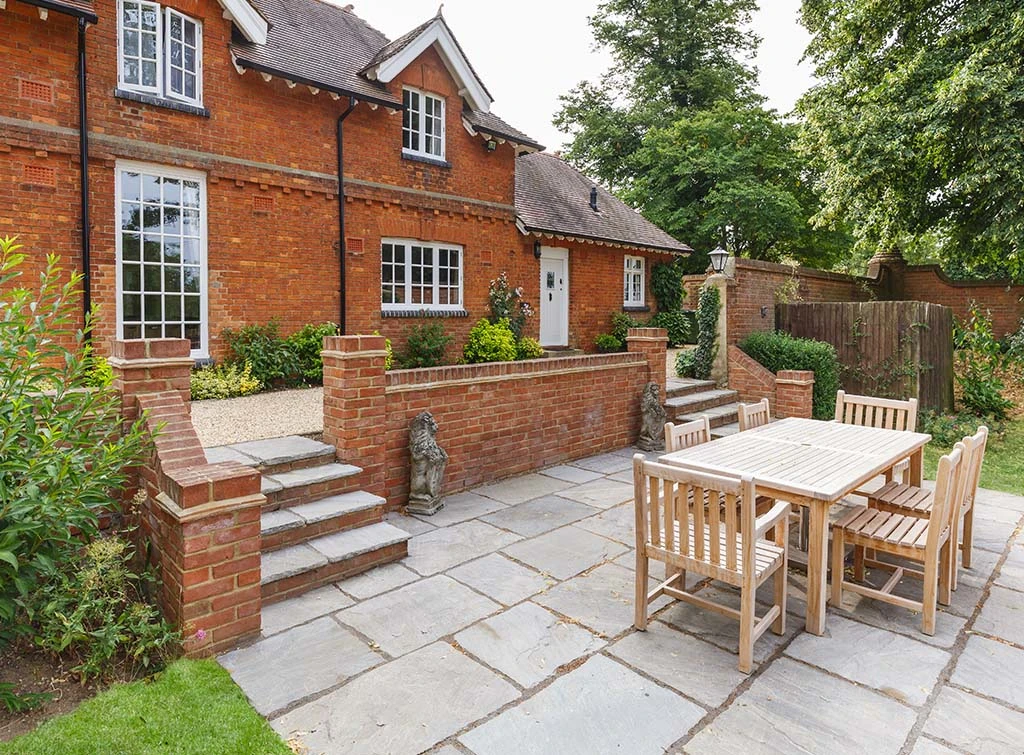
A sunken patio can be a great way of making your paving area feel like it truly belongs within the landscape
A raised patio can be well-suited to a garden that consists of many different levels, or if you want to catch more of the sun or garden views
3. Borders and edging
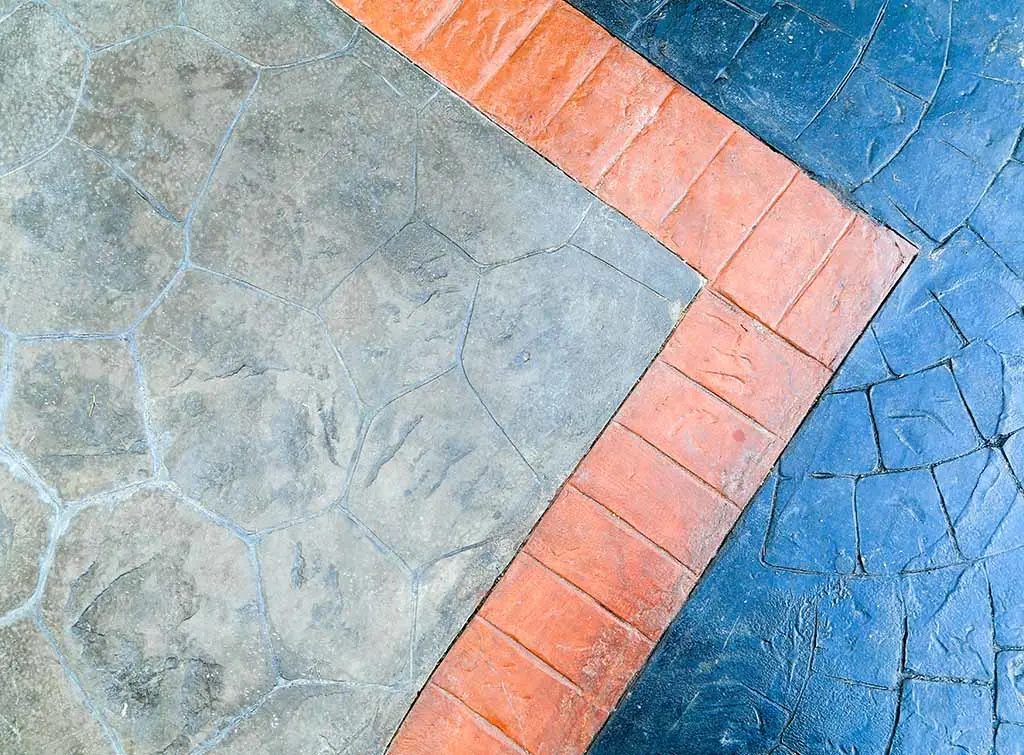
Borders and edging around your patio can create a neat aesthetic:
They provide an opportunity to add different types of paving in complementary colours or materials
For example, Indian sandstone could be edged with brickwork for a modern yet traditional feel
Check out our garden paving ideas for some inspiration
4. Features and accessories
Planning what features or accessories you want for your patio is best done in advance. That way, you can plan ahead for the materials you need, and budget accordingly:
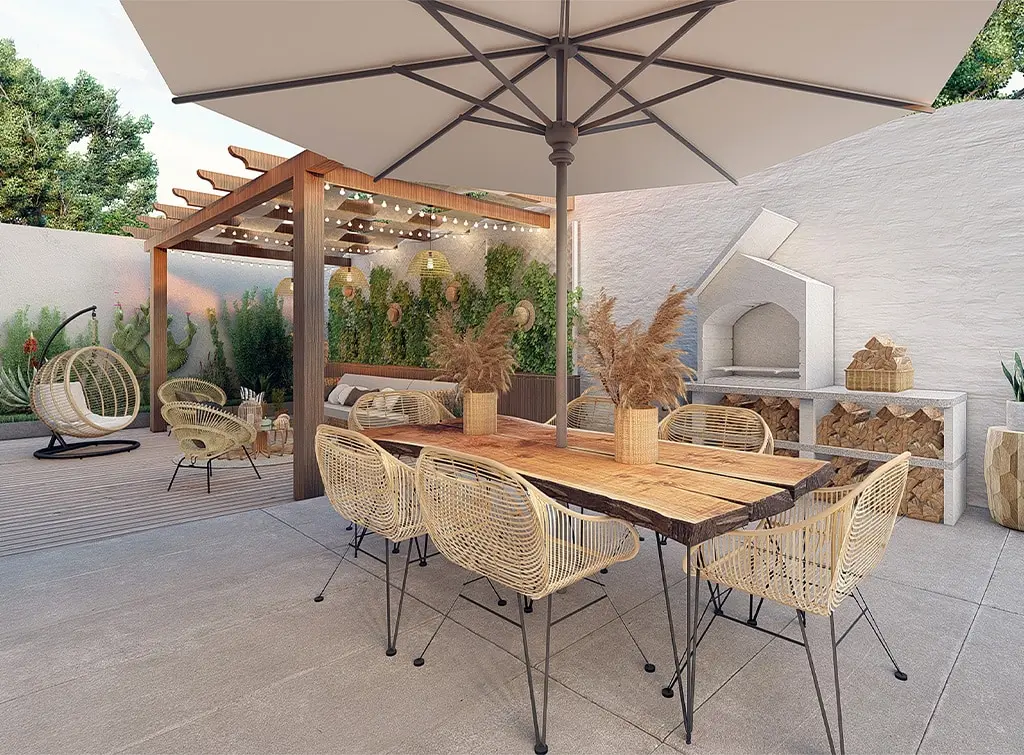
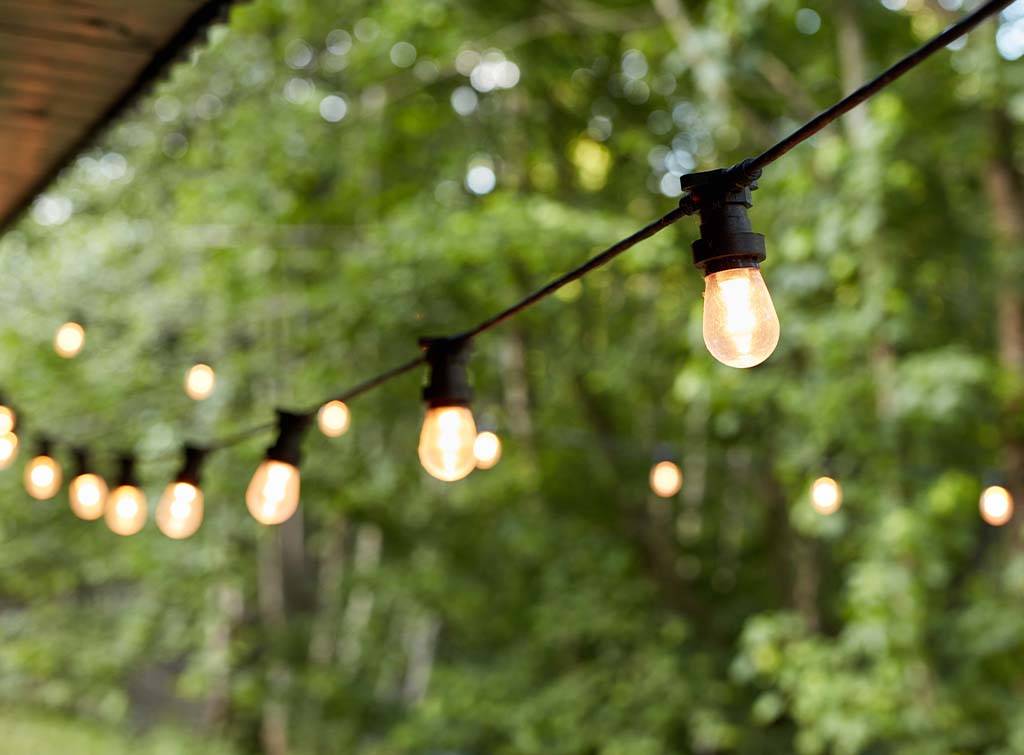
Built-in seating and outdoor lighting are popular options
Many homeowners build a pergola over their patio for shade
Patio heaters or a fire pit for warmth are also popular
Don't forget to factor in (and budget for) any plants you'd like to incorporate in and around your patio design. Pockets of greenery can help to create a division between different spaces and soften your patio landscaping.
How much does laying a patio cost?
Before getting too carried away on extra design features and accessories, it's important to get a steer on the cost to lay a patio. As a guide:
A new patio typically starts at around £1,700
A standard concrete patio starts at around £65–£120 per m², including materials and labour
A flagstone patio sits in the region of £120–£475 per m², including materials and labour
However, the total cost of a new patio will vary depending on several factors, including:
The size of the patio
Whether it's a raised patio
The type of patio slabs you choose
The complexity of the patio design and whether it needs drainage channels or soakaways
Your location and any access issues
Whether waste disposal or skip hire is needed
Whether you require any garden landscaping around your patio
Brick and basic paving slabs sit at the lower end of the price spectrum. Meanwhile, traditional flagstones, trendy porcelain, slate, and Indian stone sit at the higher end. If you're struggling to find the right balance between aesthetics and budget, a local landscaper can help to create a personalised plan.
Patio laying cost: Job estimator tool
For more on costs, use our job estimator tool below to help calculate how much it might cost you to install a patio.
Job Estimate Calculator

How to find the right paver for your project
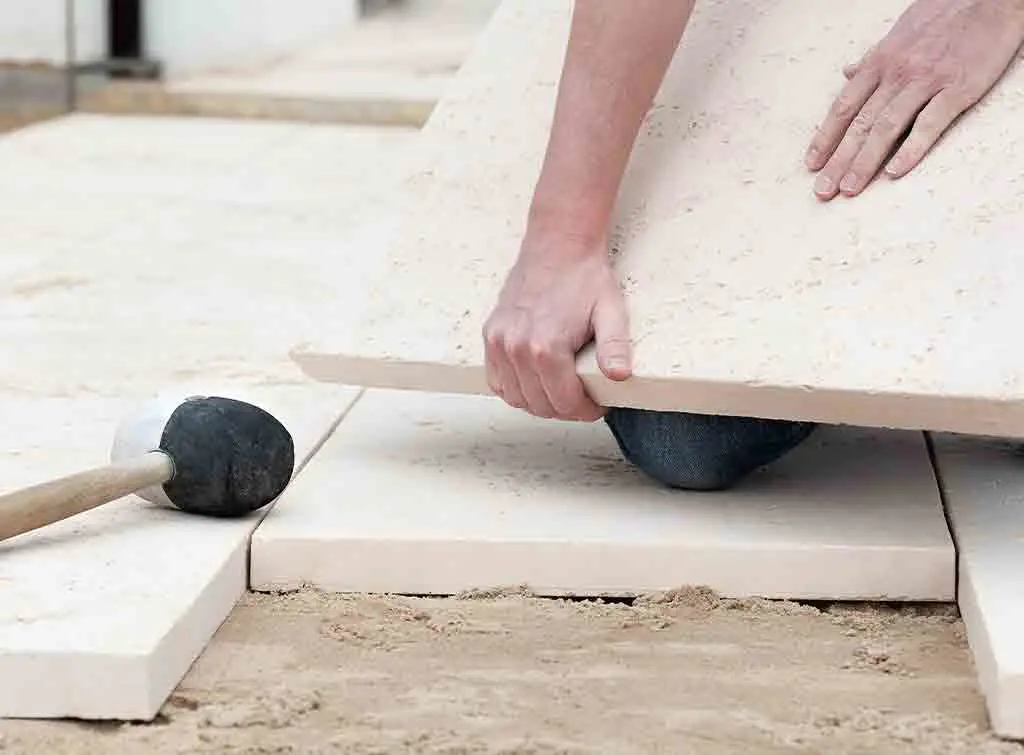
Patio laying is hard, physical labour. Without the right experience, it can be difficult to create a solid foundation, lay around any manhole covers, and get the right mortar mix to set the slabs.
That's why finding the best local patio contractor for your project is key. Here are our top hiring tips:
Ask around for recommendations: Then cross-check them on Checkatrade, so you know they’ve also been vetted by us
Read reviews: That way, you can make sure to choose someone that others rate
Get at least three quotes: You’ll be able to check that you’re getting a fair and competitive price for the work
Search a professional directory (like ours!): A trade directory offers more than just a list of business names
Hiring an experienced patio installer means your patio is built to a high standard. But if costs are stacking up, you could consider laying a patio yourself. Our guide to laying a patio takes you through the process step-by-step.
Find the best patio contractors in your area
Ready to bring your patio plans to life? Finding the best patio contractor for the job is easy with Checkatrade.
Simply search your postcode to find top-rated patio contractors in your local area.
Find a local tradesperson

Planning a patio: Checklist
FAQS about planning a patio
How much should a 20m² patio cost?
The cost of a 20m² patio can vary significantly depending on the materials you choose, the complexity of the design, and any groundwork required. Budget-friendly paving options will cost less than premium stone or bespoke layouts.
For a full breakdown of patio prices, check out our cost to lay a patio guide.
Can you lay patio slabs straight onto soil?
Patio slabs should not be laid directly onto soil, as this can lead to sinking, movement, and poor drainage over time. A proper sub-base and bedding layer are essential for a stable, long-lasting patio.
What is the best patio on a budget?
Concrete slabs, gravel, and basic paving stones are often the most budget-friendly patio options. Choosing simple layouts and standard materials can help keep costs down while still creating an attractive outdoor space.
What is the best pattern for patio slabs?
The best patio slab pattern depends on the style of your garden and the size of the space. Popular options include stretcher bond (where rectangular slabs are laid in parallel rows) and herringbone designs.
How do I make my patio slabs look new again?
Professional patio cleaning with a pressure washer and reapplying jointing compound can instantly refresh its appearance. Sealing the slabs can also help protect the surface and restore colour.
What are the latest patio design trends?
Current patio trends include porcelain paving, mixed-material designs, outdoor kitchens, and built-in seating. Seamless indoor-outdoor living spaces are also becoming increasingly popular.
What are common patio mistakes?
Common patio DIY mistakes include poor drainage planning, skipping the sub-base, choosing unsuitable materials, and underestimating the importance of layout. These issues can lead to costly repairs later on.
What type of lighting is best for a patio?
The best patio lighting depends on how you use the space. Wall lights, string lights, solar lanterns, and recessed deck lighting are all popular choices for creating both practical and ambient illumination.

See the tradespeople we've checked for your job