IDEAS
Barn conversion ideas: Beautiful ways to blend old and new
Updated 08/26
By: Lara Sargent
Reviewed: Laura Macdonald
There’s something special about converting a building that was never designed to be a home.
Old barns and stables come with features you simply can’t recreate convincingly in a new-build house: weathered beams, thick stone walls, huge openings and soaring ceilings that immediately give the space a sense of history.
The challenge is knowing what to change and what to leave alone.
The best barn conversion ideas tend to celebrate the quirks of the original building while quietly adding everything you need for comfortable modern life.
That might mean putting a sleek kitchen beneath centuries-old beams, turning an old cart opening into a wall of glass or adding a mezzanine without losing the drama of the vaulted ceiling.
If you’re at the ideas stage, here are some of the possibilities worth exploring.
How to preserve the character of a barn or stable conversion
Ways to make the most of vaulted and double-height spaces
Barn conversion ideas for bringing in more natural light
How to blend contemporary interiors with original features
Ideas for awkward layouts and large open-plan spaces
When mezzanine floors can make sense
Practical considerations before committing to your ideas
When an architect or specialist builder can help
What makes a good barn conversion?
A good barn conversion still looks and feels like a barn once the work is finished.
That doesn’t mean recreating a rustic farmhouse inside. In fact, contemporary kitchens, simple furniture and modern glazing often provide an attractive contrast to old stone and timber.
The starting point is usually working out what gives your particular building its character.
It could be the roof structure, original openings, brickwork, stone walls or simply the sheer scale of the interior.
Once you know what you’d hate to lose, you can start designing around it.
Before getting carried away with floorplans and finishes, spend some time looking at what’s already there. An awkward beam, oversized doorway or old stone wall might initially look like something you need to work around, but it could end up becoming the feature you love most about your finished home.
1. Let the original structure take centre stage
Exposed timber beams, roof trusses, brickwork and stone walls are often the features that make barn conversions so appealing.
Where they're in good enough condition, retaining and repairing them can give the finished home a depth and texture that new materials struggle to reproduce.
That might mean repointing original stonework, restoring timber or deliberately leaving sections of old brick exposed rather than covering every surface with plasterboard.
The result doesn't have to look overly rustic. Pairing those imperfect old surfaces with clean contemporary finishes can make both look better.

2. Make the most of a vaulted ceiling
If you're lucky enough to have a soaring barn roof, think carefully before dividing it horizontally.
Double-height spaces preserve the scale of the original agricultural building and can make a spectacular kitchen, living area or entrance hall. They're also a great opportunity to show off original roof trusses that would otherwise disappear above a ceiling.
The practical side matters too. A huge room still needs to feel comfortable rather than cavernous, so furniture placement, lighting, acoustics and heating all deserve thought later in the planning process.

3. Use a mezzanine without losing the sense of space
A mezzanine can give you valuable extra floor space without completely sacrificing the height that attracted you to the barn in the first place.
Depending on the building, it could become:
Keeping part of the room open to the roof lets you enjoy the best of both worlds.
The temptation with a large barn can be to squeeze in as much floor space as possible. But once you've put a ceiling across a beautiful double-height room, getting that sense of volume back isn't easy.
4. Bring in as much natural light as the building allows
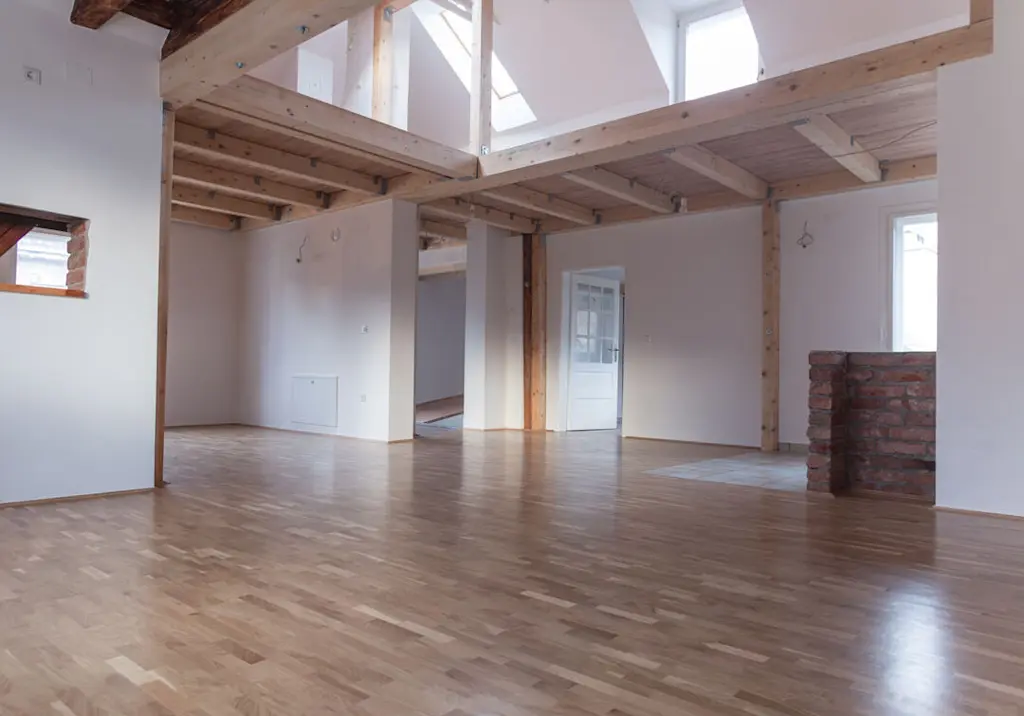
Agricultural buildings weren't designed around bright kitchens and sunny sitting rooms, so daylight can be one of the trickier parts of a barn conversion.
Rather than simply adding lots of conventional domestic windows, look at how the existing openings could work harder.
Old cart entrances and large barn doors can sometimes become dramatic glazed openings, while rooflights and carefully positioned glazing can bring daylight deeper into the building.
Full-height or gable-end glazing can also bring in huge amounts of daylight without disguising the original shape of the barn.
Inside, glass balustrades, internal glazing and open sightlines can help that light travel further.
Visit the building at different times of day if you can. A corner that seems perfect for the kitchen at midday might be surprisingly dark at breakfast time. Seeing where the sun actually reaches can be much more useful than trying to imagine it from a floorplan.
5. Contrast old materials with a contemporary kitchen
A barn conversion doesn't need a traditional country kitchen simply because it's an old building.
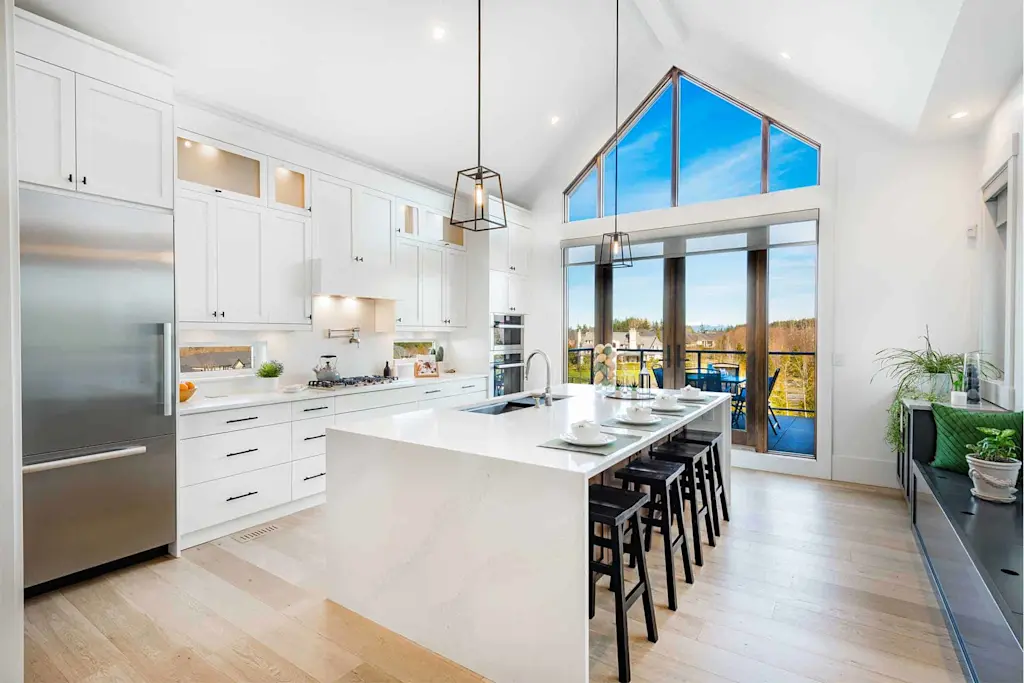
Sleek cabinetry, handleless units and contemporary appliances can look particularly striking against rough stone, aged brick and exposed beams.
The contrast is often what makes it work.
Rather than adding faux-rustic details everywhere, let the building provide the character and keep newer additions deliberately simple.
Natural timber, muted colours, matt finishes and darker accents are all good ways to soften a modern kitchen so it sits comfortably alongside older stone and timber.

6. Create zones rather than filling the barn with walls
Huge open-plan spaces look incredible in photographs, but living in one giant room isn't always as practical as it sounds.
Instead of dividing the barn into lots of conventional rooms, think about creating different zones within the larger space.
You might use:
Furniture to define sitting and dining areas
A freestanding kitchen island
Changes in flooring
Rugs and lighting
A fireplace or wood burner as a focal point
Freestanding internal structures
Partial-height or glazed partitions
This keeps sightlines open while giving different parts of the room a purpose.
It's also a good way to make a large barn feel like a home rather than one enormous hall.

7. Make awkward spaces earn their keep
Barns and stables rarely give you a neat rectangular domestic floorplan.
Roof slopes, structural beams, thick walls and unusual openings can leave you with spaces where standard furniture simply doesn't fit.
Rather than forcing conventional layouts into them, use those areas for things that can be designed around the building.
Low eaves might accommodate storage, for example, while a nook beneath a mezzanine could become a utility area, WC, pantry or built-in seating.
Bespoke joinery can be particularly useful because it follows the building rather than asking the building to accommodate standard-sized furniture.

8. Keep some reminders of the building's former life
Not every original detail needs to serve a practical purpose.
Old stable partitions, feeding troughs, timber doors, ironmongery or agricultural markings can sometimes be retained purely because they tell the story of the building.
You don't need to keep everything. Too many rustic details can make the conversion start to look themed.
One or two authentic features usually have far more impact.
9. Use sliding barn doors where space is tight
Sliding doors are a natural fit for barn and stable conversions, but they can also solve a genuine layout problem.
Because the door moves along the wall rather than swinging into the room, you don't need to sacrifice floor space for the door arc.
That can be particularly useful for:
Utility rooms
Home offices
Smaller bedrooms
They also provide an opportunity to reuse or reference the original timber doors if they're suitable.

10. Don't be afraid of contemporary additions
One of the most interesting things about barn conversions is the contrast between what was there originally and what you've added.
Contemporary glazing, black steel, polished concrete or a sharply detailed staircase can sit beautifully alongside centuries-old stone and timber.
Trying to make every new element look old can sometimes have the opposite effect and dilute the authenticity of the original building.
Let old be old and new be new. That distinction can make the original fabric stand out rather than disappear into a reproduction of the past.

11. Make large spaces feel warm and lived in
One of the realities of barn living is that a spectacular vaulted room can also feel a little empty if everything is pushed against the walls.
Large rugs, oversized sofas, substantial dining tables and layered lighting can help furniture hold its own against the scale of the building.
Think about sound, too. Hard floors, glass and double-height ceilings can make noise travel.
Curtains, upholstery, rugs and other softer materials aren't just decorative additions; they can make a big open space much more comfortable to spend time in.
12. Let the outside remain part of the story
The setting is often one of the reasons people fall for a barn in the first place.
Large glazed openings can frame countryside views, while patios, courtyards and simple landscaping can connect the converted building to its surroundings.
Try not to make the exterior suddenly look like a suburban new build.
Materials and landscaping that make sense alongside the original agricultural building can help retain that sense that the barn belongs exactly where it is.

A quick note on planning before you fall in love with an idea
Barn conversions can come with more restrictions than a conventional renovation, so not every beautiful idea you save will necessarily be possible.
In England, some agricultural buildings can potentially change to residential use through Class Q permitted development rights, subject to conditions and prior approval.
Other projects need full planning permission, and listed buildings bring another layer of consent and sensitivity.
You don't need to untangle all of that while you're simply gathering inspiration.
But if you're seriously considering a particular barn or stable, it's worth getting professional advice before building your dream design around alterations that may not be permitted.

Read more about permitted development rights for stable conversions, listed building renovation advice and listed building consent in our dedicated guides.
Common barn conversion mistakes to think about early
With a building this characterful, it's easy to solve one problem while accidentally creating another.
Watch out for:
Dividing up every double-height space and losing the original scale
Removing original features before deciding whether they could be restored
Adding too many domestic-style windows that change the character of the building
Creating enormous open-plan rooms without thinking about how you'll actually use them
Underestimating how difficult awkward beams and rooflines can make furniture placement
Forgetting how much artificial lighting deeper parts of the building may need
Trying too hard to make new additions look old
Choosing finishes before understanding what the planning restrictions allow

Barn and stable conversion ideas checklist

While you're gathering ideas, think about:
When it's worth getting some help
Barn conversions ask very different questions from ordinary renovations. Sometimes the most valuable professional input isn't about how to build something, but whether changing it is a good idea in the first place.
An architect with barn conversion or conservation experience can help you see the possibilities in an awkward building while protecting the features that make it special.
Once you have a clearer design, a builder experienced in barn and stable conversions can help turn those ideas into a practical home.
If you're starting to think seriously about the numbers too, our barn conversion cost guide can help you understand the likely budget before you go much further.
And when you're ready, you can find an architect near you or find a builder experienced in barn conversions through Checkatrade.
Browse skilled and experienced builders near you
Enter your postcode to find a top tradesperson near you
W10 Builders
10.00
(29 reviews)Services & skills
BuilderExtensions / ConversionsConcretingLoft ConversionsGeneral BuildingJR Innovative Building Limited
10.00
(13 reviews)Services & skills
BuilderExtensions / ConversionsEquestrian StableMastic SealantPartition WallsCrafted Finish Construction
10.00
(4 reviews)Services & skills
BuilderExtensions / ConversionsSuspended CeilingsCar PortsFoundationsJMC Build LTD
10.00
(13 reviews)Services & skills
BuilderExtensions / ConversionsBrick / Concrete Structural RepairsBasement / Cellar ConversionsPeriod Property RestorationAC BUILDING SERVICES (LONDON) LTD
10.00
(28 reviews)Services & skills
BuilderExtensions / ConversionsProperty Maintenance / RepairBrick / Concrete Structural RepairsConcrete Garages


FAQs
Not necessarily. Reusing an existing structure can save on some elements of construction, but structural repairs, bespoke glazing, insulation, services and working around an old building can make barn conversions expensive. Compare the likely work and costs for the individual building rather than assuming conversion will automatically be cheaper.
Common challenges include planning restrictions, awkward layouts, limited natural light, expensive structural work and the cost of upgrading an agricultural building for comfortable modern living. Original features can also restrict where floors, windows and rooms can go, which is why the building itself needs to guide the design.
You may do. In England, some agricultural buildings can be converted to residential use under Class Q permitted development rights, subject to eligibility, conditions and prior approval; other barn conversions require planning permission. Listed status and location can also affect what you're allowed to do.
A barn conversion can be worth it if you value the character, space and individuality of the finished home and the project works financially for you. Before committing, weigh the appeal of the building against the likely conversion costs, planning constraints and amount of work required.
Some qualifying conversions of non-residential buildings, including barns that have never been lived in, can qualify for the reduced 5% VAT rate on eligible conversion work. It doesn't mean everything connected with every barn conversion is automatically charged at 5%, so check the circumstances of your project with your contractor or a tax professional. HMRC specifically includes barns within qualifying non-residential conversions.
You may have to pay Stamp Duty Land Tax when buying a barn or land in England or Northern Ireland, but the rate depends on the status of the property at the time of purchase and the circumstances of the transaction. Agricultural and other non-residential property can fall under non-residential SDLT rules, while a building already being physically adapted into a dwelling can potentially be treated differently, so take conveyancing or tax advice on the particular purchase.
There isn't a blanket rule that every barn conversion must use an architect, but experienced design input can be particularly valuable. Barns often involve unusual structures, planning constraints, bespoke openings and difficult decisions about which existing features to retain, so look for someone with relevant barn conversion or conservation experience.
Generally, no. A barn conversion adapts an existing building rather than constructing a completely new one. HMRC, for example, distinguishes a new build constructed from scratch from the conversion of an existing building into a dwelling for VAT purposes.



See the tradespeople we've checked for your job