IDEAS
Decorative ceiling ideas: 27 ways to transform your ceiling
Updated 11/26
By: Lara Sargent
Reviewed: Laura Macdonald
Most of us spend time choosing wall colours and flooring, but leave the ceiling white without giving it much thought. Yet the ceiling can be just as much of a design feature as the rest of the room.
From exposed beams and timber panelling to bold paint, wallpaper and statement lighting, there are plenty of decorative ceiling ideas to explore. Some are simple updates you can tackle yourself, while others involve more substantial work.
We've gathered 27 ideas to help you make the most of the space overhead, including a few temporary decorations for parties and special occasions.
How beams, panelling and mouldings can transform a ceiling
Ways to decorate with paint, wallpaper and colour drenching
How lighting can become part of your ceiling design
Decorative ceiling ideas for bathrooms and bedrooms
Temporary ceiling decorations for parties and special occasions
Which projects you can tackle yourself and when to hire a tradesperson
Decorative ceiling ideas to transform your home
Whether you want to make a feature of an existing ceiling or give a plain surface more personality, these ideas cover everything from architectural details to colour, pattern and lighting.
1. Leave the beams bare
Exposed beams bring character to a room, particularly in older properties and homes with vaulted ceilings.
If your home has original timber beams, leaving them visible can help show off the shape and history of the space. Their natural colour and texture also provide a lovely contrast against white plaster or painted panelling.
In a loft bathroom, for example, exposed wooden beams can become a focal point against a crisp white ceiling.
If you're considering a more substantial change, our vaulted ceiling ideas offer more inspiration for making the most of the height. Meanwhile, our vaulted ceiling cost guide gives you an idea of what this project might cost.

2. Channel a cabin style
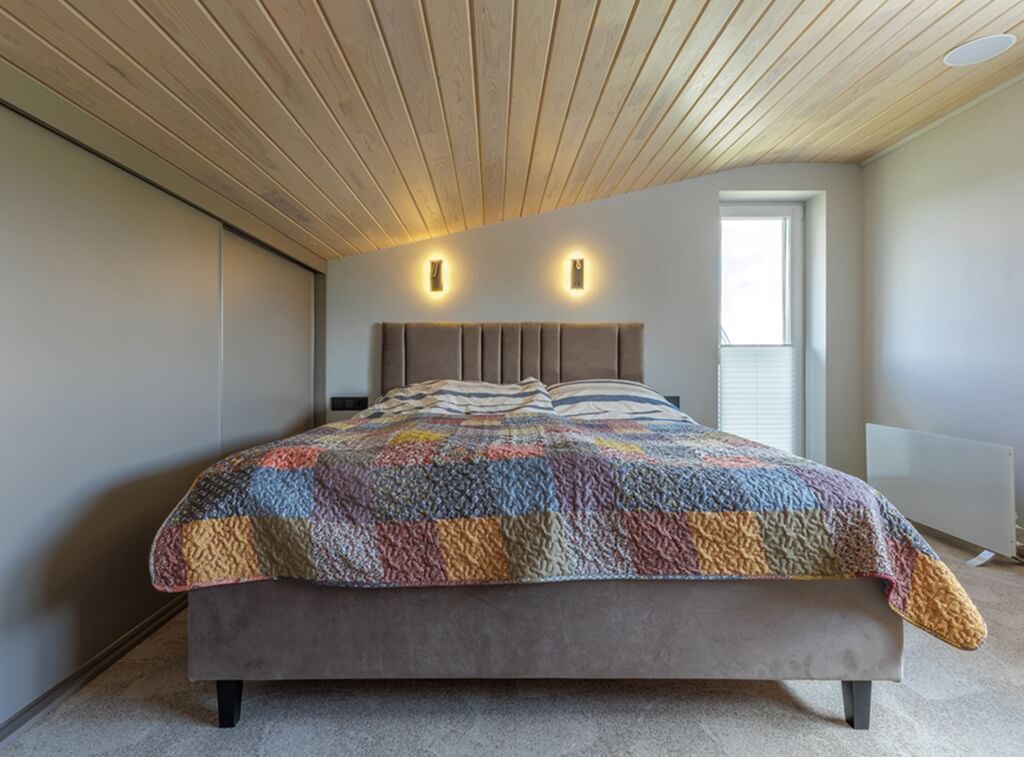
Timber cladding can give a ceiling the warm, relaxed feel of a modern cabin.
Using the same wood for the ceiling boards and exposed rafters creates a cohesive look, particularly alongside natural flooring and simple furniture.
Mid-toned timber works beautifully with warm whites, muted greens and earthy colours, while lighter woods can help keep the room feeling airy.
Installing ceiling cladding requires careful preparation and secure fixings, so it's worth discussing the project with a carpenter or joiner. Our guide on how to install cladding explains what's involved.

Ask your carpenter or joiner which timber treatment or finish is suitable for your chosen wood and the conditions in the room. Our guide to the importance of timber treatment explains why protecting wood matters.
3. Distress your beams
Distressed beams are a good way to bring an industrial feel to a kitchen or open-plan living space.
Leave the timber with a natural, weathered finish or use muted grey, charcoal or off-white paint to give the beams a more aged appearance.
The contrast between rough-textured timber and smoother surfaces, such as painted cabinetry or concrete-effect flooring, helps create an interesting mix of materials.
For more ways to achieve this look, explore our industrial kitchen ideas.

4. Draw the eye upwards with slim beams
Slim wooden beams can give a vaulted ceiling definition without making the space feel too busy.
Against a white ceiling, the natural warmth of the timber highlights the roofline and draws attention to the height of the room.
This approach works particularly well in a contemporary living room with large windows, simple furniture and a restrained colour palette.
If you're planning a vaulted ceiling rather than decorating an existing one, our planning guide to vaulted ceilings covers the considerations involved.

5. Paint everything white
Painting the ceiling, beams and walls in the same shade of white creates a calm, cohesive look.
Rather than hiding the architectural details, the single colour allows the shape of the beams and roofline to stand out through light and shadow.
It's particularly effective in bedrooms and rooms with exposed structural features, where you want the ceiling to feel interesting without introducing another colour.
Our guide on how to paint a room explains the order of work. For high ceilings or awkward beams, a painter and decorator can help achieve an even finish.

Find a checked painter or decorator near you
6. Take a modern retro route with wood panels
Wood ceiling panels bring warmth and texture to a room, with a nod to the timber-clad interiors of the 1970s.
A panelled ceiling can be particularly effective in a contemporary living room with simple furniture, low seating and a neutral colour scheme.
Choose a timber tone that complements the flooring and furniture, rather than trying to match every wooden surface exactly.
Our ceiling panelling cost guide explains what affects the price of this type of project.
If you're hiring a carpenter, ask to see examples of similar ceiling installations they've completed.

7. Embrace a spa-like mood with shiplap boards
Shiplap-style ceiling boards can give a bathroom the relaxed feel of a spa, adding texture without relying on bold colour or pattern.
White boards create a fresh, coastal look, while navy, charcoal or deep aubergine can make the ceiling a more dramatic feature.
Bathrooms need extra consideration because of humidity and condensation. Choose timber or moisture-resistant panels suitable for the location, follow the manufacturer's finishing advice and make sure the room has effective ventilation.
Avoid placing timber products where they're likely to be exposed to direct water unless they're specifically designed for that use.

8. Try a stretch ceiling
A stretch ceiling offers a smooth, contemporary alternative to a traditional painted or plastered surface.
These systems use a membrane, typically made from PVC or fabric, fitted into a perimeter track. Depending on the product, finishes can include matt, gloss or printed designs.
A glossy stretch ceiling can reflect light and make a room feel more contemporary, while a matt finish offers a quieter look.
Because the system sits below the existing ceiling, you'll need to consider the available room height and any lighting or ventilation fittings.
Installation methods vary between products, so speak to an installer about what's suitable for your space. Our stretch ceiling cost guide explains the factors that can affect the price.

9. Get arty with a graphic bathroom ceiling
A bathroom ceiling is an unexpected place to introduce pattern.
Bold geometric wallpaper or graphic artwork overhead can create a striking contrast against simple white sanitaryware and neutral wall tiles.
This approach is particularly effective in a small bathroom, where the ceiling can become the main decorative feature without taking up valuable wall space.
Choose wallpaper specifically suitable for humid environments and follow the manufacturer's installation guidance. Standard wallpaper may not cope well with condensation and steam.

10. Colour drench in charcoal
Colour drenching involves using the same colour across the walls and ceiling, sometimes extending it to skirting boards, doors and other woodwork.
Charcoal creates a dramatic, cocooning effect, particularly in a bathroom or bedroom.
Pair the dark paint with pale timber, warm metallic accents or light-coloured furnishings to introduce contrast.
A deep ceiling colour can make a room feel more enclosed, so consider how much natural and artificial light the space receives before committing.

Paint a large sample on lining paper and hold it against the ceiling. Check how it looks in morning and evening light, as colours can appear different overhead than they do on a wall.
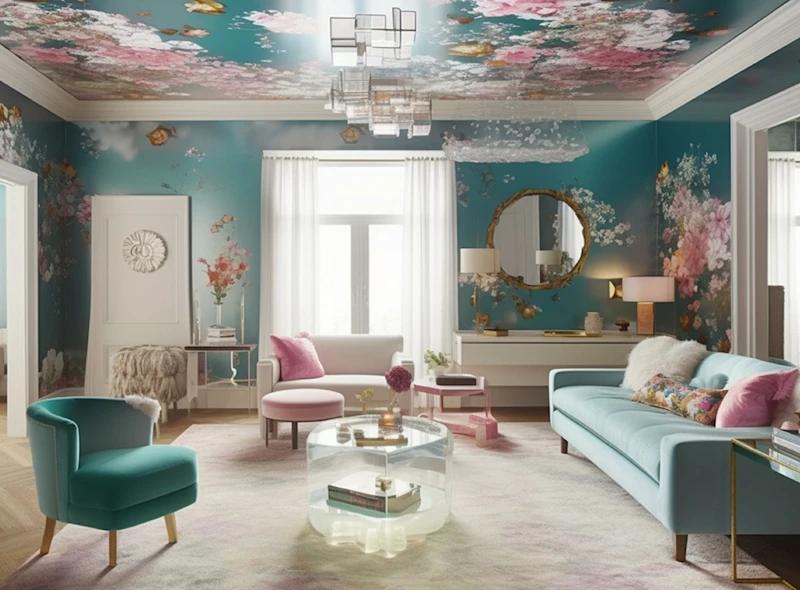
11. Paper every surface for a vintage vibe
Wallpapering the ceiling as well as the walls creates a cosy, enveloping effect.
A delicate floral or traditional patterned wallpaper can give a bedroom or sitting room a vintage feel, particularly when paired with contrasting painted woodwork.
For a more subtle version, keep the wallpaper on the ceiling and choose a coordinating plain colour for the walls.
Hanging wallpaper overhead can be awkward, especially when patterns need careful matching. A decorator can help achieve a neater finish, and our wallpapering cost guide explains what affects the price.

12. Think pink
A warm blush pink ceiling can give a bedroom or living room a soft, welcoming feel.
Painting the walls and ceiling in the same shade creates a gentle colour-drenched effect, while using pink overhead with cream or off-white walls gives the ceiling its own identity.
Blush tones pair well with natural wood, linen and warm metallic accessories.
For more colour inspiration, explore our pink living room ideas.

13. Experiment with bold colour
A ceiling doesn't have to be white or neutral to work.
Combining leaf green with cobalt blue, for example, creates a playful, colourful scheme that can give a bedroom plenty of personality.
You could paint the ceiling in one shade and use the other on the walls or architectural details, allowing the colours to complement rather than compete with each other.
Strong colour contrasts make uneven paint edges more noticeable, so take time over preparation and cutting in.
Our guide to painting a ceiling explains the process if you'd like to try it yourself.

14. Fit a decorative plaster moulding
Decorative plaster mouldings can bring architectural interest to an otherwise plain ceiling.
Coving and cornices create a decorative transition between walls and ceilings, while more elaborate mouldings can introduce a traditional or period feel.
For a contemporary interpretation, keep the mouldings simple and paint them the same colour as the ceiling. Alternatively, use a contrasting colour to highlight the detail.
Our coving cost guide explains what affects the price, while a plasterer or coving installer can advise on suitable designs.

Older textured ceiling coatings, including some Artex finishes, can contain asbestos. Don't drill, sand or scrape the surface until you've had it assessed by someone competent to identify asbestos-containing materials. Our guide to Artex removal explains what to do next.
15. Make a statement with a vintage chandelier
A chandelier can turn a plain ceiling into a feature without changing the surface itself.
Vintage-style chandeliers suit traditional bedrooms and dining rooms, while simpler contemporary designs can provide the same sense of drama in a modern interior.
Think about the scale of the fitting in relation to the room. A large chandelier needs enough ceiling height and clearance to avoid making the space feel crowded.
Heavy light fittings also need suitable structural support. Ask a qualified electrician to assess the existing fitting and installation requirements before buying.
Our recessed lighting cost guide is useful if you're comparing different ceiling lighting options.
16. Add architectural interest with a coffered ceiling
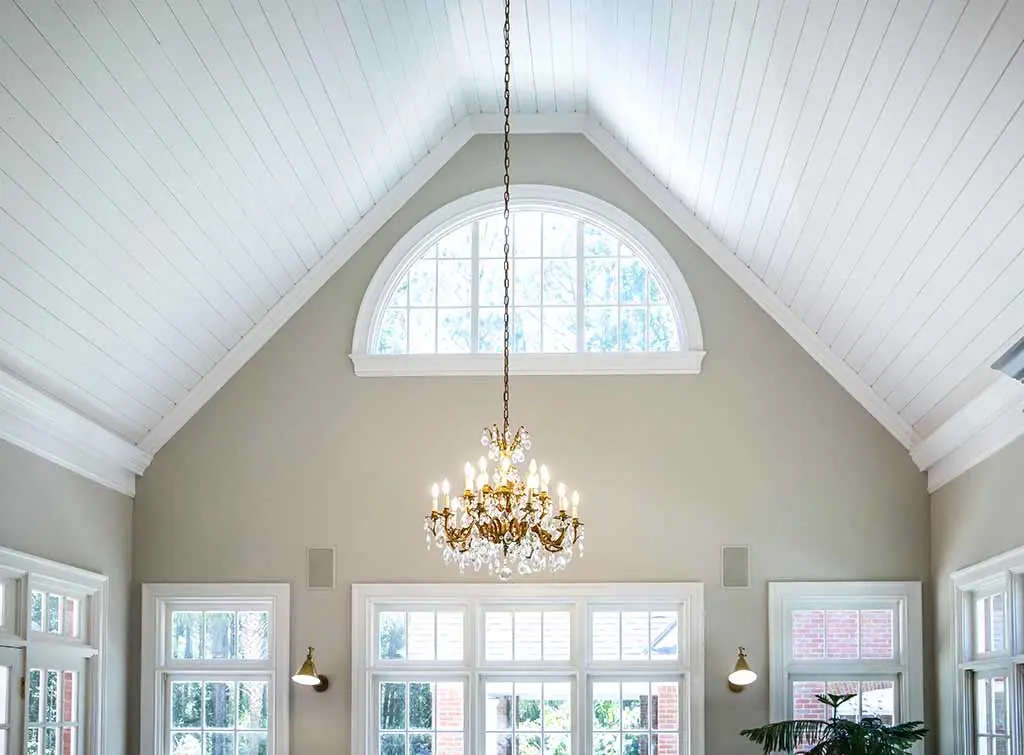
A coffered ceiling uses a series of recessed panels framed by raised or dropped sections, creating a geometric pattern overhead.
It's a striking way to introduce architectural detail, particularly in a living room, dining room or larger bathroom.
The repeated shapes give the ceiling depth and structure, while integrated lighting can highlight the different levels and make the design stand out.
Coffered ceilings can be constructed using timber, plasterboard or other suitable materials, depending on the design. Because they may reduce the available ceiling height, it's worth considering the room's proportions before planning the work.
A carpenter, joiner or ceiling installer can advise on the construction and finish, while a qualified electrician should handle any new fixed lighting.

17. Fit a decorative ceiling rose
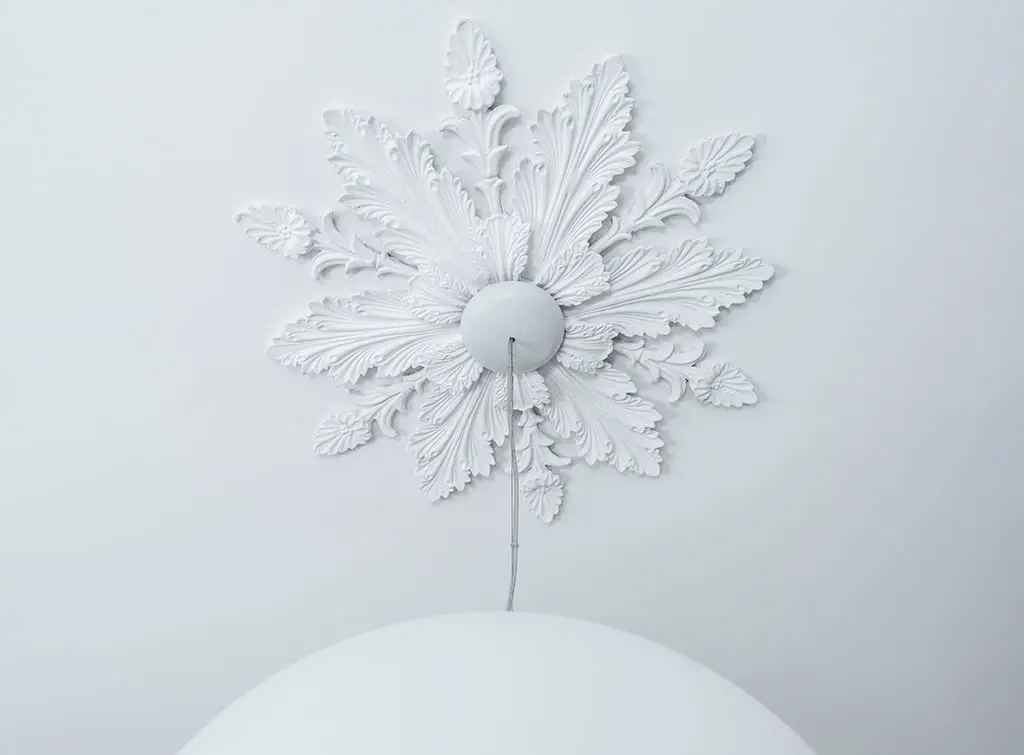
A decorative ceiling rose is a simple way to make a pendant light feel more considered.
Traditional plaster roses suit period homes, while smaller, simpler designs can look equally effective in contemporary bedrooms and living rooms.
Choose a size that suits both the light fitting and the proportions of the room.
A lightweight decorative ceiling rose may be suitable for DIY installation, provided it's fixed securely and doesn't interfere with the existing electrical fitting. For heavier plaster roses, check that the ceiling and fixings can support the weight. If the work involves altering wiring or moving a light fitting, hire a qualified electrician.
Our guide on how to wire a ceiling rose explains what's involved.
18. Offset a skylight with a statement light
A skylight brings natural light into a room, but it can also become part of a more considered ceiling design.
Pairing a skylight with a statement pendant or chandelier creates interest throughout the day. The skylight draws attention upwards in daylight, while the light fitting becomes a feature after dark.
This approach works particularly well in rooms with vaulted ceilings, where there's enough height for a suspended fitting.
Plan the lighting position carefully so it complements the skylight without obstructing the space.
A qualified electrician can advise on suitable fittings and installation.


Need reassurance? All tradespeople pass up to 12 checks before joining, and we keep checking after.
19. Paste the ceiling with atlas pages
Old maps and atlas pages can turn a child's bedroom ceiling into a colourful feature.
The different colours, place names and illustrations create plenty to look at, particularly above a bed or reading area.
You could cover the whole ceiling for a bold effect or create a smaller feature using a collection of carefully arranged maps.
Working overhead takes patience, and paper finishes may be difficult to remove later. Test a small area first and consider whether a removable wallcovering would be more practical.
Use a stable working platform rather than standing on furniture.

20. Fix up faux greenery panels
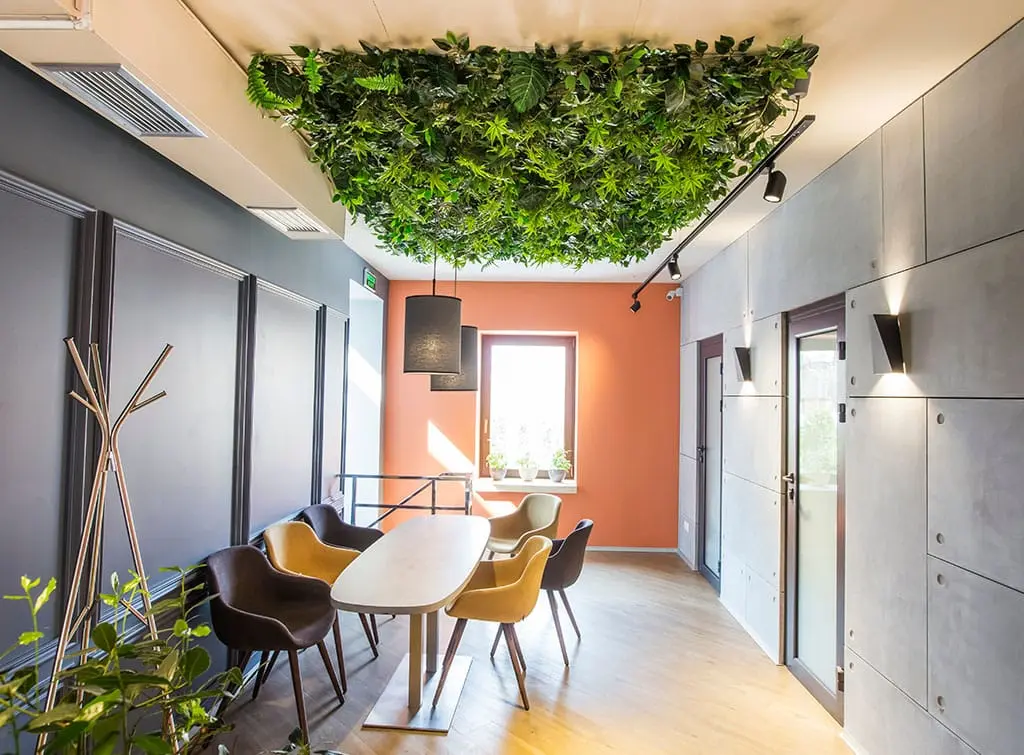
Faux greenery can bring a playful, nature-inspired element to a ceiling.
A small section of artificial foliage above a seating area or reading corner can create a more unusual decorative feature without covering the entire room.
However, overhead panels need suitable fixings and must be appropriate for indoor use. Check the manufacturer's installation and fire-safety guidance, particularly if the panels are close to electrical fittings or sources of heat.
For a temporary effect, lightweight hanging greenery may be easier to manage than fixed panels.
21. Paint a simple mural
A painted mural that continues from the wall onto the ceiling can make a room feel imaginative and personal.
Try a simple cloud design in a child's bedroom, soft abstract shapes in a living room or a painted landscape that extends overhead.
Keeping the design to one corner or section of the ceiling is a manageable way to experiment without covering the whole surface.
For more elaborate artwork, a mural painter can help bring your idea to life. Our mural painting cost guide explains what affects the price.

22. Drape strings of bulbs
Festoon lights can give a plain ceiling a warm, relaxed atmosphere.
They're particularly effective in a garden room, covered seating area or informal living space where you want softer decorative lighting.
Choose plug-in lights designed for the location, and follow the manufacturer's instructions for fixing and positioning them.
Keep bulbs and cables away from paper, fabric and other materials that could be affected by heat, and avoid creating trip hazards with trailing leads.
For permanent electrical alterations, hire a qualified electrician.

Temporary ceiling decoration ideas for parties and special occasions
Not every decorative ceiling idea needs to be permanent. If you're planning a birthday, celebration or seasonal gathering, lightweight decorations can transform a room for the occasion without a major decorating project.
23. Hang bright paper lanterns
Colourful paper lanterns can turn a plain ceiling into a cheerful party feature.
Mix bold shades such as turquoise, orange and hot pink, or choose a smaller palette to complement your party decorations.
Hanging lanterns at different heights creates a more layered display, particularly in rooms with high ceilings.
Use suitable lightweight fixings and keep paper decorations away from hot light fittings. Battery-powered LED lights can provide a decorative glow without needing additional wiring.

24. Add a star turn
Metallic stars are a simple way to add sparkle to a ceiling for a party or seasonal celebration.
Try hanging gold or silver stars at different heights, or combine them with paper garlands for a fuller display.
A small cluster above a dining table can be just as effective as decorating the entire ceiling.
Choose lightweight decorations and make sure they're securely fixed, particularly in rooms where people will be moving around underneath.

25. Try flower power
Hanging flowers overhead can create a memorable centrepiece for a celebration.
A suspended floral arrangement above a dining table, for example, brings colour and texture into the room without taking up table space.
You don't need to cover the whole ceiling. A smaller arrangement or a few hanging garlands can create a similar effect.
Fresh flowers, containers and supporting structures can be surprisingly heavy, so make sure the fixings are suitable. For elaborate installations, consider hiring an event florist or decorator.

26. String up white lights
Strings of warm white fairy lights can create a soft, twinkling backdrop for a party.
Drape them across the ceiling, arrange them around a central feature or combine them with lightweight decorations for a more festive effect.
Choose lights suitable for indoor use and follow the manufacturer's installation instructions.
If you're decorating an outdoor space, use lighting specifically rated for outdoor conditions. Our guide to lighting a gazebo offers more ideas.

27. Dare to go disco
A mirror ball adds a playful finishing touch to a party ceiling.
Hang one above a dance area or seating space where it can catch the light and reflect it around the room.
For a more subtle look, try a smaller mirror ball in a bedroom or living room as a permanent decorative accessory.
Make sure it's securely suspended from a suitable fixing, with enough clearance underneath. Larger or motorised mirror balls may need additional support and installation considerations.


Decorative ceiling ideas: DIY or hire a tradesperson?
Some decorative ceiling ideas are manageable DIY projects, particularly if they involve lightweight accessories or straightforward painting. Others require more planning because you're working overhead, installing heavy materials or dealing with electrical fittings.
Projects you might tackle yourself include:
Lightweight party decorations and removable garlands
Simple painted ceiling designs
Small decorative updates that don't involve electrical work
Plug-in decorative lighting installed according to the manufacturer's instructions
Projects where hiring a tradesperson may be the better option include:
Installing structural or decorative beams
Timber cladding, panelling and coffered ceilings
Stretch ceiling installations
Plaster mouldings and coving
Heavy or suspended decorative features
New ceiling lights or alterations to electrical wiring
Wallpapering or painting large, high or awkward ceilings
Even straightforward ceiling decorating can be tiring because you're working above shoulder height. Make sure you have safe access equipment and enough time to complete the job without rushing.
Our guide on how to paint a ceiling covers the preparation and method if you're planning to do the work yourself.
Find a checked painter or decorator near you
Finding the right tradesperson for your ceiling
The right tradesperson depends on the decorative ceiling idea you have in mind.
Painters and decorators for ceiling paint, wallpaper and decorative finishes
Plasterers for coving, cornices, mouldings and ceiling repairs
Carpenters for timber beams, cladding and panelling
Qualified electricians for ceiling lights, new wiring and electrical alterations
Stretch ceiling installers for membrane ceiling systems
If your ceiling is cracked, stained or damaged, find out what's causing the problem before covering it with a decorative finish. Our guide to ceiling damage explains some common causes.
When comparing quotes, ask what's included in the preparation, materials, installation and finishing work.
Our painting and decorating price guide explains the factors that affect decorating costs.

From choosing the perfect paint colour, to trends and inspiration, how-to guides, and expert advice, take a look at our painting hub for help with all your decorating decisions.
When you're ready to start, you can browse painters and decorators who work in your area.
Find painters and decorators
Enter your postcode to find a top tradesperson near you
- U
Universal Decorators Ltd
10.00
(4 reviews)Services & skills
Painter / DecoratorPainting / DecoratingPaint SprayerWallpaperingExterior Painting G Pro Painters
10.00
(5 reviews)Services & skills
Painter / DecoratorPainting / DecoratingPaint SprayerWall MuralsAnti Vandal CoatingsSuper Services
10.00
(148 reviews)Services & skills
Painter / DecoratorPainting / DecoratingPaint SprayerDoor StrippingAnti Vandal CoatingsKane Contractors LTD
10.00
(37 reviews)Services & skills
Painter / DecoratorPainting / DecoratingAnti Vandal CoatingsSpecialist Paint EffectsDoor StrippingAlmo Property Group
10.00
(2 reviews)Services & skills
Painter / DecoratorPainting / DecoratingTimber RestorationPaint SprayerWallpapering


Decorative ceiling checklist

Before you start, run through this quick list:
Decorative ceiling ideas FAQs
You can decorate a ceiling with paint, wallpaper, timber beams, panelling, decorative mouldings or statement lighting. For a temporary update, try lightweight paper decorations, fairy lights or hanging garlands, using fixings suitable for your ceiling.
The best colour for a ceiling depends on the room's size, lighting and the look you want to create. White and pale neutrals can keep a room feeling bright, while darker shades add drama. Painting the walls and ceiling in the same colour creates a more enveloping effect.
Popular decorative ceiling ideas include exposed beams, timber panelling, colour drenching, patterned wallpaper and decorative plaster mouldings. Statement lighting and coffered ceilings can also add architectural interest, while painted murals offer a more creative approach.
The tradesperson you need to decorate a ceiling depends on the work involved. Painters and decorators handle paint and wallpaper, plasterers can install mouldings and coving, and carpenters work with timber features. For new lighting or wiring, hire a qualified electrician.
You may need an electrician to install new ceiling lights, particularly if the work involves altering fixed wiring, adding a circuit or moving an existing fitting. A qualified electrician can assess the installation and make sure the work meets the relevant electrical safety requirements.
You can put wood panelling on a bathroom ceiling, provided you choose materials suitable for humid conditions and follow the manufacturer's installation and finishing guidance. Effective ventilation is important, and timber products should be kept away from direct water exposure unless they're designed for it.
You can decorate a ceiling in a rented home with removable accessories, provided they don't damage the surface or breach your tenancy agreement. For painting, wallpapering or installing permanent fittings, check with your landlord before making changes.


See the tradespeople we've checked for your job